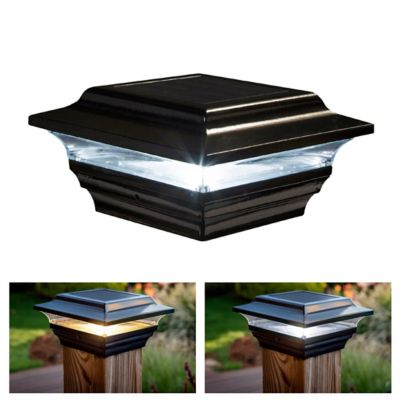
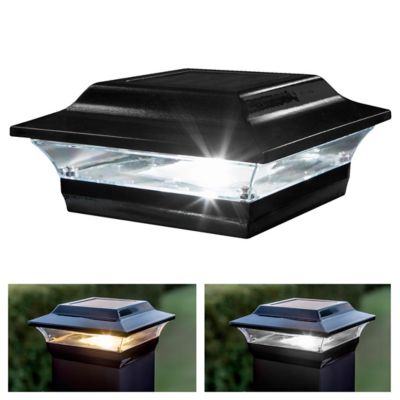
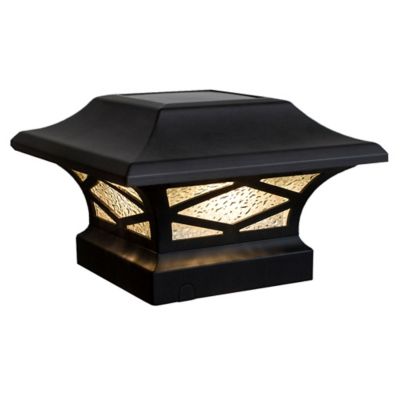
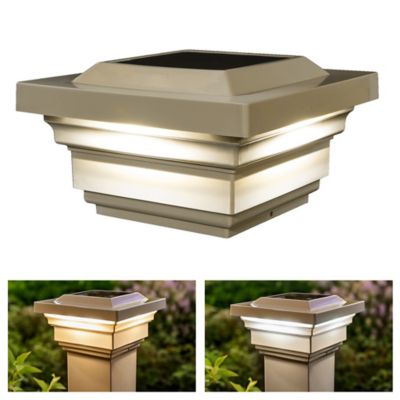
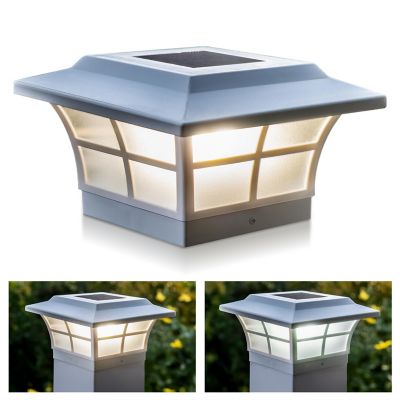
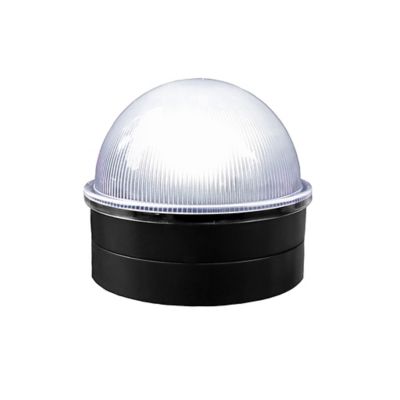
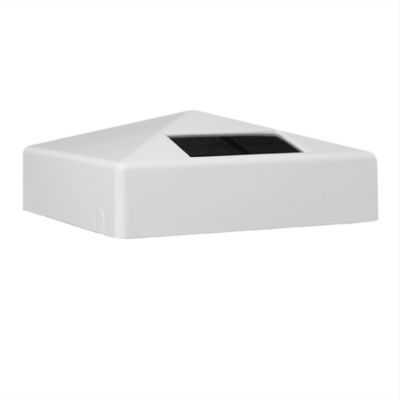
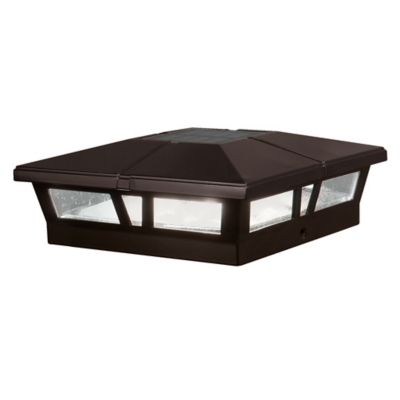
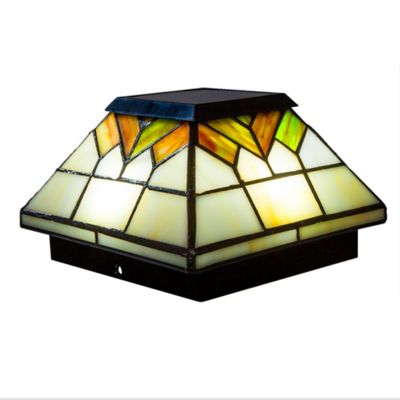
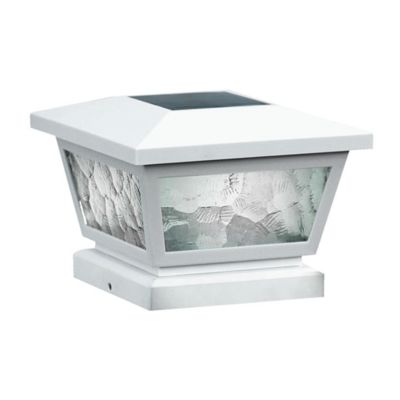
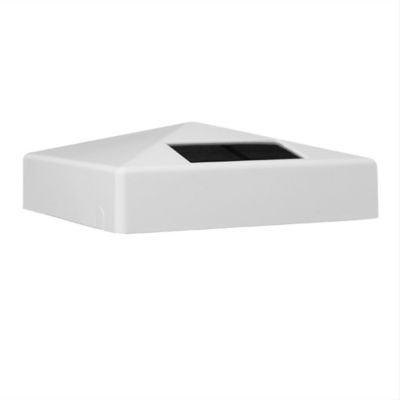
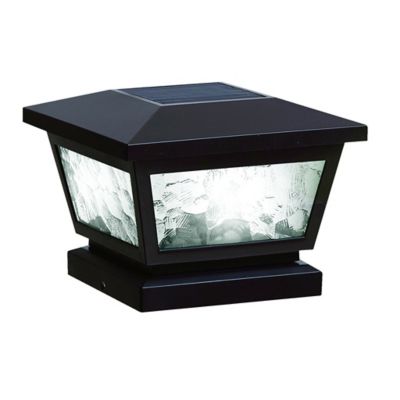
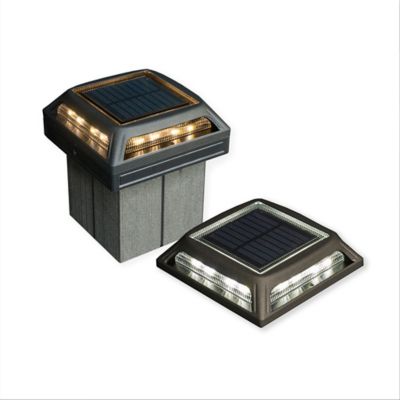
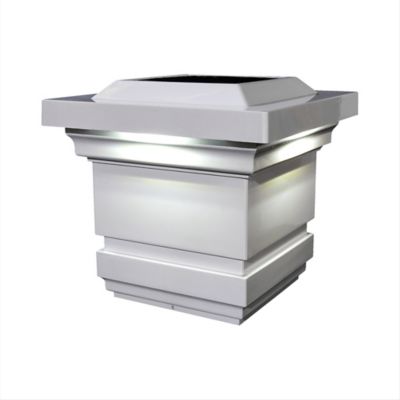
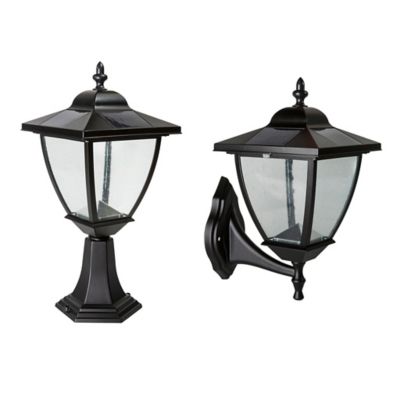
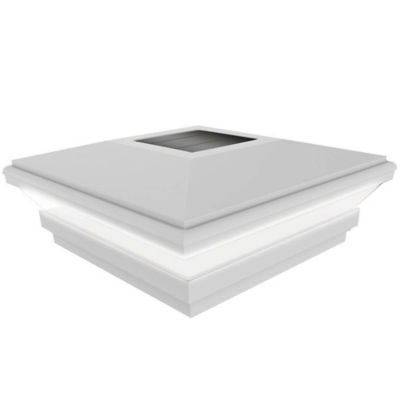
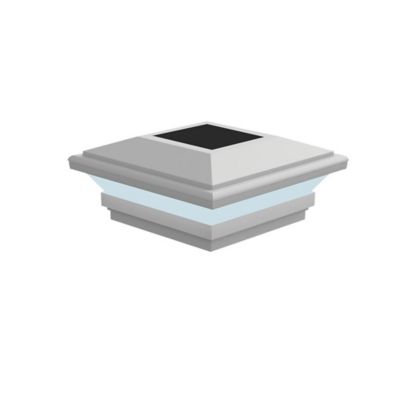
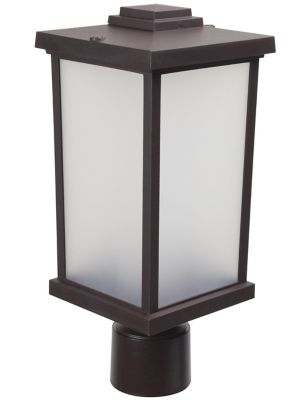
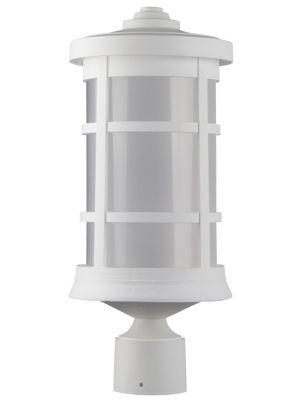
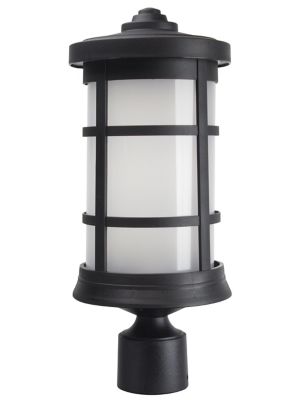
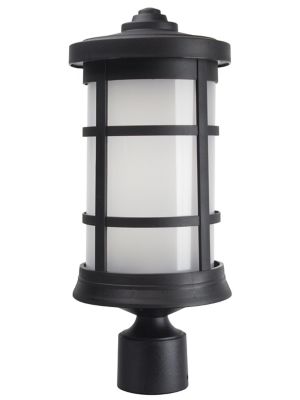
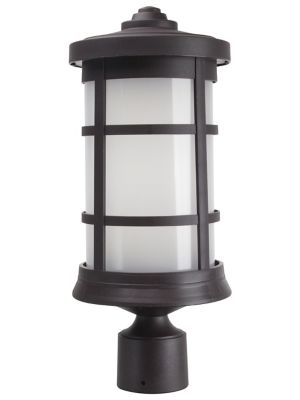
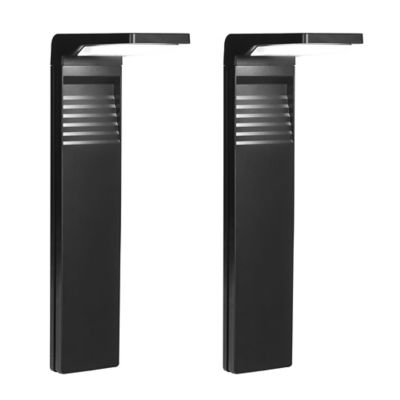
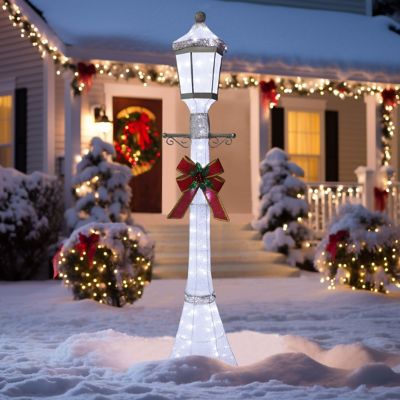
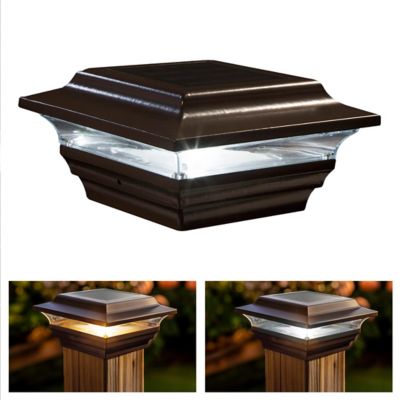
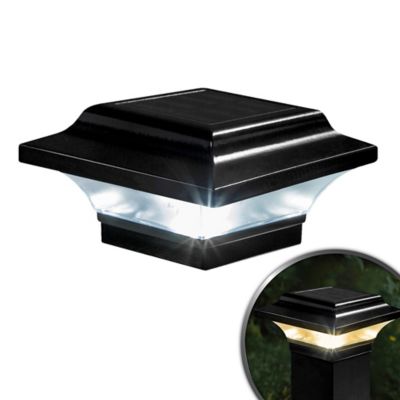
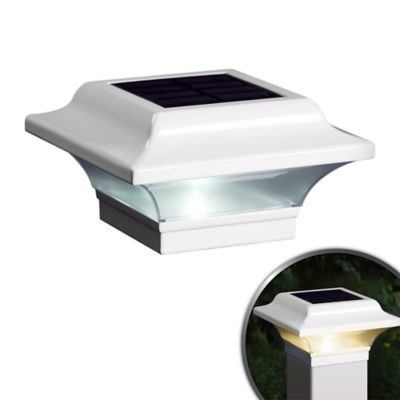
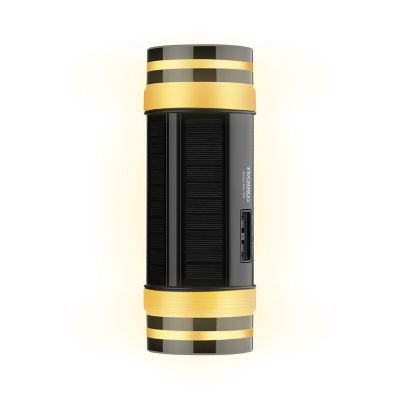
LED post lights are outdoor light fixtures that mount on top of a post, attach to its side, or sit on a freestanding lamp post to illuminate fences, decks, walkways, and driveways. They bring light up off the ground, helping define an entrance, mark a property boundary, or make the route from the house to the gate easier to follow after dark. Different shapes serve different jobs. LED post cap lights sit over fence or railing posts and generally cast a soft glow around the top or down the sides. They work well where the goal is to outline a deck or show where a walkway turns without lighting up the whole yard. Lantern-style post lights usually stand higher and can spread light over a broader area, making them a good match for driveway entrances, front walks, and gathering spots near a porch. Side-mounted fixtures, including compact wedge lights, direct illumination toward nearby steps, deck boards, or the base of a railing. For a place with a long gravel drive and a gate set back from the road, lights on the entrance posts can make that opening easier to spot. Around a backyard deck, a lower glow can help guests see the railing while keeping the seating area comfortable. Brightness matters more than fixture size alone: lumens describe light output, while the lens, shade, mounting height, and beam direction determine where that light lands. A small boundary light is not a substitute for lighting that clearly shows stair treads or a working area. Warm white light often suits porches and seating spaces, while a more neutral white can give paths and entryways a crisper appearance. Color temperature, listed in kelvins, helps compare that appearance between fixtures. Shielded designs and downward-facing light can also help keep glare out of a driver's eyes and limit light spilling toward neighboring homes. For homeowners, acreage owners, and folks maintaining fenced outdoor spaces, the best fit comes from matching the light's coverage to the spot it needs to serve.
Power source is another big difference among LED post lights. Solar post lights collect energy through a panel, store it in a rechargeable battery, and power the LEDs after dark. Many include a light sensor for automatic operation, and they do not need a connection to household wiring. That makes them practical for a fence line or gate where running an electrical circuit would be a bigger project. Their performance still depends on direct sunlight, panel placement, battery condition, and the fixture's operating settings. A cap tucked beneath a broad tree canopy or porch roof may not gather enough energy for the expected lighting time, and dusk-to-dawn operation does not mean every solar fixture will stay lit until morning. Low-voltage LED post lights typically connect to a compatible transformer and outdoor cable, offering an option for several lights along a deck, fence, or path. Transformer capacity, total fixture wattage, cable length, and manufacturer specifications all matter when planning that layout. Line-voltage fixtures connect to an electrical circuit and require suitable wiring, mounting hardware, and installation that follows local electrical requirements. A qualified electrician can handle connections that call for professional installation. Fit deserves just as much attention as power. A post cap labeled for a nominal 4-by-4 wood post may be designed around an actual post measurement of about 3½ by 3½ inches; a nominal 6-by-6 wood post commonly measures about 5½ by 5½ inches. Vinyl sleeves, composite posts, metal posts, and specialty railing systems can have different outside dimensions, so the fixture's stated mounting measurements are the better reference. Some caps include adapters, while others fit only one post size. Side-mounted lights need a secure attachment surface and enough clearance to avoid catching on gates or interfering with railing hardware. Taller lantern fixtures need a compatible pole, base, or mounting arrangement rather than a fence-cap opening. Checking these details helps prevent a light from rocking on a narrow post, overhanging an awkward corner, or facing the wrong direction once attached.
Materials, construction, and upkeep help determine how well LED post lights hold up outdoors. Aluminum housings offer a lighter metal option, while steel fixtures depend on suitable finishes to help limit corrosion. Molded plastic housings can suit post caps and compact solar fixtures, with resistance to sunlight exposure worth checking in the specifications. Glass and plastic lenses vary in appearance, weight, and cleaning needs, and the lens design affects whether the light looks clear and directional or softer and more spread out. For exposed posts, a fixture rated for wet locations is a more suitable match than one intended only for sheltered, damp locations; the manufacturer's location rating should match the installation site. Secure fasteners, protected connections, and intact seals matter as much as the visible housing. A loose cap on a gatepost can shift whenever the gate closes, while a light mounted beside a frequently handled latch needs room to stay clear of hands and moving hardware. Routine care is usually straightforward: wipe away dust and grime with a soft cloth, keep solar panels clear, and follow the fixture's cleaning directions rather than reaching for harsh chemicals or abrasive pads. Rechargeable batteries in solar lights may need replacement over time, and replacement access varies by design. Some LED fixtures have integrated light sources, while others take replaceable LED bulbs, so serviceability is worth considering before installation. Timers, light sensors, and motion controls can help match operation to the way a space functions, but compatibility should be confirmed for the lighting system. Alongside post-mounted fixtures,
LED Garden Lights can provide lower-level illumination beside planting beds and connecting paths. Matching light color across those areas can make the route feel cohesive without requiring every fixture to have the same shape. Whether marking a front gate, lighting deck corners, or tracing the walk to an outbuilding, well-placed post lighting helps put illumination where people actually walk, gather, and come and go.