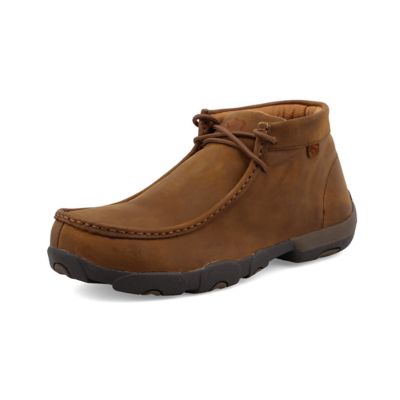
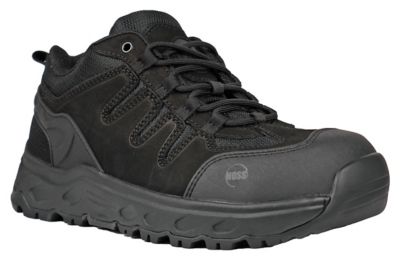
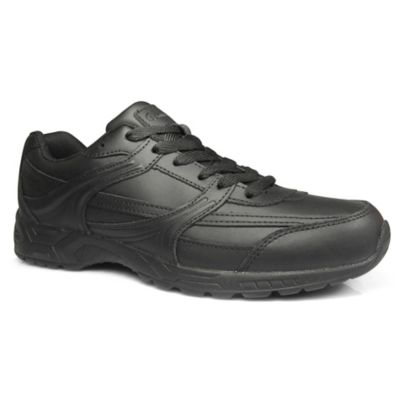
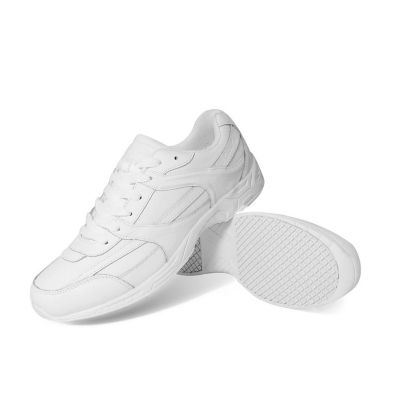
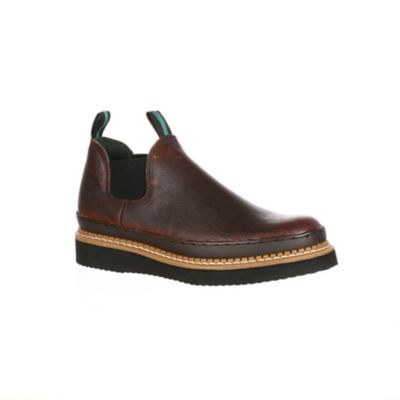
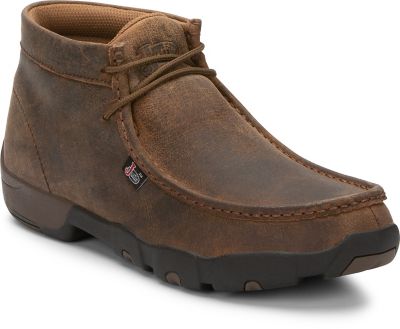
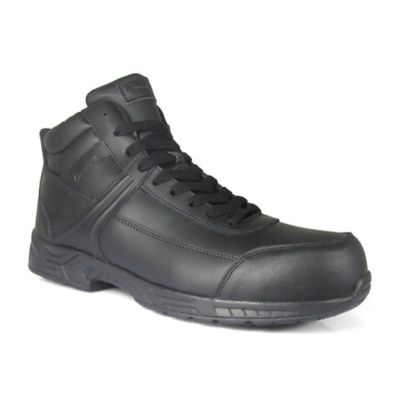
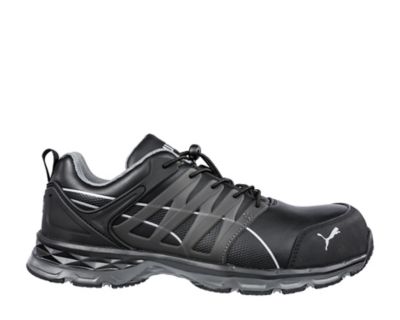
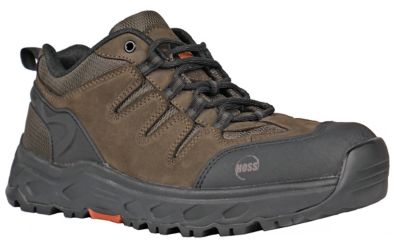
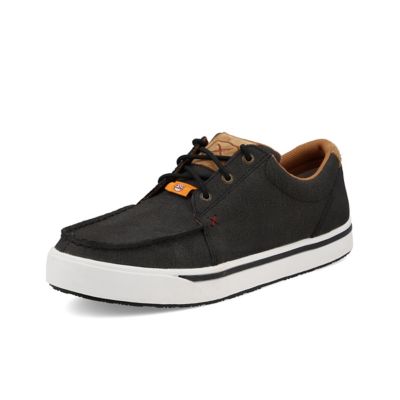
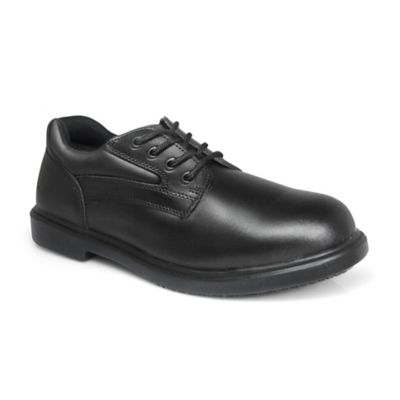
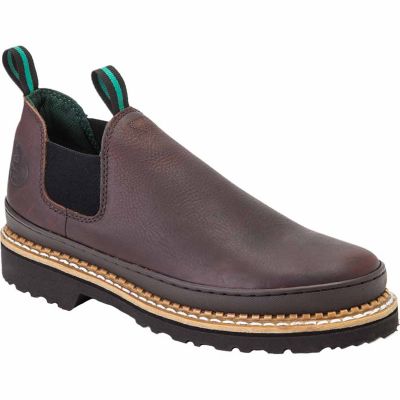
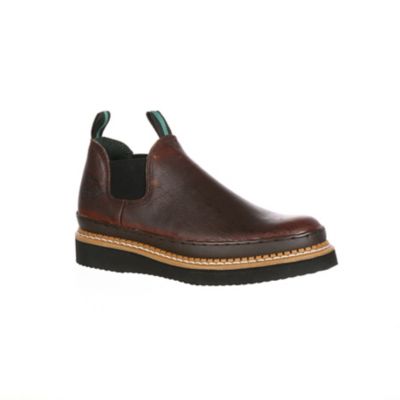
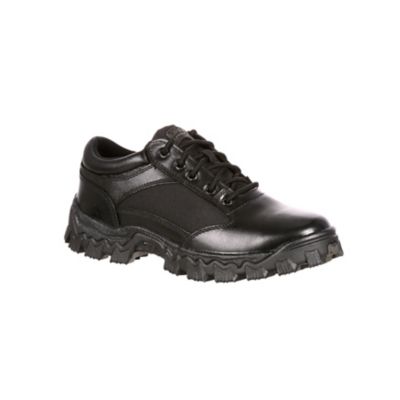
Leather work shoes bring together a leather upper, underfoot support and job-ready features in a lower-cut shape that leaves more of the ankle free than a boot. They make sense for plenty of everyday work, from walking warehouse aisles and tending a service counter to handling shop tasks or moving between a farm office and an equipment shed. The right pair depends on the floor underfoot, the hazards on the job and how much walking, standing or kneeling fills the day. Full-grain leather retains the hide’s natural grain surface and offers abrasion resistance, while top-grain leather has a sanded surface for a more even appearance. Both need care to stay supple. Split leather and leather combined with fabric panels offer different balances of flexibility, coverage and breathability, so the upper’s construction matters as much as its appearance. A smooth finish generally wipes clean more easily than a napped surface, which can hold dust around the grain. Leather thickness affects weight and flexibility, but thickness alone does not tell the whole story about how a shoe will hold up. Stitching, sole attachment, reinforcement around the heel and protection across the toe all play a part. Welted construction may allow a cobbler to replace a worn outsole, depending on the shoe’s design and condition. Cemented construction bonds the upper to the sole and can offer a lighter, more flexible feel, though repair options vary. Lace-up leather work shoes allow adjustment across the instep, while slip-on styles trade laces for an easy-on shape that needs a secure fit through the heel and midfoot. For someone bending beside a workbench or stepping in and out of a delivery vehicle, those everyday details can matter more than a rugged-looking exterior. The goal is footwear that matches the work rather than adding weight or stiffness that the job does not call for.
Comfort starts with enough room for the foot to settle naturally, supported by a heel that stays seated and a midfoot that feels secure without squeezing. Toes need space to spread, and a safety cap should never press against them. Leather may soften with wear, but a toe cap will not stretch to correct a cramped fit. Trying shoes with the socks normally worn on the job gives a better sense of the space inside, especially when thicker work socks or an orthotic take up room. Feet often swell over a long shift, so a fit that feels tight at the start may become distracting after hours on concrete. Cushioning can soften each step, while a supportive footbed and stable sole help keep the shoe from feeling overly soft or wobbly. Removable insoles make cleaning, drying and replacement easier, provided any replacement works with the shoe’s fit and safety requirements. Outsole design deserves attention, too. A broad, relatively flat tread can provide steady contact on smooth floors, while deeper lugs may suit loose ground but can carry grit into a shop or house. Slip resistance depends on the outsole compound, tread, walking surface and anything on that surface; no shoe can prevent every slip. Oil resistance is a separate feature describing resistance to damage from oil, not a promise of traction on an oily floor. Manufacturer testing information is more useful than judging grip by tread depth alone. Workplace rules also determine whether soft toes, steel toes or composite safety toes are appropriate. For jobs requiring impact and compression protection, the footwear’s markings and stated compliance with ASTM F2413 matter more than the toe material by itself. Electrical-hazard protection is another separate designation, offering secondary protection under specified conditions rather than replacing electrical safety practices. A soft-toe leather shoe may be comfortable for a counter shift, yet unsuitable where rolling equipment or falling materials create hazards. Matching those features to the actual job keeps comfort and protection working together instead of treating either one as an afterthought.
Leather work shoes hold up better when care fits into the routine between shifts. Grit left along seams and flex points can grind against the leather as the foot bends, so brushing away loose dirt and wiping the upper with a damp cloth helps limit buildup. Mud is easier to remove gently after it dries than by scrubbing it deep into the stitching. Cleaning products and conditioners should match the leather finish; treatments meant for smooth leather can darken or flatten suede and nubuck. A small test on an out-of-the-way spot helps reveal a color change before the whole shoe is treated. Conditioning helps keep suitable leather uppers supple, but too much product can leave a heavy residue. Shoes that become damp need time to air-dry away from a heater, stove or other direct heat source that can stiffen the leather or affect adhesives. Removing a removable footbed can help the interior dry, and rotating between pairs gives each one more time to air out. Water resistance and waterproof construction are not the same thing: leather alone does not make a shoe waterproof, and seams, linings and membranes all affect moisture protection. Routine care also includes checking for worn-smooth tread, separating soles, broken stitching and cushioning that no longer feels supportive. Those signs can affect footing and comfort even when the upper still looks presentable. When a task calls for a higher shaft or more coverage around the lower leg,
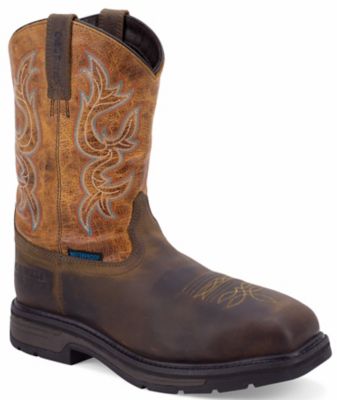
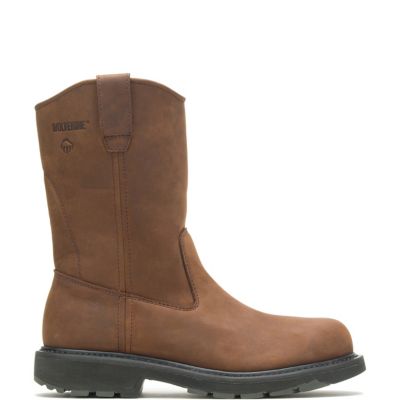
Men's Leather Work Boots offer another footwear category to consider, with the same need to match fit and safety features to the job. For work that suits a lower profile, leather work shoes offer a practical balance of coverage, flexibility and everyday wear. Whether the day means stocking feed bags, checking equipment or staying on a concrete floor for hours, the best match comes down to the demands underfoot and a fit that stays comfortable beyond the first few steps.