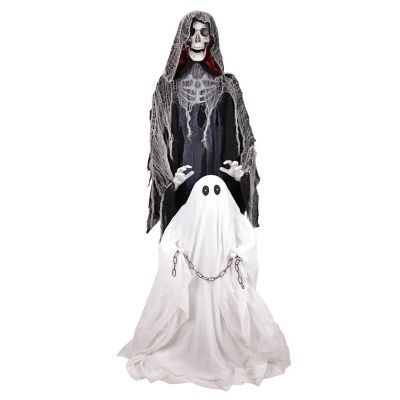
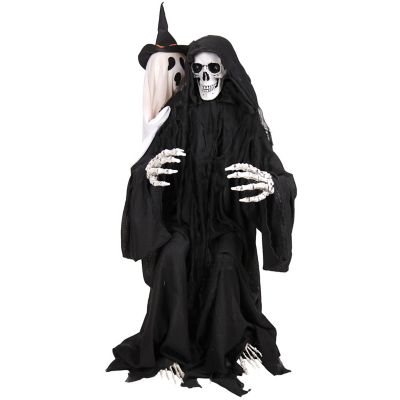
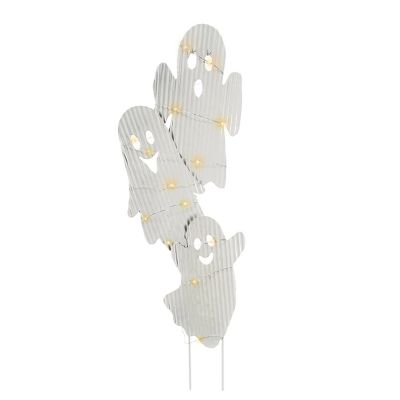
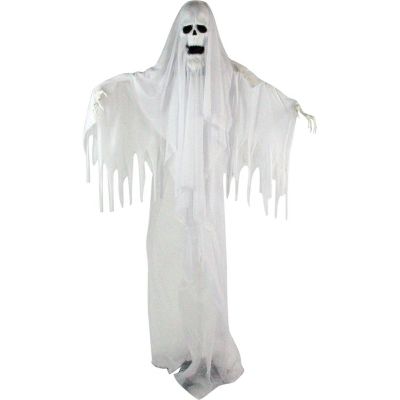
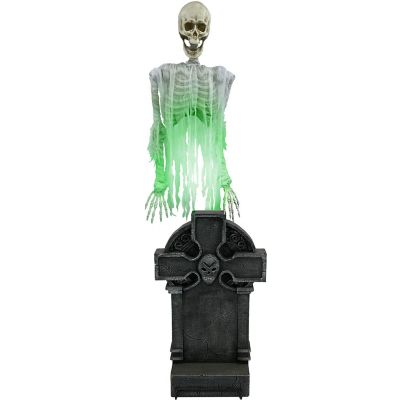
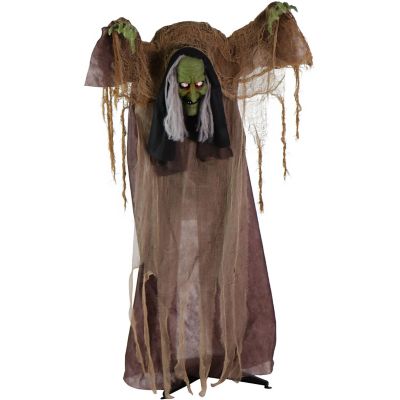
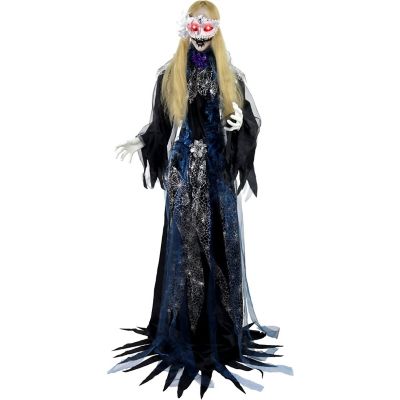
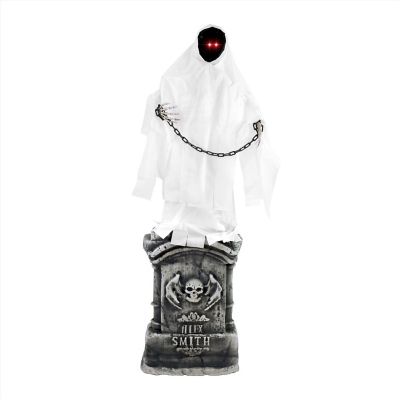
Halloween ghouls are eerie figures that bring a haunted-house feel to porches, yards, entryways, and party spaces. They often have hollow-looking faces, bony hands, ragged clothing, and long, flowing shapes that stand out against a wall or fence. Static ghouls hold a fixed pose, hanging figures move with the air, and animated versions may turn, reach, light up, or make noise. Each style brings a different kind of scare, from a quiet figure beside the front steps to a moving presence near a Halloween gathering. A ghoul does not need a whole graveyard around it to make an impression. One well-placed silhouette beneath a porch roof can give trick-or-treaters plenty to notice, especially when its face catches a little light. Larger spaces can carry several figures, with different heights and poses giving the scene depth rather than making everything look lined up in a row. For a farmhouse porch, a shadowy figure near a railing can fit the setting without taking over the entire entrance. Along a yard fence, taller shapes are easier to see from a distance, while smaller figures tend to work better near eye level or within a closer viewing area. The right level of fright depends on who will be coming through. Families with young children may prefer still figures, softer lighting, and faces that look spooky rather than gruesome. Adults hosting a haunted gathering may lean toward sudden movement, unsettling sounds, and more detailed features. Sound carries across open yards, so volume and placement matter when neighbors, pets, or sleeping children are nearby. A clear route to the door helps keep the fun comfortable for everyone, including visitors with strollers or mobility aids. Figures placed beside the route, rather than in it, can still deliver a good scare without crowding the steps. The strongest Halloween ghoul displays have a clear focal point and enough open space for the shape, face, and movement to register.
Materials influence how Halloween ghouls look up close, how they move, and where they belong. Molded plastic or resin can give faces and hands a defined shape, while fabric creates the loose sleeves, trailing robes, and uneven edges associated with a wandering ghoul. Foam can add dimension without much weight, and wire or metal supports may help hold an arm, frame, or standing pose. Construction varies, so intended placement matters more than a weathered-looking finish. A figure made for indoor use belongs in an indoor setting; a covered porch is still exposed to wind, damp air, and blowing rain. Outdoor suitability should come from the product’s stated rating, including any limits on moisture exposure and protection for electrical parts. Long fabric panels can look striking in a breeze, but they also need room away from porch lights, door hinges, thorny shrubs, and anything that might snag them. Ground contact can leave fabric wet or muddy, making hem length worth considering for lawn displays. Size involves more than overall height. A reaching arm, wide base, or swaying robe can take up space that is easy to overlook when picturing a figure beside a doorway. For animated ghouls, the full movement area matters too, particularly along a narrow porch or near furniture. Standing figures need a level surface and the anchoring method specified for their design. Hanging versions depend on a suitable support and secure attachment, not a light branch or a loose piece of trim. Weight matters for both mounting and storage, especially when a display must be carried up porch steps or packed onto a garage shelf. Dark fabric tends to disappear into an unlit background, while pale faces and hands are easier to pick out. Lighting aimed toward the figure can reveal those details without shining into visitors’ eyes or toward the road. Around a working property, placement away from livestock areas, gates, and equipment routes helps keep Halloween fun separate from everyday chores.
Power and activation features shape the experience just as much as a ghoul’s appearance. Battery-operated figures offer flexibility where an outlet is not close by, while plug-in designs need a suitable power source and a cord route that stays clear of foot traffic. Outdoor electrical setups call for outdoor-rated connections and ground-fault circuit interrupter protection, along with the manufacturer’s placement directions. Motion sensors respond differently depending on their design, viewing angle, and surroundings. A sensor facing a busy walkway may trigger often, while one tucked behind thick fabric may not respond as expected. Some figures offer sound activation, timers, or separate controls for light, movement, and audio; those details help match the effect to a family porch, an indoor party, or a larger haunted scene. An easy-to-reach power switch is handy when the gathering ends or a visitor needs a quieter welcome. Ghouls also pair naturally with other
Halloween Scary Props, especially when the surrounding pieces share a similar scale and level of fright. A little space between effects lets each one stand out instead of turning the entrance into a jumble of noise and motion. For someone who enjoys putting together a Halloween display, a ghoul can make a fitting gift when its size, power needs, and storage requirements suit the recipient’s space. Care after the celebration helps preserve faces, fabric, and moving parts for another Halloween. Cleaning methods depend on the materials, with painted surfaces, fabric, and electronics often needing different treatment. Manufacturer care directions take priority over a general wash or spray, and electrical components should not be soaked. Everything should be fully dry before packing to help prevent mildew and musty smells. Removable supports, cords, and small fasteners are easier to keep track of when stored together, while padding around sculpted features can prevent rubbing in a storage tote. A protected storage spot also keeps trailing fabric away from pests and sharp tools, leaving the ghoul ready for its next turn by the porch steps.