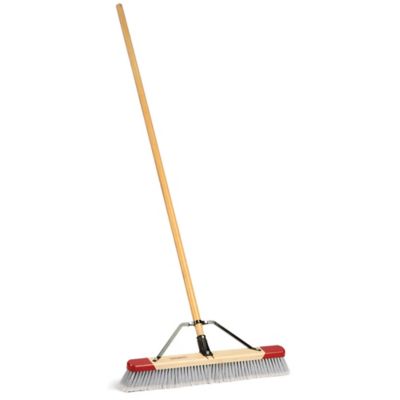
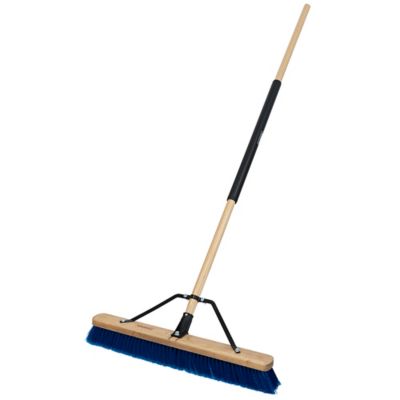
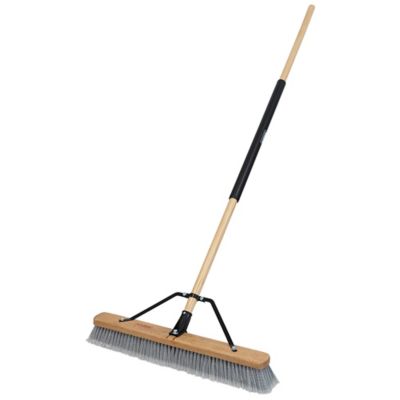
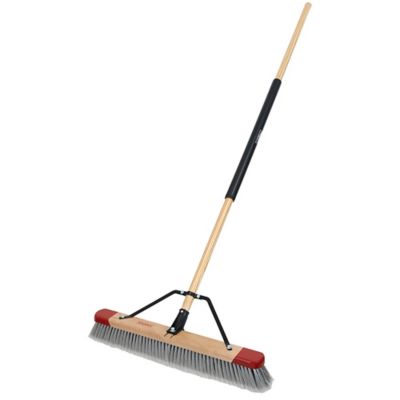
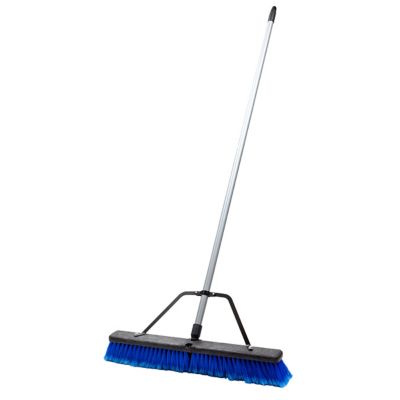
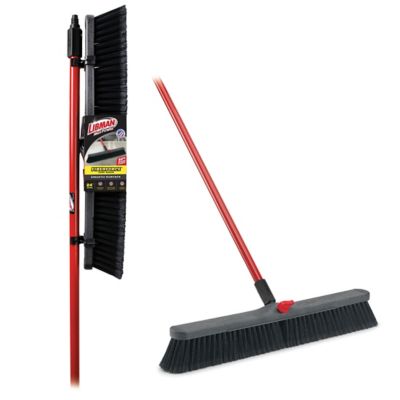
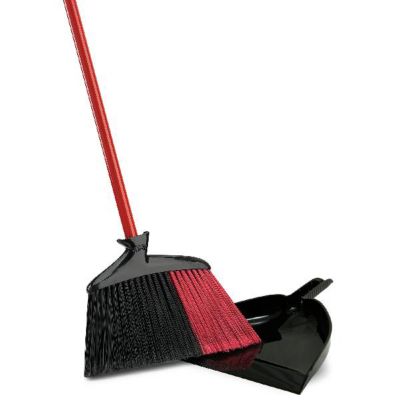
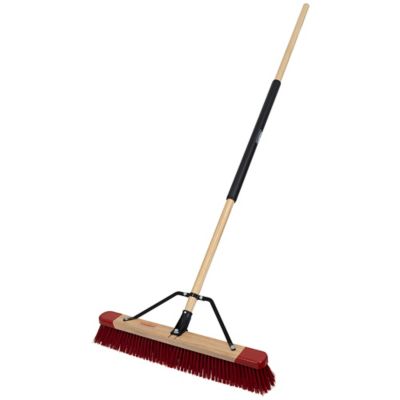
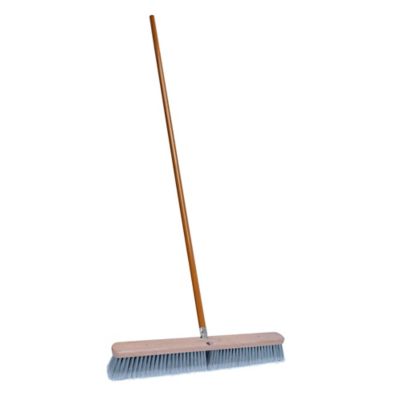
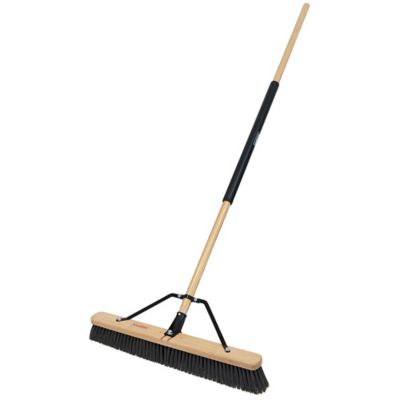
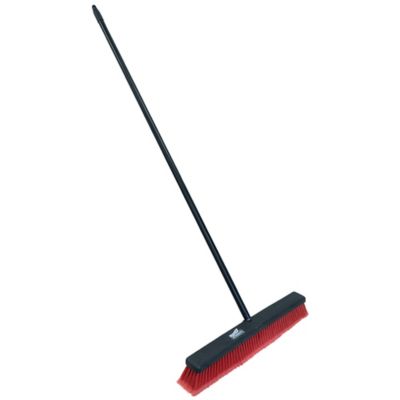
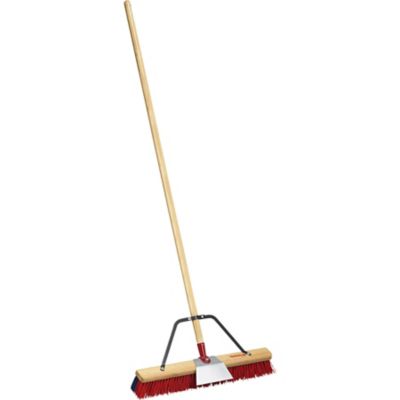
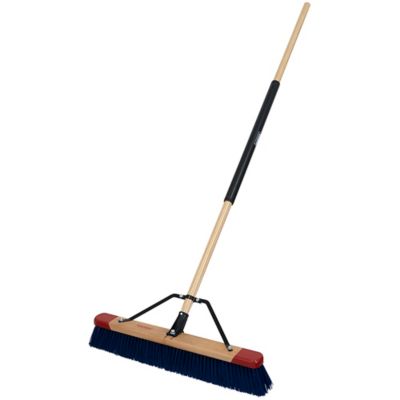
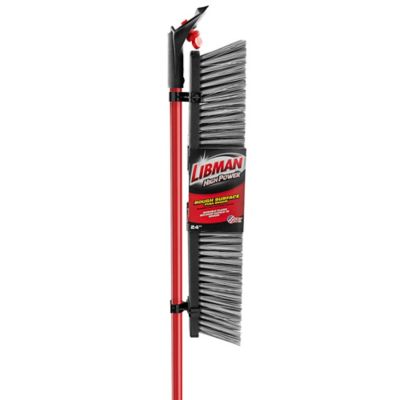
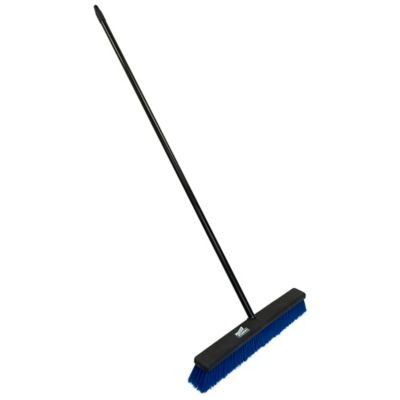
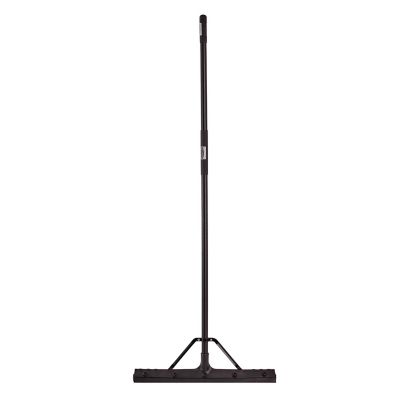
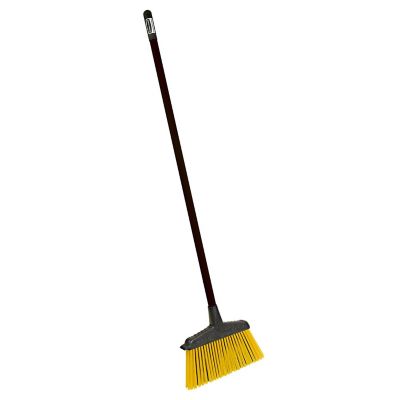
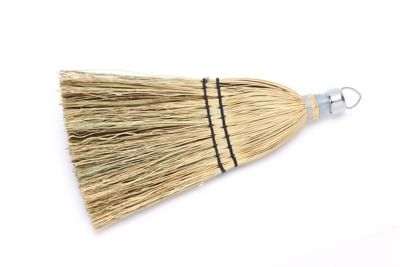
Garage brooms are floor-cleaning tools for moving dirt, grit, sawdust and other loose debris off concrete and similar hard surfaces. A push broom with synthetic bristles is a practical choice for many garages, especially where boots, tires and work projects leave a mix of fine dust and heavier bits behind. The best fit depends on the floor’s texture, the kind of debris and how much open space there is to sweep. Stiff bristles help move coarse dirt across rough concrete, while softer bristles make better contact with smooth, sealed floors and gather smaller particles. Some broom heads combine a firmer center with softer outer bristles to handle both jobs in one pass. Flagged bristles have split ends that help catch fine, dry dust; unflagged bristles have straight ends that generally release larger debris more readily and are often easier to rinse clean. Neither style is the answer for every mess. A garage that doubles as a woodworking space has different cleanup needs than a bay where a tractor gets parked after chores. Head width matters, too. Common push-broom widths include 18, 24 and 36 inches, with wider heads covering open floors in fewer passes. A narrower head has more room to turn between shelving, tool cabinets and parked equipment. An angled upright broom can reach along walls and into corners where a broad push broom cannot sit flat. For a garage with plenty of obstacles, having those two shapes serve different jobs can be more useful than choosing the largest head alone. Bristle length also changes how a broom feels against the floor: longer fibers offer more flex, while shorter, firmer fibers tend to give a more direct push. Good contact across the head matters more than size alone, because bristles that skip over low spots leave trails behind. On a coated floor, the broom also needs to match the surface manufacturer’s cleaning recommendations, especially when loose grit could scratch the finish.
Handle fit and head construction make a real difference once the sweeping starts. A handle that is too short encourages a bent back, while an awkwardly long one can catch on a workbench or make close quarters harder to navigate. A comfortable length lets the person sweeping stand fairly upright, keep both hands spaced apart and guide the head without reaching far ahead. Adjustable handles can help when several people share cleanup duties, though the locking connection needs to stay snug. Wood handles offer a familiar feel, while metal and fiberglass options bring different weights and grip characteristics. A padded or textured grip may be easier to hold through a longer cleanup, but balance matters just as much as padding. A wide broom loaded with stiff bristles can take more effort to push, particularly across an uneven slab. The connection between the handle and head deserves a close look because that joint takes repeated force every time the broom changes direction. Threaded sockets, bolted connections and support braces are different ways of holding the assembly together; the important point is a firm connection without wobble. Head materials matter for care as well. Wood blocks need protection from prolonged soaking, while plastic blocks are generally easier to rinse, subject to the maker’s directions. Around a busy garage, clearance can matter as much as strength. A low-profile head may reach beneath a bench, but a thick block or tall brace can limit that reach. Along the edge of a parked pickup, shorter, controlled strokes help keep the handle away from the body panels. Across an open bay, steady passes work better than bearing down hard enough to flatten the bristles. A broom should move debris with its tips, not with fibers folded over against the floor. That balance of reach, weight and control makes everyday sweeping less of a wrestling match.
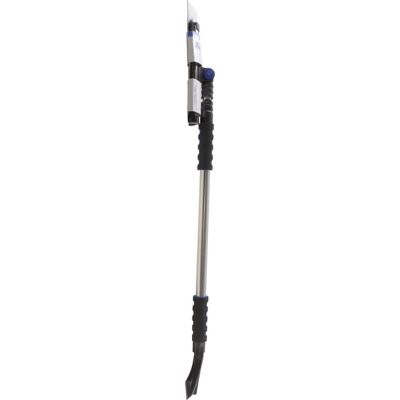
Care starts with keeping the broom matched to the mess. Dry dirt and loose grit belong to a different cleanup job than motor oil, paint, solvents or an unknown spill. A floor broom does not replace an absorbent, a squeegee or the cleanup method listed for a spilled substance, and chemical compatibility varies by bristle and head material. Very fine dust from concrete cutting or similar work may require dust-control equipment rather than dry sweeping. Collect sharp metal scraps with a suitable pickup tool before sweeping, and keep nails and screws out of ordinary foot traffic. For routine cleanup, overlapping passes help gather scattered debris into a manageable pile without chasing it from one end of the garage to the other. A dustpan with a lip that sits flat against the floor helps finish the job, especially with fine grit that otherwise slips underneath. Afterward, pull out tangled string and packed debris, and rinse the head only as the care directions allow. Let it dry before putting it away. Hanging a broom with its bristles clear of the floor helps prevent a permanent bend, and a wall rack keeps the handle out of walkways. Check the head connection occasionally, particularly if the broom starts twisting during a push. When bristles stay flattened, break off or leave repeated strips of debris despite proper technique, the head may be ready for replacement if the design allows it. A separate broom for the garage also keeps shop grit from traveling into cleaner household spaces. For clearing snow from vehicles rather than sweeping a floor,
Snow Brooms serve a different purpose; keeping those tools separate helps keep abrasive garage debris away from vehicle surfaces. Whether cleanup follows an afternoon at the workbench or everyday trips between the barn and the house, a well-fitting garage broom helps keep loose debris from collecting around the places people walk and work.