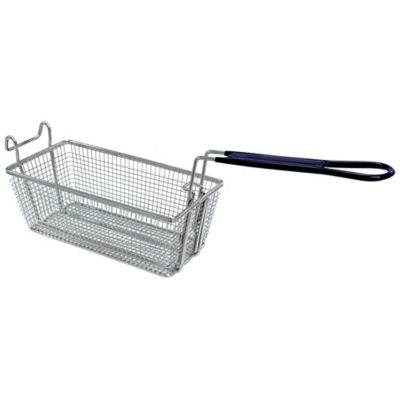
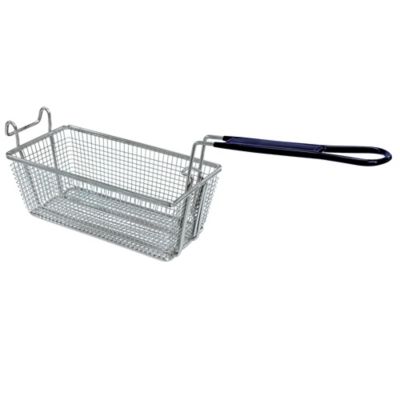
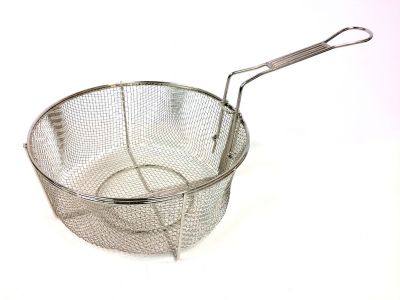
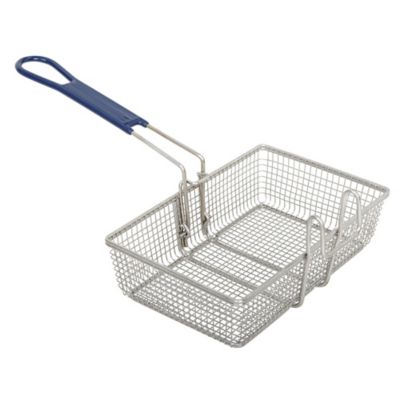
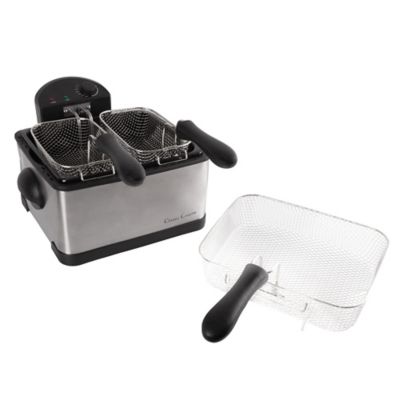
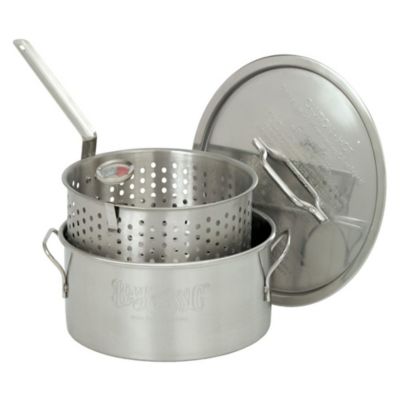
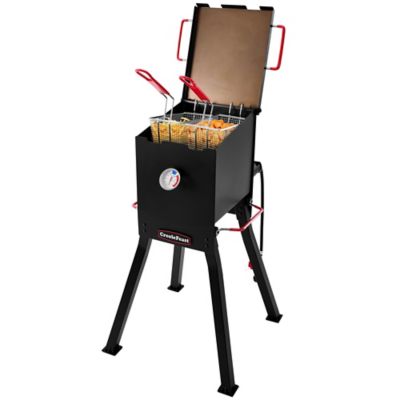
Fryer baskets hold food during cooking and let excess oil drain away when the food comes out of the fryer. They make it easier to handle a batch of fries, chicken wings, breaded vegetables, or fish without chasing each piece around the pot with a slotted spoon. For a family fish fry, a busy kitchen, or supper after a long day of chores, the right basket helps keep cooking and serving moving along. Shape, mesh spacing, basket depth, and handle design all affect how a basket fits the equipment and handles the food. Round fryer baskets generally suit round pots, while rectangular baskets fit many countertop and commercial-style fryers. Neither shape is interchangeable across every setup, so the fryer’s requirements matter more than appearance. Fine mesh helps contain smaller pieces and loose crumbs, while a more open wire pattern allows oil to move freely through the basket and drain readily afterward. Perforated metal offers another construction style, with hole size affecting what stays inside. Breaded foods, delicate fillets, and small vegetable pieces call for attention to the basket surface because coatings and soft edges can catch in the openings. Enough room between pieces helps limit crowding and makes a batch easier to manage. A deep basket may hold more food, but its full physical volume is not the same as the fryer’s recommended cooking capacity. Too much food at once can lower the oil temperature and leave a batch cooking unevenly. For households that fry a few servings at a time, a manageable basket can be more practical than the largest size that fits. For larger gatherings, a comfortable handle and a secure draining position matter just as much as capacity, especially when several rounds of food are headed from the fryer to the serving tray.
Fryer basket materials commonly include stainless steel, plated steel, and aluminum, with construction and finish affecting weight, cleaning, and resistance to corrosion. Stainless steel is a common choice for repeated cooking and washing, though it still needs proper cleaning and drying. Nickel-plated or chrome-plated steel depends on an intact finish to help protect the metal underneath, so flaking, peeling, or exposed rust deserves attention. Aluminum is generally lighter than steel, but cleaning products and care methods need to suit that metal. Firm wire, sound joints, a secure handle connection, and a basket that holds its shape are useful signs to examine when considering long-term service. Fit starts with the cooking vessel rather than the basket’s outside appearance. Interior length, width or diameter, usable depth, and clearance around heating elements all matter. When pairing baskets with
frying pots, the pot’s shape and the manufacturer’s specifications help determine a suitable match. A basket needs room for safe placement and removal without binding against the sides, interfering with the lid, or contacting components it is meant to clear. Handle length and angle also affect the setup: a handle that works well over one pot may sit awkwardly over another. Heat-resistant grips can make handling more comfortable, but they do not make every surface safe to touch without protection. Drain hooks are handy only when their shape and position suit the fryer and support the basket securely above the oil. A compatible resting position lets oil return to the vessel rather than drip across the work area. For replacement fryer baskets, matching the equipment maker’s stated dimensions and attachment details is more dependable than judging by a photo. Air fryer baskets belong to a different cooking setup, where airflow, tray placement, and appliance-specific fit are central considerations. A deep-frying basket should not be assumed suitable for an air fryer, or the other way around, unless the equipment manufacturer allows that application.
Fryer basket care affects both food handling and how well the basket holds up over time. Food scraps and cooked-on coating can collect where wires cross, along the rim, and around handle attachments, making accessible corners and a straightforward shape helpful features. Once the equipment has cooled enough for safe handling, washing according to the manufacturer’s directions helps remove grease without harming the basket’s finish. A soft brush can reach mesh openings without the scraping that may damage plated surfaces. Dishwasher compatibility varies, especially when a basket includes coated grips or mixed materials, so that feature is worth confirming rather than assuming. Thorough drying matters before storage and before any basket returns to hot oil, since trapped water can cause dangerous splattering. Harsh cleaners, prolonged soaking, and abrasive tools may shorten the life of some metals or finishes. Routine inspection also has a place: loose handles, broken wires, sharp edges, and damaged plating are reasons to take a basket out of service. For frequent frying, easy-to-clean construction and a comfortable lifting position can make more difference day to day than extra basket depth. A basket filled with food weighs considerably more than an empty one, and a load that feels manageable helps keep movement controlled. The fryer itself also needs a stable setup and operation within its stated oil and food limits. These considerations apply whether the cooking happens in a home kitchen, at an outdoor cooking station, or in a food-service setting, with equipment intended for that particular environment. Fryer baskets can also make a practical gift for someone who enjoys cooking the catch from a fishing trip or feeding a table full of family and friends. Knowing the recipient’s fryer or pot measurements keeps that gift useful. A well-matched basket earns its place through simple work: holding the batch, lifting it steadily, and letting it drain before the food reaches the plate.