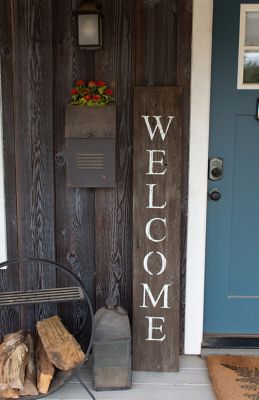
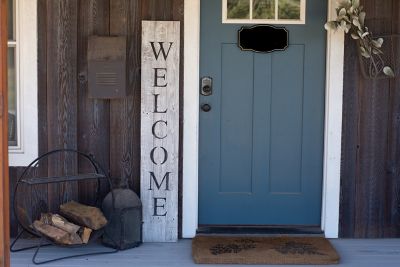
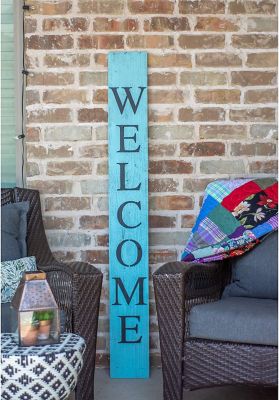
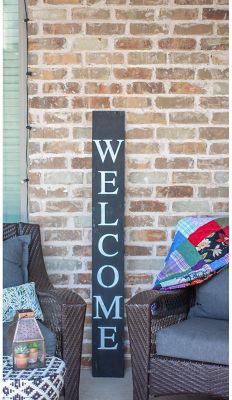
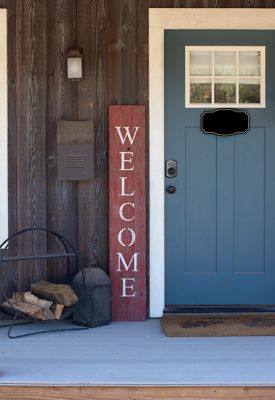
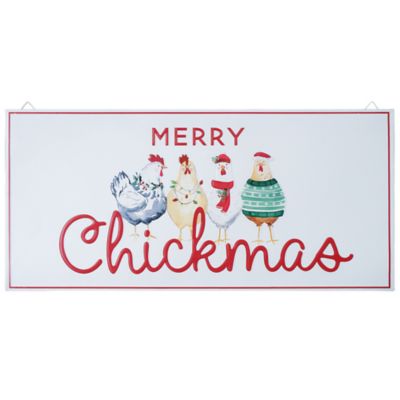
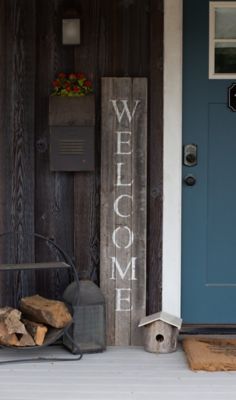
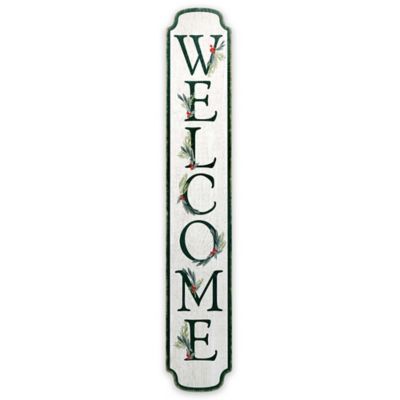
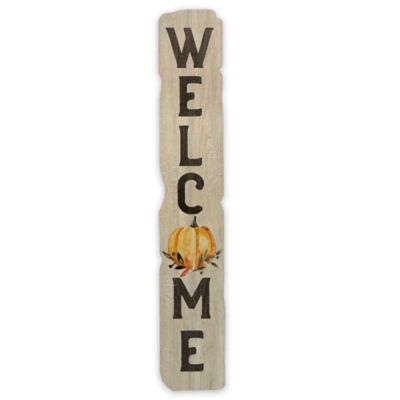
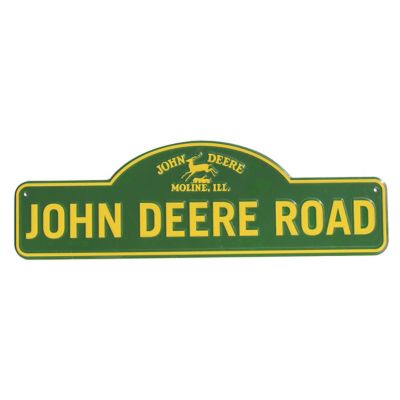
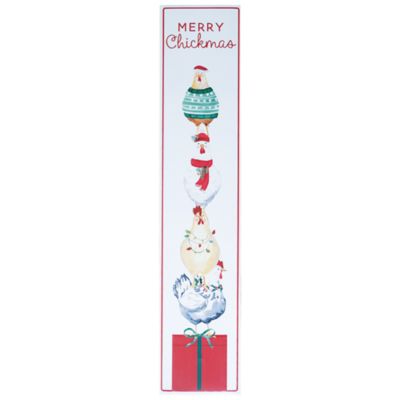
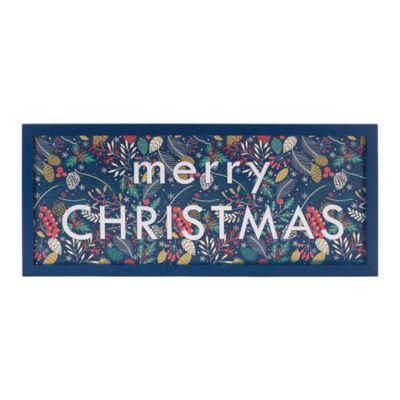
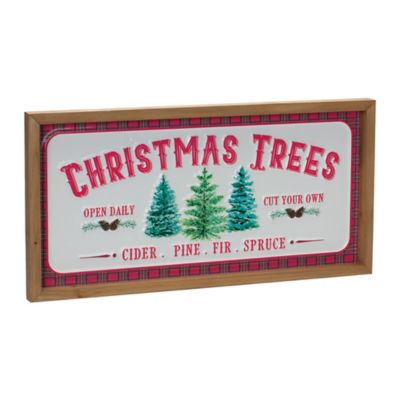
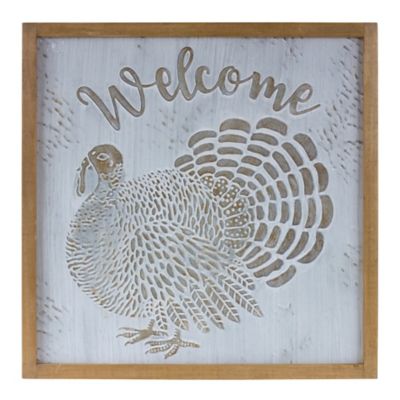
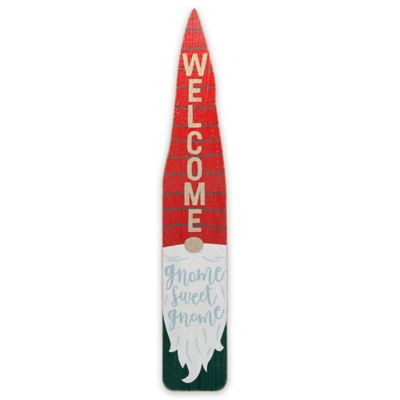
Front door signs put a friendly greeting, a family name, or a clear message right where visitors will see it. Common styles include round door hangers, rectangular plaques, tall porch leaners, and signs with changeable accents or lettering. A door hanger sits on the door itself, while a porch leaner rests beside the entrance and needs enough floor space to stay clear of foot traffic. Wall-mounted plaques offer another option when the door has glass panels, raised trim, or hardware that makes hanging something awkward. Each format brings a different look to the entry, from a simple welcome above the handle to tall lettering beside a farmhouse doorway. On a broad front porch, a larger sign can hold its own alongside a bench or a pair of planters. At a smaller entrance, a compact plaque keeps the greeting easy to spot without crowding the doorbell or latch. Proportion matters more than filling every open space: the sign should look at home on the door and leave its everyday workings within easy reach. Lettering deserves just as much attention as shape. Bold letters with plenty of contrast are easier to read from the walk, while fine script works better for a message visitors see up close. A short greeting can stay readable across a round sign; a longer saying needs more room around each line. Wood-grain finishes, painted backgrounds, metal edges, and simple animal or botanical motifs can all help tie a sign to the rest of the entry. A quiet design may suit a plain painted door, while stronger contrast can keep lettering from disappearing against detailed panels. Whether the entrance belongs to a country house, a small-town home, or an apartment with a permitted door hanger, the best fit feels welcoming without making the doorway harder to use.
Materials and construction help determine where front door signs belong and how much attention they need over time. Solid wood brings visible grain and natural variation, while engineered wood offers a smooth surface for lettering and painted designs. Neither should be assumed suitable for outside placement without checking the intended-use information and finish. Metal signs can have a slim profile and crisp lettering, though their weight, edge treatment, and protective coating deserve a close look. Acrylic offers a smooth surface and can create a layered appearance, but it still needs careful handling to prevent scratches. Mixed-material signs may combine a rigid backing with raised letters, fabric bows, rope hangers, or attached accents; those smaller parts need to suit the placement just as much as the backing does. A sign labeled for indoor placement belongs inside rather than at an outside entry, even beneath a porch roof. Mounting also affects how well a sign holds up through daily opening and closing. The hanging point, cord, hook, and door surface all need to work together, especially on a busy entrance that sees muddy boots, grocery bags, and kids heading in and out. Over-the-door hangers need enough clearance for the door to close freely, and adhesive hooks need a compatible surface and a weight rating that covers the sign. A little space between the sign and door hardware helps prevent rubbing and rattling. Porch leaners need a stable position away from the main walking path, with support or securing hardware where the design calls for it. For care, follow the material’s cleaning directions; gentle dusting or a soft, lightly damp cloth may be appropriate, while soaking and harsh cleaners can harm lettering or finishes. Drying surfaces promptly and checking cords, fasteners, and attached pieces from time to time can help keep the whole sign looking tidy and hanging as intended.
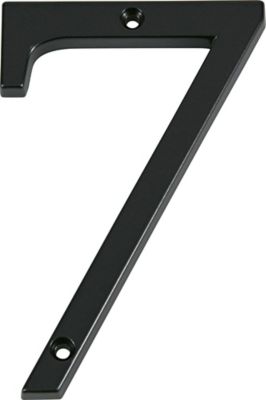
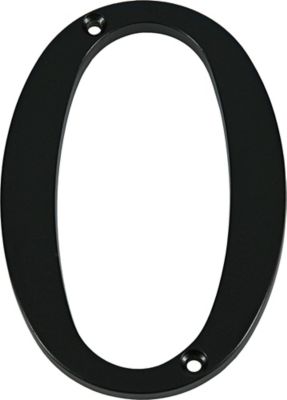
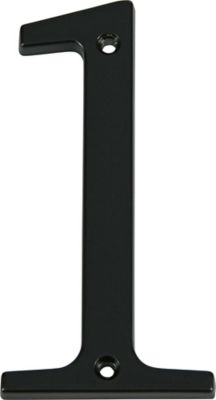
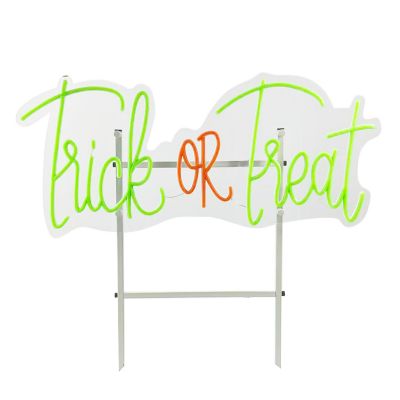
The message on a front door sign can be welcoming, practical, or a bit of both. A straightforward greeting works for households that like a friendly entrance without much fuss. Family-name signs can give a shared home a more personal feel, while address plaques help visitors identify the right doorway when several entrances sit close together. Any address display should keep its numbers easy to read and should not replace required address markings unless it meets local requirements. Message plaques can also spell out delivery preferences, request that callers ring the bell, or make a no-soliciting request clear before someone knocks. Plain wording is especially helpful for instructions that delivery drivers or first-time guests need to understand at a glance. Those messages work best where they are visible from the approach, rather than tucked behind a planter or low beside the threshold. For households that enjoy changing the look of the entry, interchangeable accents or removable pieces allow a familiar sign base to take on another character. Related styles such as
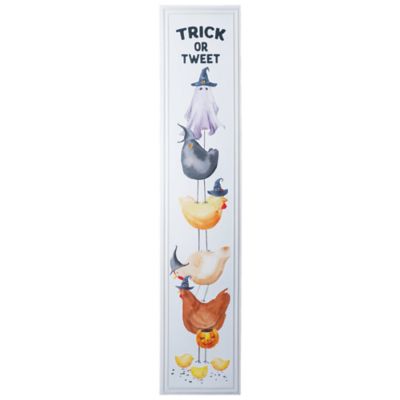
Halloween Door Signs can give the entrance a playful theme while keeping the same attention to size, secure hanging, and readable lettering. Front door signs can also make thoughtful housewarming or wedding gifts, particularly when the wording suits the household rather than a passing trend. A simple welcome is an easygoing choice when the recipient’s taste is hard to pin down; a farm-inspired motif may fit someone settling into a place with acreage. For a gift, manageable dimensions and a straightforward mounting method are helpful details, especially if the recipient has a narrow entry or cannot put holes in the door. Whether the sign marks a new home or adds a finishing touch to a familiar porch, its job stays simple: make the entrance feel cared for, communicate clearly, and leave plenty of room for everyday comings and goings.