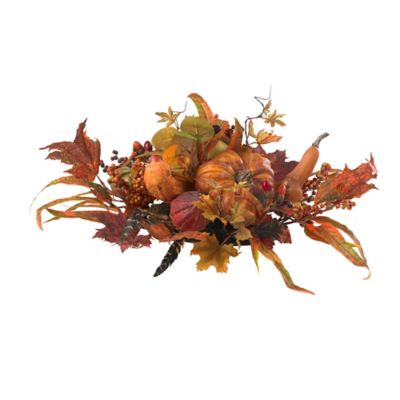
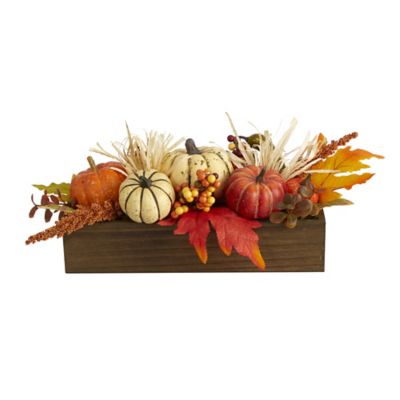
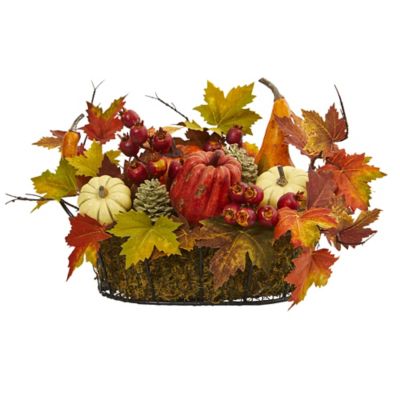
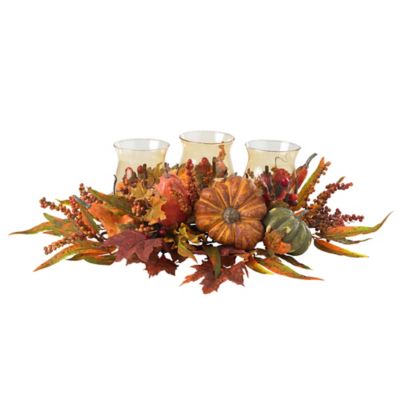
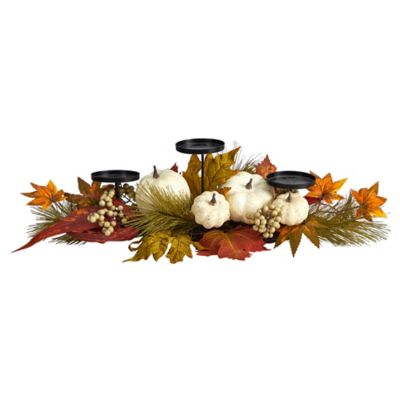
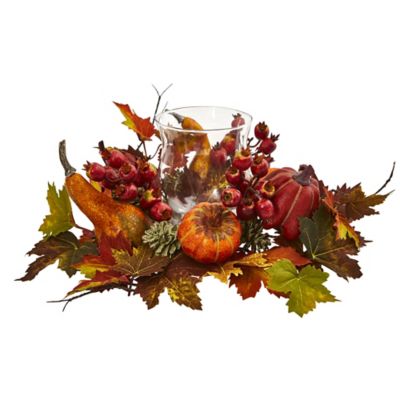
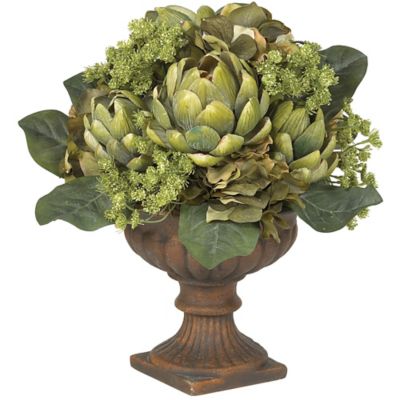
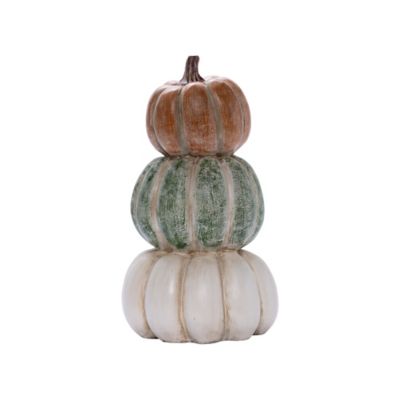
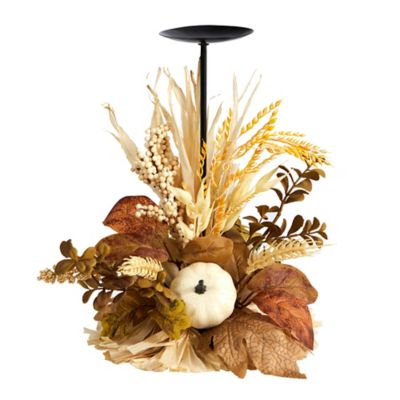
Fall centerpieces bring the colors and textures of the harvest season to dining tables, kitchen islands, coffee tables, and entryway consoles. Their familiar mix of earthy tones, leafy shapes, and natural-looking accents can make a room feel ready for a family supper without dressing it up beyond recognition. Deep orange, rusty red, golden yellow, and warm brown suit a traditional fall table, while cream, muted green, and soft tan offer a quieter look that sits comfortably alongside everyday dishes. Pumpkin shapes, autumn foliage, floral arrangements, and candlelight are common elements, with each bringing a different kind of presence to the tabletop. A full arrangement can hold its own on a broad farmhouse table; a smaller accent can give a breakfast nook the same seasonal character without taking over. Texture matters just as much as color. Rough wood grain, woven fibers, smooth ceramic, and clear glass catch the light differently and keep an arrangement from looking flat. Against a pine table marked by years of meals and homework, simple earth tones can feel right at home. On a painted sideboard, deeper harvest colors create a stronger contrast. The best fit comes down to the room and the way folks gather there, rather than matching every surface. A Thanksgiving meal may call for a centerpiece that anchors the whole table, while an everyday kitchen setting benefits from something easy to move when supper comes out of the oven. Fall table centerpieces can also tie together an open kitchen and dining area, especially when their colors echo a nearby quilt, curtain, or set of chair cushions. A centerpiece does not have to fill every inch to make an impression. A little open space around it lets the shape stand out and leaves room for the serving bowl that always seems to arrive after everyone has sat down.
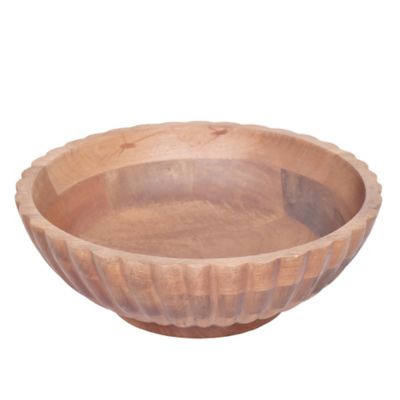
Size and construction make a real difference in how a fall centerpiece fits into daily life. Overall width includes any leaves, stems, or branches extending beyond the base, so the footprint may be larger than the container alone suggests. On a dining table, lower arrangements help keep faces visible across the meal, while taller silhouettes often make more sense on an entryway table or a sideboard. Long, narrow shapes work naturally with rectangular tables; rounded forms tend to suit smaller square or circular surfaces. Enough clearance for plates, glasses, elbows, and serving dishes keeps a pretty table from becoming a crowded one. Weight deserves attention, too. A substantial base may help an arrangement stay put, but a heavy centerpiece can be awkward to lift when the table doubles as a place for puzzles or paperwork. Materials each have their own character and care needs. Wood brings visible grain and a down-to-earth feel, though standing moisture can leave marks or affect the finish. Woven materials add texture but can catch crumbs and dust in their crevices. Glass lets light pass through and pairs easily with different table settings, while ceramic offers a more solid visual anchor. Both need sensible placement where a passing elbow or a pet’s tail is less likely to knock them over. Metal finishes can range from dark and understated to bright and reflective; care directions matter because some finishes react poorly to moisture or harsh cleaners. A soft backing, trivet, or suitable surface protector can help separate a rough base from a finished tabletop. Any vessel holding water needs attention to leaks and condensation, especially on wood furniture. For a busy household, simple shapes with accessible surfaces can make routine cleaning less of a chore. A centerpiece that is easy to lift, wipe around, and return to its spot is more likely to stay part of the room instead of getting set aside after the first big dinner.
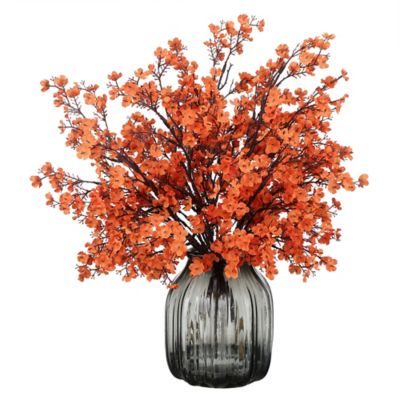
Floral details give fall centerpieces another layer of color and movement, from loose, airy stems to fuller arrangements with a gathered-from-the-garden feel. Broad leaves create a strong outline, smaller blossoms soften the edges, and branching shapes bring height without necessarily adding a heavy-looking mass. For a flower-forward take on the season, explore
Autumn Floral Centerpieces. Fresh flowers offer natural variation and scent, but they also need water, regular attention, and protection from heat. Artificial arrangements offer a different trade-off: their appearance does not depend on watering, though dust, direct sunlight, and storage conditions can affect how they look over time. Silk-like fabric, molded foliage, and other constructed materials may have different cleaning requirements, so the care label is a better reference than assuming every stem can be rinsed. Fragrance is worth considering wherever food is served. Strongly scented flowers or candles can compete with a roast dinner or a fresh pie, while unscented accents leave those familiar kitchen smells alone. Any open flame needs a stable holder and clear space away from foliage, fabric, children, and pets; flameless lighting avoids an exposed flame but still calls for attention to battery access and the maker’s directions. These practical details matter when a gathering includes little hands reaching across the table or a cat determined to inspect every new arrival. Fall centerpieces can also make thoughtful housewarming or host gifts, particularly when the size and colors suit the recipient’s home. A compact arrangement is easier to place in a small kitchen, while a broader piece may suit someone who regularly feeds a full table. After the fall display comes down, clean, dry storage helps protect surfaces and shapes. Delicate stems benefit from space rather than being crushed beneath heavier belongings, and separate protection for glass or ceramic helps prevent chips. With sensible care and a good fit for the household, a fall centerpiece can become a familiar part of harvest suppers and Thanksgiving gatherings year after year.