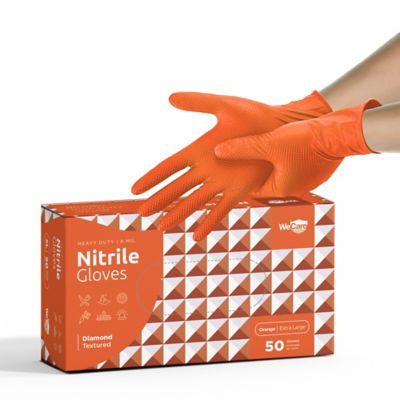
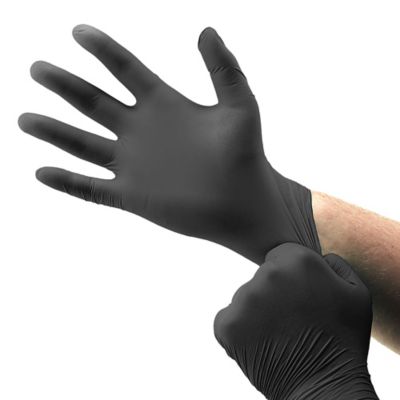
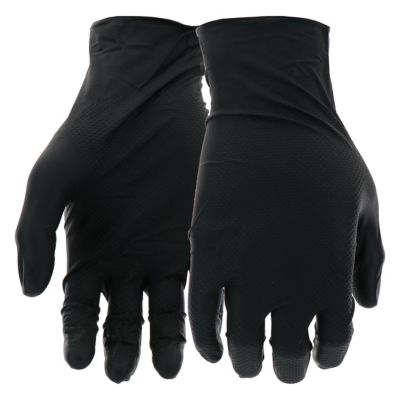
Extra-large nitrile gloves give larger hands a close-fitting barrier for chores involving grease, grime and everyday messes without the baggy feel of an oversized general-purpose glove. Nitrile is a synthetic rubber made without natural rubber latex, and it combines flexibility with resistance to many oils and greases. That makes it a practical choice for mechanics, farm owners, cleaning crews and folks tackling maintenance around the house or shop. XL sizing is not the same across every manufacturer: some charts place extra-large gloves at palm widths around 110 to 115 millimeters, or about 4.3 to 4.5 inches, while others base sizing on hand circumference. A width measurement runs across the palm near the knuckles without including the thumb; circumference goes around the hand. Those measurements are not interchangeable, so the sizing chart for the glove matters more than the XL label alone. A good fit leaves room to bend the fingers and close the hand without pulling hard across the knuckles or stretching the material tight between the thumb and index finger. Fingertips should reach close to the ends without pressing firmly against them, and the palm should not bunch when gripping a wrench or wiping down a workbench. Hands with broad palms, thick fingers or long fingers may fit differently even when the same size seems right on paper. A glove that feels tight before the work starts can restrict movement, while excess material can catch or make small parts harder to handle. Many disposable nitrile gloves have an ambidextrous shape, so either glove fits either hand, and a beaded cuff helps with pulling the glove on. For larger hands, that balance of palm room, finger length and wrist fit can make the difference between finishing a messy chore comfortably and stopping to replace a torn glove.
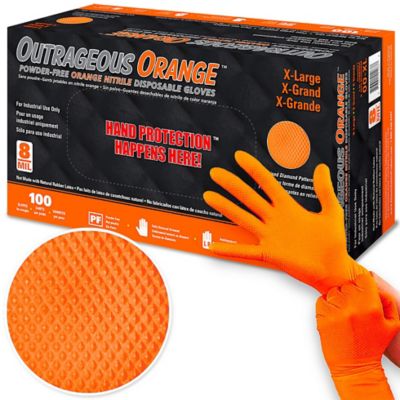
Thickness, surface texture and cuff length help distinguish extra-large nitrile gloves suited to different kinds of work. Thickness is commonly listed in mils, with one mil equal to one-thousandth of an inch. A thinner glove generally offers more fingertip feel for sorting hardware, fastening a small clip or handling other detailed tasks. A thicker glove can provide more material between the hand and rough surfaces, though thickness alone does not establish chemical resistance, puncture resistance or service life. The glove’s formulation, construction and testing matter, too. Textured fingertips or a textured palm can help with grip when handling smooth tools or slippery containers, but gloves still need a secure fit and a sound surface. Longer cuffs extend coverage farther past the wrist, which can be helpful when wiping down equipment or reaching into a messy work area; they do not make an open cuff liquid-tight. Color is another practical consideration. Dark gloves can keep grease marks less noticeable during shop work, while lighter colors may make certain kinds of dirt easier to spot. The
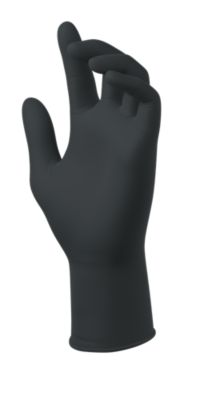
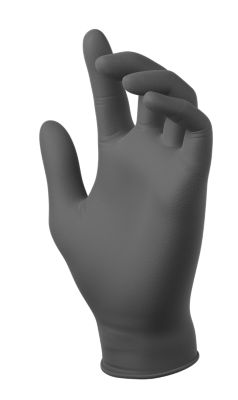
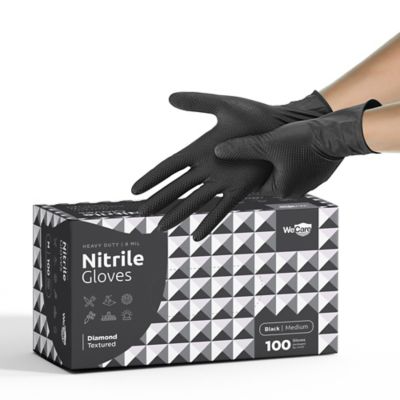
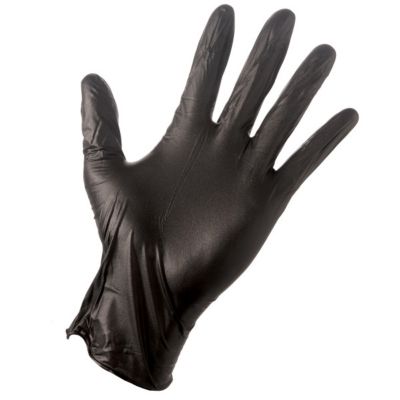
Black Nitrile Disposable Gloves category brings that dark finish into the same range of cleanup and maintenance tasks, with fit, thickness and labeled protection still guiding the choice. Around a farm or garage, nitrile gloves can keep hands cleaner while greasing fittings, wiping oily housings or tending to routine cleanup. Food preparation, animal care and medical tasks call for closer attention to the stated application: a glove meant for general work is not automatically suitable for food contact, veterinary procedures or medical examinations. Likewise, nitrile does not resist every cleaner, solvent, pesticide or fuel equally. The substance being handled, its concentration and the length of contact all affect protection. Manufacturer chemical-resistance information and any glove requirements on the chemical label provide a better basis for selection than glove color or thickness by itself.
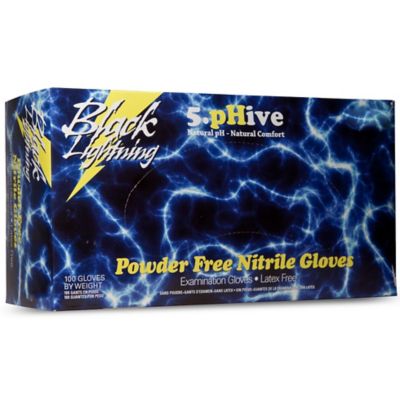
The condition of disposable extra-large nitrile gloves matters just as much as their size. Fresh gloves should be free of tears, pinholes, brittle areas and other damage before they go on, especially when the job involves contact with something that should stay off the skin. Clean, dry hands make gloves easier to pull on without tugging hard at the cuff, and rings or sharp fingernails can snag thin material. Powder-free styles avoid the loose powder found inside some gloves, but powder-free does not mean allergy-free. Certain rubber-processing chemicals can cause skin reactions, and accelerator-free nitrile options may be worth considering for people sensitive to those ingredients. Disposable gloves are intended for a single task or period of wear, not washing and wearing again. A pair that has handled greasy equipment should not carry that residue to a feed scoop, clean door handle or lunch container. Changing gloves between dirty and clean work helps keep that trail of grime from spreading through the shop or barn. Tears, visible contamination and signs of softening or swelling are reasons to stop and change gloves; chemical exposure may call for replacement even when damage is not visible. Removal also matters: peeling gloves away from the hands while keeping the contaminated outer surfaces off bare skin helps contain the mess, followed by handwashing. Unworn gloves keep best in their original packaging, protected from direct sunlight, excessive heat and contact with shop chemicals. Disposal depends on what the gloves have touched, since chemical-contaminated gloves may require handling beyond ordinary household trash. Nitrile gloves also have clear limits: disposable styles do not replace cut-resistant gloves, electrical protection or other task-specific protection, and gloves can create an entanglement hazard near rotating machinery. For everyday messy work, the right extra-large fit offers room to move, enough fingertip feel to manage the task and protection matched to the material being handled—not simply the thickest glove or the largest size.