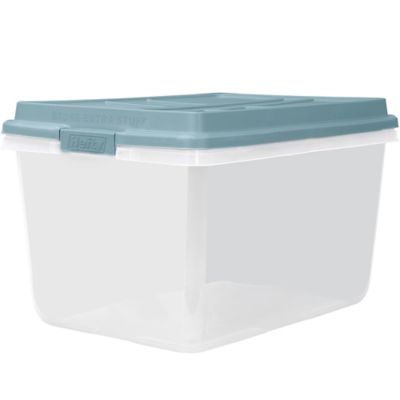
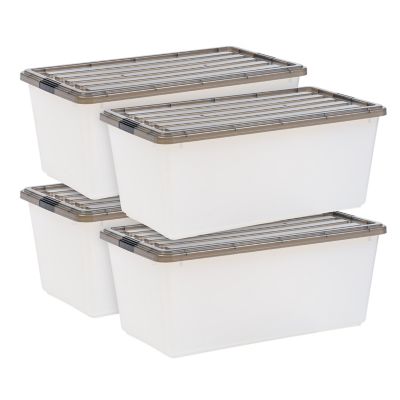
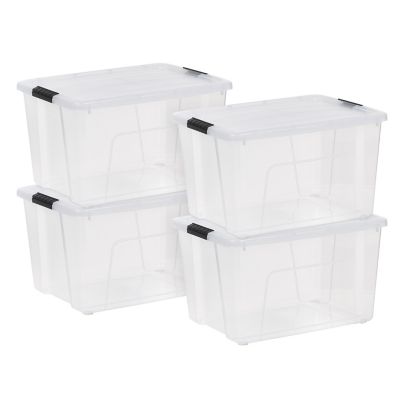
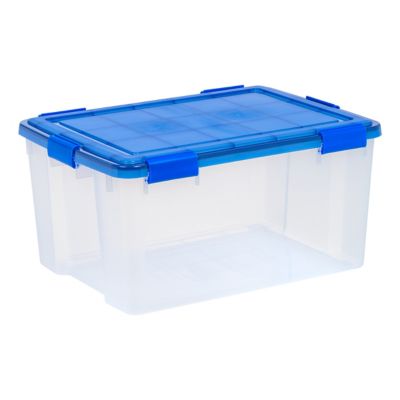
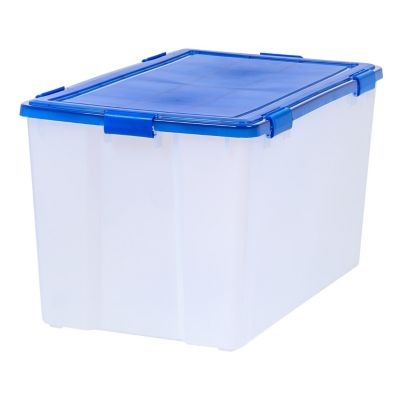
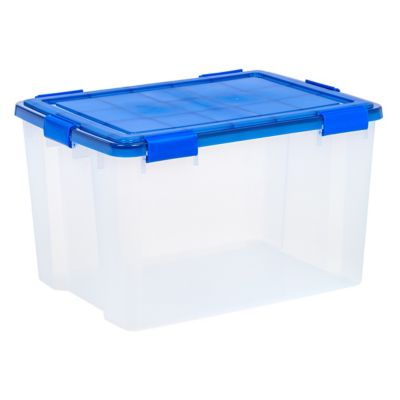
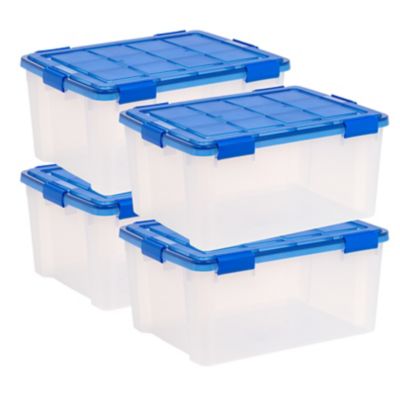
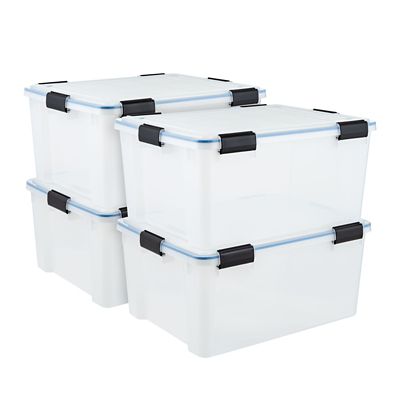
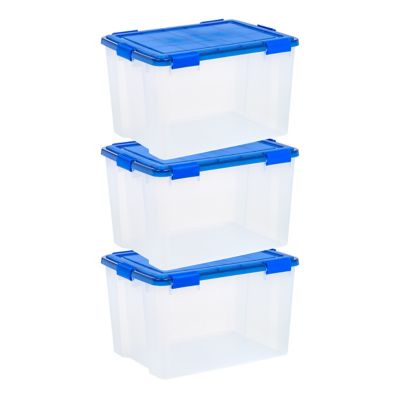
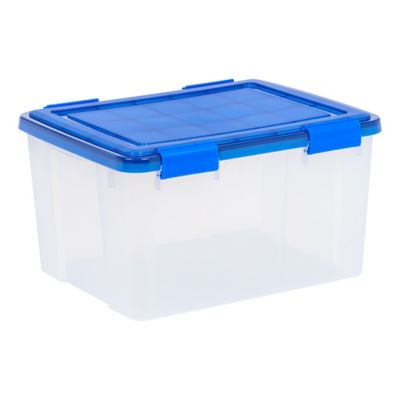
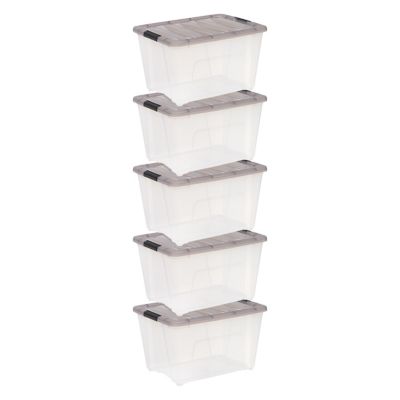
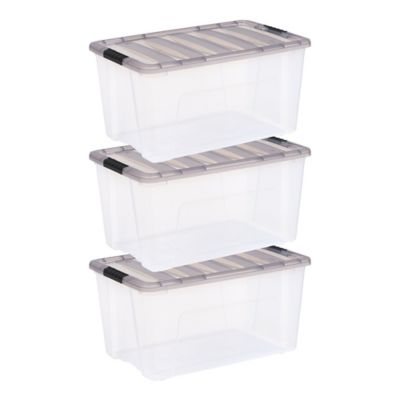
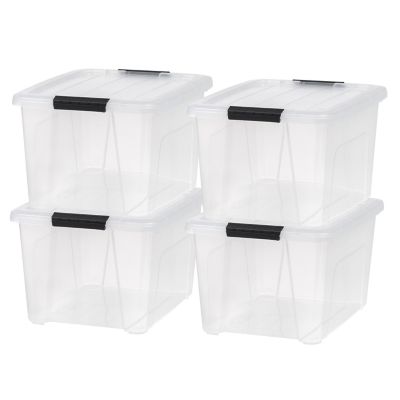
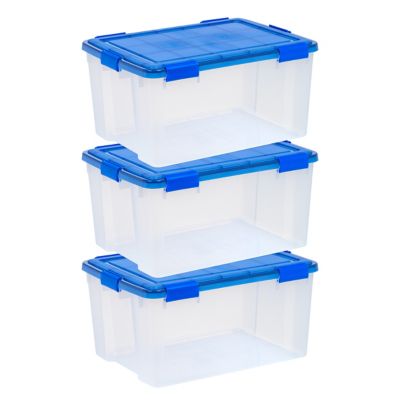
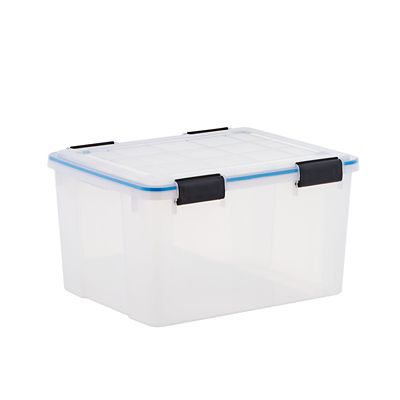
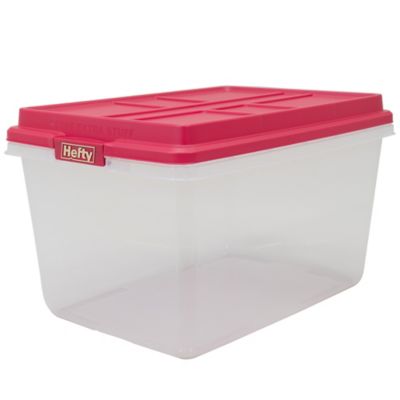
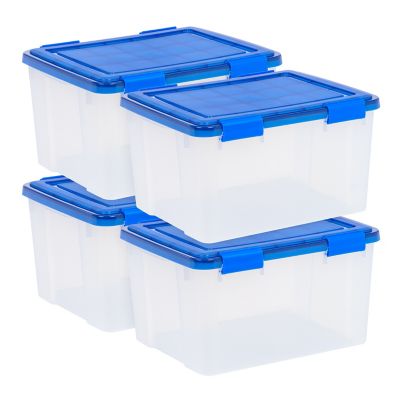
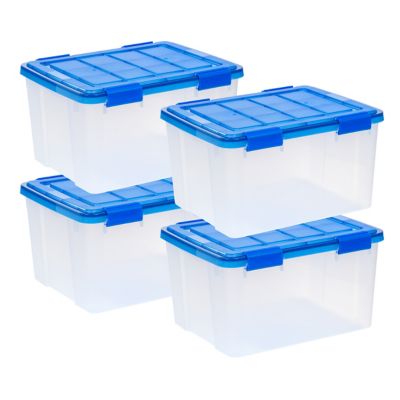
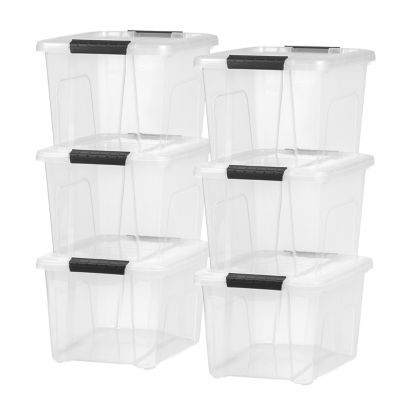
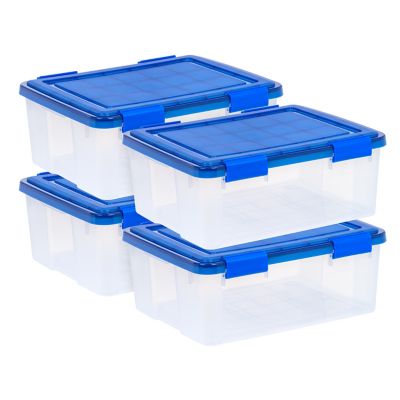
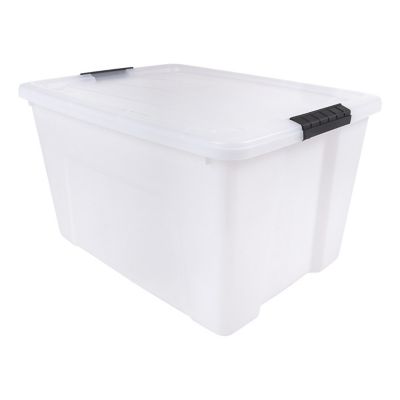
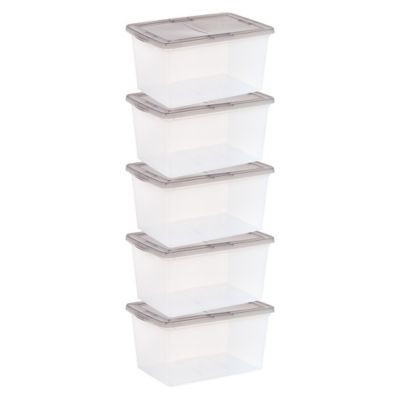
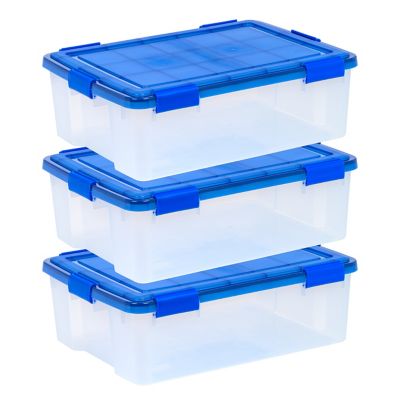
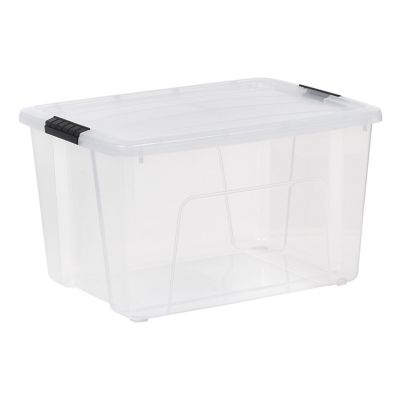
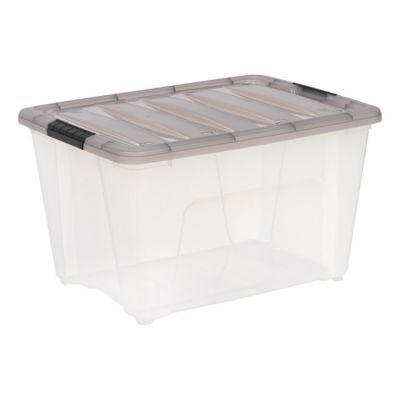
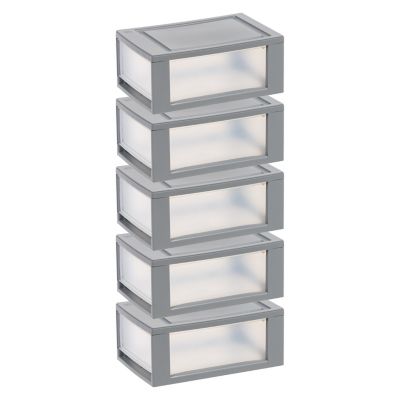
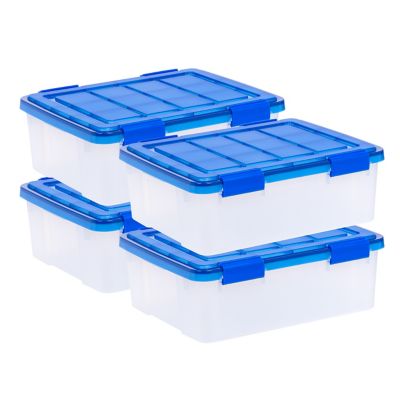
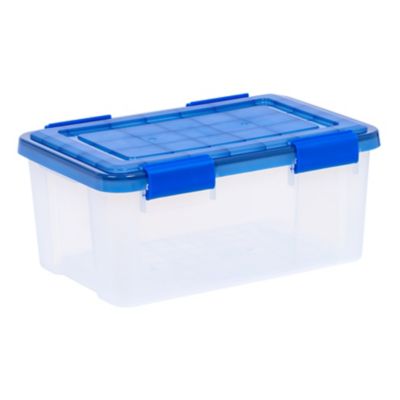
Extra large clear storage bins bring roomy storage and an easy view of what’s inside to closets, laundry rooms, garages, and workspaces. Their see-through walls help keep everyday belongings from turning into a guessing game: folded blankets stay in sight, a missing baseball glove is easier to spot, and the box holding spare towels doesn’t have to be opened just to check its contents. These containers generally pair a large plastic body with an open top or a fitted lid, though closure styles, handles, and shapes vary. Clear storage bins with lids are handy for keeping dust off stored belongings, while open-top designs make sense for supplies that come out several times a day. For households with plenty to put away, a generous interior can hold bedding, pillows, fabric, toys, or sports gear together instead of spreading them across several smaller containers. Around a farm office or workshop, clear bins can give lightweight supplies and spare workwear a place of their own. A tote holding clean shop towels, gloves, and knee pads can sit on a shelf where everything is easy to recognize before the next chore. Families, renters, small-business owners, and folks managing shared storage spaces all benefit from being able to see what belongs where. Transparency is especially helpful when several people reach for the same supplies, since putting things back takes less guesswork. Large clear plastic storage containers also make it easier to notice when a bin has room left or when its contents need sorting. They work best when each container has a sensible purpose rather than becoming a catchall for everything that needs to leave the kitchen table. Keeping bedding separate from craft supplies, for instance, helps preserve that at-a-glance benefit. A simple label on the end facing the aisle adds another point of reference, particularly when folded fabric or stacked boxes hide what sits farther inside.
Size matters beyond the number printed on a capacity label. Extra large is a general description, not a single set of dimensions, and capacity may be listed in quarts, gallons, or liters. Two containers with similar capacity can have very different footprints: one may be long and low, while another is tall enough for upright storage. The outside length, width, and height determine whether a bin fits on a utility shelf, beneath a workbench, or through a closet opening. Interior measurements tell a different part of the story, especially when the walls taper toward the bottom or the lid extends into the storage space. A stack of folded quilts needs a different shape than a collection of tall supply packages. Latches, handles, and wheels can add to the outside dimensions, so a shelf opening that looks generous may still be a tight fit. There also needs to be enough clearance to lift the lid or slide the container out without scraping knuckles against the shelf above it. Many clear storage totes are made from polypropylene or other rigid plastics, with wall thickness, flexibility, and clarity varying by design. Some have a crisp, transparent appearance; others are translucent enough to show shapes and colors without revealing every detail. Reinforced rims and supported bases can help a container hold its shape, but material alone does not establish a carrying or stacking limit. Molded grips and latching handles deserve attention, too, because a large container full of linens handles very differently from one packed with tools. Snap-on lids offer a straightforward closure, while latch-style lids fasten at designated points along the rim. Neither style automatically means the bin is airtight or watertight. Gasketed closures may offer additional protection when the manufacturer specifies it. Likewise, food-contact suitability and BPA-free claims should come from the container’s labeling rather than assumptions about clear plastic. For pantry storage, keeping groceries in their original sealed packages helps preserve package directions and separates the food from a container that may not be intended for direct contact.
A good storage setup leaves belongings easy to reach without making every trip to the shelf a lifting job. Extra large clear bins are often a practical match for roomy but relatively light contents, such as bedding, yarn, or soft toys. Dense loads can become difficult to carry well before a large tote looks full, so weight limits and comfortable handling matter as much as space. Containers with wheels can help move loads across suitable surfaces, although thresholds, gravel, and uneven floors may limit how smoothly they roll. Stackable clear storage bins can make better use of vertical space when their lids and bases are designed to fit together. Matching footprints, fully seated lids, and a level supporting surface help keep a stack steady; the manufacturer’s stacking guidance still takes priority. Heavier containers belong lower down, with frequently needed supplies within easy reach. For heavier loads or a more demanding workspace,
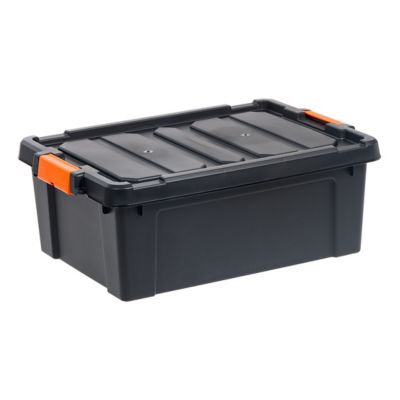
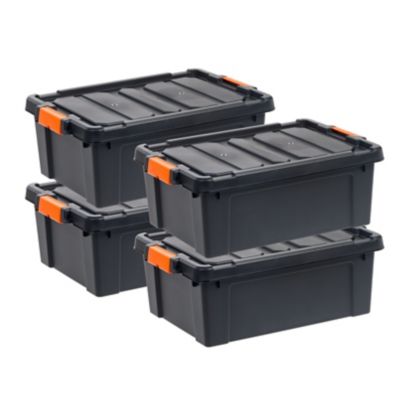
Heavy Duty Storage Bins are another storage category worth considering alongside the visibility of clear containers. Everyday care is usually straightforward, though the manufacturer’s cleaning directions should govern. Mild soap, water, and a soft cloth can remove ordinary dirt without the scratching that abrasive pads may leave behind. Both the bin and its contents should be completely dry before the lid goes on, particularly when storing fabric or paper. Clear walls are helpful for spotting spills, debris, or a cracked corner during a quick check. A damaged handle, split base, or lid that no longer closes properly can affect how safely the container carries or stacks. Household storage bins should not be assumed suitable for fuels, pesticides, or other hazardous materials; those need containers and storage arrangements appropriate to their labels. With the right shape, closure, and load for the job, a large clear bin can turn an overfilled closet or cluttered shelf into a place where belongings have a home—and where finding the next thing doesn’t mean emptying everything else.