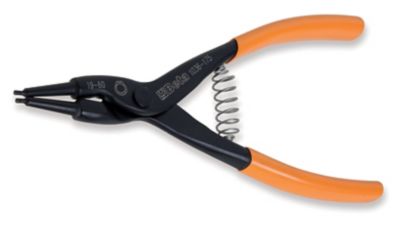
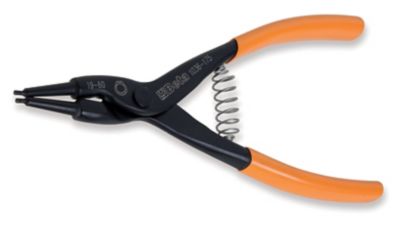
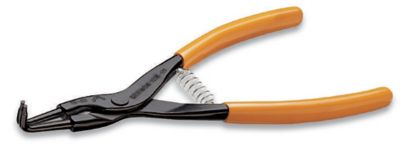
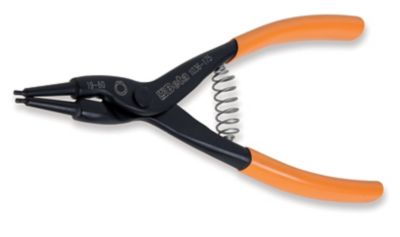
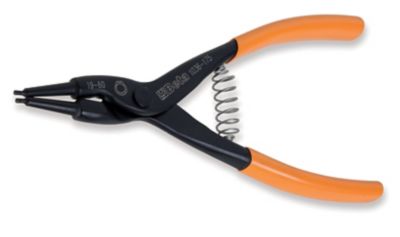
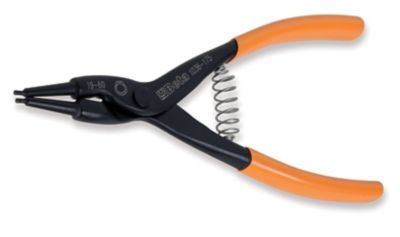
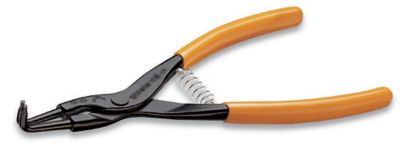
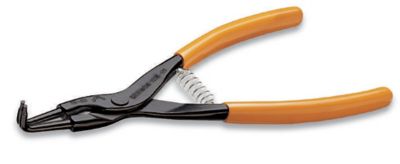
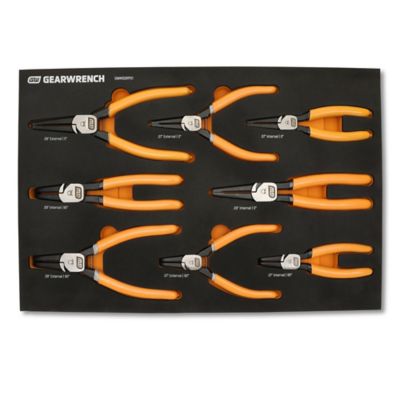
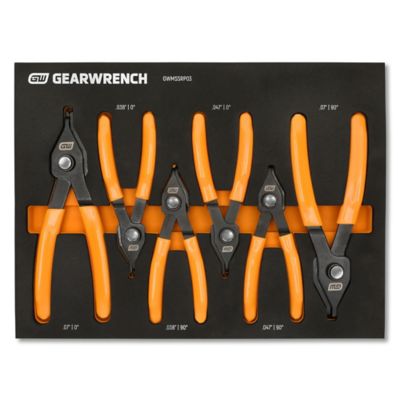
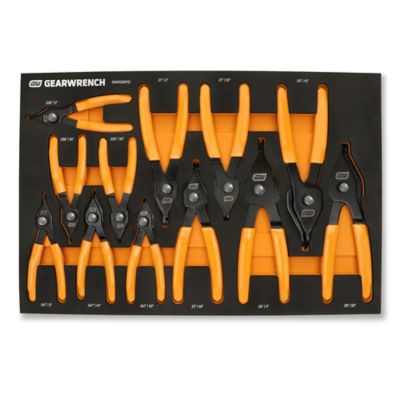
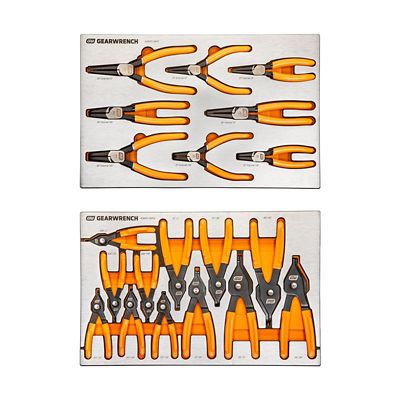
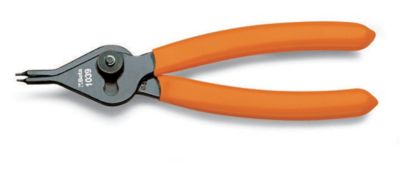
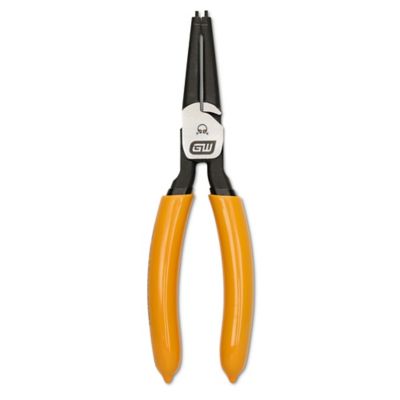
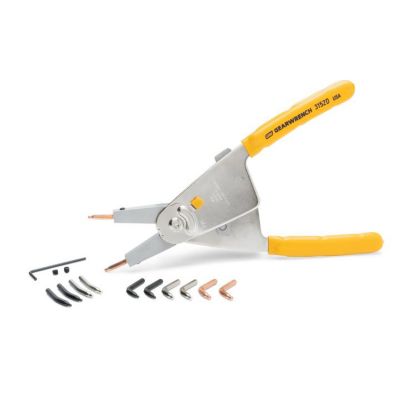
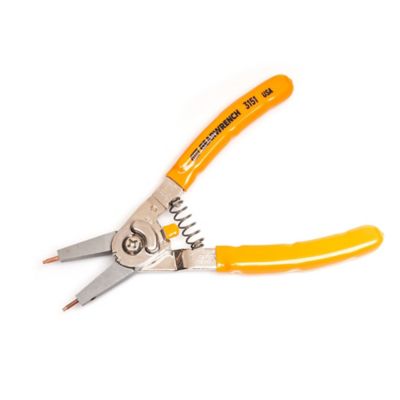
External snap ring pliers spread their tips outward when the handles are squeezed, opening an external retaining ring so it can move over a shaft during installation or removal. These rings sit in grooves on the outside of shafts and help keep bearings, gears, pulleys, and other parts from sliding out of position. That makes the pliers a practical tool for farm equipment repairs, automotive work, small-engine service, and plenty of jobs around the shop. A retaining ring may be small, but getting a firm hold on it matters when a mower spindle or gearbox is apart on the bench. External snap ring pliers are different from internal snap ring pliers, which squeeze a ring inward for work inside a bore or housing. The right action depends on where the ring sits, not simply how it looks. For external rings with holes at their ends, the plier tips fit into those holes and apply controlled spreading pressure. Other retaining-ring styles, including many spiral rings and E-clips, call for different tools. Access is another big part of the fit. Straight tips suit rings that face the operator with a clear path to the shaft. Angled tips can put the handles in a better position when a bracket, housing edge, or nearby component blocks that path. A 45-degree bend offers an in-between approach, while
90-degree snap ring pliers can help reach a ring from the side when straight tips leave little room for the handles. The bend alone does not determine whether a pair will work; tip length, jaw reach, and the space needed to squeeze the handles also matter. On a crowded assembly, a good fit leaves enough room to control the ring without scraping against a seal or leaning the tool against a neighboring part. That kind of access can make a fiddly repair feel a lot less like a fight.
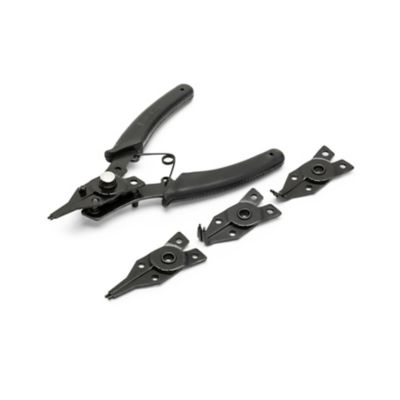
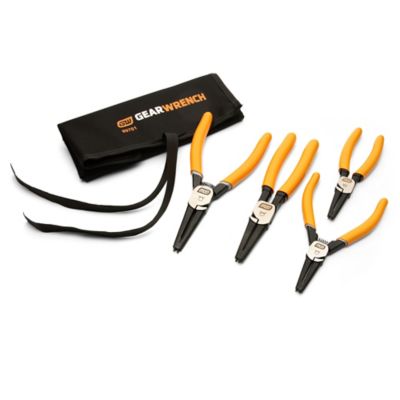
Size and construction deserve as much attention as tip angle. External snap ring pliers have working ranges, and the correct range should match the retaining ring and shaft dimensions specified for the repair. Overall plier length is not a substitute for that rating. A longer pair may provide more leverage, but it can still have tips that are too large for the holes in a small ring. Tips that are too small may sit loosely and slip under tension, while tips that are too large may not seat fully. Tip diameter, spreading capacity, and the manufacturer's stated external-ring range provide a better picture of fit than appearance alone. This is especially important when moving between small equipment and larger machinery, where rings can differ considerably in thickness and spring tension. Forged alloy steel, including chrome vanadium steel in some designs, can provide strength in the body, while heat treatment helps the working tips resist bending and wear. Construction varies, so the steel type is only one part of the picture. Jaw alignment, pivot movement, and how securely the tips hold the ring also affect performance. Fixed-tip pliers keep the working ends integral to the tool or permanently attached, with fewer connections to check. Interchangeable-tip designs offer flexibility across tip sizes and angles, though their attachments need to remain secure. Convertible retaining-ring pliers can switch between internal and external action; their operating mode and ratings need to match the job. Handle shape matters during longer bench sessions, too. A comfortable grip and a manageable handle span help maintain control, particularly when hands are tired or gloves are part of the work. Extra leverage is useful for a stiff ring, but it should not come at the expense of control. The goal is enough spread to clear the shaft, not an opening that stretches the ring beyond its intended shape.
External retaining rings hold spring tension, so secure tip engagement and eye protection belong with any work involving them. A ring that slips free can travel farther than expected, and a bent or worn tip can make that loss of grip more likely. Straight, evenly matched tips and a pivot that moves smoothly help keep the pressure balanced. Pliers are meant to spread the ring, not pry a bearing off a shaft or force apart a seized assembly. Those extra loads can bend the tips, loosen attachments, or damage the ring groove. A retaining ring that has taken a permanent set, cracked, or lost its spring action may no longer seat properly, even if it looks close to its original shape. Replacement should follow the equipment manufacturer's specifications, since the ring's dimensions and material are part of the assembly's design. Keeping the pliers in good working shape is straightforward: wiping away grease and grit keeps buildup out of the pivot and tip connections, and drying the tool after cleaning helps limit rust. Lubrication at the pivot should follow the tool maker's recommendations, without leaving the grips slick or packing the working ends with residue. Solvents and other shop chemicals can affect some grip materials, so suitable cleaning products matter. Storage that protects the narrow tips from heavy tools helps prevent bends and keeps the pair ready for the next repair. For someone maintaining tractors, trailers, shop machinery, or recreational equipment, external snap ring pliers earn their place alongside sockets and wrenches by handling a fastening job those tools cannot do well. A pair matched to familiar equipment can also make a practical gift for a mechanic or a neighbor who spends evenings fixing things in the shop. Whether the work happens at a service bench or beside a piece of equipment, suitable reach, properly sized tips, and smooth jaw action are what help these pliers handle small rings with steady control.