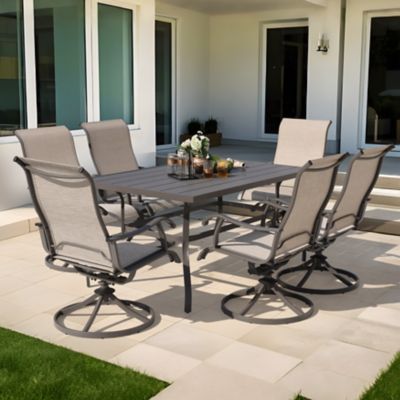
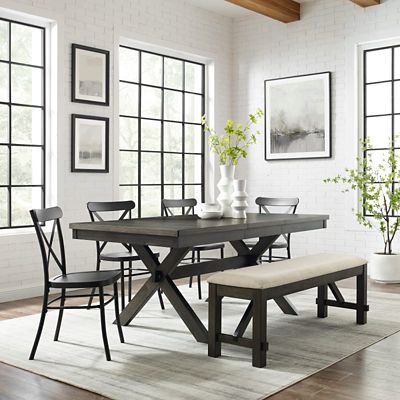
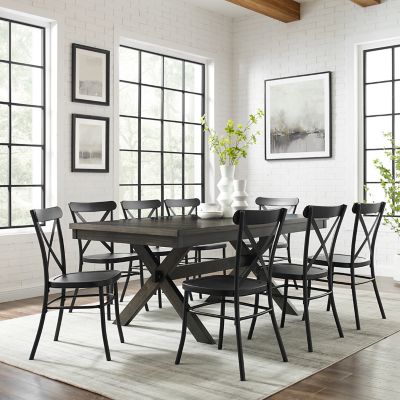
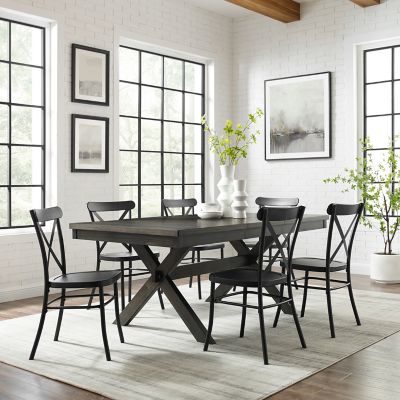
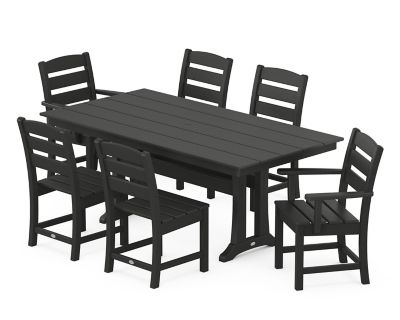
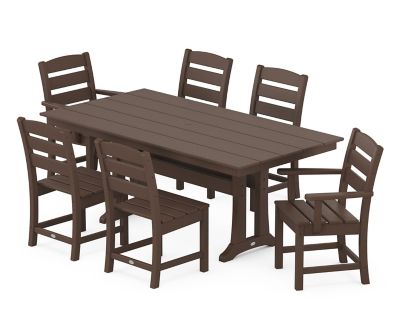
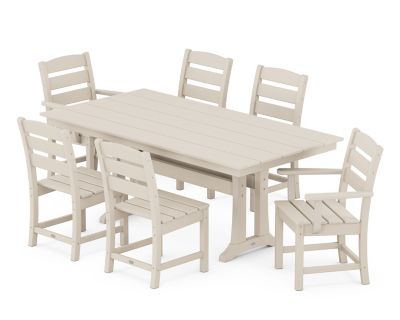
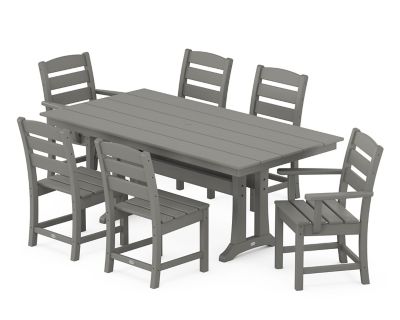
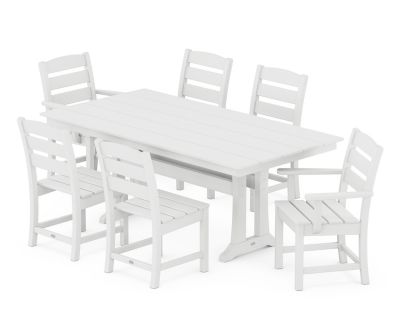
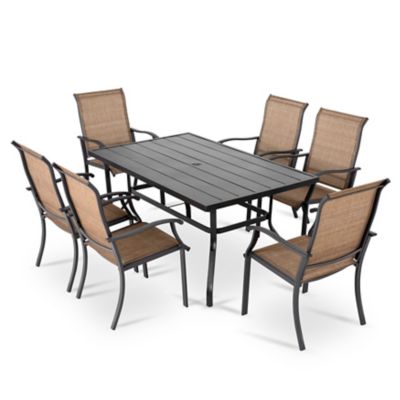
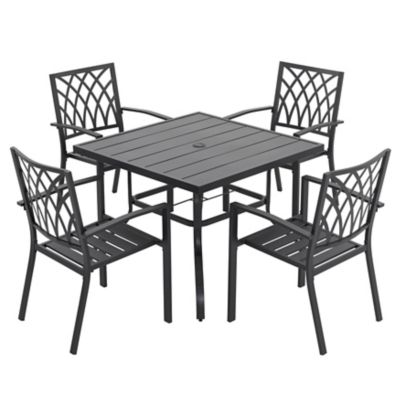
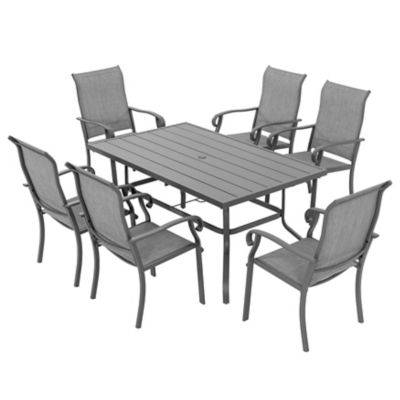
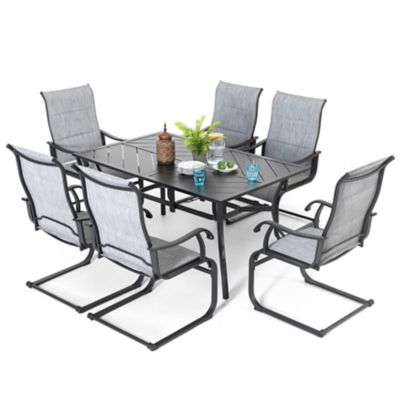
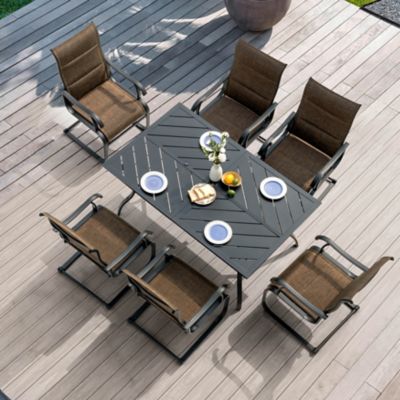
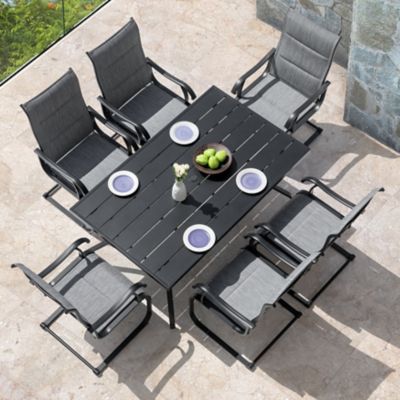
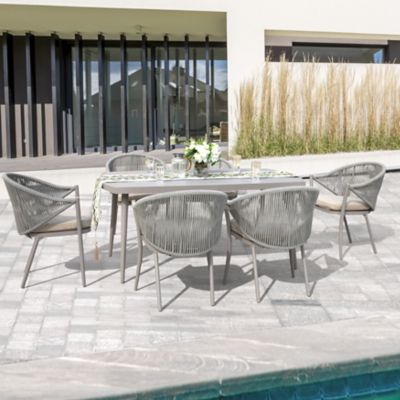
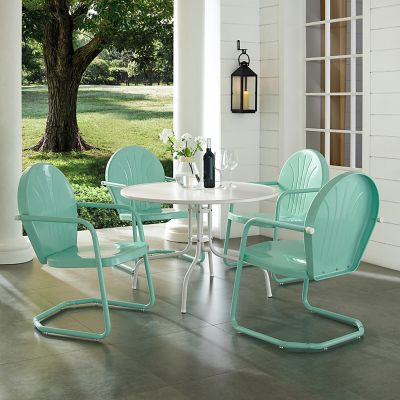
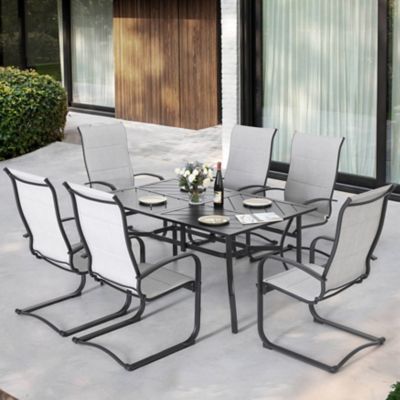
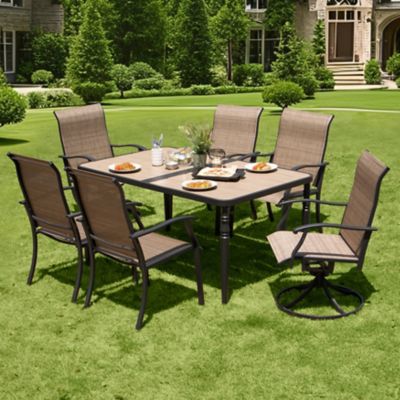
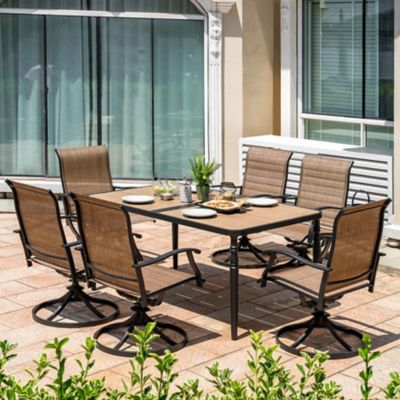
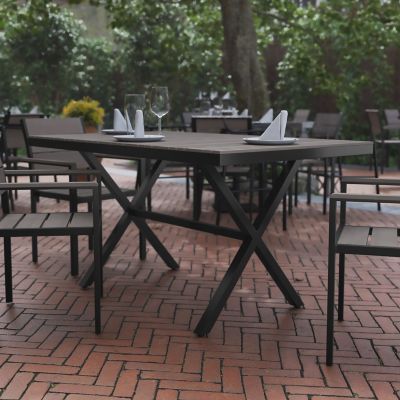
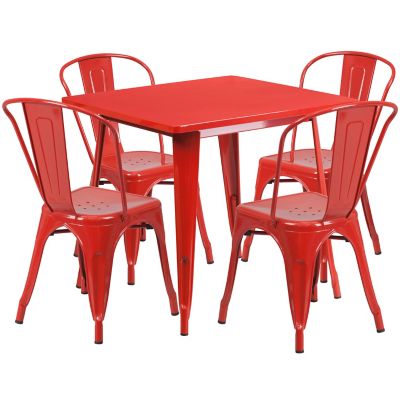
Extendable outdoor dining sets make it easier to keep everyday meals comfortable without giving up room for a crowd. With the table folded down, a family can enjoy breakfast, supper, or a quiet cup of coffee without filling the whole patio. When company arrives, the tabletop expands to create space for extra plates, serving bowls, drinks, and elbows. Depending on the design, an extendable outdoor dining table may seat four to six people in its compact position and eight to 12 or more when fully opened. That flexible sizing works well for rural homes with wide porches, back patios, pool areas, and garden spaces, as well as smaller decks where every square foot matters. It also makes these sets a thoughtful housewarming or wedding gift for someone who enjoys hosting but does not want a table that takes up all the available outdoor space every day. Before choosing a set, measure the area with the chairs pulled out from the table, then leave enough walking room for guests to move around comfortably. A table that fits on paper can feel crowded once people are seated, especially near railings, outdoor kitchens, fire pits, or sliding doors. Think about your regular household size, too. A four-person daily setup that expands for larger gatherings often offers a better balance than a permanently oversized table. For a broader look at patio dining options built to handle changing conditions, browse
All Weather Outdoor Dining Sets.
The extension style affects how easily the table changes from compact to full size. A butterfly leaf folds in the middle and stores beneath the tabletop, so the extra panel stays with the table and is ready when needed. Drop-in panels are separate pieces that sit in the center of the table and may be stored in a nearby shed, garage, or storage bench when they are not in use. Telescopic slide systems allow the outer sections to pull apart on guided tracks while the center extensions move into place, giving the table a smooth, finished look when closed or expanded. Each style has practical advantages. Self-storing leaves help prevent misplaced parts and are convenient when one person is setting up for dinner, while separate panels may offer a sturdy, straightforward design for households that have a dry place to store them. Look for a mechanism that opens evenly, locks securely, and does not require excessive force. Run your hand along the tabletop when it is extended to check that the sections meet with minimal gaps or raised edges. A solid center support can help keep the extended surface steady, especially when it is holding a full meal. Materials also shape the look, weight, upkeep, and long-term performance of an outdoor dining set. Aluminum frames are lightweight, easy to move, and naturally resistant to rust, making them a handy choice when furniture needs to be shifted for mowing, cleaning, or storm preparation. Powder-coated finishes add color and help protect the metal from the elements, though scratches should be touched up before moisture has a chance to reach the surface. Wood and teak bring a warm, familiar look that blends naturally with porches, barns, gardens, and wooded yards. Teak is valued for its durability and natural oils, but it can gradually weather to a silvery gray; periodic cleaning, a suitable outdoor finish, or a protective cover can help maintain the original color. Composite and other synthetic materials offer a low-fuss option with a clean appearance, while concrete-style tabletops provide a substantial, modern feel but can be difficult to move once they are in place. Consider the ground beneath the set as well. Heavy tables stay put in breezy areas, while lighter tables are easier to rearrange but may need a sheltered location or anchoring plan during rough weather.
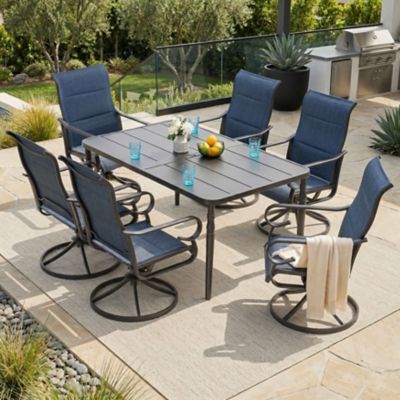
Comfort matters just as much as table size, since a good outdoor meal often stretches into an afternoon of conversation. Check the chair height against the tabletop and look for enough room between the legs for guests to sit without bumping knees. Wide seats, supportive backs, armrests, and breathable sling materials can make a difference during long dinners, while cushions add softness and color but need a plan for storage when rain rolls in. If children, older relatives, or guests with limited mobility will use the set, stable chairs with easy-to-grip arms and a generous path around the table are helpful details. During warmer stretches, use the set for grilled suppers, lemonade on the porch, birthday gatherings, or a simple family meal served under the evening sky. As temperatures cool, the same table can anchor a covered patio dinner with warm drinks, hearty food, and a few extra layers nearby. Keep the table clean with the care recommended for its material, wipe up standing water and spills, and use an outdoor cover when the set will sit unused for extended periods. In areas with strong wind, secure or store cushions and move lightweight pieces to a protected spot before bad weather. Some households leave their dining set in place through much of the year, while others bring it into a shed or garage during the coldest or wettest conditions. Choosing an extendable outdoor dining set with the right footprint, seating range, material, and opening style gives you a dependable place for ordinary meals and those pleasantly crowded gatherings where somebody brings another dish and pulls up one more chair.