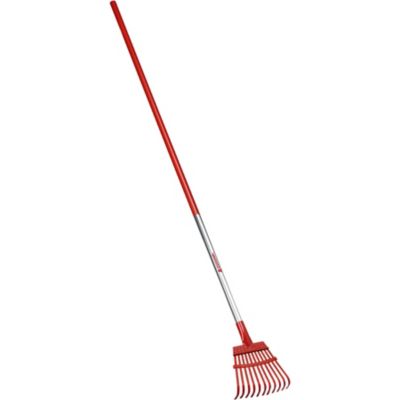
Ergonomic rakes for comfortable yard work put the focus on how a tool feels in your hands and how naturally it moves across the ground. A rake that suits your height, reach, and workload can make a difference when you’re gathering leaves along a fence line or tidying the ground around a garden bed. Features such as adjustable handles, cushioned grips, and balanced head designs can help limit unnecessary bending, reaching, and tight gripping. They don’t take all the effort out of yard work, but they can make repeated pulling motions feel more manageable. Handle length is a good place to start: a handle that’s too short encourages stooping, while one that’s too long can feel awkward close to your feet or between shrubs. Telescoping designs offer flexibility for households where more than one person handles the yard chores, provided the locking mechanism holds firmly at the chosen length. Fixed-length handles keep things simple and may suit someone who already knows which length feels right. Grip shape matters, too. A slightly contoured or cushioned surface can spread pressure across the palm, while a nonslip texture can make the handle easier to control without squeezing hard. Grip thickness should leave enough room for your fingers to wrap comfortably around the handle, including when wearing work gloves. Some designs provide a second gripping area farther down the shaft, giving the lower hand a comfortable place to settle during a pull. The balance between the handle and head matters just as much as total weight; a light rake with a head that feels heavy can still take effort to lift and reposition. For homeowners, gardeners, and folks keeping up a larger property, a well-fitting rake supports a more upright working position without forcing an unnatural reach. Comfort comes from the whole tool working together, rather than one padded spot on the handle.
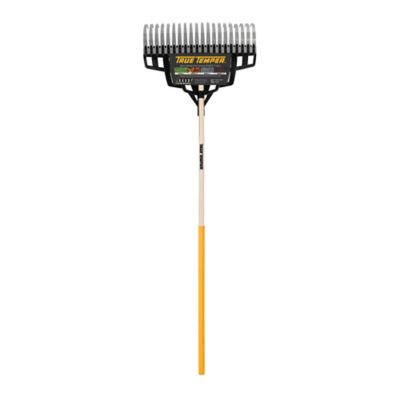
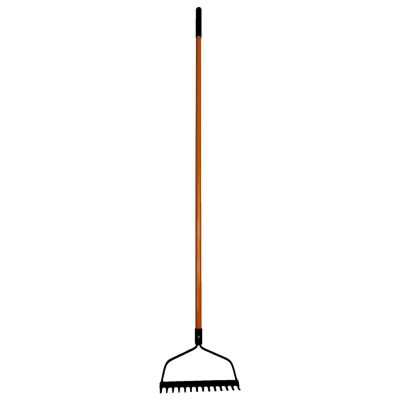
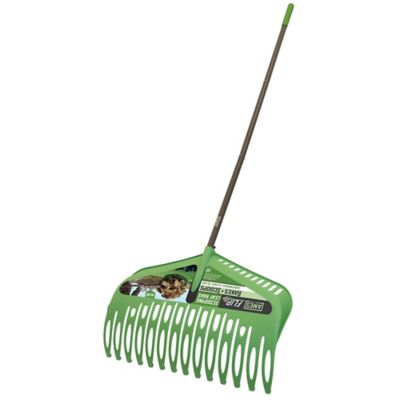
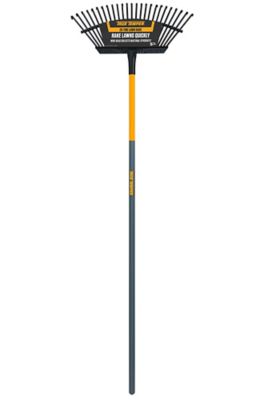
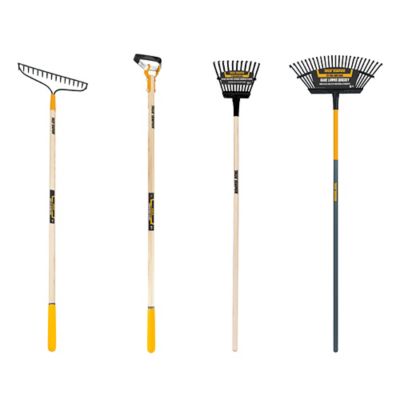
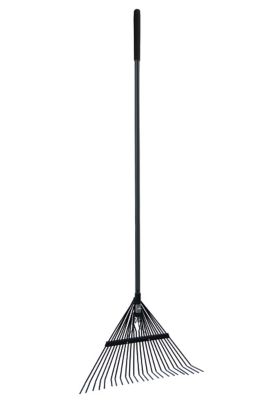
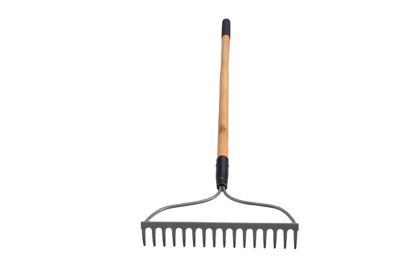
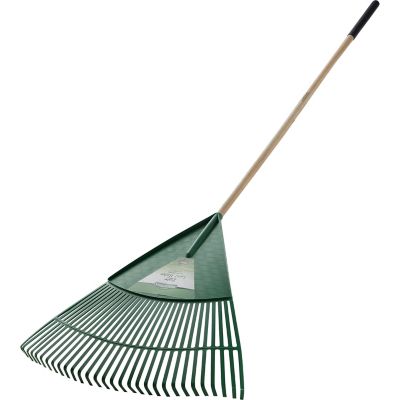
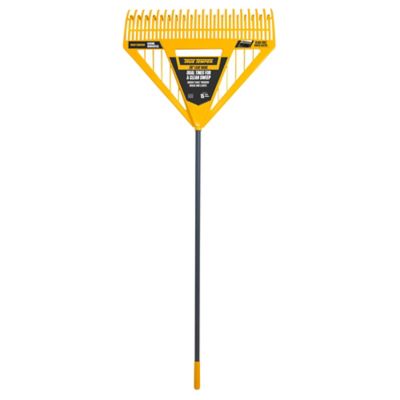
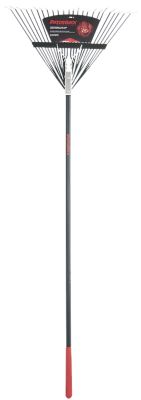
The rake head determines what kind of work that comfortable handle can help you tackle. Flexible fan-shaped heads are suited to gathering loose leaves, grass clippings, and light yard debris without digging deeply into the ground. Plastic tines generally keep weight down and offer some give, while springy metal tines can work through scattered debris with a different feel against the lawn. Neither material is right for every surface or every load. Tine spacing affects what gets gathered: closer spacing catches finer material, while wider spacing lets more small particles pass through. A broad head covers open lawn with fewer passes, but it also gathers a larger load with each pull. A narrower head can be easier to steer around shrubs, along edging, or between closely planted beds. Adjustable-width heads offer another way to balance coverage and access, though the adjustment should stay secure during work. Shorter, smaller rakes can be handy around raised beds and tight corners where a full-length tool gets in the way. For spreading soil, drawing mulch into place, or leveling loose gravel, a rigid bow-rake head generally makes more sense than a flexible leaf rake. Those heavier jobs place different demands on the head, handle, and connection between them, so a soft grip alone doesn’t make a light-duty rake suitable for moving dense material. Ergonomic designs fit within the broader family of
Yard Rakes For Outdoor Maintenance, with working width, tine shape, and handle construction helping distinguish one task from another. Picture a narrow strip beside the barn compared with an open stretch of lawn: the first calls for control around obstacles, while the second may favor wider coverage. Matching the head to the job helps keep each pull reasonable, rather than making your hands and shoulders compensate for a rake that’s doing work outside its intended purpose.
Handle materials also affect weight, feel, upkeep, and how a rake holds up to repeated chores. Aluminum handles tend to be light and resist rust, making them worth considering when frequent lifting and repositioning are part of the job. Fiberglass handles resist rot, though their weight and balance vary by construction. Wood offers a familiar feel and can be comfortable in the hands when its surface stays smooth, but it needs attention if the finish wears or splinters develop. Steel can provide strength for demanding work, with added weight depending on the design. The connection between the head and shaft deserves attention because looseness there can make even a comfortable grip feel difficult to control. Adjustable sections, fasteners, and head attachments all benefit from occasional checks according to the maker’s directions. Simple care helps preserve smooth operation: removing soil and tangled grass from the tines, wiping down the handle, and letting the rake dry before storage keeps buildup from lingering around joints and metal surfaces. Telescoping sections work best when grit stays out of the locking parts, and cushioned grips should be cleaned with methods suited to their material rather than harsh solvents. Storage off the ground, with the head secured and tines out of walkways, protects the tool and keeps the shed easier to move through. Replaceable parts, where offered, may allow a worn grip or damaged component to be addressed without replacing the entire rake. For someone who spends plenty of time tending a yard, an ergonomic rake can also be a practical gift, especially when the recipient’s height, hand comfort, and usual chores are taken into account. Even a well-matched tool works best with manageable loads, shorter pulls, and breaks during longer sessions. The goal is a rake that feels steady and easy to steer, whether the job is a quick pass beside the porch or a longer cleanup around the property.