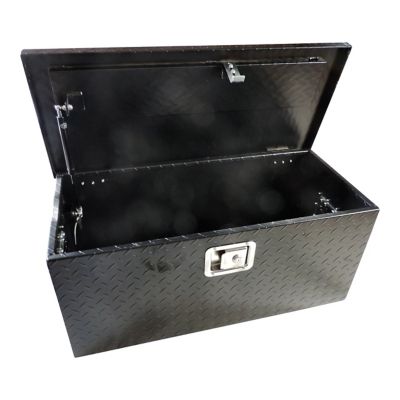
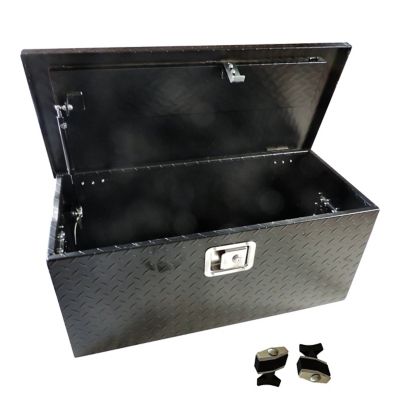
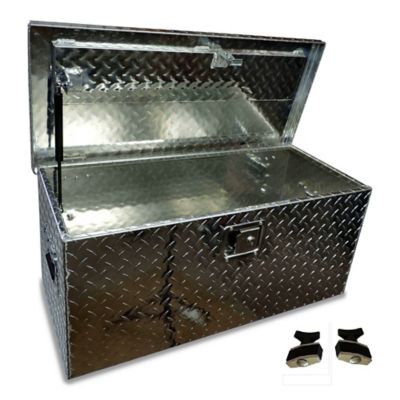
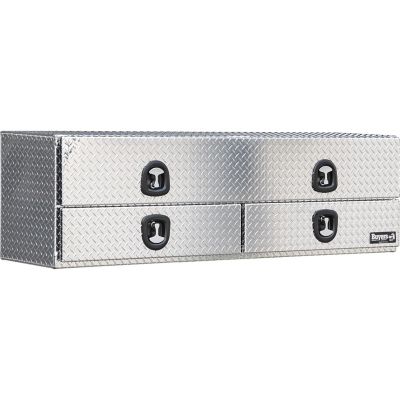
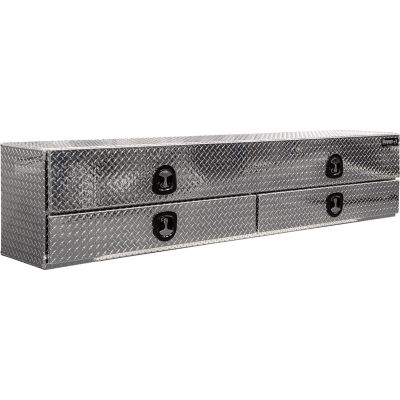
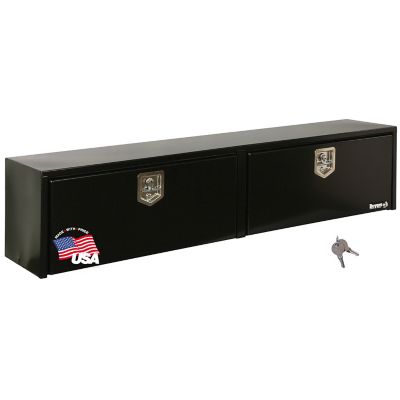
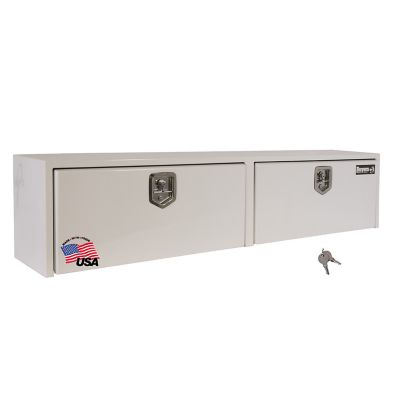
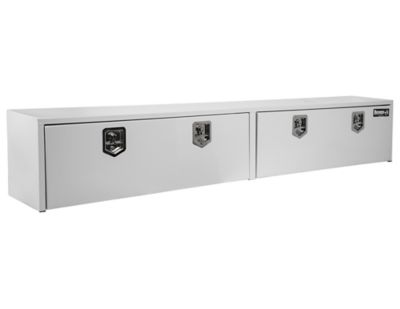
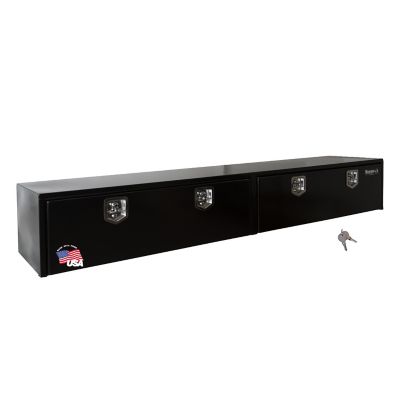
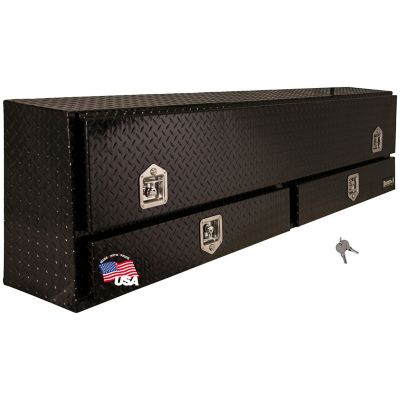
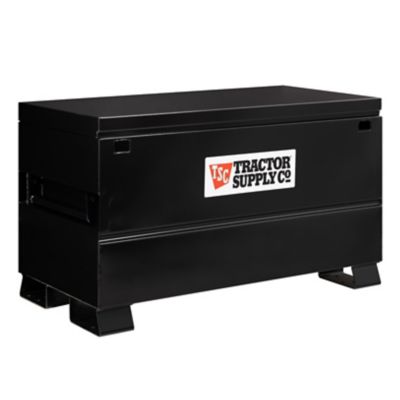
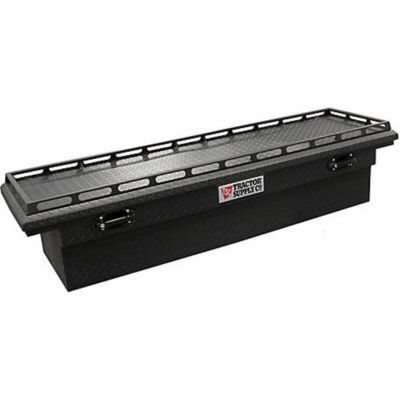
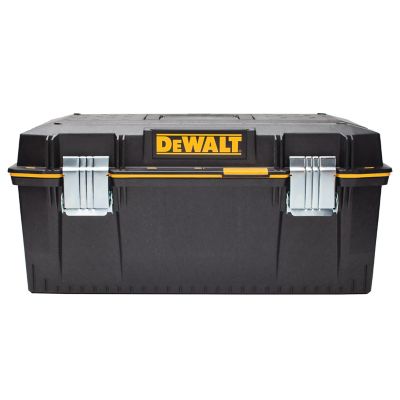
Diamond plate storage boxes are metal containers with a raised diamond-pattern surface, designed to hold tools, hardware, and work gear in truck beds, on trailers, and around the shop. Aluminum and steel are common materials, with differences in weight, finish, and care that matter when a box becomes part of an everyday work setup. Aluminum keeps the box itself lighter and resists rust, leaving more of a vehicle’s carrying capacity for the contents. Steel generally adds weight and needs a protective finish to help keep exposed metal from corroding. Neither material tells the whole story on its own: metal thickness, reinforced edges, hinge construction, and the way the lid meets the body all affect how a box holds up to regular loading and travel. The diamond pattern gives the surface its familiar work-ready look, but the pattern alone does not establish load capacity or resistance to dents. A box holding a few straps and gloves faces different demands than one carrying heavy repair tools down a gravel lane every day. For farmers, fencing crews, contractors, and folks who handle their own equipment repairs, enclosed storage gives loose gear a dedicated place instead of letting it spread across a truck bed or shop floor. A ranch truck might carry the supplies for a quick gate repair, while a trailer box can keep tie-down gear close to the equipment it serves. The right layout helps separate small parts from larger tools, keeps sharp edges from rubbing against other belongings, and makes it easier to spot an empty space where something belongs. Inside dimensions matter just as much as the overall footprint, especially when long-handled tools, bulky cases, or deep storage trays need room. That combination of material, construction, and usable space is what makes diamond plate storage boxes useful beyond their distinctive surface.
Fit starts with the space a box will occupy and the room needed to reach into it. Crossover configurations span the bed rails of a pickup, while chest-style boxes generally sit within the bed. Trailer tongue boxes fit a different space altogether, and underbody configurations depend on suitable clearance and mounting support beneath a truck or trailer. These arrangements serve different needs, so outside width alone is not enough to establish a good fit. Bed shape, wheel wells, rail height, mounting surfaces, and nearby equipment can all affect placement. A lid also needs clearance to open without striking a cab, rack, trailer component, or other obstruction. In a working pickup, the box should fit into the larger hauling plan rather than crowd out the cargo space needed for feed, fencing supplies, or equipment. A low-profile shape may help preserve sightlines, while a deeper body can provide more room for taller gear; the trade-off depends on the vehicle and the job. The opening deserves attention, too, since a large interior is less useful when a narrow access point makes heavier contents awkward to lift. Shallow trays and divided compartments can keep small hardware within reach, while open space below leaves room for larger tools. For longer boxes, access from more than one position may reduce the need to climb into a bed just to retrieve something at the far end. Mounting hardware and attachment points need to match the box, the supporting surface, and the manufacturer’s directions. The combined weight of the box and everything inside also counts toward applicable vehicle, trailer, and mounting limits. Secure attachment matters even on short trips between the barn and the back pasture. A storage box should stay firmly in place rather than slide around with each turn, and heavy contents should not be free to slam against the lid or sides.
Day-to-day convenience often comes down to the parts that get handled most: lids, hinges, handles, and latches. A lid that opens smoothly and stays supported makes loading less of a chore, particularly when one hand is already holding a tool case. Lift supports, lid restraints, seals, and locking mechanisms vary by design, so those features are worth checking rather than assuming every diamond plate box includes them. A close-fitting lid and an intact seal can help limit dust and moisture entering the storage area, but that does not make every box watertight. Likewise, a locking latch helps control access without making the contents theft-proof. Valuable gear may still call for added security or a different storage location when the vehicle is unattended. Shoppers comparing these boxes with other work-storage styles can also explore
Heavy Duty Toolboxes for broader storage needs. For everyday upkeep, the raised pattern benefits from cleaning that reaches into the small channels where dirt and grit collect. A soft brush, a nonabrasive cleaner suited to the metal or finish, and thorough drying help keep the surface tidy without unnecessary wear. Harsh chemicals or aggressive abrasives can damage some finishes, so care directions should match the box’s material. Hinges, latches, lid supports, seals, and mounting points also deserve occasional attention, especially on a box that travels regularly. Loose fasteners, worn seals, chipped coatings, or a latch that no longer closes cleanly are easier to address before they interfere with the workday. Keeping oily rags and leaking containers out of general tool storage helps protect both the box and its contents. For someone setting up a first work truck, taking on more acreage, or organizing a busy shop, a well-matched storage box can also make a practical gift. Its value comes from fitting the space, carrying the intended gear, and keeping everyday essentials easier to find when there is work waiting.