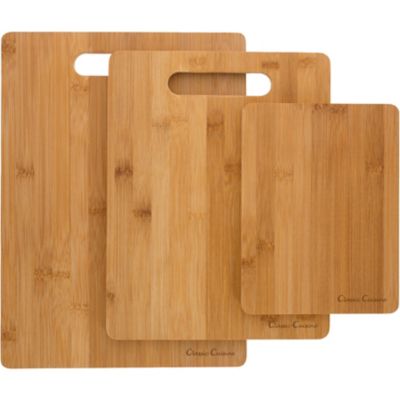
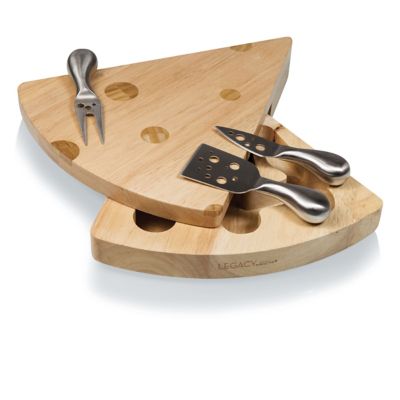
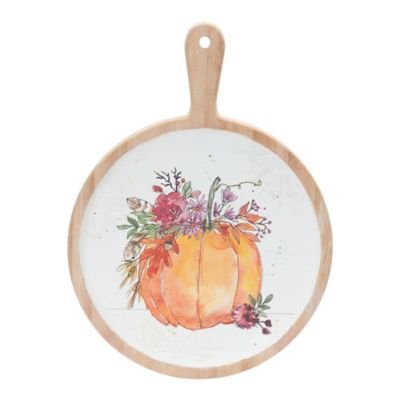
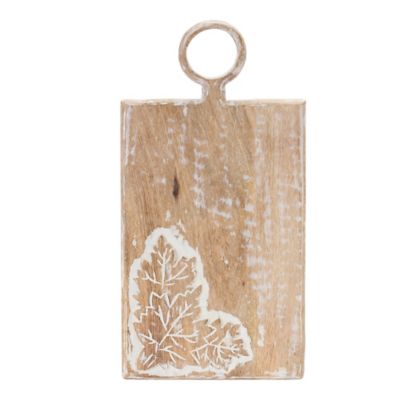
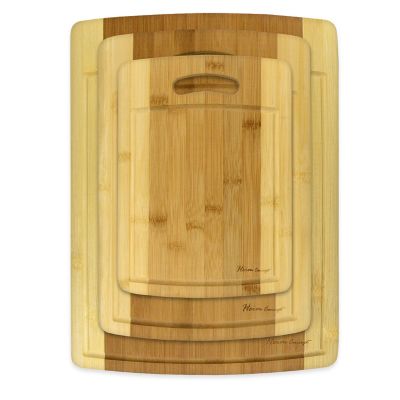
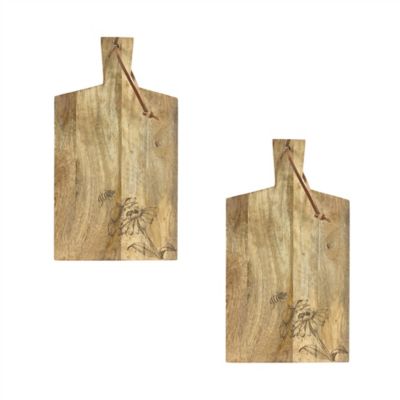
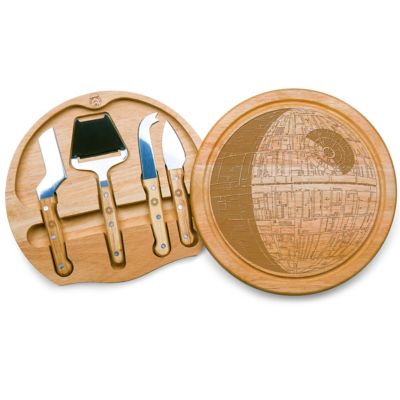
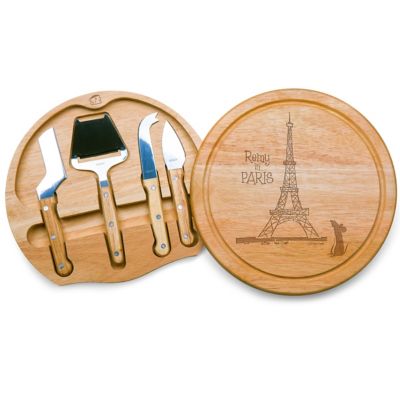
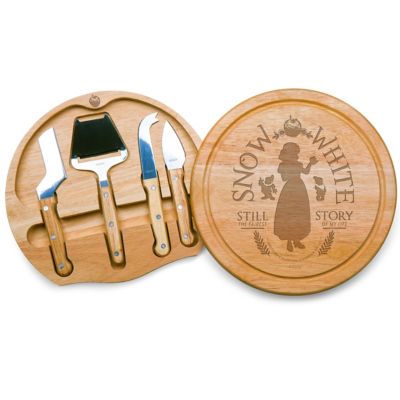
Cutting board sets combine two or more boards for chopping, slicing, carving, and other everyday kitchen prep. A set can bring together several sizes, matching boards, or separate surfaces for different foods, giving a busy kitchen more room to work without crowding everything onto one board. Common materials include wood, bamboo, plastic, and composites, each with a different feel under the knife and its own care requirements. Wood boards offer a substantial work surface for slicing bread, chopping onions, or carving a roast. Edge-grain construction shows the length of the wood fibers, while end-grain construction brings the cut ends of those fibers to the surface. Both need care suited to their construction and finish. Bamboo is a grass rather than a wood, and bamboo boards typically consist of pieces bonded together to form a firm cutting surface. Plastic boards come in rigid and flexible designs, with some suitable for dishwasher cleaning when their care instructions allow it. Composite boards vary in their ingredients, thickness, and cleaning requirements, so the material description alone does not tell the whole story. No single material suits every kitchen or every job. A cook who wants a substantial carving surface may favor a thicker wooden board, while someone handling several small prep tasks may appreciate lighter boards that are easy to move between the counter and sink. The knife matters, too: wood and plastic are generally easier on knife edges than glass or stone cutting surfaces. Construction, finish, and regular care all affect how a board holds up through repeated chopping and washing. A well-matched set balances working room with manageable weight, whether supper starts with a few sandwich fixings or a pile of potatoes beside a chef’s knife. Matching appearance can be a nice touch, but the real value of a set comes from having useful surfaces ready for different parts of the meal.
Size and shape make a big difference once food hits the board. A small cutting board gives a lemon, a handful of herbs, or a block of cheese enough space without taking over the counter. A medium board handles everyday vegetables and lunch prep, while a larger board leaves room around a roast or a loaf of crusty bread. That extra space helps keep sliced food from slipping over the edge, though a board still needs to fit the counter, sink, and storage spot. Thickness deserves a look alongside length and width: a thick board may feel steady during chopping but can be awkward to lift when it is full of food. Thin boards take less storage space, and flexible styles can bend to help funnel chopped vegetables into a pot. Handles and finger grooves can make lifting easier, especially when moving a board from a deep sink. Juice grooves provide a channel for liquid from carved meat or ripe tomatoes, but they also reduce the flat working area and add corners that need cleaning. A flat surface offers more uninterrupted room for chopping and gathering ingredients. Reversible boards can provide two working faces, while feet or raised grips may limit a board to one side. Nonslip edges and feet help reduce movement, but a stable, level counter remains important. For households preparing several foods at once, separate boards can help keep raw meat, poultry, and seafood apart from bread, fruit, and other ready-to-eat foods. Color differences or clear markings make those assignments easier to follow; they do not take the place of washing and sanitizing. A set also gives another cook a place to work, whether one person is trimming vegetables while another slices rolls or a young helper is learning knife skills with close supervision. Useful sizes and sensible features matter more than simply having the largest number of boards in the cabinet.
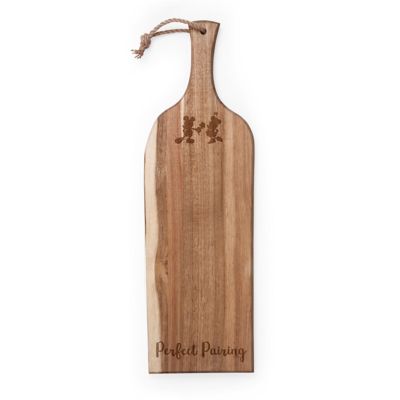
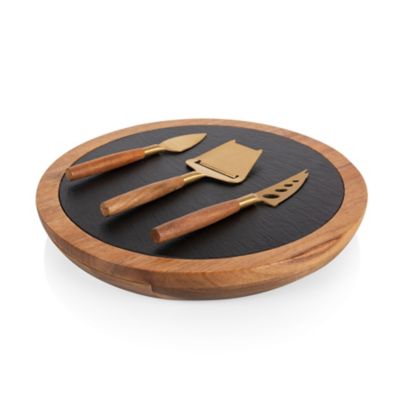
Care requirements are part of the everyday fit of cutting board sets, not just something to consider after the first meal. Boards need washing with hot, soapy water after food preparation, along with sanitizing when appropriate under the manufacturer’s directions and food-safety guidance. Dishwasher suitability depends on the individual board, including its material, adhesives, grips, and other components. Wood and bamboo generally call for hand washing rather than soaking or dishwasher cycles, followed by thorough drying. When the maker recommends conditioning, food-grade mineral oil or a board conditioner intended for food-contact surfaces can help keep the material from drying out; ordinary cooking oils may turn rancid and are not a substitute. Plastic boards also need attention as knife marks build up. Deep grooves, splits, loose layers, and damaged edges can create places that are difficult to clean, and boards with that kind of wear need replacement. Storage plays a role in upkeep as well. Airflow around clean boards helps them dry fully, while a crowded stack put away damp can trap moisture between surfaces. A rack, cabinet divider, or other storage arrangement should leave enough room to remove a board without wrestling the whole set out of the cupboard. Weight and grip are especially worth considering for anyone who finds heavy kitchen tools hard to handle. For a housewarming, wedding, or someone setting up a first kitchen, cutting board sets make a practical gift when their sizes and care needs suit the recipient’s routine. A person who cooks most meals at home may welcome several prep surfaces, while someone with a small sink and limited cabinet space may get more benefit from a compact set. Some boards can also carry sliced bread, cheese, or fruit to the table when their design and food-contact finish permit. For pieces intended mainly for presenting food,
Serving Boards offer a related option. Keeping prep needs, cleaning habits, and storage space in mind helps make a cutting board set a useful part of the kitchen day after day.