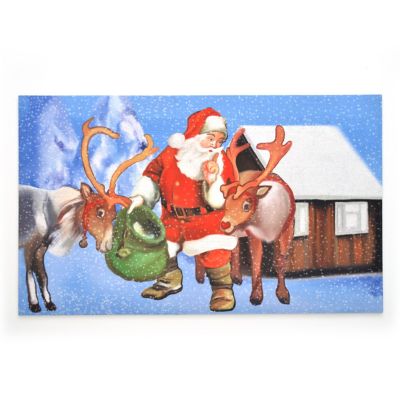
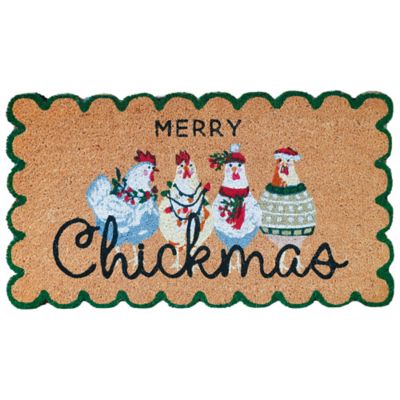
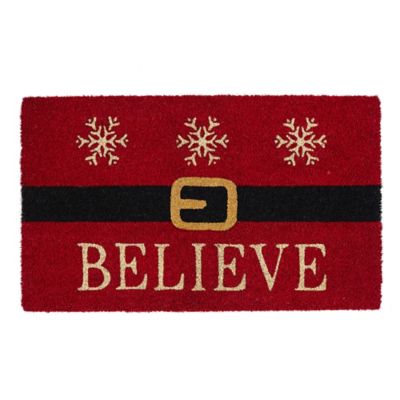
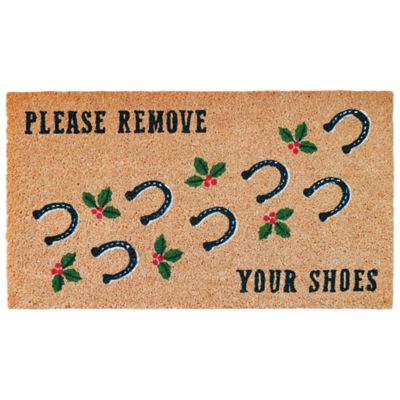
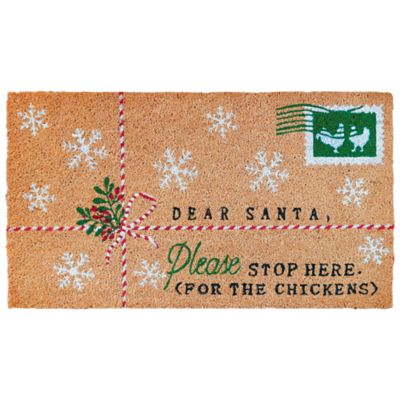
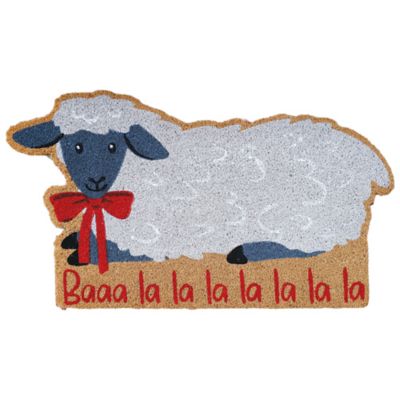
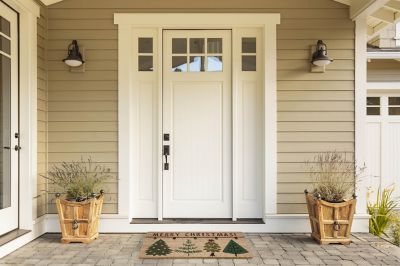
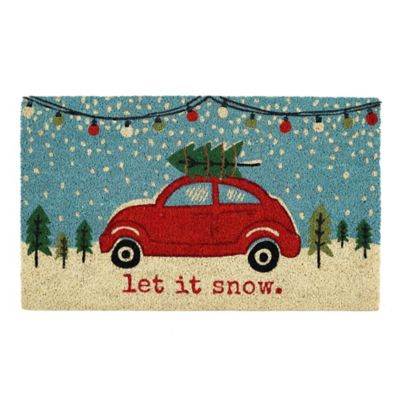
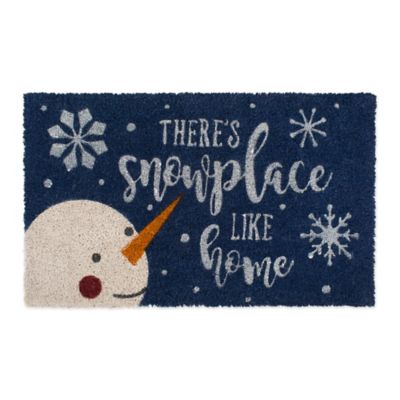
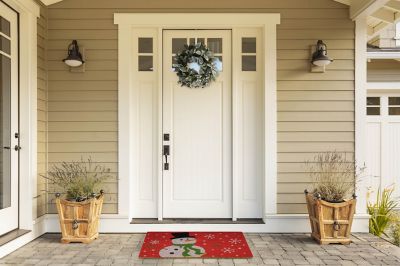
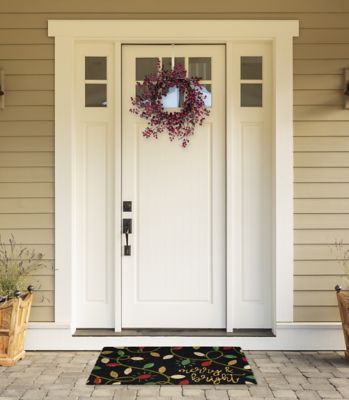
Christmas mats bring holiday color to doorways, porches, kitchens and other everyday spaces while giving shoes and boots a place to leave some of the mess behind. The category includes outdoor doormats, indoor entry mats and holiday accent rugs, with different materials suited to different jobs. A rough-textured mat at a sheltered front door can help brush loose dirt from footwear, while an absorbent indoor mat can help catch moisture carried across the threshold. In the kitchen, a Christmas floor mat adds a festive touch near the sink or prep counter, where family and friends tend to gather between batches of cookies and holiday meals. Classic red and green, buffalo check, evergreen branches, holly, woodland animals and cheerful Christmas greetings all bring a different feel to an entrance. A simple tree pattern might suit a quiet farmhouse porch, while a playful Santa design can brighten a busy family doorway. Think about how the pattern looks beside the door color, porch furniture and nearby greenery rather than trying to match every detail. A bold design reads clearly from the steps, while smaller patterns reward a closer look. Christmas mats also make sense at side entrances, especially when that is the door everyone actually takes after chores, errands or a walk across the yard. A festive front porch is welcoming, but a well-placed mat by the everyday entrance earns its keep, too. The broader range of
Holiday Doormats connects that same welcoming touch with other celebrations throughout the year. For Christmas, the best match balances the look of the home with the amount of foot traffic at the door. A household with muddy work boots, visiting relatives and pets moving through the entry has different needs from a covered doorway that sees only occasional guests. The setting matters just as much as the picture printed on top.
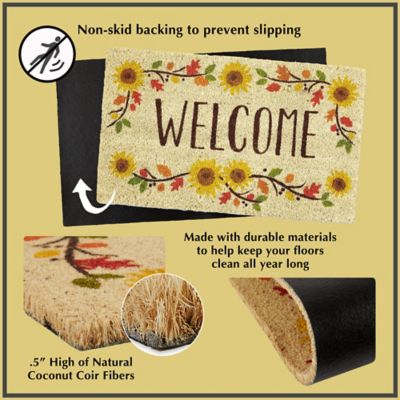
Material is a good place to start when comparing Christmas mats. Coir, a fiber made from coconut husks, has a coarse surface that helps scrape dirt from shoe soles. It can shed loose fibers, and its suitability for exposed outdoor areas depends on the backing and construction, so check the care and placement information before putting it beyond the porch roof. Rubber mats often have textured surfaces or open patterns that let loose debris fall through, making cleanup beneath the mat part of regular care. Fabric-surface mats made with fibers such as polyester or nylon can provide a softer feel indoors, though absorbency and washing instructions vary. Some kitchen mats include cushioning for time spent standing at the counter; others are thin accent rugs meant mainly to add color underfoot. Match the construction to the task rather than expecting every holiday mat to handle wet boots, outdoor exposure and kitchen splashes equally well. Size and clearance deserve the same attention. Measure the usable space in front of the door, then check that the door swings freely over the mat without catching its edge. A mat should leave enough standing room for someone to wipe both feet without stepping straight onto the surrounding floor. At a narrow side entrance, a smaller footprint may fit better than a wide porch-style mat. In a larger entry, a longer indoor mat can give wet footwear more contact with an absorbent surface. Keep edges flat, avoid crowding steps and leave room for walkers, wheelchairs or anyone carrying a full armload of packages. A backing intended for the floor beneath it can help limit movement, but no backing makes a mat slip-proof in every setting. Water, grit and smooth flooring can change how it behaves. Check compatibility with finished wood, vinyl or other sensitive surfaces, and avoid layering mats if the added height interferes with the doorway or creates a raised edge.
Everyday care helps Christmas mats stay presentable through family visits, holiday meals and the steady back-and-forth of country life. Shake loose dirt outside when the care directions allow it, sweep beneath the mat and clear away gravel before it gets tracked farther into the house. Coir generally calls for a different cleaning approach than a washable fabric mat, and a rubber-backed rug may have drying restrictions even when its face fabric tolerates washing. Follow the label instead of assuming that every small mat can go in the washing machine or take a strong spray from the hose. Let both the mat and the floor underneath dry fully before putting everything back in place. A mat that stays damp can hold moisture against the surface below, especially in an entry that gets little airflow. On an exposed porch, keep snow and ice cleared from the walking area rather than counting on the mat to make the surface safe. Indoors, check corners after pets run through or chairs shift nearby, and move a mat that repeatedly bunches or slides. For a kitchen setting, choose a placement that does not interfere with appliance doors, and clean spills according to the material’s care directions. Christmas mats can also make thoughtful gifts for someone settling into a first home, a neighbor who hosts the holiday supper or a family member who enjoys dressing up the front porch. A useful gift starts with knowing the space: covered or uncovered, roomy or narrow, and busy with boots or mostly light foot traffic. Simple patterns can be easier to pair with an existing entrance, while a cheerful greeting gives the gift a more personal feel without needing an exact match to the home’s colors. Once the Christmas display comes down, clean and thoroughly dry the mat before storing it according to its construction. Keep it somewhere dry, away from heavy objects that could bend the edges or crush the surface, so it is ready to welcome another round of holiday company.