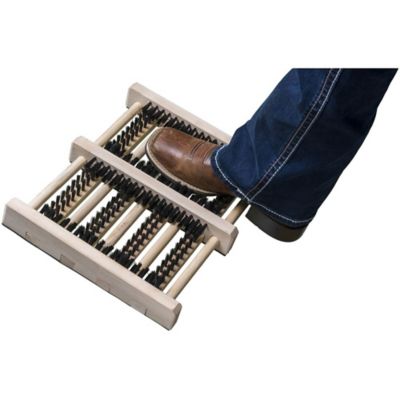
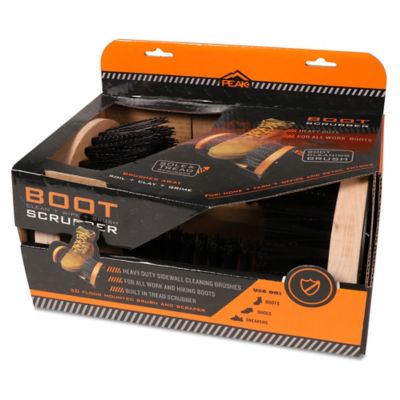
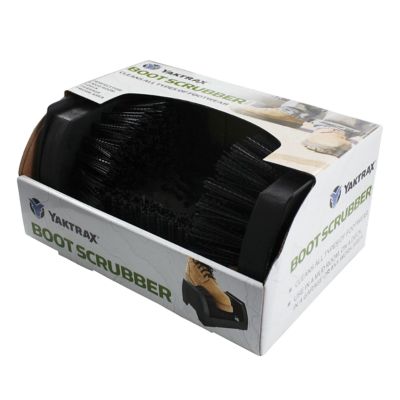
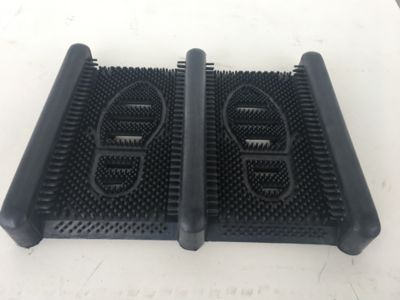
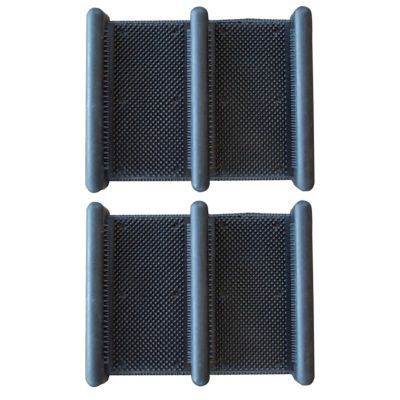
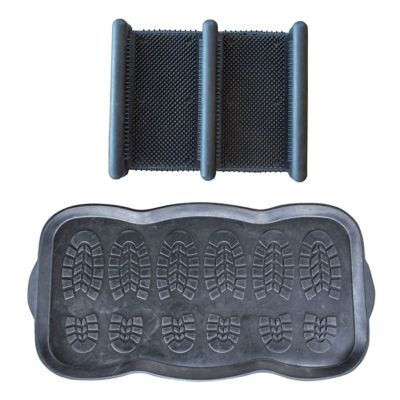
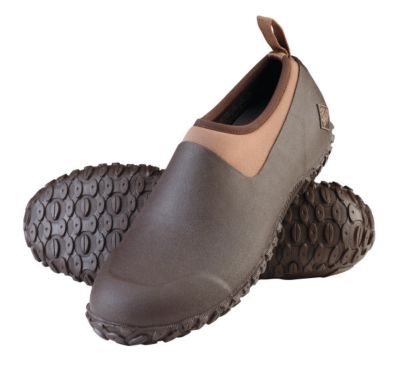
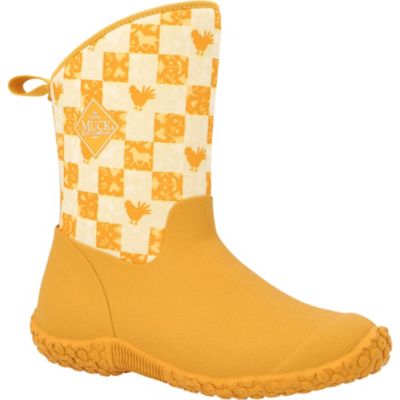
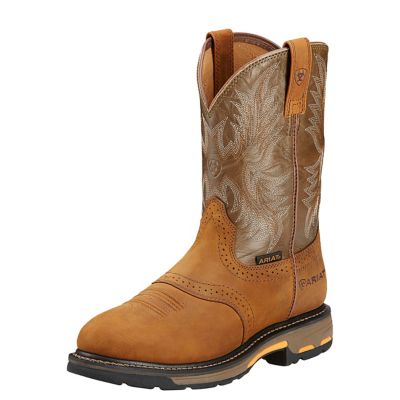
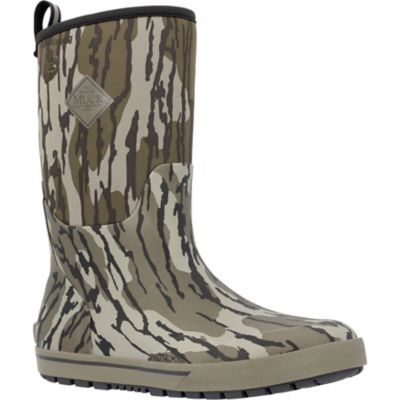
Boot scrubbers for muddy work boots help knock packed dirt out of tread and brush mud off the sides of footwear before it reaches the porch, truck cab, mudroom, or kitchen floor. A bottom brush works against the outsole, while side brushes reach along the edges where clay and grit tend to collect. Some designs also include a scraping edge for breaking away larger clumps before brushing. That combination comes in handy after feeding livestock, walking fence lines, tending a garden, or crossing a muddy jobsite. Thick mud caught between deep tread lugs takes more effort to remove than loose surface dirt, so brush stiffness, spacing, and a steady base all matter. Firm synthetic bristles can work into outsole grooves without absorbing much water, while the frame holds the brushes in position through repeated back-and-forth movement. Metal frames may have a painted or powder-coated finish to help limit corrosion; wood bases offer another construction style, with care requirements that depend on the material and finish. The opening between the brushes deserves just as much attention as the frame. Whether paired with lace-up leather footwear or
Men's Muck Boots, a scrubber needs enough room for the widest part of the sole and heel. A snug opening can bring the bristles into contact with both sides, but an overly tight fit makes movement awkward and may rub areas that do not need scrubbing. Broad safety-toe boots, flared rubber heels, and deeply lugged soles can all affect that fit. Boot height alone does not tell the whole story. Side brushes usually clean near the sole rather than up the shaft, so taller footwear may still need a separate rinse or wipe. For farm families, grounds crews, tradespeople, and anyone coming home with dirt on their soles, a well-matched boot brush makes the doorway a practical stopping point instead of the start of a muddy trail.
Where a boot scrubber sits has a big effect on how well it works. A stationary model with mounting holes can provide leverage when secured to a suitable wood or concrete surface with the fasteners specified for that base. The mounting surface needs to be sound, and the attachment method needs to suit both the scrubber and the surface beneath it. A firm mount lets the brushes resist the boot’s movement instead of following it across the porch. Freestanding designs offer a different benefit: they can move between an entryway, barn door, garage, or campsite without a permanent installation. Some have wide bases or foot plates that help hold them in place, though stability still depends on the design, footing, and amount of pressure applied. Extra width by itself does not guarantee that a scrubber will stay put. Loose gravel, uneven boards, and slick concrete can make an otherwise sturdy setup harder to manage. A level spot with room to move a boot through the brushes is more useful than a cramped corner beside the door. It also helps to leave space for scraped-off mud to collect without blocking a walkway. Around a livestock area, placement should keep manure and wash water away from feed, water containers, and places where food is handled. At the house, a location just outside the main entrance catches mess before it travels indoors. A boot scrubber and an entry mat serve different purposes: the scrubber loosens packed debris, while a suitable mat can catch remaining grit and moisture. Neither takes the place of cleaning or disinfecting when animal health or jobsite rules call for it. For a household with several pairs of work boots, room around the station matters, too. A brush tucked behind stacked footwear is easy to skip when both hands are full of feed buckets or groceries. A clear, convenient spot makes that quick stop more likely to become part of the everyday routine.
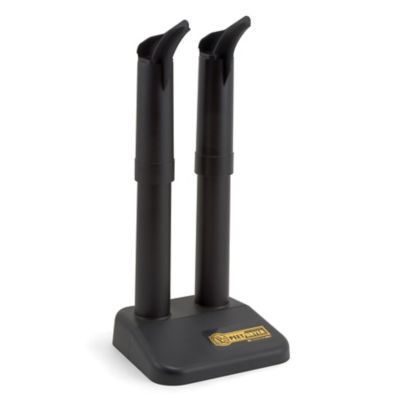
Care needs vary with both the scrubber and the boots passing through it. Mud left packed into a brush reduces the space available for the bristles to reach the next sole, so clearing buildup helps keep the brush working as intended. For rinse-safe models, water can carry away loosened soil, followed by drainage and drying according to the maker’s directions. Wood components, coated metal, and mounting hardware may need different attention, especially where water collects beneath the base or around screws. Loose fasteners, cracked supports, bent frames, and flattened bristles are signs that the setup needs attention. Replaceable brush sections can extend a frame’s working life when that feature is part of the design. Boot materials deserve the same consideration. Rubber outsoles generally tolerate firm brushing better than soft leather uppers, suede, nubuck, or fabric panels, so scrubbing should stay focused on the areas the boot maker allows. Sharp scraping edges and wire bristles can damage softer surfaces. Leather footwear benefits from gentle cleaning and drying away from direct heat before any suitable conditioner or waterproofing treatment goes on. Drying time varies with how wet the boots became, their construction, and the surrounding conditions; a fixed number of hours will not suit every pair. Rubber and neoprene footwear also needs care that follows its own cleaning directions, including attention to seams and bonded parts. A scrubber removes surface debris, but it cannot restore worn tread or guarantee traction on slick ground. Its everyday value is simpler: less packed mud riding into the truck, fewer gritty tracks across the floor, and less dirt left clinging around the welt and heel. That makes boot scrubbers a useful addition near a working doorway and a practical gift for someone who spends long days around fields, stalls, gardens, or construction sites. Matching the brush opening, base style, and care requirements to that person’s footwear and routine matters more than appearance alone. The right setup earns its place with a straightforward job—helping leave the mess outside when the workday comes through the door.