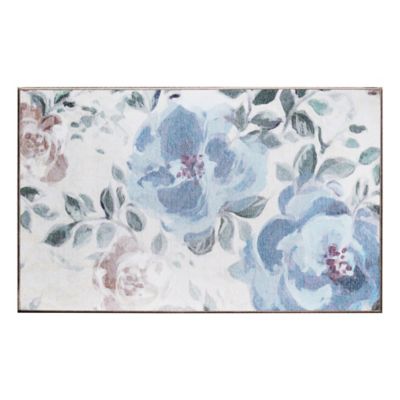
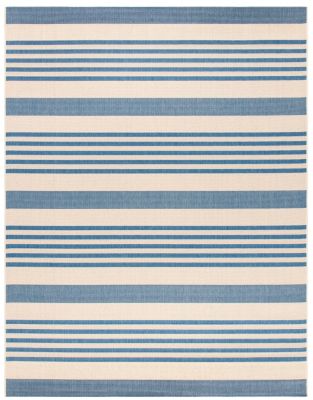
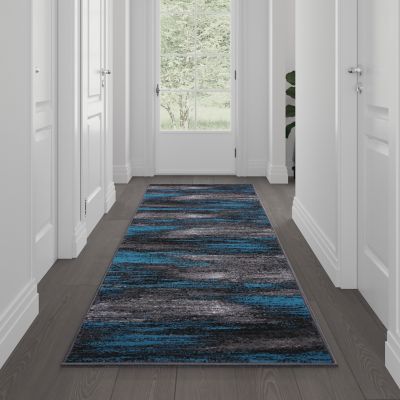
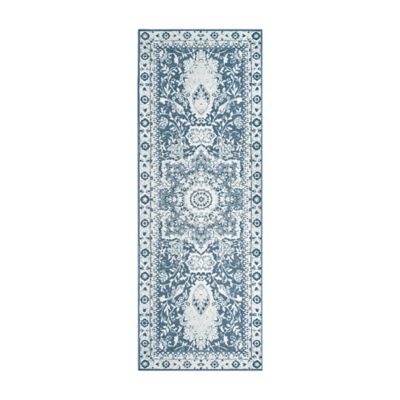
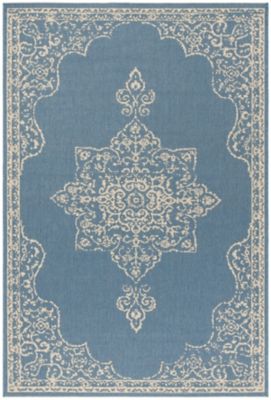
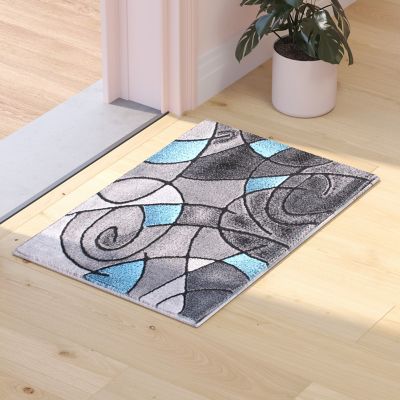
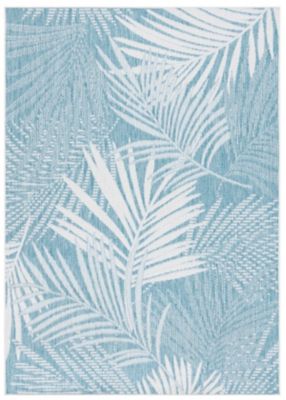
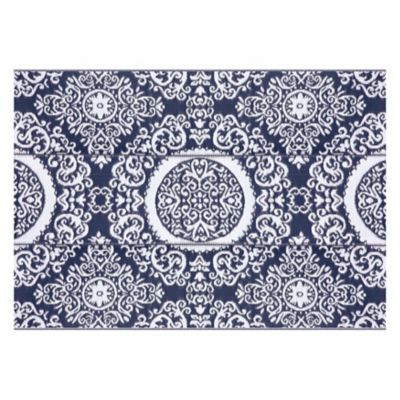
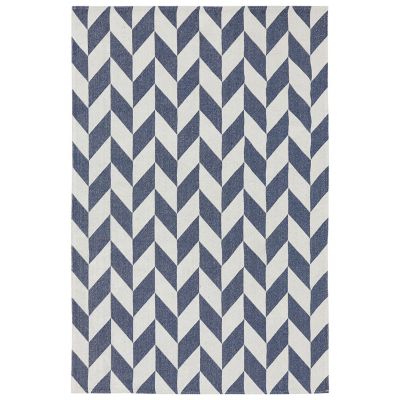
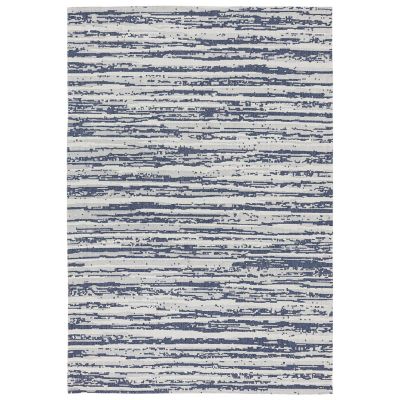
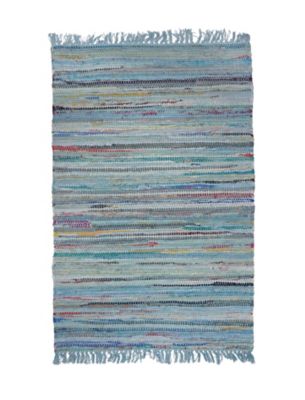
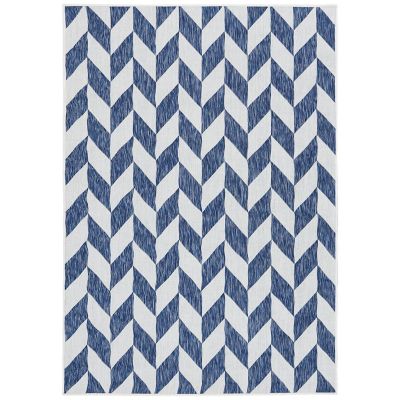
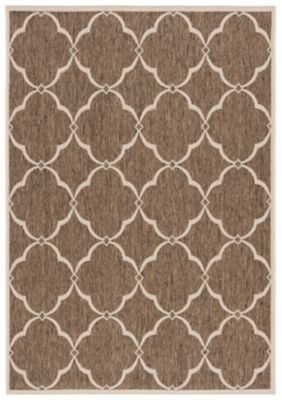
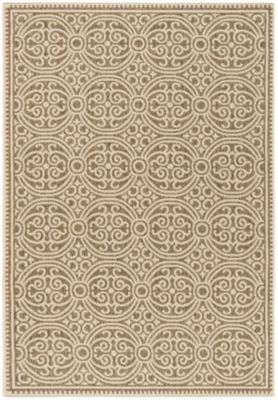
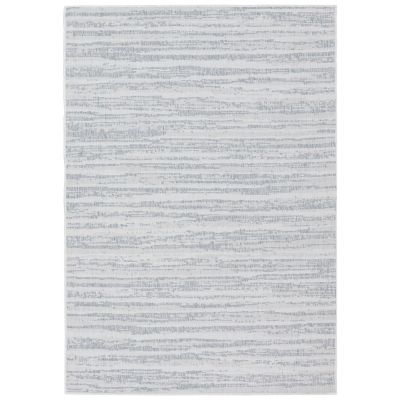
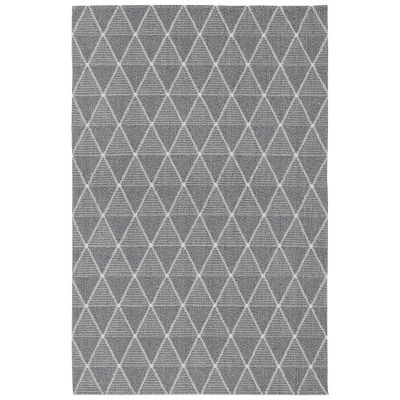
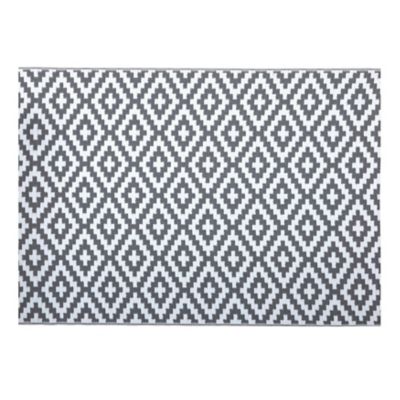
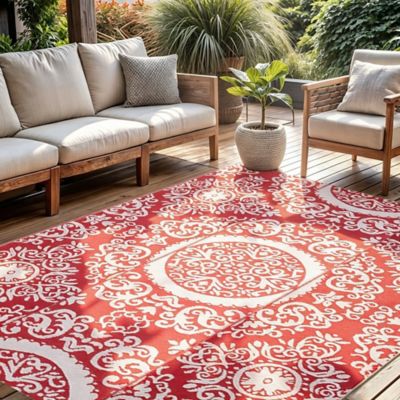
Blue and cream area rugs bring a little color into a room without making everything else compete for attention. The pairing feels right at home beside a worn leather sofa, a painted farmhouse table, or a sturdy wood bed frame. Navy gives the pattern a stronger outline, while softer denim and dusty blue shades settle in more quietly against cream backgrounds. Cream adds warmth without the bright contrast of pure white, making the combination easy to work into rooms with oak floors, stone fireplaces, woven baskets, and natural wood trim. A broad border can frame a seating area, while stripes, geometric shapes, and flowing patterns each give the floor a different look. Larger motifs tend to read clearly across an open room; smaller, closely spaced patterns create a more blended effect. The balance between the two colors matters, too. A mostly cream rug with blue details keeps the floor looking lighter, while a blue-ground rug with cream accents gives furniture a more defined place to sit. In a living room, a rug large enough to hold at least the front legs of the main seating pieces helps pull the arrangement together. A smaller rug floating between the sofa and chairs can make the same space feel disconnected. Beneath a dining table, allowing about 24 inches of rug beyond the tabletop on each side generally gives chairs room to move, though larger chairs may need more clearance. Bedrooms call for a different approach: enough rug showing beside the bed gives feet a soft landing and keeps the pattern from disappearing beneath the frame. Measuring the room, furniture, and nearby door swings before choosing a size helps keep the finished arrangement practical. Painter’s tape laid on the floor can make the footprint easier to picture, especially in rooms where walkways pass between several pieces of furniture. For homes with connected living and dining spaces, repeating a shade of blue rather than matching every pattern can help the rooms feel related without looking exactly alike.
Material and construction make just as much difference as color when a rug has to live with everyday household traffic. Wool offers a springy feel underfoot and natural resilience, making it worth considering for living rooms and bedrooms where comfort matters. Some wool rugs shed loose fibers, particularly early on, so regular care is part of the picture. Cotton rugs often have a lighter, more flexible feel, although their care requirements depend on the weave, backing, and size. Synthetic fibers such as polypropylene and polyester appear in many area rugs and can offer practical options for busy family spaces. Their resistance to staining, moisture, and wear varies, so the care label and intended-use information matter more than the fiber name alone. A low pile generally gives dining chairs an easier surface to move across and leaves less depth for crumbs and grit to settle into. Flatwoven rugs can also work well where a slimmer profile is helpful, provided the edges lie flat and the rug stays properly positioned. A thicker pile feels softer beside a bed or beneath a reading chair, but it may take more effort to vacuum and can interfere with doors that sit close to the floor. In homes with pets, a tight surface without loose loops may be a better match for claws, and a balanced blue-and-cream pattern can make everyday lint less noticeable than a large solid field. That does not replace cleaning, but it can make a well-loved room feel less fussy between vacuuming sessions. Backing deserves a close look as well, particularly over finished wood or resilient flooring. A rug pad suited to both the rug and the floor can add cushioning and help limit movement, while the wrong backing or pad may affect certain finishes. Indoor rugs belong in indoor settings unless their labeling says otherwise; a covered porch still presents conditions that some fibers and backings are not meant to handle. Matching the rug to the room’s actual workload helps preserve its appearance over time.
Day-to-day care keeps blue and cream area rugs looking settled rather than tired, especially where family, friends, and pets cross the same stretch of floor. Fine grit carried in on shoes can work down into the pile, so regular vacuuming is useful even when the surface looks clean. Follow the maker’s directions for suction and brush settings, and take extra care around fringe, bound edges, and raised patterns. Spills are best blotted promptly with a clean, absorbent cloth rather than scrubbed, which can spread the spot or roughen the fibers. Any cleaning solution should match the fiber and backing, with a small test in an out-of-the-way area before broader application. A rug described as washable still needs a closer look at its instructions: machine capacity, water settings, drying method, and whether a separate cover is involved can all affect the process. Larger rugs or certain natural fibers may call for professional cleaning instead. Turning a rug occasionally helps distribute foot traffic and light exposure, particularly in rooms with a favorite chair or a well-traveled path from the doorway to the sofa. Furniture cups or other suitable floor protectors can help manage pressure beneath heavy legs, and lifting furniture instead of dragging it protects both the rug edges and the floor below. For households furnishing several rooms, blue and cream can serve as a steady thread without requiring identical rugs everywhere. A bolder pattern can anchor the main gathering space, with a quieter companion in a bedroom or home office. For another direction that works alongside this palette,
Modern Neutral Area Rugs offer a way to carry softer tones into adjoining rooms. The best fit comes down to how the space feels and functions: room for chairs to move, a surface that suits the household’s routines, and colors that sit comfortably with the furniture already there. A well-chosen rug should feel like part of the home, ready for ordinary evenings, company at the table, and feet tucked beneath a favorite chair.