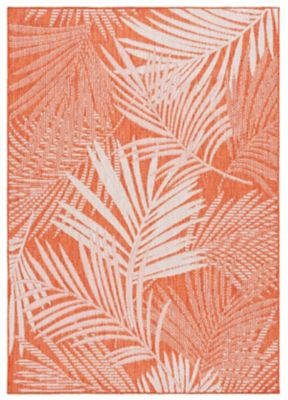
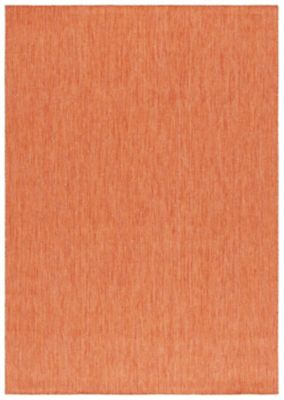
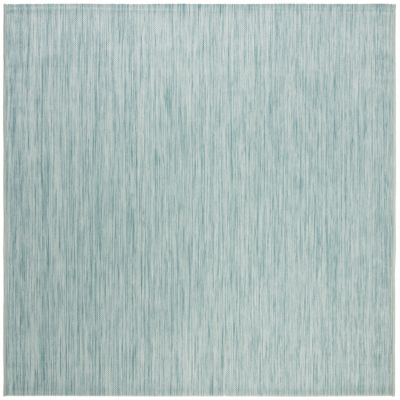
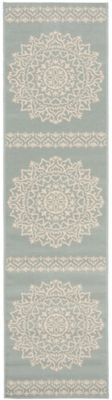
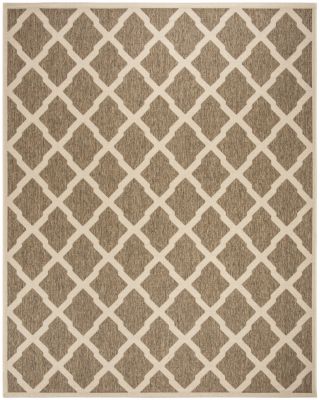
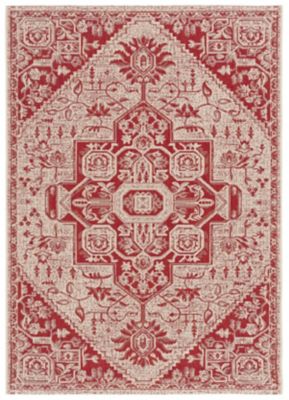
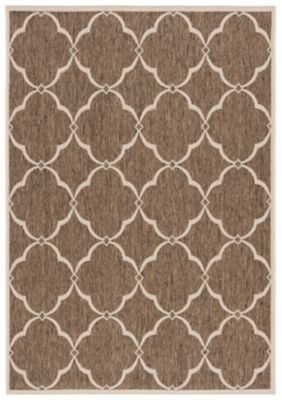
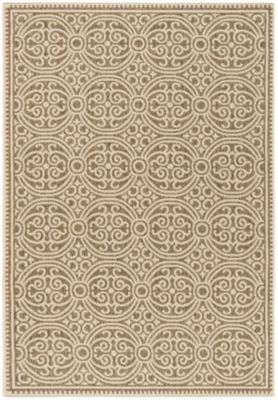
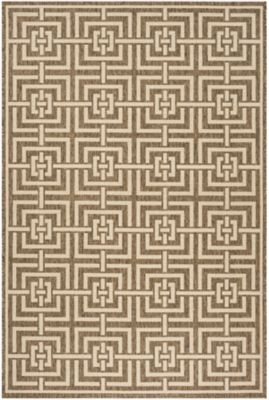
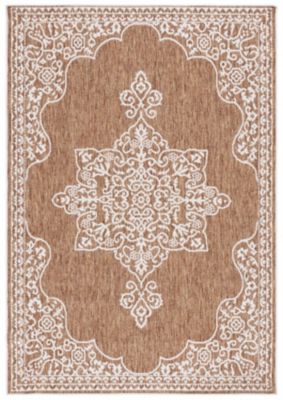
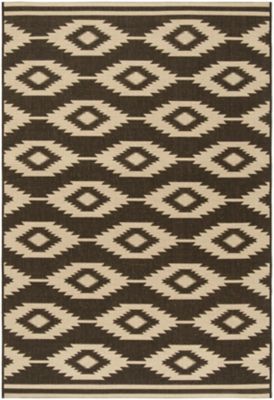
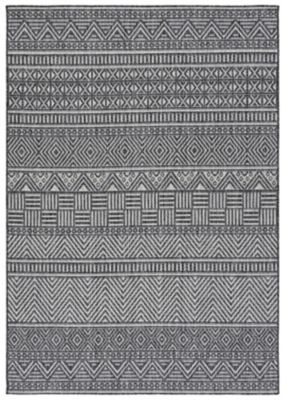
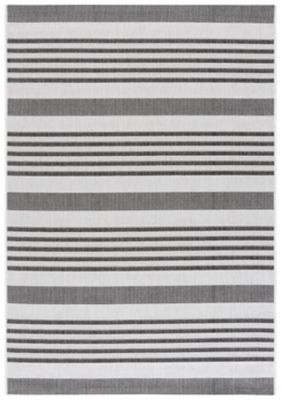
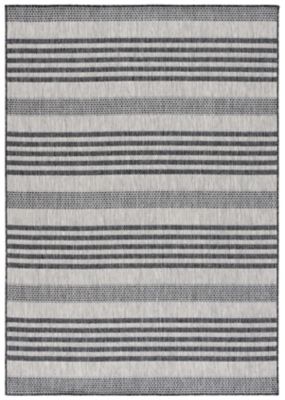
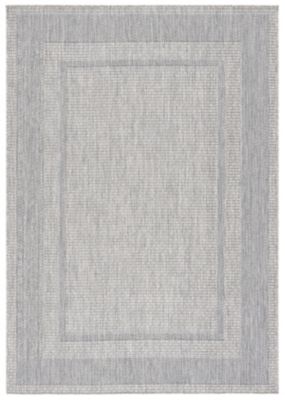
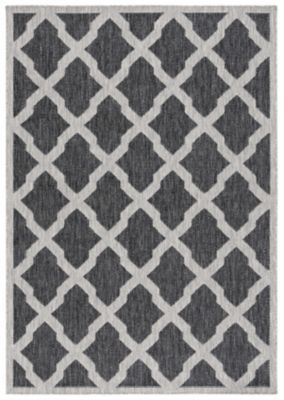
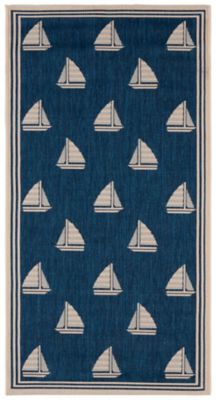
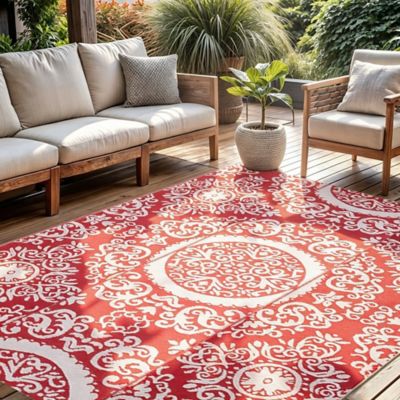
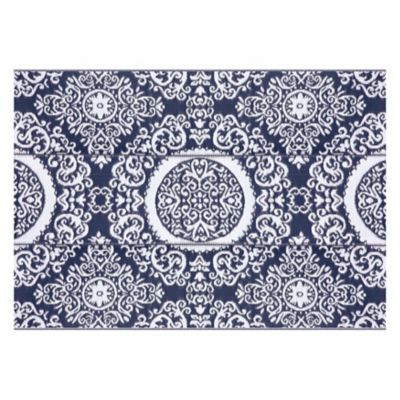
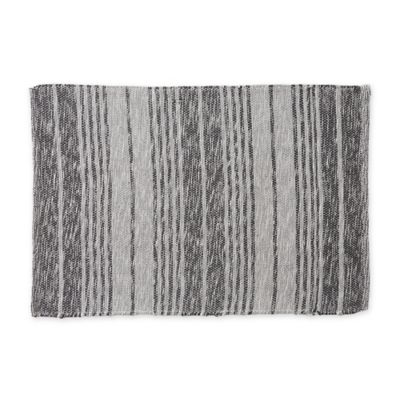
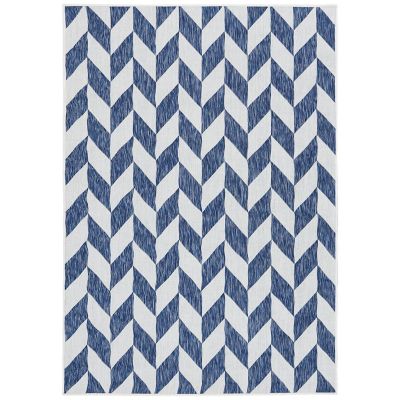
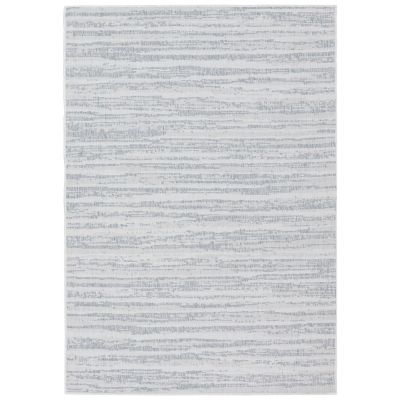
Beach-themed outdoor rugs bring seaside colors and coastal patterns to porches, decks, patios, and outdoor entryways. Seashells, coral branches, starfish, rolling waves, and nautical stripes give this style its familiar look, while shades of sand, sea glass, navy, and turquoise help tie the space together. Some patterns make the beach connection plain, with palm trees or scattered shells across the surface. Others keep things quieter with rippling lines, rope-inspired borders, or a blue-and-cream stripe that looks right beside a porch swing. There’s no need for an ocean view to enjoy the look. A coastal outdoor rug can soften the feel of a concrete patio behind a farmhouse, frame a pair of rocking chairs at a lake cabin, or give a small back porch a comfortable spot for sitting and visiting. The pattern helps set the mood, but the layout matters just as much. A large central design makes a clear focal point when much of the rug stays visible, while an allover pattern still reads well beneath a table and chairs. Borders give seating areas a tidy outline and can echo the shape of a rectangular dining table. Sandy neutrals pair easily with wood furniture and woven seats; deeper blues work well alongside white railings, metal chairs, and natural wood finishes. A little teal or coral can pick up a color already present in cushions without making every piece match. Midtone backgrounds and broken-up patterns can also make everyday dust and small bits of tracked-in dirt less noticeable between cleanings. For households with kids, pets, and a busy back door, that practical side belongs in the picture alongside the beach theme. The best fit is a rug that feels at home with the furniture, leaves room to move around, and suits what happens on that porch or patio from one day to the next.
Materials and construction shape how a beach-themed outdoor rug handles foot traffic, moisture, and routine upkeep. Polypropylene is common in outdoor rugs because the fiber absorbs little water and can stand up to frequent cleaning when cared for according to its label. Polyester, including recycled polyester, also appears in outdoor-rated designs, though cleaning methods and exposure limits vary by construction. A synthetic rug with a woven, grasslike appearance offers a different option from natural jute or seagrass, which generally need more protection from moisture. The outdoor designation matters more than a coastal-looking pattern alone. Flatwoven and low-pile surfaces tend to let chair legs move more easily and give dirt fewer places to settle than a deep pile. Raised patterns add texture underfoot, but their ridges may collect sand or crumbs and need extra attention around a dining table. For an uncovered deck, water needs a path away from the rug; even water-resistant fibers cannot make up for standing puddles or a backing that stays damp. Fade resistance is another useful consideration in a sunny spot, although no rug should be expected to hold its color forever under constant exposure. Size affects everyday comfort, too. Beneath a dining table, enough rug should extend past the tabletop for chairs to remain on it when pulled back for someone to sit down. In a conversation area, placing the front legs of the main seating pieces on the rug helps connect the arrangement. Smaller porch rugs need enough clearance for doors to swing freely, especially when a pad adds thickness. A pad rated for outdoor use and approved for the surface underneath can help limit shifting, but backing and pad compatibility deserve attention on painted porches, composite decking, and other finished surfaces. Keeping walkways open and edges flat makes the space easier to navigate with a serving tray, a laundry basket, or muddy boots headed toward the door.
Care is usually straightforward when it matches the rug’s fiber, backing, and cleaning instructions. Loose grit is worth removing regularly because sand and soil can work their way into the weave as people walk across it. A broom, a shake for smaller rugs, or a vacuum setting permitted by the care label can handle much of that everyday mess. Spills are easier to manage before they spread: blotting lifts liquid without working it farther into the surface, and a mild cleaning solution may be appropriate when the manufacturer allows it. Some outdoor rugs can be rinsed with a garden hose, but that should never be assumed from the beach pattern or synthetic fiber alone. Strong cleaners, concentrated water pressure, and stiff scrubbing can affect color, texture, or backing. After washing or a soaking rain, both sides need to dry fully, and the surface below needs attention as well. Lifting the rug periodically helps reveal trapped leaves, dirt, or damp patches that might otherwise go unnoticed. Furniture feet also deserve a look, since sharp edges can snag a weave and heavy pieces can leave compressed spots. Rotating a rug, when its shape and layout allow, can help spread out foot traffic and light exposure. Before putting one away, a clean, completely dry rug is less likely to develop mildew or an unwanted smell than one rolled up with moisture inside. For a porch that opens into a mudroom or enclosed sitting area,
Indoor Outdoor Area Rugs offer another way to carry related colors between adjoining spaces. A beach-themed rug can also make a thoughtful gift for a cabin owner or someone settling into a home with a porch, provided the dimensions and care needs suit the space. Whether it sits beneath a picnic table or beside a well-loved rocking chair, its appeal comes from a relaxed coastal look backed by materials and a fit that make sense for daily life.