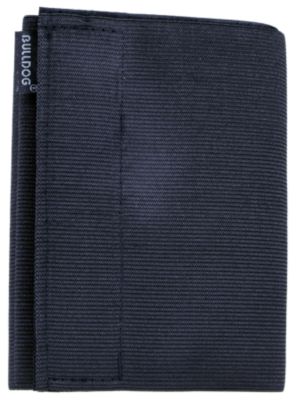
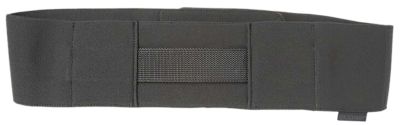
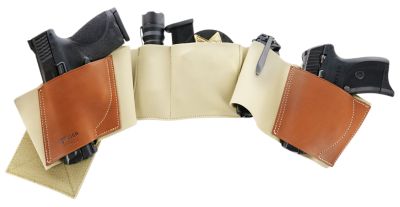
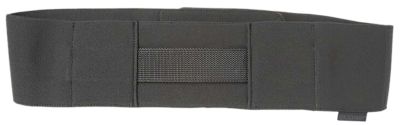
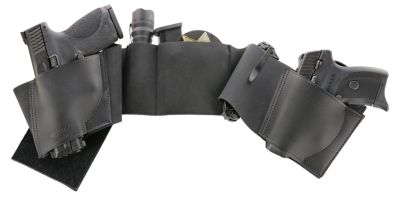
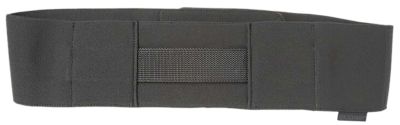
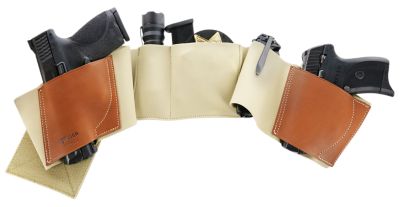
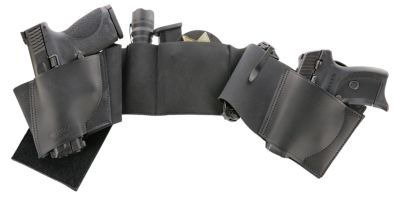
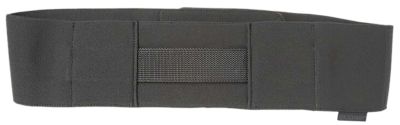
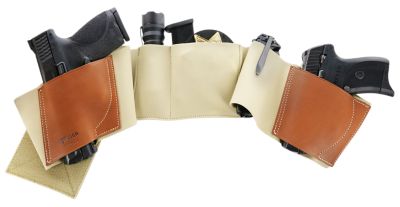
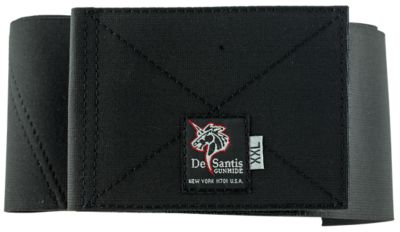
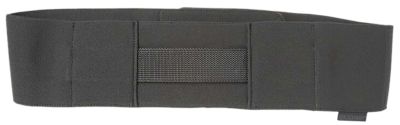
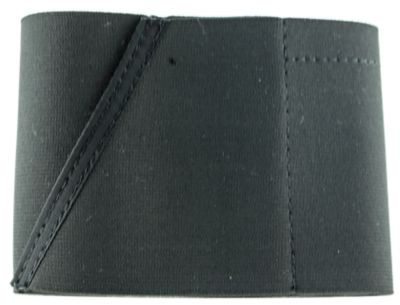
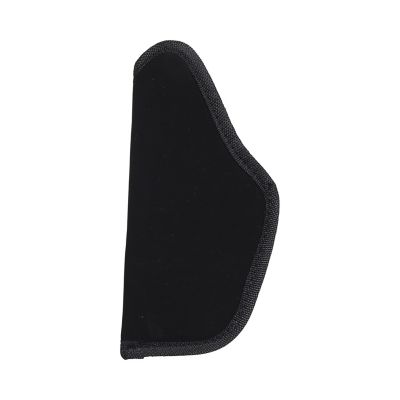
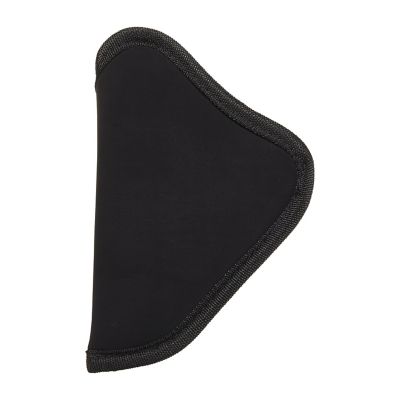
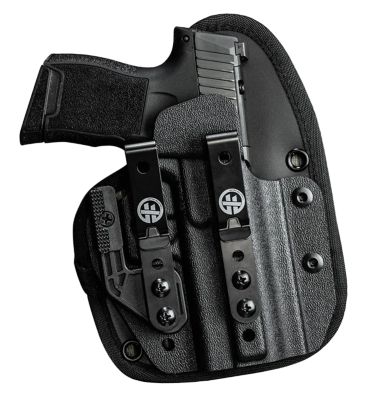
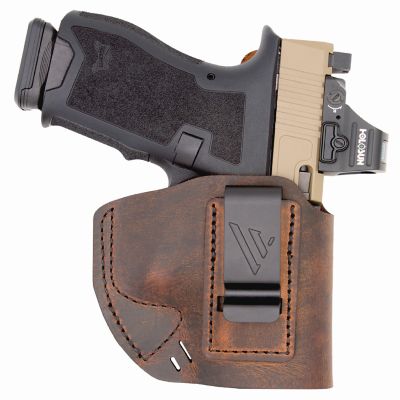
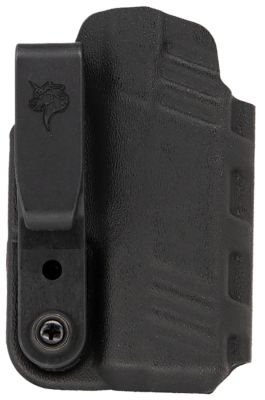
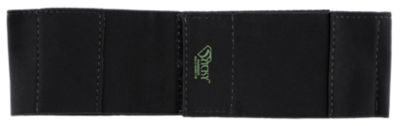
A belly band concealed carry holster is a wide, adjustable wrap that holds a handgun close to the torso without relying on a traditional gun belt. That beltless design makes it an option for lawful carry with drawstring pants, athletic shorts, or clothing without belt loops. Rather than hanging from the waistband, the band wraps around the midsection and supports a holster pocket or attached shell. Depending on the design, it may also have separate spaces for spare magazines or small personal essentials. Belly band concealed carry holsters commonly feature elastic fabrics, neoprene, breathable mesh, or combinations of flexible materials. Elastic allows the wrap to stretch with movement, while neoprene provides cushioning and a close-fitting feel. Mesh panels can help air circulate, though comfort still depends on the band’s width, construction, and contact with the body. A broad band distributes support across more of the torso, but it also covers more skin and may feel restrictive when sitting. A narrower design covers less area, although it still needs enough structure to support the intended handgun. Fit starts with the manufacturer’s measurement instructions, not simply a pants size. Measure around the part of the torso where the band will sit, since a waist measurement and a measurement higher on the abdomen can differ quite a bit. The closure should have enough overlap to stay fastened without pulling the wrap so tight that breathing, sitting, or bending feels restricted. Think about ordinary moments: settling into a pickup seat, reaching across a workbench, or sitting through a meal. The band should remain stable through those movements rather than rolling at the edges or bunching beneath clothing. For outfits built around a supportive belt,
Belt Holsters offer another carrying setup to consider. The better match depends on clothing, firearm compatibility, and how much structure and support the wearer needs throughout the day.
Firearm fit matters just as much as body fit. A belly band that fits comfortably around the waist is not automatically suitable for every handgun that fits inside its pocket. Compatibility should account for the firearm’s dimensions, shape, and any attached equipment, including an optic or weapon-mounted light. Broad sizing descriptions can be a starting point, but the manufacturer’s compatibility information should settle whether a particular configuration belongs in the holster. Trigger protection deserves special attention. Soft elastic alone may allow pressure from clothing or another object to reach the trigger, so a design with a rigid, properly fitted shell that fully covers the trigger guard offers an important safety advantage. The shell and band also need to work together: the firearm should stay supported, the attachment should remain secure, and the surrounding fabric should not fold into the trigger area. Retention describes how the holster holds the firearm in place, and it should come from the intended holster design rather than simply tightening the wrap harder. Handedness and permitted carrying positions vary, too. Some bands support several positions around the torso, while others have a fixed pocket angle or orientation. A reversible appearance does not necessarily mean a band is suitable for either hand. Pocket placement can also change how the handgun sits against the ribs, abdomen, or hip, especially in a seated position. A compact handgun and a larger handgun place different demands on the wrap, and adding a spare magazine increases the weight it must support. For walking, hiking, or other movement, pay attention to the manufacturer’s intended-use information rather than assuming every elastic band is built for vigorous activity. Excess movement, a shifting closure, or a firearm that tips outward are signs that the setup needs attention. Check fit only with an unloaded firearm and follow the firearm and holster manufacturers’ safety directions. A qualified firearms instructor can help assess a carrying setup without treating comfort or concealment as a substitute for safe handling.
Everyday comfort also depends on what sits between the band, the body, and the outer clothing. A smooth backing can reduce rubbing, while thick seams, exposed fastener edges, or a stiff pocket corner may become noticeable after several hours. Some wearers prefer a light undershirt beneath the band to limit direct skin contact, provided that arrangement follows the manufacturer’s directions and does not interfere with the holster. Outer garments affect concealment as well: thin, clingy fabric may show the outline of the firearm more readily than a shirt with a roomier cut. No belly band can promise complete concealment with every body shape, handgun, and outfit. Flexible construction also brings tradeoffs. Stretch fabric can lose tension over time, hook-and-loop closures can collect lint, and stitching near loaded pockets can show wear. Regular inspection helps catch stretched sections, frayed seams, cracked shell attachments, and closures that no longer hold firmly. Those changes matter because a band that feels softer with age may also provide less support. Care instructions vary by material and construction, particularly when a wrap includes a rigid shell, metal hardware, or removable components. Remove the firearm, ammunition, and other contents before cleaning, then follow the maker’s washing and drying directions. Let the band dry completely before putting it back into service, and avoid cleaners or drying methods that could damage elastic, adhesives, or fasteners. Extra storage pockets are handy only when they keep their contents separate from the firearm and do not interfere with its holster. Keys, loose objects, and other belongings do not belong in the firearm pocket. For someone buying a belly band as a gift, the recipient’s measurements, handedness, firearm configuration, and preferred clothing matter more than a guess based on appearance. Whether the band is for regular wear or a different clothing setup, the strongest choice balances comfort with proper trigger coverage, secure retention, and lasting support. Follow applicable carry laws, and remember that a wearable holster is not a replacement for secure firearm storage when the firearm is off the body.