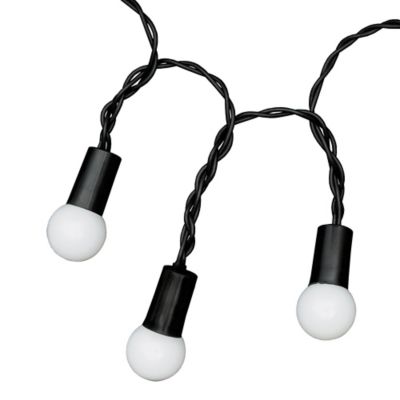
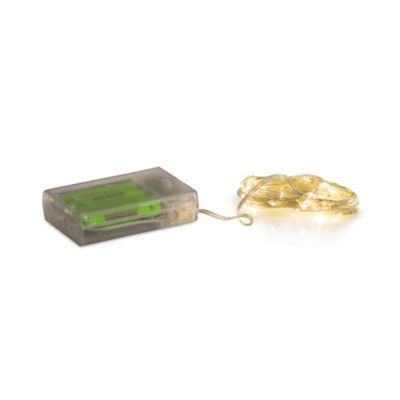
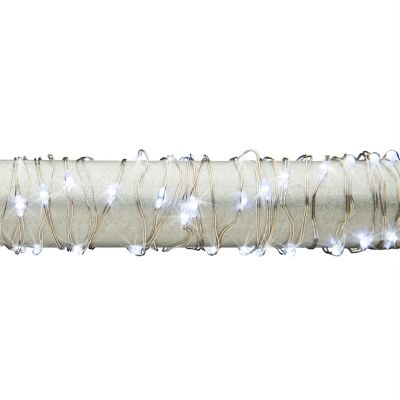
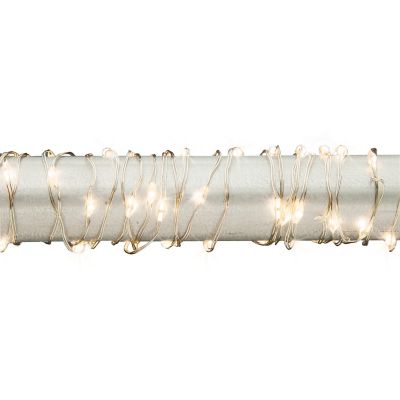
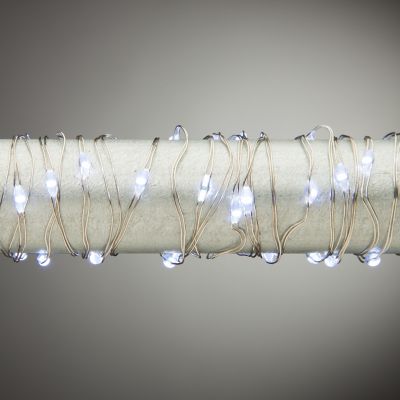
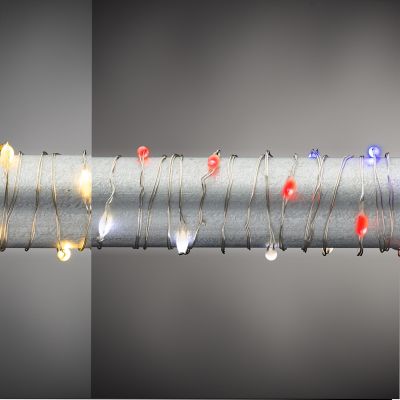
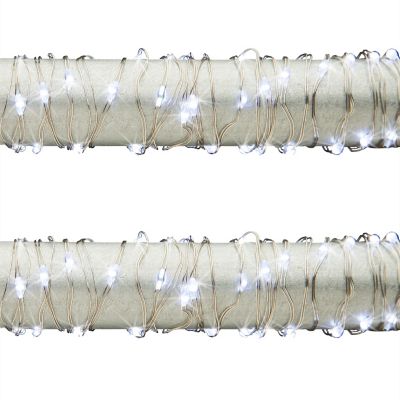
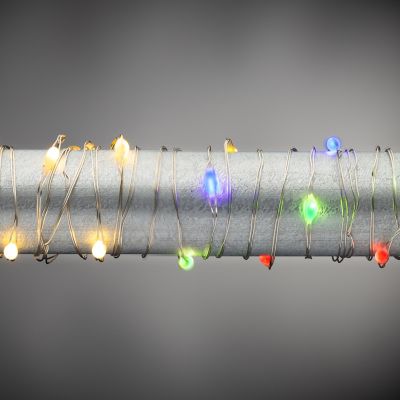
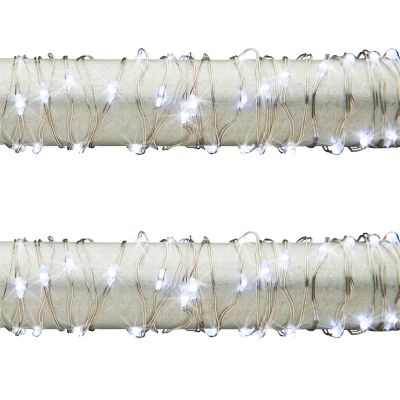
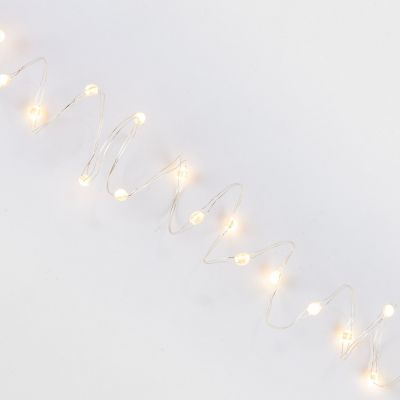
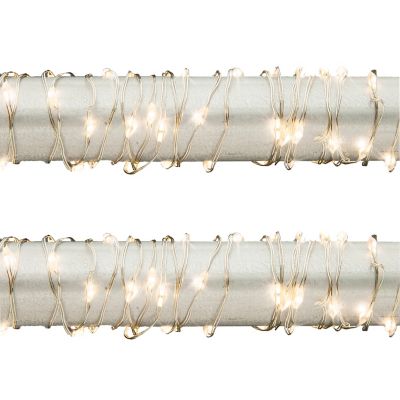
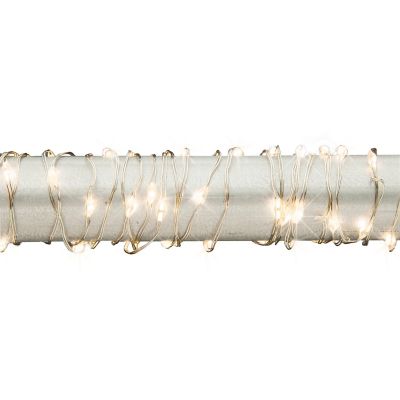
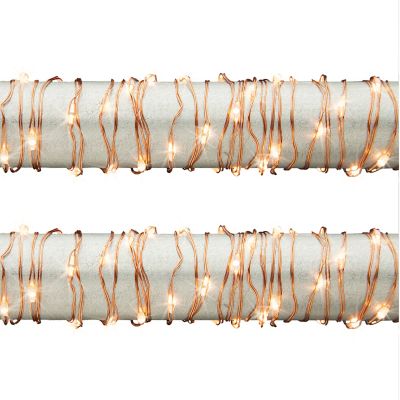
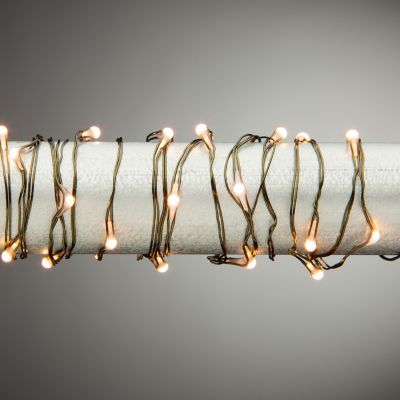
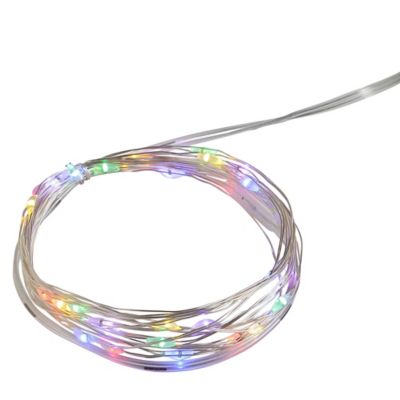
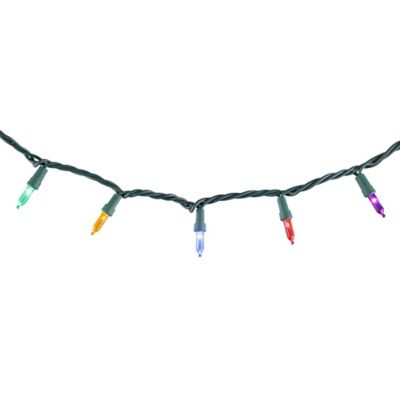
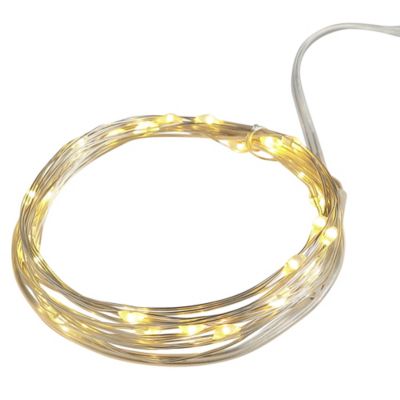
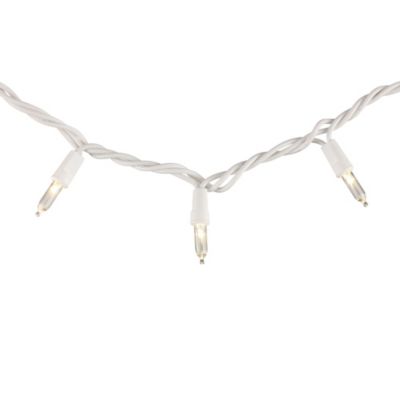
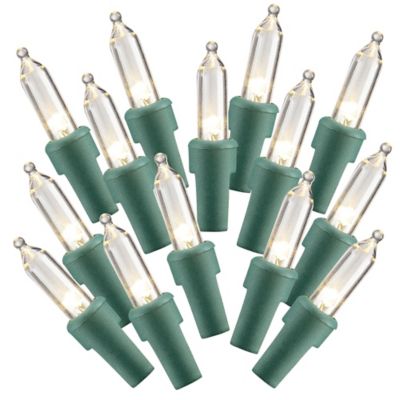
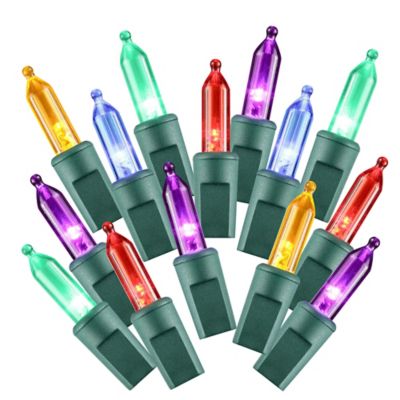
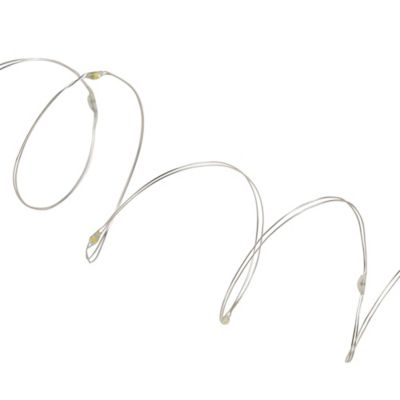
Battery-operated mini string lights are compact strands of small lights powered by a battery pack instead of a wall outlet. They add accent lighting to centerpieces, wreaths, shelves, mantels, and other spots where a plug-in cord would get in the way. That makes them handy for a kitchen hutch, a farmhouse entry table, or a gathering space with tables set well away from the wall. Most styles feature small LEDs, though bulb type, light output, and battery requirements vary by design. Their main job is to create a soft glow or highlight a display, not replace a reading lamp, work light, or overhead fixture. A fine wire strand can trace the curve of a wreath frame or tuck between objects on a shelf, while a strand with a thicker insulated cord may have a more noticeable outline. Copper-colored, silver-colored, green, and clear wiring each blend into different surroundings, so the wire matters almost as much as the lights themselves. Against greenery, a darker cord can disappear into the background; inside a clear glass vessel, a fine metallic wire becomes part of the arrangement. Small bulb covers may be plastic or another material, with construction affecting how gently the strand needs to be handled. Warm white lighting generally gives wood, baskets, and natural textures a softer appearance, while cool white lighting has a crisper look. Colored lights bring a playful touch to party tables and family gathering spaces. Bulb spacing also changes the effect: closely spaced points create a fuller ribbon of light, while wider spacing leaves more of the background visible. Total strand length, illuminated length, and the distance between the battery pack and first bulb are separate measurements worth comparing. A strand that looks right across the front of a mantel may not reach around its sides, and a centerpiece needs enough unlit lead to place the battery box somewhere accessible without pulling the arrangement out of shape.
The battery pack is a big part of how mini string lights fit into everyday life. Some strands run on AA or AAA batteries, while others take smaller cells, and the required type and quantity should match the product labeling. Battery size alone does not tell the whole story about runtime. The number of lights, brightness setting, lighting mode, battery condition, and length of each lighting session all affect how long a set stays lit. Steady illumination creates a calm backdrop for a supper table or bedroom shelf, while flashing or fading modes add movement where that suits the setting. Those functions vary, so a simple on-and-off strand should not be expected to offer the same controls as one with several modes. A timer can be helpful for a display that stays in place, especially when reaching the switch means moving a vase or stepping behind furniture. Timer schedules differ, and some repeat a fixed cycle rather than allowing any start and stop times. Remote controls, dimming, and memory settings are also model-dependent. The best fit is the one with controls that make sense for the spot, whether that is a clearly marked switch on the pack or a remote that works from a nearby chair. Battery-box dimensions deserve attention, too. A box that fits behind a picture frame may be too large for a narrow jar opening, and hiding it too thoroughly can make battery changes a chore. Leaving the compartment accessible helps keep a tabletop arrangement easy to manage. For gatherings, a fresh, matching set of batteries and a trial run beforehand help establish whether the lights can cover the planned hours. Rechargeable batteries are an option only when the light manufacturer allows their type and voltage. Mixing battery types, combining fresh and depleted cells, or forcing the compartment shut can lead to trouble. A secure closure and clean, dry contacts help keep the power connection working as intended.
Placement and care matter just as much as the glow. Battery power does not automatically make a light strand suitable for outdoor use, and the rating for the lights may differ from the protection provided by the battery box. For a porch railing or outdoor gathering table, the entire setup needs to meet the manufacturer’s stated requirements for that location. Indoors, a stable surface and a clear path around the display help prevent a loose strand from catching on a sleeve or getting pulled off a shelf. Fine wire bends easily around a frame, but repeated sharp bends, tight knots, and pulling at individual lights can damage it. Gentle curves and attachment points that support the strand without pinching it are better suited to keeping the arrangement intact. Lights should stay clear of open flames, hot surfaces, and any material the manufacturer warns against, even when the LEDs give off little heat. A glass jar or lantern can make an attractive setting, provided the placement instructions allow it and the battery pack is not sealed into a space where it should not go. Households with children or pets need extra care with loose wire and small batteries; coin and button cells pose a serious swallowing hazard, and battery compartments must remain secured and out of reach. Before cleaning, switch the lights off and remove the batteries as directed, then wipe suitable surfaces gently rather than soaking the strand or pack. For storage, a loose coil around a smooth card or reel helps prevent tangles, and removing batteries during extended storage reduces the chance of leakage damaging the contacts. These small strands suit hosts dressing a long supper table, crafters finishing a wreath, or gift recipients who enjoy arranging welcoming spaces around the house. For displays centered on the holiday,
Battery Powered Christmas Lights offer a related way to explore that festive look without planning the arrangement around a wall outlet.