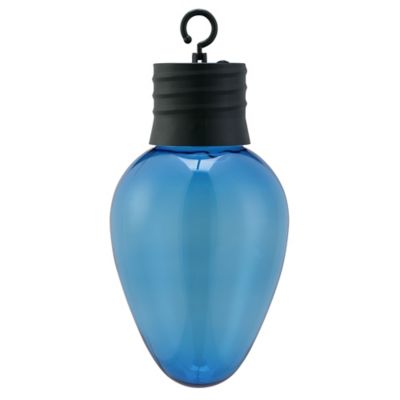
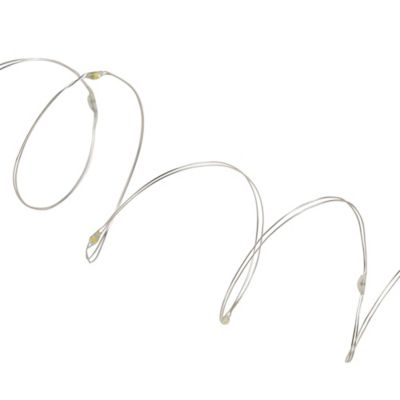
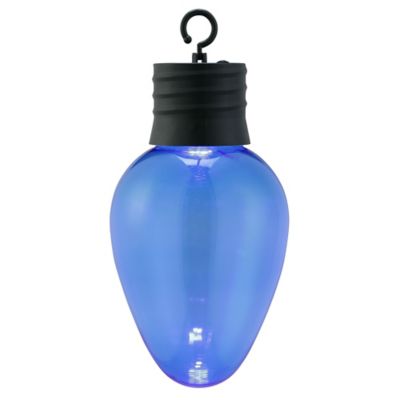
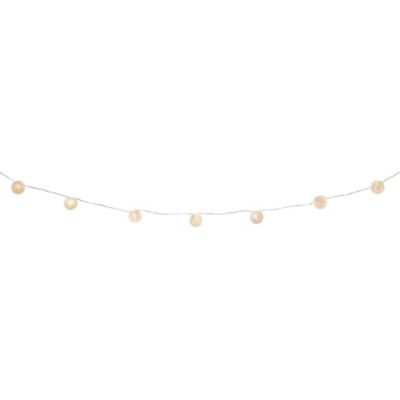
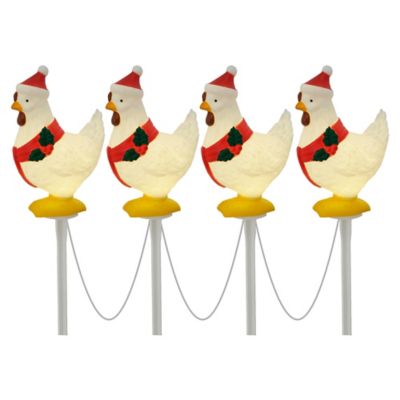
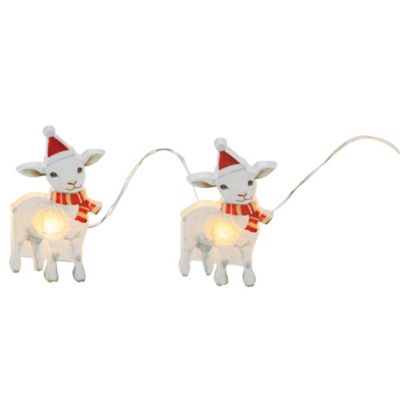
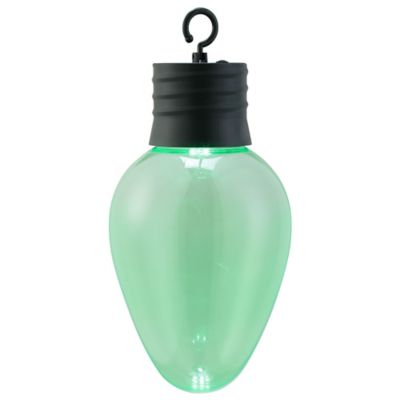
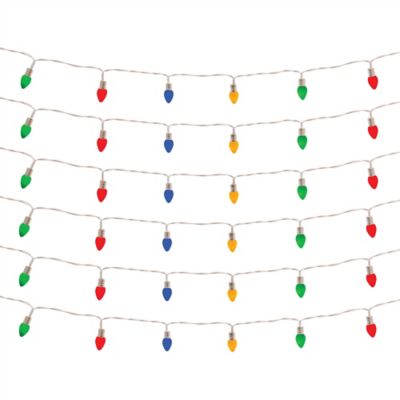
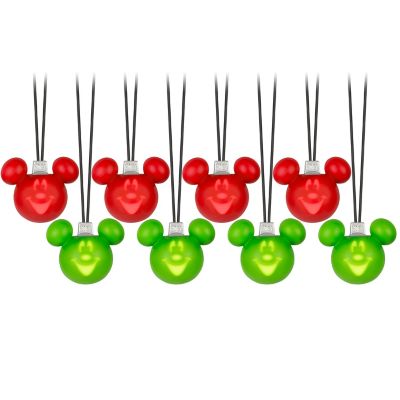
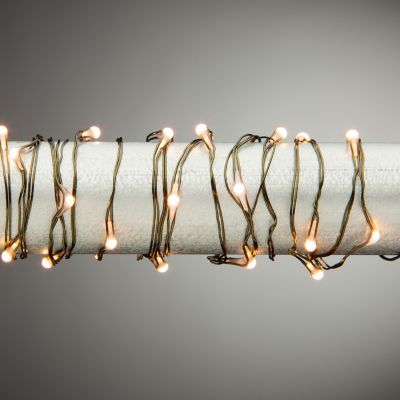
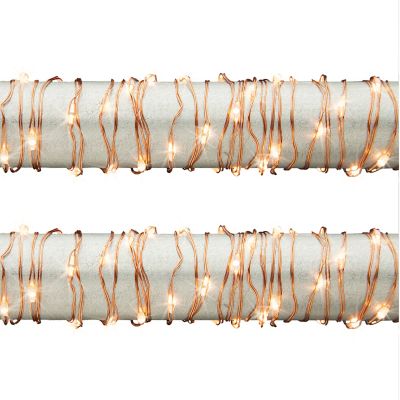
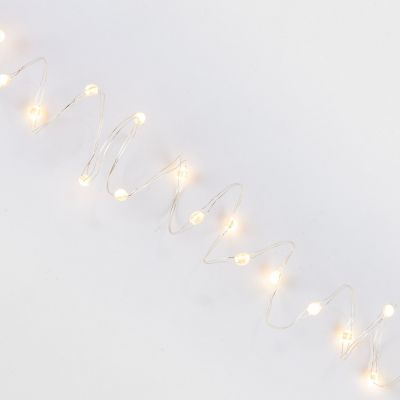
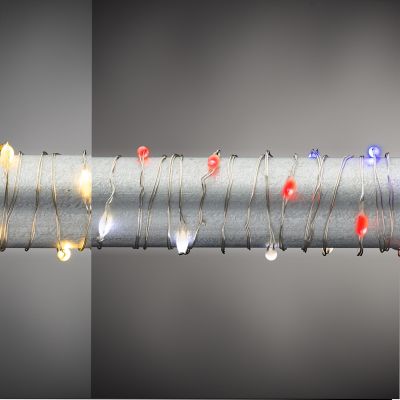
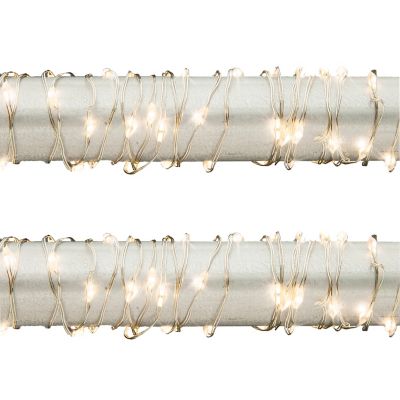
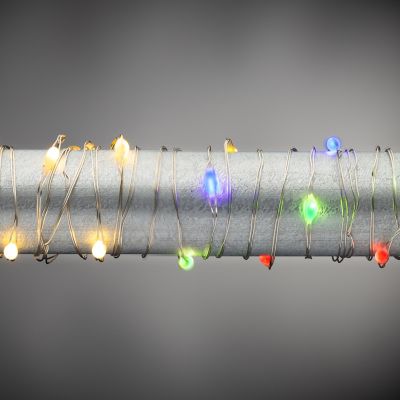
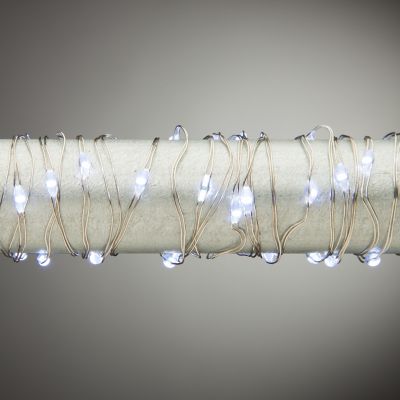
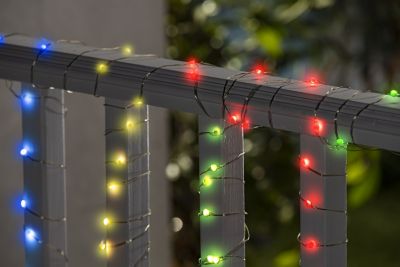
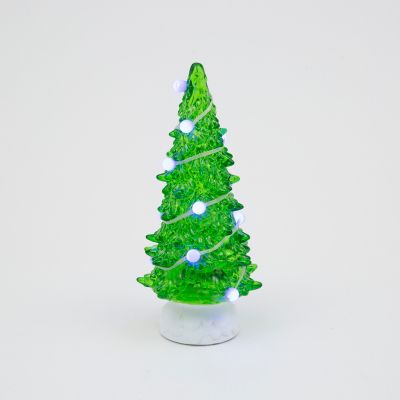
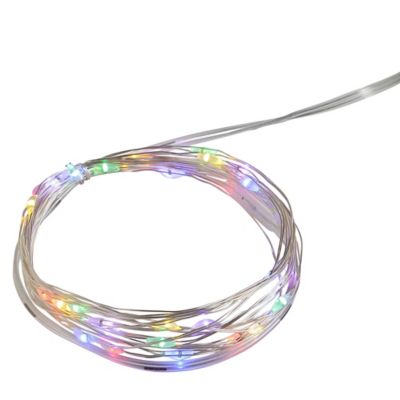
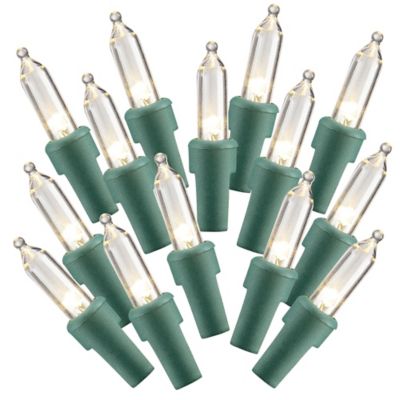
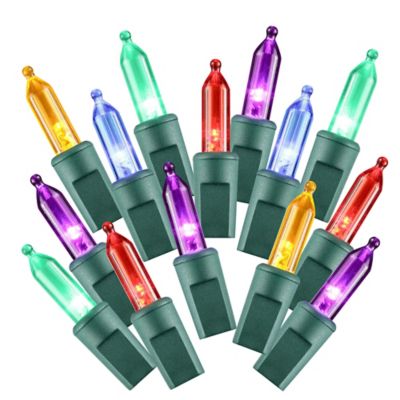
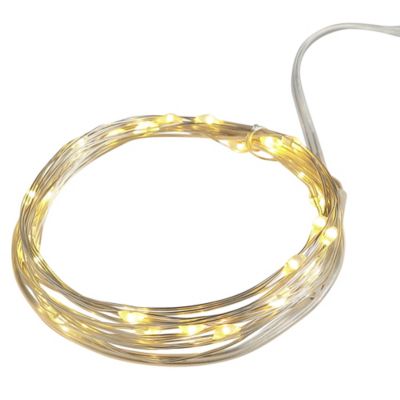
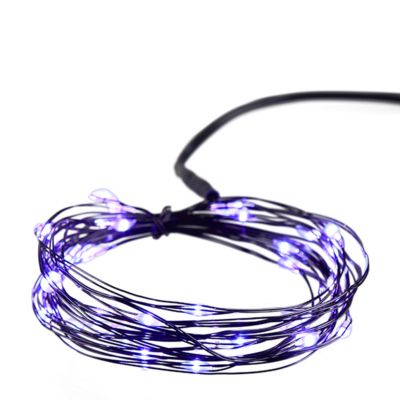
Battery powered Christmas lights bring a holiday glow to wreaths, garlands, small trees and table displays without needing a nearby wall outlet. That makes them a handy fit for a front door, a dining table in the middle of the room or a farmhouse entryway where an extension cord would get underfoot. The light strand connects to a battery pack, so placement depends on strand length and a safe spot for the pack rather than the location of a receptacle. Different light styles suit different jobs. Tiny fairy lights tuck between evergreen branches and add small points of light around pinecones, while strands with larger bulbs stand out more clearly along a railing or across a broad mantel. Warm white lights give greenery a soft, welcoming glow; cool white lights create a brighter-looking contrast against snowy accents; and multicolor lights bring a playful feel to a family Christmas tree. Color names can vary between manufacturers, so matching the stated light color helps when several strands share one display. Lighted length, total strand length and bulb spacing also affect the finished look. A strand with closely spaced bulbs looks fuller than one with wider gaps, even when both cover the same distance. The section between the battery box and the first bulb matters, too, especially when the box needs to sit behind a wreath or beneath a table arrangement. For a small display, a shorter strand can keep extra wire from bunching up around the base. A longer garland may need more than one strand, with each battery pack kept accessible. Alongside
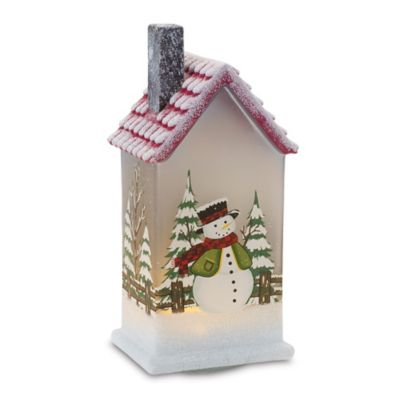
Battery Operated Christmas Decorations, these lights can help carry the same colors from the entryway to the living room without running cords between displays. They also suit households that rearrange furniture for Christmas gatherings, since a lighted centerpiece can move with the table.
Battery life is one of the biggest considerations with battery operated Christmas lights, and there is no single runtime that applies to every strand. Battery type, bulb count, brightness, operating mode and temperature all play a part. LED lights generally draw less power than comparable incandescent lights, making them well suited to battery operation, but a larger or brighter display can still call for more frequent battery changes. Some sets take AA or AAA batteries, while others require a different size or power arrangement; the battery compartment and package information identify what belongs in that set. Fresh batteries of the same type help support steady operation, and mixing old and new batteries can lead to uneven performance or leakage. Rechargeable batteries are an option only when the light manufacturer's instructions allow the battery type and voltage involved. Built-in timers can make everyday operation simpler, especially for a wreath hanging above easy reach. A timer that runs six hours on and eighteen hours off, for example, repeats a daily cycle while limiting the time the lights stay lit. Timer schedules differ, and some controls need resetting after batteries are changed. A steady glow works well around a supper table, while twinkle or flashing modes create a livelier display on a small tree. Controls are easier to manage when the pack sits where a switch can be reached without taking the arrangement apart. Battery-box size deserves attention as well: a larger compartment may be harder to conceal in a slim wreath, even if the strand itself fits. Indoors, a pack can rest behind greenery with access to its latch and controls. Outdoors, both the lights and their battery enclosure need a rating suited to the intended location. A covered porch still exposes a display to damp air and windblown moisture, and a weather-resistant housing is not permission to leave a pack in standing water. Cold conditions can also reduce battery performance, so outdoor runtime may differ from indoor results.
Materials and construction affect how battery powered Christmas lights fit into a display and how well they handle repeated holiday setup. Fine metal-wire strands bend neatly around branches and wreath frames, but sharp folds and repeated twisting can weaken the wire. Insulated strands with more substantial bulb housings have a different look and may be easier to arrange where the lights remain visible. Green wire blends into evergreen branches, while clear or pale wire is less noticeable against light-colored surfaces. Plastic battery cases help keep the controls together, but latches, seals and wire connections still need gentle handling. A secure attachment supports the strand without pulling on the wire or pinching it beneath a door. On a wreath, the battery box needs its own support rather than hanging by the lead wire. Outdoor displays also need protection from swinging branches, foot traffic and animals that might chew or tug at loose sections. Indoors, loose batteries and accessible battery compartments belong out of reach of children and pets, with particular care around small button or coin cells if a set takes them. Lights should stay away from open flames, hot fireplace surfaces and other heat sources, even when the bulbs are LEDs. After the Christmas display comes down, removing replaceable batteries before extended storage helps prevent leakage damage. A gentle wipe with a dry cloth, followed by storage in a dry place, keeps dust and moisture from lingering around contacts and controls. Loosely winding each strand around a piece of cardboard can prevent tangles without forcing tight bends, and keeping the battery box with its strand makes the next setup easier. Before another season of lighting, checking for cracked housings, corroded contacts and damaged wires helps identify strands that need replacement. With the right length, light color and placement, battery Christmas lights bring a welcoming touch to everything from a kitchen windowsill to the wreath that greets family at the front door.