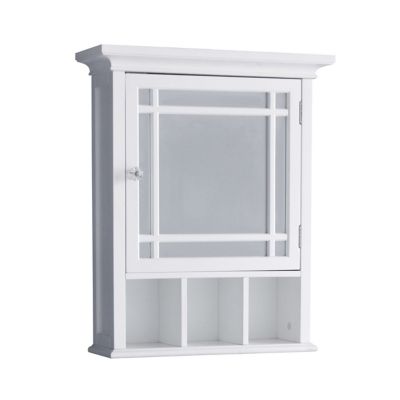
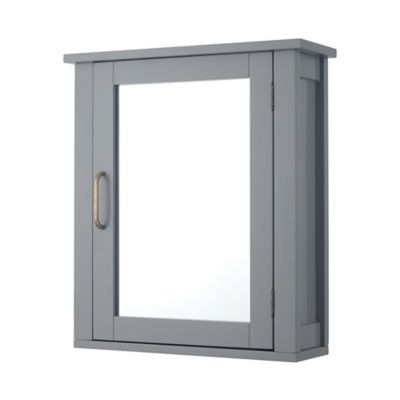
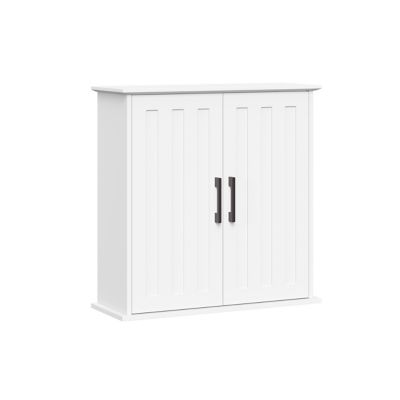
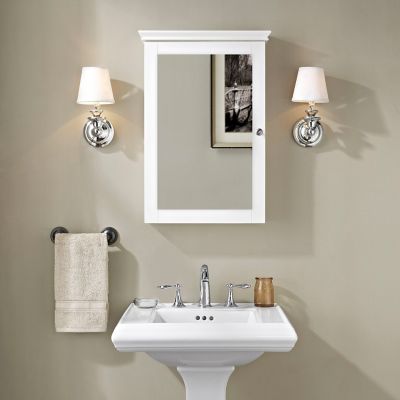
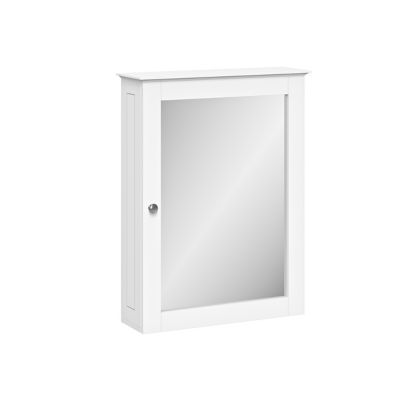
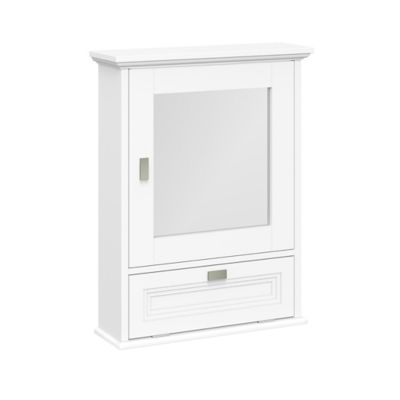
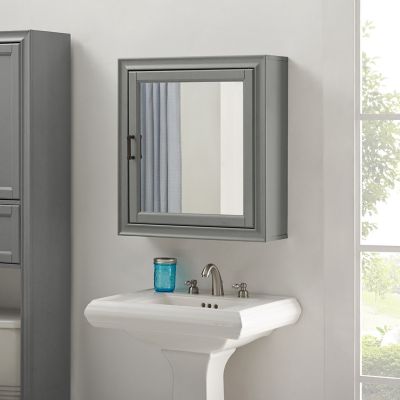
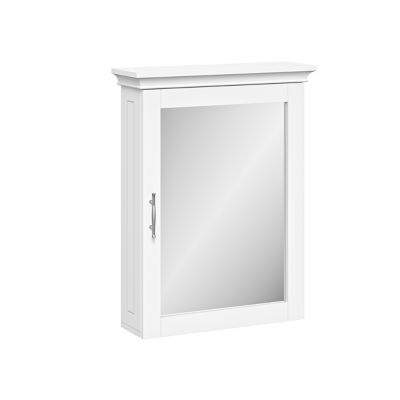
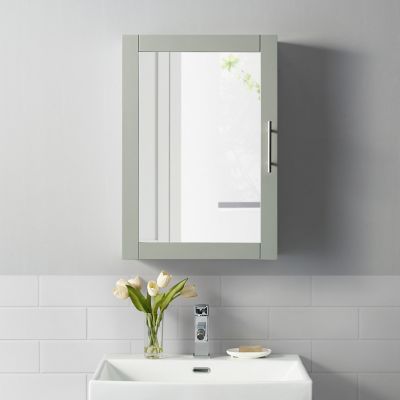
Bathroom wall cabinets with mirrors bring a mirror and tucked-away storage together in one wall-mounted piece, keeping everyday essentials close without taking up floor space. Often called mirrored medicine cabinets, they make good use of the area above a sink or vanity, especially in bathrooms where counter space is tight. A toothbrush, shaving cream, and a contact lens case can have their own spots behind the door instead of crowding the sink ledge. That leaves more room for washing up after chores, getting ready for work, or helping a little one brush their teeth. These cabinets fit into primary bathrooms, shared family bathrooms, and small guest baths, with different storage layouts suited to different routines. A single mirrored door offers a straightforward setup, while divided compartments and multiple doors can help separate one person’s supplies from another’s. Enclosed shelves keep small bottles and grooming tools out of sight; open side shelves, where included, put frequently needed essentials within easy reach. Adjustable shelves can accommodate taller containers, although the cabinet’s interior depth also determines what fits. A tall bottle may clear the shelf above it and still keep the door from closing if its base is too wide. For that reason, useful storage depends on more than the cabinet’s outside dimensions. Shelf spacing, hinge placement, and the size of the door opening all affect how comfortably the cabinet holds daily supplies. The mirror deserves just as much attention as the storage behind it. Its height and width influence how well it serves the people sharing the room, and the mounting position should provide a comfortable reflection without stretching or stooping. In a hardworking household, a mirrored bathroom cabinet earns its place by making familiar routines a little less cluttered, whether the room serves one person before sunrise or a whole family getting out the door.
The biggest difference among mirrored bathroom wall cabinets is how they sit against the wall. Surface-mounted cabinets attach to the wall face, leaving the cabinet body visible and projecting into the room. Recessed cabinets fit into an opening in the wall, with much of the storage compartment tucked between the framing for a shallower profile above the sink. Some designs support either mounting method, but that flexibility needs to be confirmed in the cabinet specifications. A recessed installation depends on the space inside the wall, where framing, wiring, plumbing, or other obstructions may limit placement. Surface mounting avoids the need for a full cabinet-sized wall opening, though secure attachment still calls for suitable support and fasteners for the wall construction and the cabinet’s loaded weight. Fit also includes the space around the cabinet, not just the patch of wall behind it. A door needs room to swing without bumping a light fixture, nearby shelving, or a side wall. Over a shallow sink, a deeper cabinet may feel intrusive when someone leans forward to rinse their face. Above a wide vanity, a very narrow mirror may leave less viewing space than the household expects. Measuring the cabinet’s width, height, and projection alongside the sink, faucet, and lighting helps put those proportions in perspective. Materials matter in a bathroom, too. Solid wood, engineered wood, steel, and aluminum each bring different characteristics, and their suitability depends on construction, finish, and the manufacturer’s stated bathroom application. Sealed surfaces and protected edges help limit moisture entry, while exposed seams or damaged finishes deserve attention before repeated splashes take a toll. Metal construction can simplify wiping down, but corrosion resistance varies with the metal and coating. Glass shelves offer a smooth cleaning surface; their thickness, supports, and stated weight limits still matter. A cabinet that feels steady, has well-supported shelves, and opens smoothly is better suited to the repeated handling that comes with everyday bathroom use.
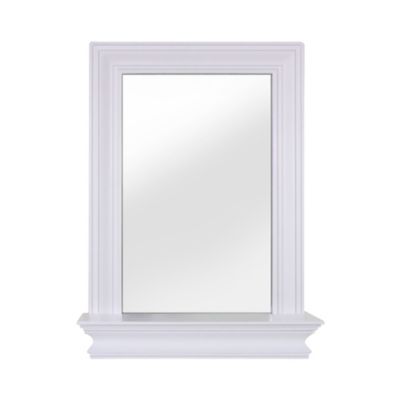
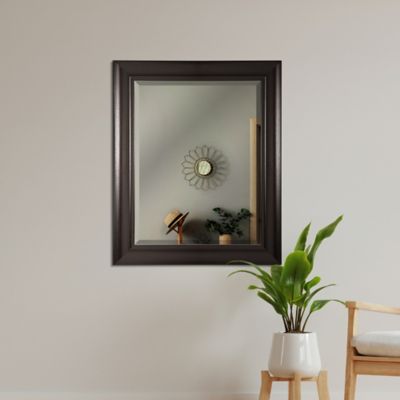
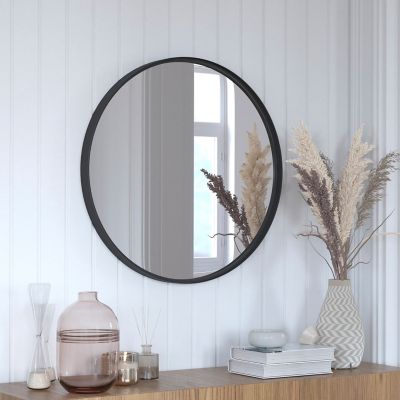
Style and upkeep help determine how well a bathroom wall cabinet with a mirror settles into the room for the long haul. A painted frame can blend with trim or vanity doors, while a wood-tone finish can bring a warmer look alongside a simple sink and practical hardware. Frameless mirrored doors create a less visually busy appearance, which can work well in a small bathroom with limited wall space. The shape of the frame, the visibility of hinges, and the finish of a knob or pull all contribute to the overall look without changing the cabinet’s main job: keeping essentials organized and providing a useful reflection. For a bathroom that already has a separate mirror,
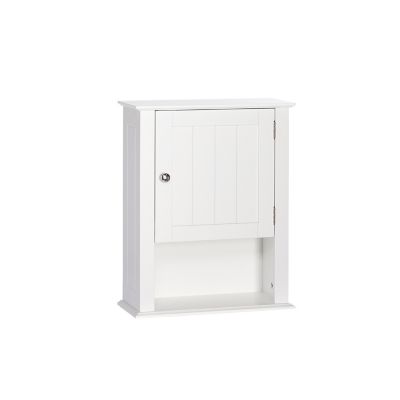
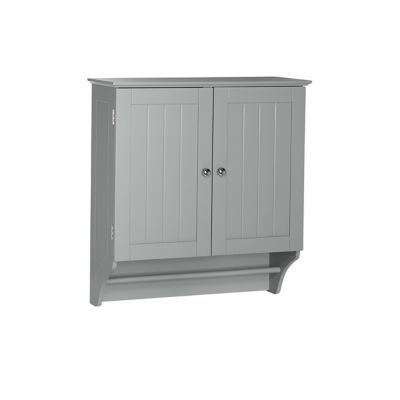
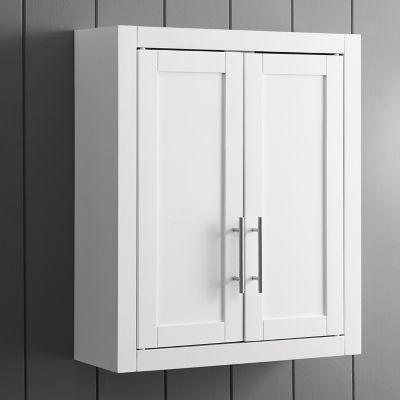
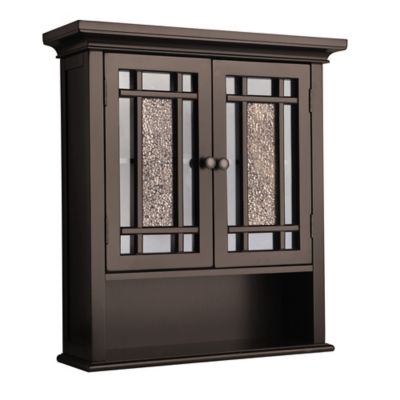
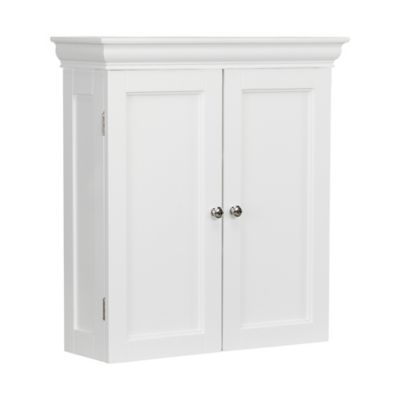
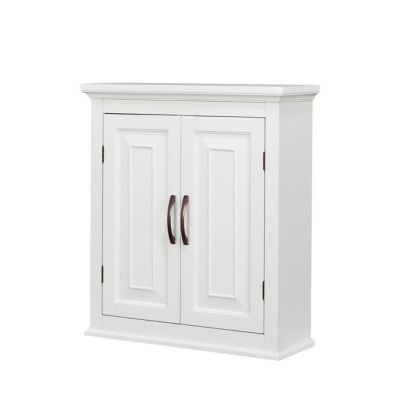
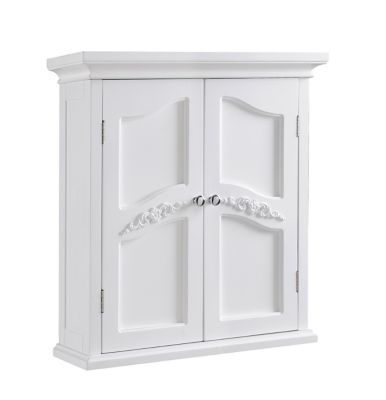
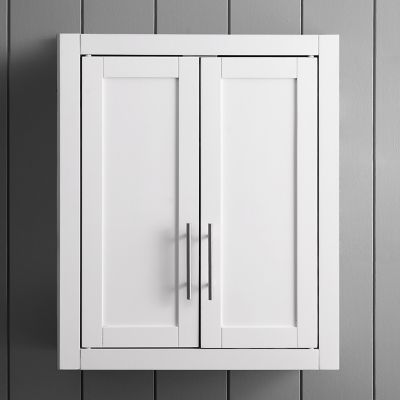
Bathroom Wall Cabinets With Doors offer another way to add enclosed wall storage without repeating the mirrored surface. In a shared bath, separate shelf areas can keep shaving supplies apart from hair accessories, while a guest bathroom may only need room for spare toothbrushes and a few basic toiletries. Although the term medicine cabinet is common, not every medication belongs in a bathroom; storage directions on the label determine whether the room is appropriate. A standard cabinet door also does not provide child-resistant security, so medicines, sharp tools, and other potentially harmful supplies need storage suited to the household. Day-to-day care is generally straightforward when it follows the material and finish instructions. A soft cloth helps remove fingerprints from the mirror, and applying a compatible cleaner to the cloth rather than spraying the cabinet can help keep liquid away from mirror edges, joints, and hardware. Promptly wiping splashes, keeping bottle bottoms clean, and allowing the bathroom to ventilate help reduce lingering dampness. Shelf supports and hinges benefit from occasional checks, particularly in a cabinet opened several times a day. With proportions that suit the sink, storage that fits the household’s essentials, and surfaces that are manageable to clean, a mirrored wall cabinet brings order to a busy bathroom without asking for another inch of floor space.