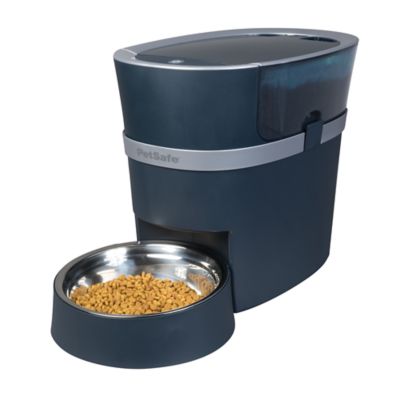
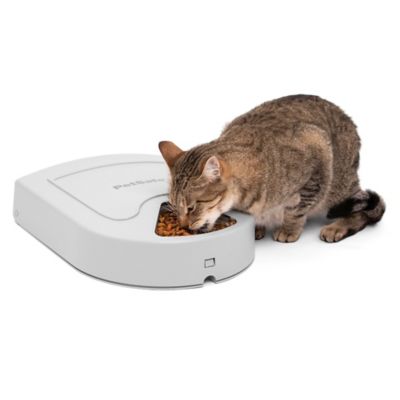
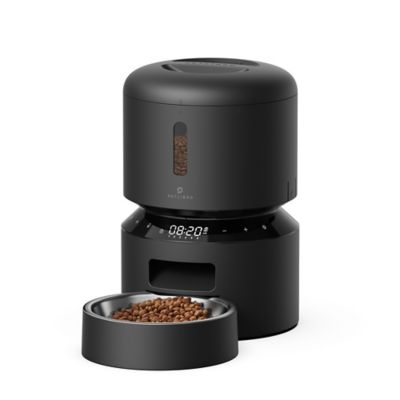
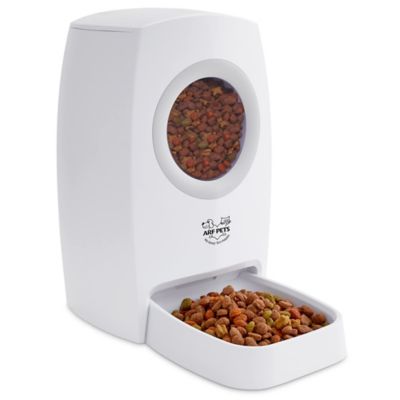
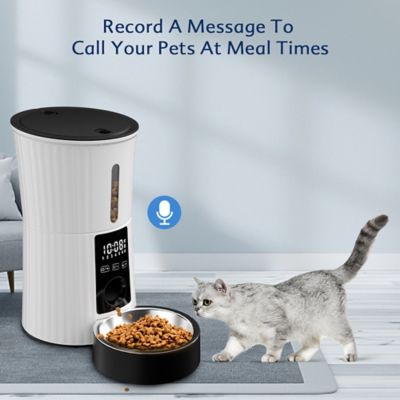
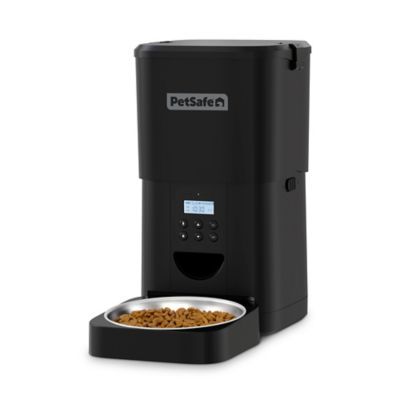
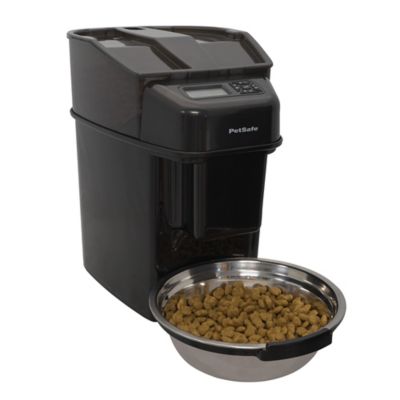
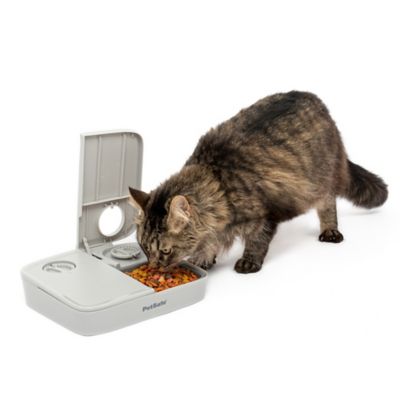
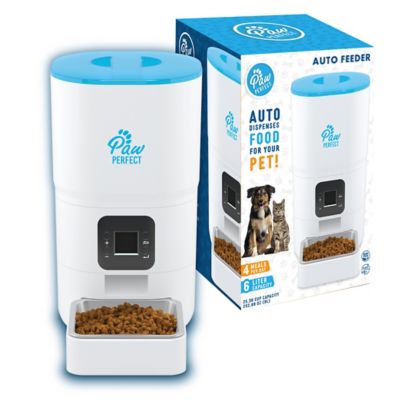
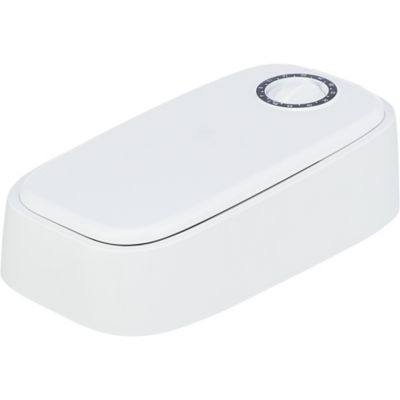
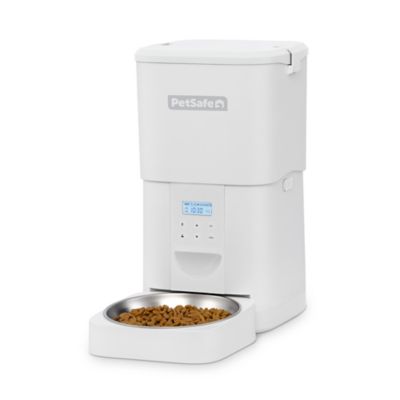
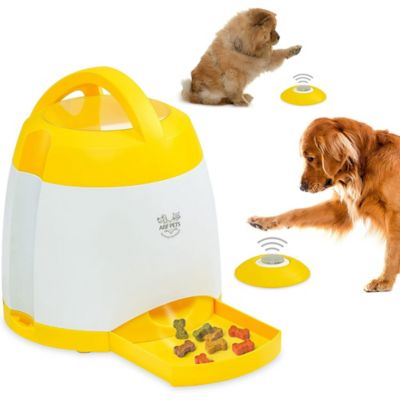
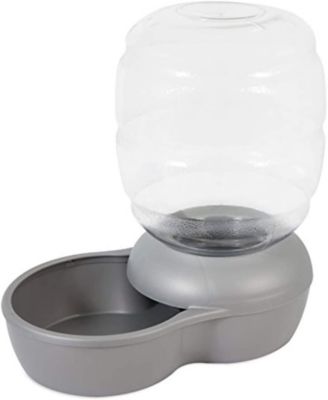
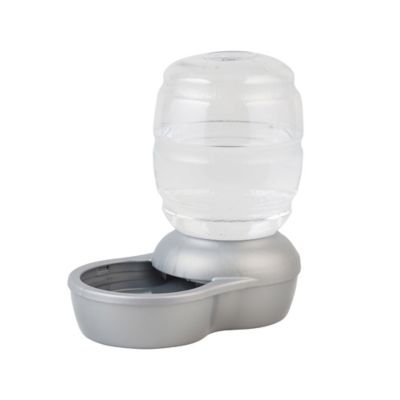
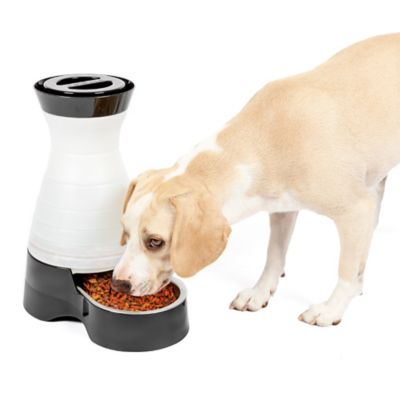
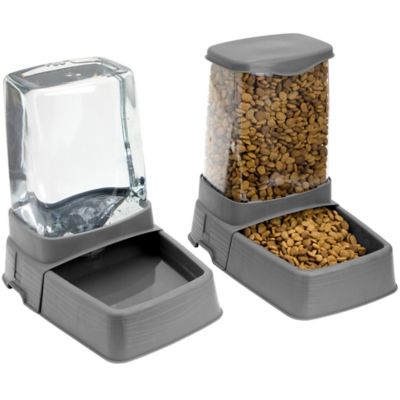
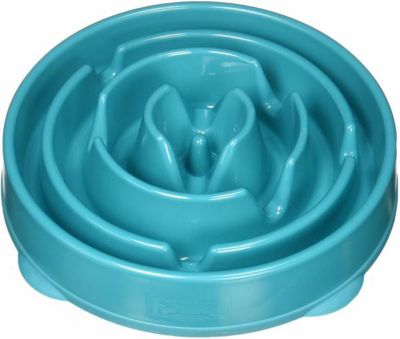
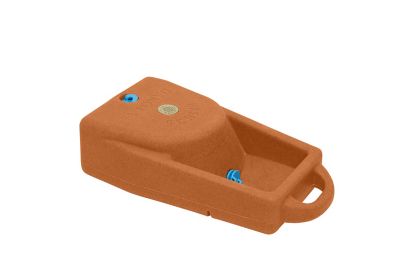
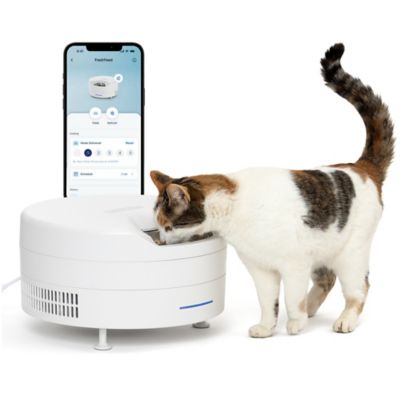
Automatic dog feeders dispense food on a set schedule or make it accessible through a gravity-fed design, depending on the type. Programmable feeders can release measured servings at selected times, while gravity feeders refill the bowl as a dog eats and do not control meal timing or portions. That difference matters for a dog who grazes throughout the day compared with one who would polish off every bite within reach. Scheduled feeding can help keep breakfast and supper consistent when morning chores run long, a work shift starts early, or the trip home takes longer than planned. These feeders support an everyday feeding routine, but they do not replace fresh water, exercise, companionship, or someone checking on the dog. Most hopper-style automatic feeders hold dry kibble in a covered container and move it into a bowl below. Compartment-style feeders keep separate servings in a rotating tray or beneath timed lids, making the amount placed in each compartment the serving for that meal. Some feeders offer several daily feeding times, and certain designs release a serving gradually rather than dropping it all at once. Slow dispensing may help pace a fast eater, though it is not a treatment for digestive problems. Portion settings also deserve a close look: a feeder’s “portion” may mean a small dispensing increment rather than a cup or a complete meal. The amount delivered depends on the mechanism and the food, so checking a few servings against a measuring cup or kitchen scale helps establish what actually lands in the bowl. Daily food amounts still depend on the dog’s age, body condition, activity level, and veterinary recommendations. A hard-working adult dog, a growing puppy, and an older house companion may all need different meal patterns. Automatic dog feeders work best when their scheduling range and serving sizes match those needs, rather than asking the dog’s routine to fit the machine.
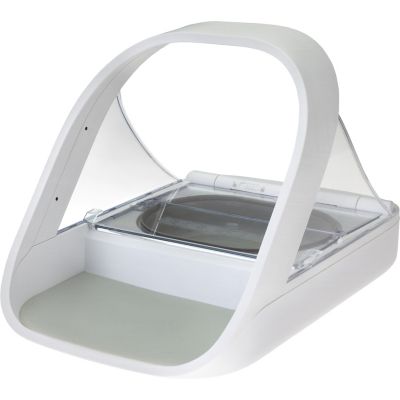
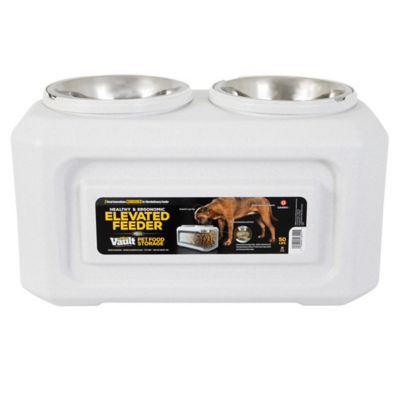
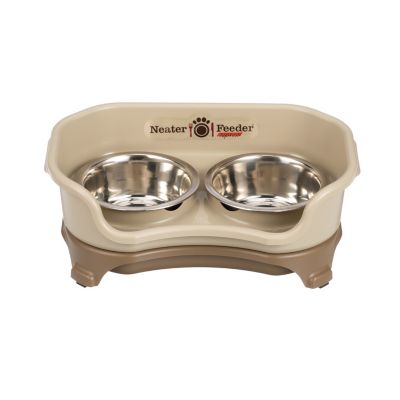
Food compatibility, bowl shape, and overall size have just as much bearing on everyday use as the timer. Dry-food dispensers generally have limits on kibble size and shape, and large pieces, irregular chunks, or food with soft mix-ins may not move smoothly through a mechanism meant for small, uniform kibble. Wet or canned food belongs only in a feeder specifically designed to hold it. Some compartment feeders accommodate moist meals and include cooling packs, but those packs have limits; safe holding time depends on the food, room temperature, and manufacturer’s directions. A large hopper means fewer refills, not unlimited freshness, and stored food still needs protection from moisture, heat, and pests. For a little dog, an easy-to-reach bowl with a shallow eating area may be a better fit than a deep bowl tucked beneath a broad dispenser. A larger dog needs enough room around the opening to eat comfortably without pressing its muzzle against the housing. A steady base, nonslip feet, and a securely closing lid matter when an eager eater nudges the bowl across the kitchen floor. Food-contact components commonly include plastic or stainless steel, with removable stainless-steel bowls offering a smooth surface that is straightforward to wash. Plastic containers make it easy to see the food level, while their condition needs checking for cracks, scratches, and tooth marks over time. No feeder should be treated as chew-proof, especially around a determined puppy. In homes with several animals, a shared feeder can make it hard to tell who ate what. Microchip- or tag-activated feeders can restrict access to a recognized pet, which may help separate diets, but access control is not necessarily the same as scheduled dispensing. Separate feeding spaces and observation still matter when one dog crowds another. For a timid eater, a quiet spot away from the back door and muddy-boot traffic can make the feeder easier to approach, particularly while the dog gets familiar with its motor sounds and moving parts.
Power and controls shape where an automatic feeder fits into the house. A
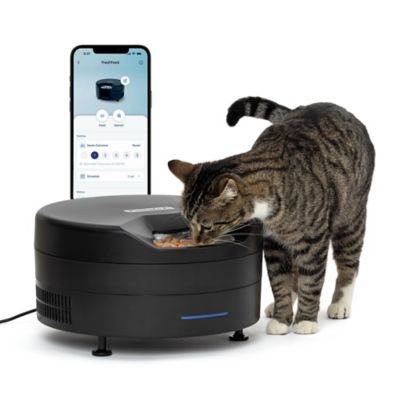
battery operated dog feeder offers flexibility away from an outlet, while plug-in designs need a suitable outlet and a cord kept clear of chewing, foot traffic, and water. Some electric feeders include backup battery operation, though the functions supported during an outage vary by design. Backup power may keep scheduled dispensing running without maintaining a camera or wireless connection, so those details matter in places where storms sometimes knock out electricity. Battery checks belong alongside refilling and cleaning rather than waiting for the feeder to stop. Basic digital controls keep scheduling on the unit itself; connected feeders may add remote schedule changes, meal notifications, or a camera through a phone app. Wireless features depend on compatible home networking, and whether stored meal schedules continue without internet service depends on the feeder. A dispensing alert can confirm that the machine ran, but it does not necessarily confirm that the dog ate. The most useful setup is one that someone in the household can check and operate without a fuss. Care is another part of that everyday fit. Removable bowls, trays, and accessible food paths make it easier to clear crumbs and food residue before buildup interferes with feeding. Dishwasher cleaning is appropriate only for parts identified as dishwasher-safe, and motors, control panels, and electrical connections need to stay dry. Washed food containers should dry fully before refilling. Most household automatic dog feeders belong indoors in a dry, sheltered space unless specifically rated for outdoor use; a covered porch or open barn can still expose food and electronics to damp air, freezing temperatures, insects, and wildlife. During the cooler months, a steady indoor feeding spot can help keep the routine familiar as daylight and chore schedules shift. For shift workers, busy farm households, or anyone coordinating several daily meals, the right feeder takes one repeating task off the clock while keeping hands-on care firmly in the picture.