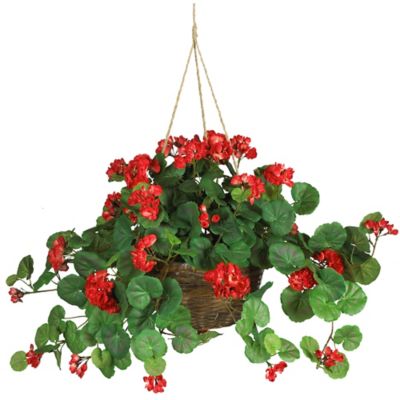
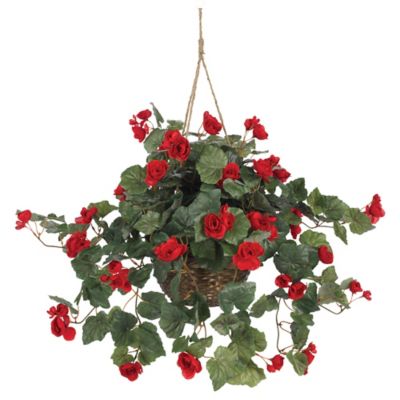
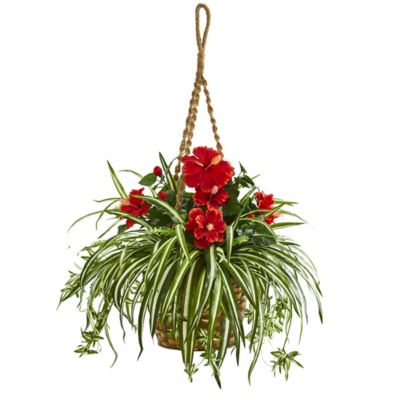
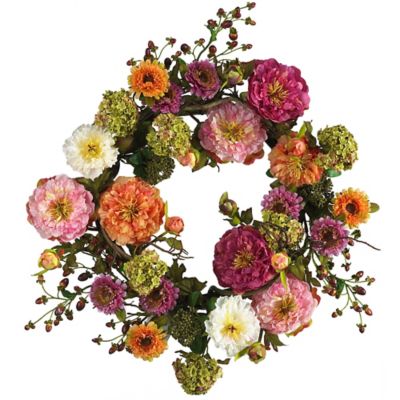
Artificial flowering hanging baskets bring the color and fullness of blooming plants to a porch, patio, balcony or indoor corner without watering, feeding or pruning. Flowers and trailing greenery sit in a suspended container, creating a planted look without the upkeep that living flowers need. They’re a practical fit for a busy household, a weekend getaway or an entryway where tending a live basket would be a chore. Above a porch swing, beside the back door or near a kitchen window, a hanging arrangement adds color while leaving floors, steps and tabletops clear. The overall shape makes a difference: rounded arrangements create a tidy outline, while trailing stems soften the basket’s edge and draw the eye down along a porch post or railing. Broad flower heads stand out from the driveway, while smaller blossoms and layered leaves offer more detail near a seating area. Petunia-style blooms, geranium-like clusters and daisy-shaped flowers each bring a different feel, from a full cottage-garden look to something simpler and more relaxed. Color can tie the arrangement to siding, painted trim, chair cushions or a favorite front door. White and cream blooms provide a soft contrast against dark backgrounds, while reds, pinks and purples make a stronger statement against pale walls. Greenery matters just as much as the flowers; a mix of leaf sizes and trailing lengths helps an arrangement look less flat. A matching pair can frame an entrance, while one generously filled basket can finish a small porch without crowding it. In a longer space, repeating the same flower colors gives separate seating areas a common thread. Indoors, artificial hanging flowers also suit spots where a living plant would struggle for light, though placement still needs to leave enough room for everyday movement. That balance of color, shape and manageable upkeep makes these baskets appealing to anyone who enjoys the look of flowers but would rather spend time on other things.
Materials and construction affect how an artificial flower hanging basket looks up close, how much it weighs and where it belongs. Fabric blossoms can have a softer finish, while molded plastic flowers and leaves can provide more defined shapes. Polyester is a common material for artificial petals, and some stems contain wire that allows gentle shaping. The word “silk” sometimes describes a style of artificial flower rather than its actual fiber, so material details are more useful than that label alone. Containers may have a woven appearance, a solid molded body or a metal frame with a fiber liner. Each contributes a different look: woven textures sit comfortably beside wood furniture and porch rockers, while a simpler container keeps the flowers as the main focus. The liner or filler may support the stems rather than hold growing plants, so an artificial arrangement does not need potting soil or regular watering. For outdoor placement, the flowers, foliage, container and hanging parts all need to suit that setting. An outdoor-use designation and stated resistance to fading are worth considering separately; neither means an arrangement will keep its original appearance indefinitely. Size deserves the same attention as materials. Basket width may describe only the container, not the full spread of flowers, and the overall drop can include the hanger, basket and lowest trailing stems. A basket that looks compact in a picture can take up considerable space beside a narrow doorway. Enough clearance above a porch chair and away from a screen door helps keep blossoms from brushing against people or catching as the door opens. The combined weight of the basket and its hanger also matters, particularly overhead. Chains, hooks and mounting points need to support the complete arrangement, with fasteners suited to the surface rather than attached only to thin trim. A sound hanging setup keeps the display steady and makes it easier to take down for cleaning or rearranging. Around children and pets, out-of-reach placement is sensible because artificial flowers are not meant for chewing or play.
Care is usually straightforward, but artificial flowering hanging baskets still benefit from occasional attention. Dust can settle between petals, along leaf veins and around the rim, especially near an open doorway or in a busy room. A soft brush or dry microfiber cloth can lift light buildup without pulling at the flower heads. Some plastic components may tolerate a gently dampened cloth, while fabric petals, glued joints and certain finishes need a lighter touch; the care directions for the arrangement should determine the cleaning method. Soaking an entire basket can affect adhesives, wire or the container, even when some of its parts can handle surface cleaning. Supporting stems close to their base while adjusting them helps prevent unnecessary strain, and small changes in direction often give compressed flowers a fuller appearance. There’s no need for every bloom to face forward. A few turned slightly to the side, with trailing greenery spread around the edge, can create a more natural-looking outline. When a basket comes down, a roomy storage container helps keep flower heads from being flattened under heavier belongings. Keeping the hanger from tangling through the stems also saves fuss when it’s time to hang it again. For a coordinated entry, flower colors can connect a hanging basket with an arrangement on a bench or console;
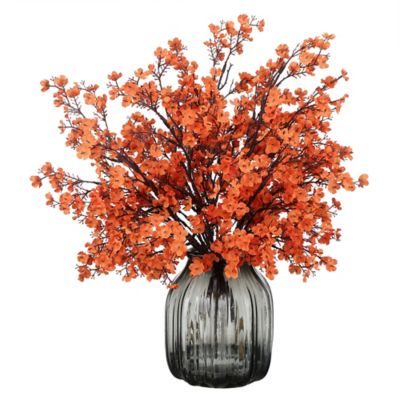
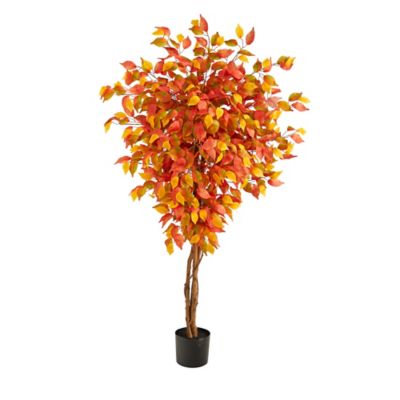
Fall Artificial Flowers offers another direction for a palette of rust, gold and deep red. Artificial hanging flowers can also make a thoughtful housewarming gift for someone settling into a place with a porch, or a welcome present for someone who loves flowers but finds lifting a watering can difficult. A manageable basket size and a hanging location within comfortable reach make ongoing care easier. Whether the setting is a farmhouse entrance, an apartment balcony or a quiet indoor nook, the best fit comes down to a pleasing shape, suitable materials and enough breathing room for the flowers to show.