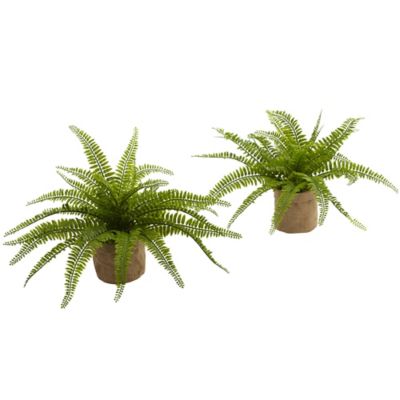
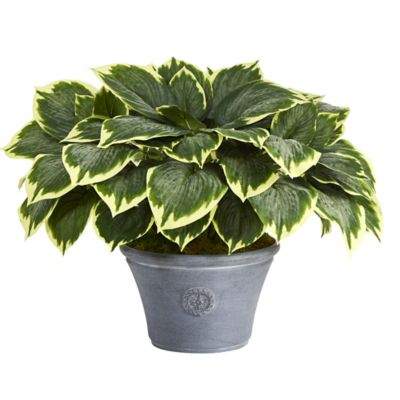
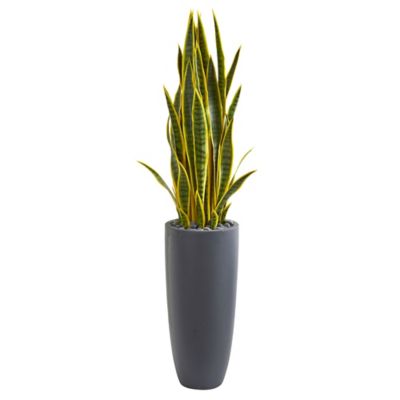
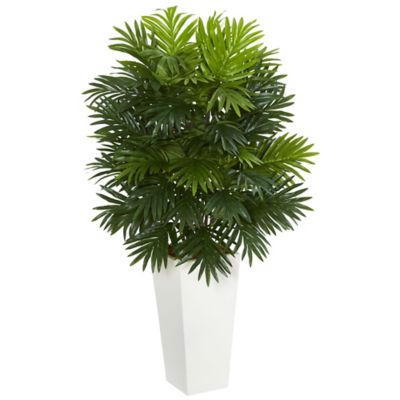
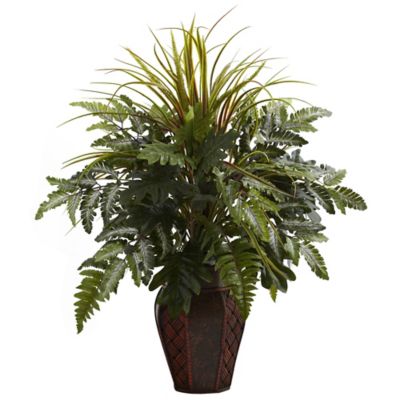
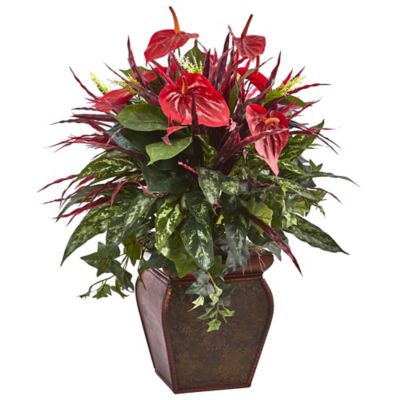
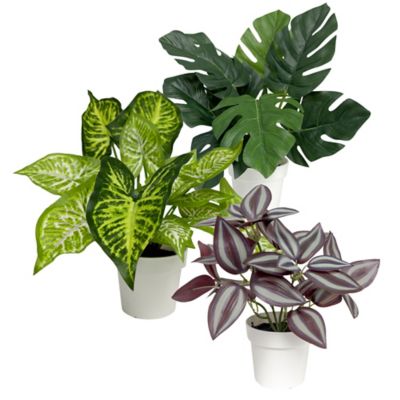
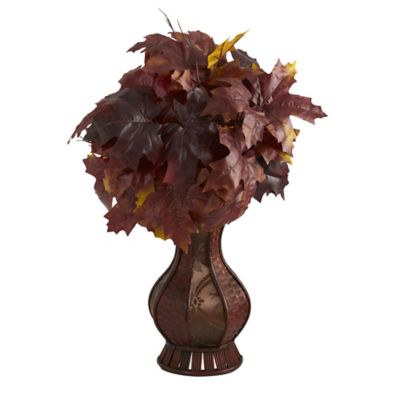
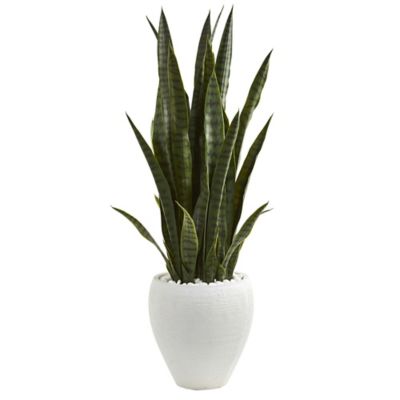
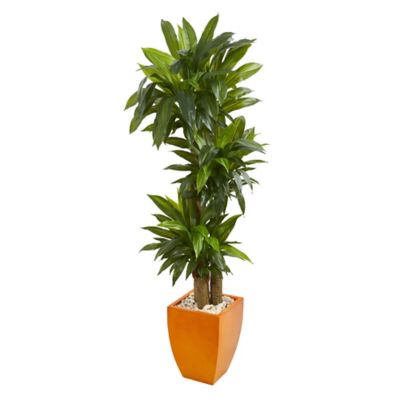
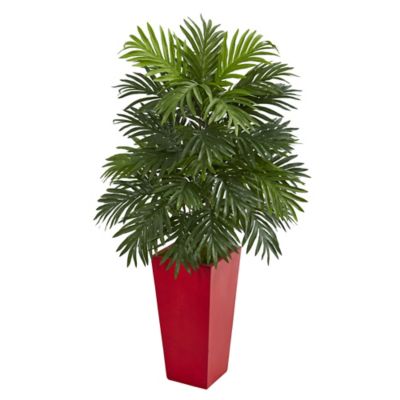
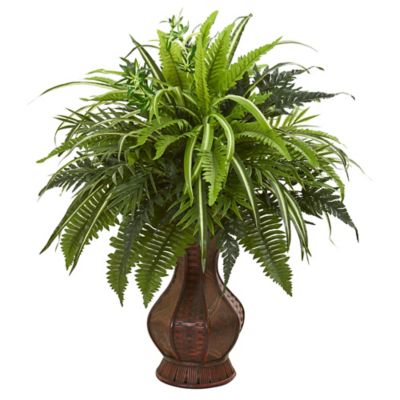
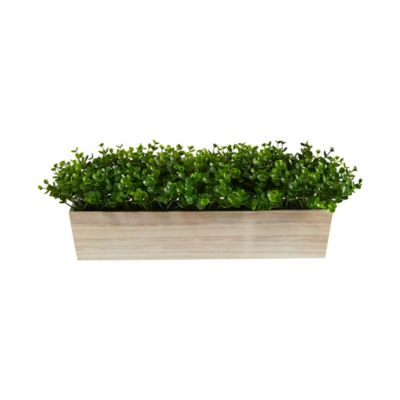
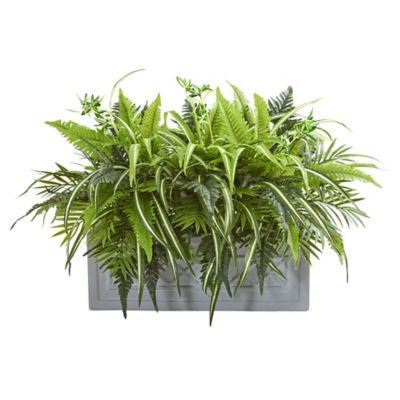
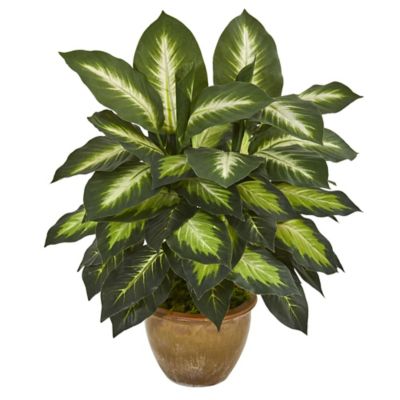
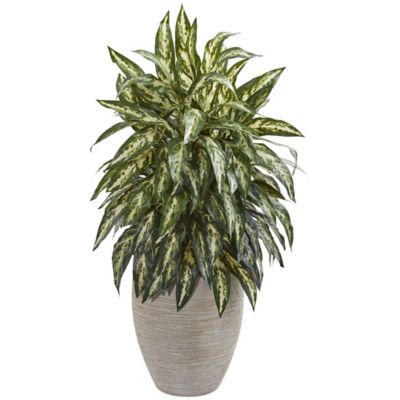
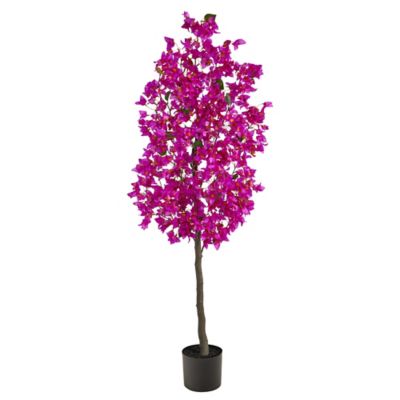
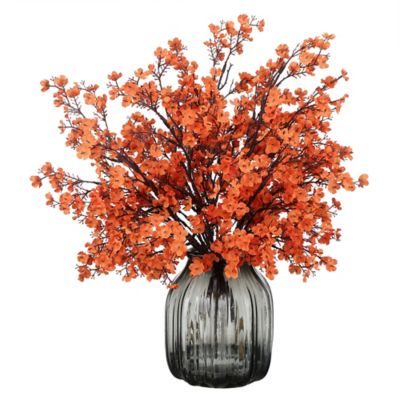
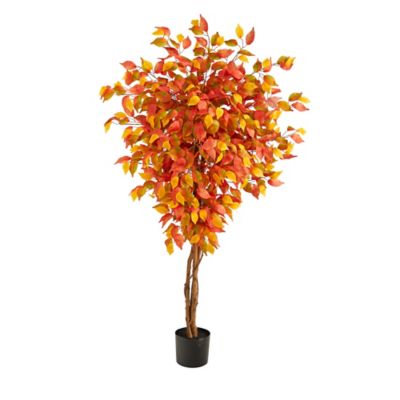
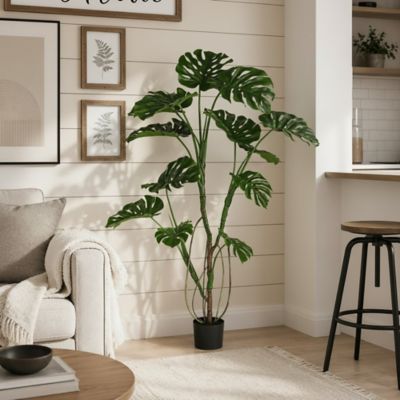
Artificial plants with planters combine manufactured foliage and a coordinating container in one ready-to-place arrangement. They bring the look of greenery to a room without watering, feeding, repotting for growth, or trimming back new shoots. That makes them a practical fit for a farmhouse kitchen, a busy mudroom, an office away from the windows, or a guest room that sits empty between visits. Unlike living plants, artificial greenery does not need sunlight to grow, though its materials still need occasional cleaning and proper placement. The foliage may feature molded plastic, fabric leaves, flexible stems, or a mix of materials, with each construction creating a different look and feel. Molded leaves can give small succulents their thick, rounded appearance, while fabric foliage can give broader leaves a softer finish. Fine stems and narrow blades create an airy shape; dense branches and broad leaves make a fuller statement. Those differences matter in a room: an open arrangement can sit beside a lamp without crowding it, while a fuller plant can help fill a bare corner beside a reading chair. Natural-looking color variation, visible leaf veins, and stems that branch at different heights help keep an arrangement from looking flat. Some designs have bendable stems that allow gentle shaping according to the care instructions, while others hold a fixed form. A plant-and-planter pairing also takes some of the guesswork out of matching the greenery to its container. The result can feel settled and intentional, whether the setting leans toward painted cabinets and open shelves or plain wood furniture and hardworking floors. Small arrangements suit a bedside table or a kitchen counter with limited room, while taller shapes can stand beside a bench or bring height to an open living area. The best fit depends less on filling every empty spot and more on giving the foliage enough room to show its shape without getting in the way of everyday chores.
The planter contributes as much to the finished look as the leaves do, and its material affects weight, handling, and care. Ceramic containers can have smooth glazed surfaces or more textured finishes, while resin and plastic containers often keep the overall weight easier to manage. Concrete and stone can add substantial weight, which matters when an arrangement will sit on a narrow shelf or need to move for cleaning. Metal containers bring another range of finishes, although their care requirements depend on the coating and intended setting. Woven outer containers add texture, but some serve as covers around an inner pot rather than as the structure holding the stems. With any pairing, the listed measurements deserve a close look. Overall height may run from the bottom of the planter to the tallest leaf, and foliage width can extend well beyond the container’s rim. A plant that fits neatly on a console by its base measurement may still brush against a doorway or hide a light switch. Shelf depth, overhead clearance, and room for nearby lamps or picture frames all affect how comfortably an arrangement fits. On a dining table, a lower profile leaves a clearer view across the table; on the floor, a broader base can help support taller foliage. Stability matters around children, pets, and busy walkways, especially where a wagging tail or a carried laundry basket might catch a branch. Artificial greenery is not meant for chewing, and loose surface stones, fibers, or other small components should stay out of reach. Some plants are secured into their planters, so the container may not be removable without damaging the arrangement. Others have an inner pot that rests inside an outer container. That distinction matters if the arrangement needs to move or if its outer container needs cleaning. Outdoor placement calls for both the foliage and the planter to be labeled for outdoor use; a container’s suitability alone does not establish that the entire arrangement belongs outside.
Care is usually straightforward, but artificial plants with planters are not completely maintenance-free. Dust can gather along leaf edges, settle into branching stems, and collect around the base, especially near an entryway or in a room with plenty of foot traffic. A soft, dry cloth or gentle duster is often enough for routine upkeep when the care label allows it. Textured leaves and tightly packed foliage may need a little more attention than smooth, open shapes. Water and cleaning sprays are not suitable for every material: fabric leaves, glued joints, surface finishes, and filling inside the planter can react differently to moisture. Following the maker’s cleaning directions helps protect those parts, and there is no need to water an artificial arrangement. Placement also affects how well its appearance holds up over time. Repeated handling can bend stems or loosen attached pieces, while strong direct light may fade materials that are not designed for that exposure. Keeping foliage clear of cooktops, heaters, candles, and other heat sources is important, and an arrangement should never block a vent or interfere with a door. In everyday rooms, these plants work well where living greenery would be awkward to tend: on a high shelf, beside a seldom-opened guest bed, or on an office cabinet far from natural light. A compact arrangement can also make a thoughtful housewarming gift for someone who likes greenery but does not want another watering chore. The planter’s size, weight, and finish help determine whether that gift will fit a small apartment, a roomy farmhouse, or a desk at work. For a broader look at shapes that suit living spaces,
artificial plants for the home offer more ways to carry greenery from one room to another. Whether the goal is a leafy corner or a small touch of green beside the coffee maker, a well-proportioned plant and planter can make the space feel more welcoming without adding plant care to the chore list.