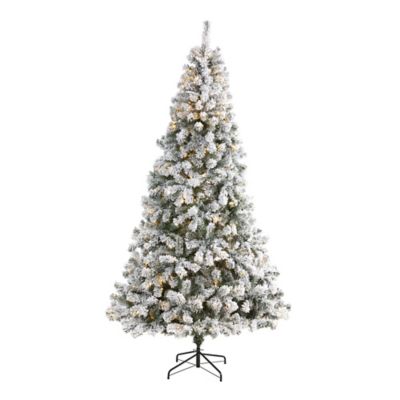
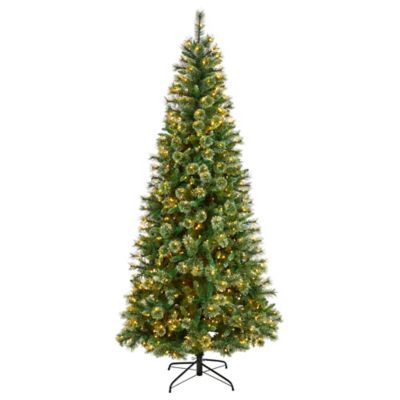
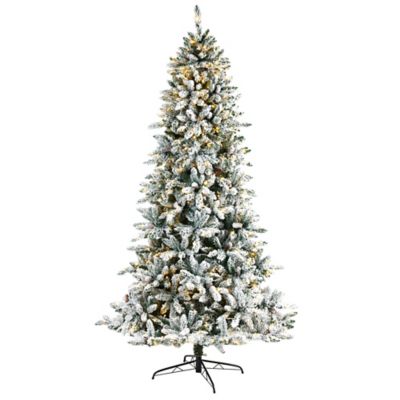
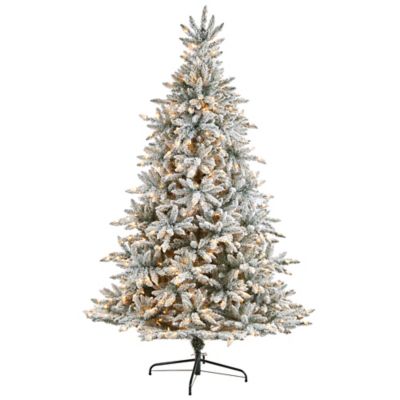
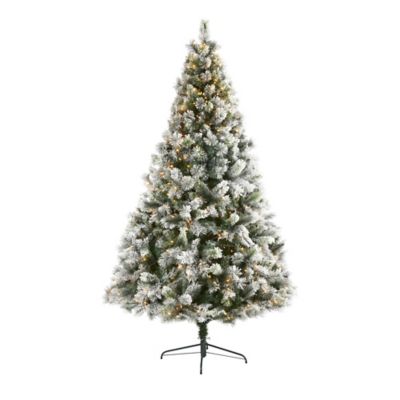
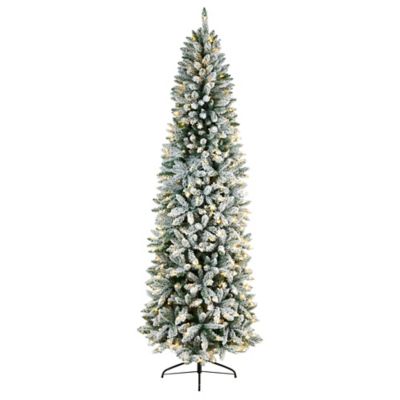
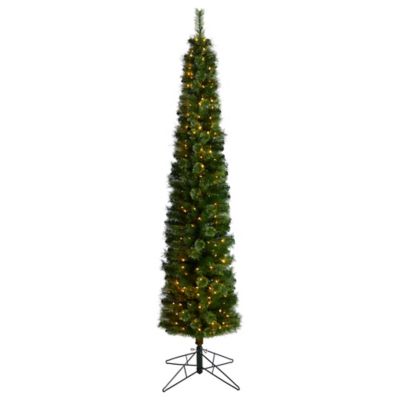
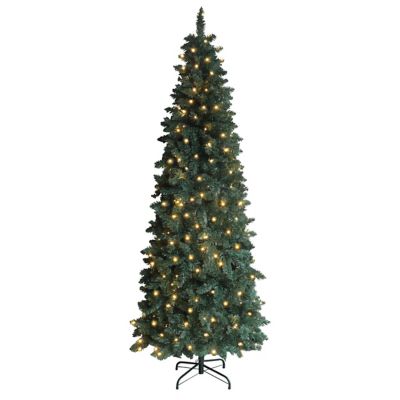
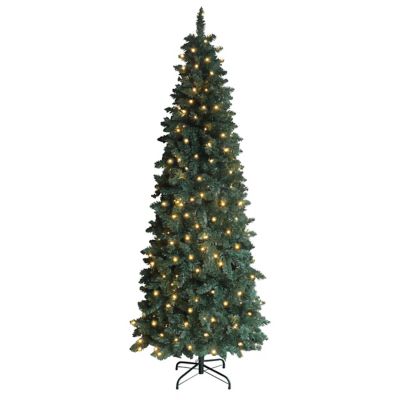
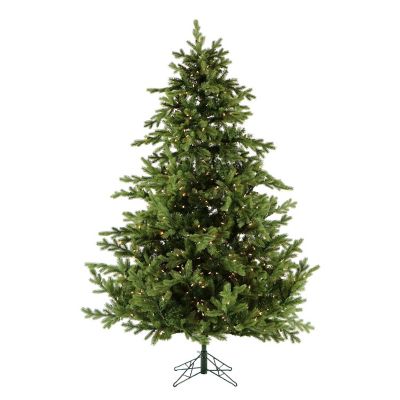
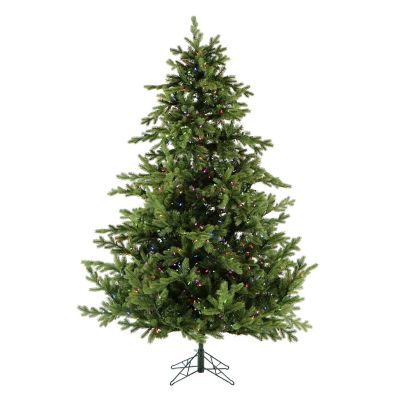
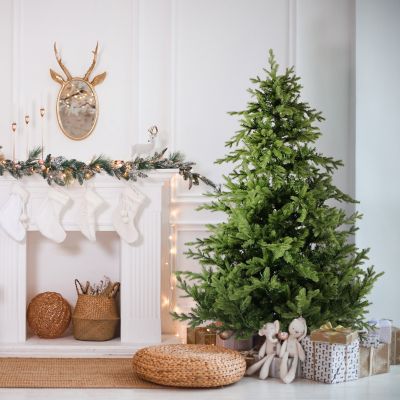
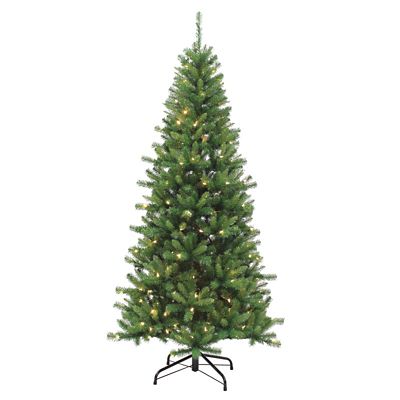
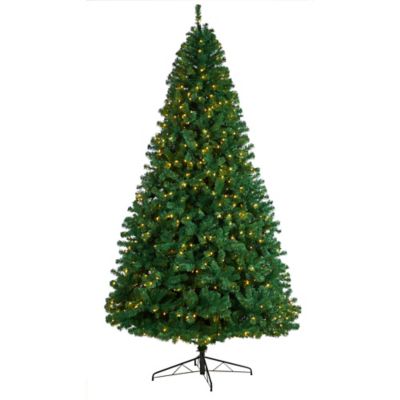
An 8-foot prelit Christmas tree is an artificial Christmas tree with lights already arranged on its branches, creating a tall holiday centerpiece without the separate job of winding light strings around the tree. A 9-foot ceiling generally gives an 8-foot tree about a foot of overhead space, provided the stated tree height includes its stand. That space needs to accommodate the topper, too, so a tall star or angel may call for a higher ceiling. An 8-foot ceiling leaves little to no clearance for a tree of the same height. Ceiling fans, hanging fixtures, and sloped ceilings also affect where a tree can comfortably fit. Width matters just as much as height: a full tree can fill a broad corner beside the picture window, while a slim profile leaves more walking room between the sofa and the hallway. The listed branch spread helps show how much floor space the tree needs, with additional room for a skirt or collar around the base. Within the broader category of
8ft Artificial Christmas Trees, prelit styles bring the branches and lighting together for households that would rather spend their time hanging family ornaments than sorting tangled cords. Their height works well as a focal point in a spacious front room, an open-plan farmhouse, or an entryway with enough clearance. A smaller room can still accommodate that height when the tree has a narrower shape and does not crowd doors, furniture, or everyday traffic. Green branches give colorful ornaments a familiar backdrop, while snow-tipped or flocked finishes bring a different look to the same tall silhouette. From the kitchen doorway to the chair where the family gathers after supper, the viewing angle matters, too. A tree standing in front of a window may be seen from several sides, while one tucked into a corner puts most of its visible branches toward the room.
Branch materials and construction shape both the appearance of an 8-foot prelit tree and the work involved in setting it up. Molded polyethylene, often identified as PE, can give individual tips a dimensional, needle-like appearance. Polyvinyl chloride, or PVC, commonly forms flatter needles that help fill out the branches. Some artificial trees combine the two materials, with molded tips on the outer branches and other foliage closer to the trunk. The result depends on the overall arrangement, not simply the material name or tip count. Closely spaced branches create a dense outline, while a more open branch pattern leaves room for long ornaments, ribbon loops, and keepsakes that deserve a clear view. Branch strength matters for heavier ornaments, which generally sit better closer to the main branch than at the outermost tip. Hinged construction lets attached branches lower into place as the sections come together, although shaping is still part of getting a full appearance after storage. Lighting brings another set of choices. Warm white lights create a soft, steady glow alongside wood furniture and familiar red-and-green trim, while multicolor lights suit a tree filled with bright ornaments and family favorites. Some lighting systems offer selectable colors or effects; others keep things simple with one light color and a steady setting. LED lights generally consume less electricity and give off less heat than incandescent bulbs, but the bulb type and electrical requirements should come from the tree’s specifications. Light count alone does not tell the whole story. Branch density, bulb spacing, and how far the lights reach into the tree affect whether the glow looks evenly spread. Controls also make a difference in daily use. Where included, a foot switch or remote can keep anyone from having to reach behind a wide lower branch every evening. Section connections, replacement-bulb requirements, and the way the light strings are attached are worth considering alongside the tree’s overall appearance.
An 8-foot tree also needs a sturdy setup and a storage plan that suits its size. The stand should match the tree and rest on a level surface, with enough space around the base to keep presents from spilling into a walkway. In a busy household, a spot away from a frequently opened door can help keep branches from getting bumped every time someone comes in with an armload. Homes with small children or curious pets benefit from securely placed ornaments, protected cords, and a tree positioned where climbing or tugging is less tempting. Glass keepsakes can sit higher on the branches, with softer ornaments nearer the bottom. Prelit does not mean suitable for every location: indoor-only trees and light sets belong indoors, and a covered porch still requires equipment specifically rated for that setting. A tree should stay clear of fireplaces, wood stoves, space heaters, and other heat sources, even when its lighting feels cool to the touch. A nearby outlet helps keep the cord arrangement tidy, and any extension cord needs the proper rating for the lighting load. For setup, the weight of individual sections and the reach needed for the upper branches matter as much as the finished height. A stable step stool and another adult can make handling the top section more manageable. Between Christmas gatherings, gentle dusting and care consistent with the manufacturer’s directions help protect needles, branch joints, and wiring. Flocked branches may need lighter handling to limit shedding, and electrical parts should stay dry. After the ornaments come down, the tree stores best with its branches folded without forcing hinges or sharply bending light wires. A properly sized storage bag or box helps keep sections together and shields them from dust. Dry storage away from excessive heat and dampness supports the tree’s condition between holidays. With room to stand tall and a little care between celebrations, an 8-foot prelit Christmas tree can become the familiar backdrop for wrapped presents, family photos, and the quiet glow left on after the gathering winds down.