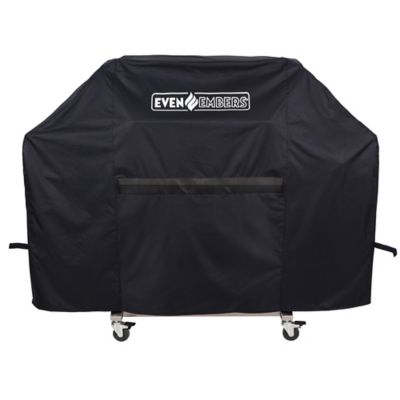
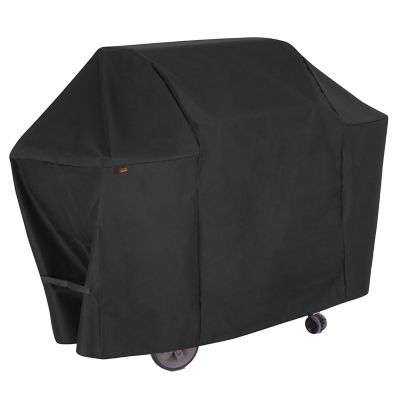
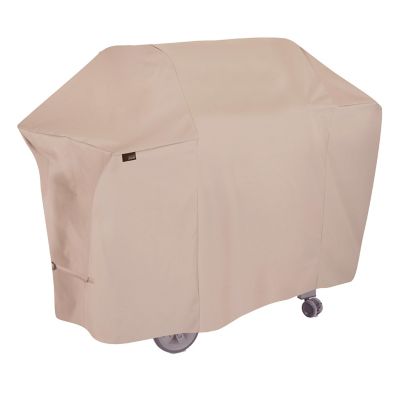
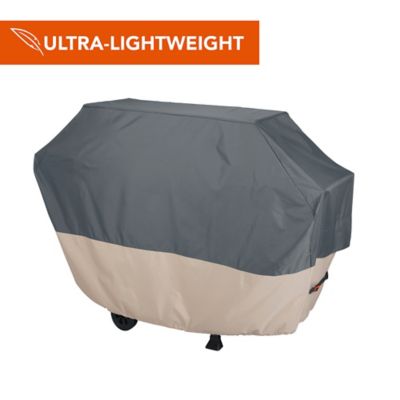
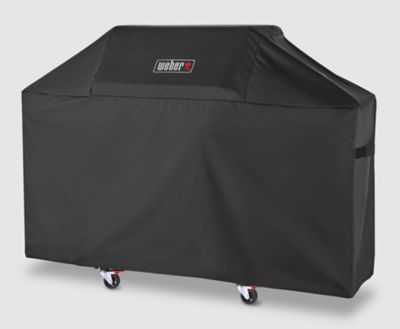
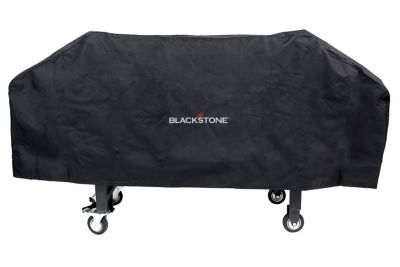
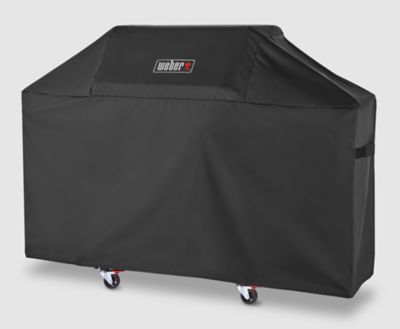
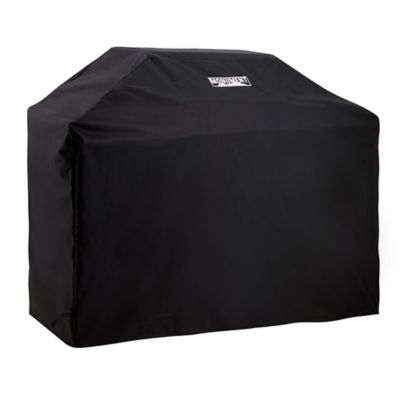
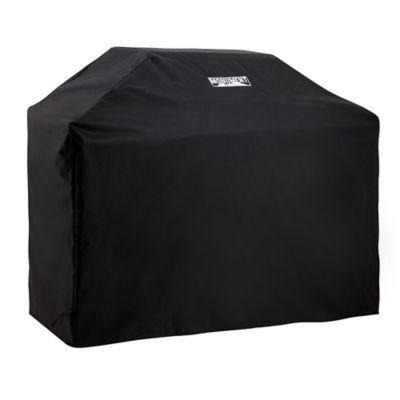
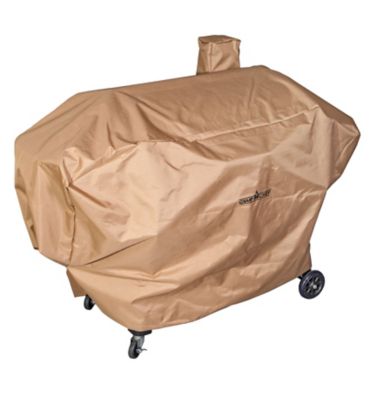
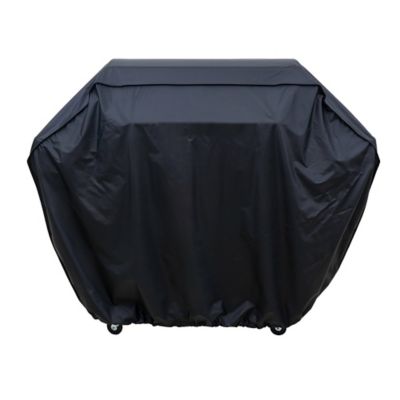
A 65 inch grill cover is a practical way to help protect a larger gas grill from sun, rain, dust, pollen and the everyday mess that comes with an outdoor cooking area. Covers in this size commonly work with many three- to five-burner grills, including models with side shelves, warming racks and other add-ons, but the listed length is only one part of getting a good fit. Before choosing a cover, measure the grill from its widest point, then check the depth and height as well. Include side shelves, handles, control knobs, wheels and any attached storage when taking measurements, and allow enough room for the cover to slide on without a struggle. A little extra room is useful, while a cover that hangs several inches past the bottom can collect water, drag in the dirt or catch the wind. If the grill has a chimney, raised back, attached rotisserie or other unusual features, look for a shape and cut that leaves those parts protected without putting too much strain on the seams. A snug hem, elastic edge, adjustable drawstring or hook-and-loop strap helps keep the cover in place, especially when a gust rolls across the yard or the grill sits in an open spot near a barn, driveway or pasture. Fastening points can also help discourage the cover from blowing off while you're away. For grills that stay outside through changing weather, browse
Heavy Duty Grill Covers for sturdy options designed with outdoor exposure in mind.
Fabric weight is another helpful detail when comparing 65 inch grill covers. Polyester is a common choice because it is flexible, easy to handle and available in a range of weights. Denier ratings offer a general idea of fabric density: lighter materials can be convenient for covered patios or occasional use, while 600-denier and heavier fabrics are often better suited to frequent rain, strong sunlight, rough handling and year-round outdoor storage. A waterproof backing or protective inner coating helps keep moisture from soaking through the fabric, though seams, zippers and vent openings still deserve attention. Water-resistant covers can shed ordinary showers, while waterproof construction may be a better match for areas that see repeated rain or damp, cooler weather. Vented panels allow air to move beneath the cover, which helps reduce trapped condensation and may keep wind from turning the cover into a sail. Fade-resistant fabric is useful where the grill sits in direct afternoon sun, and reinforced corners, double stitching and strong handles can make a difference when removing a cover covered in dew. During warmer stretches, a cover helps limit fading, dust and bird droppings between cookouts; as the weather turns cooler, it can help keep leaves, moisture and frost off the cooking surface. Let the grill cool completely before covering it, and clean and dry the cover from time to time so grit does not rub against the finish. Store it in a dry place when washing or deep cleaning the grill, and avoid placing a cover over hot metal. These covers make useful gifts for someone who has moved into a new home, set up a backyard cooking station or enjoys feeding family and friends outdoors. They are also handy for rural households where equipment may be exposed to blowing dust, pollen and open-air conditions. Whether the grill lives beside a deck, under a simple shelter or out near the garden, the right 65 inch cover helps keep it ready for the next batch of burgers, steaks, vegetables or slow-cooked fare.