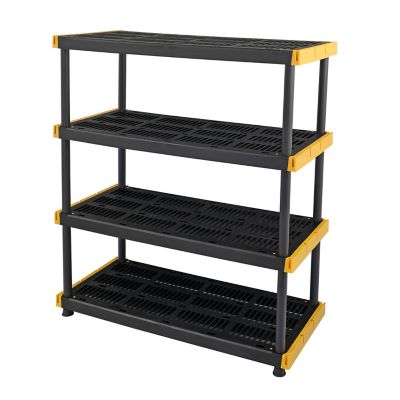
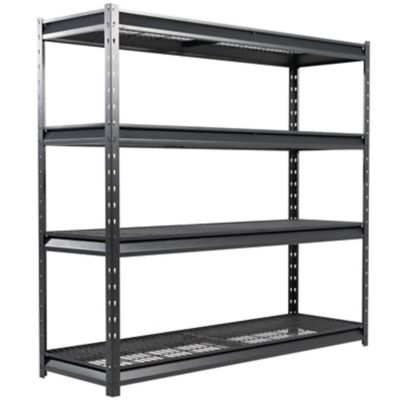
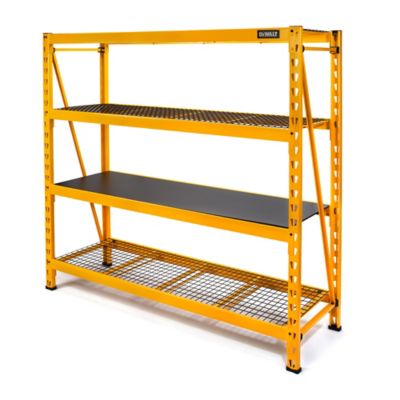
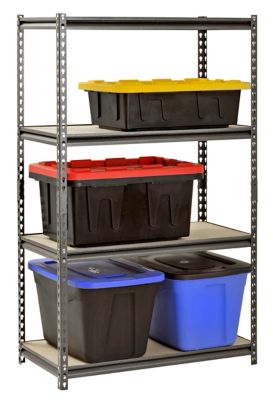
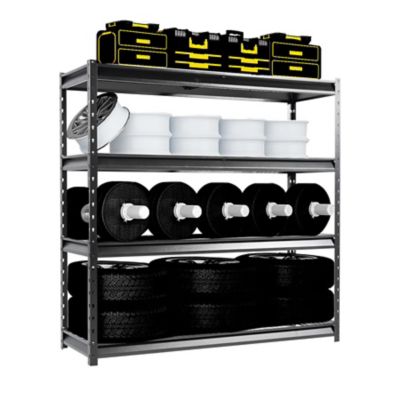
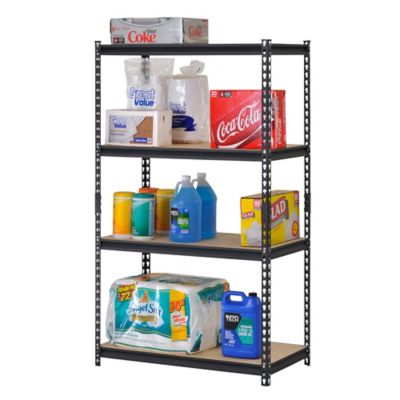
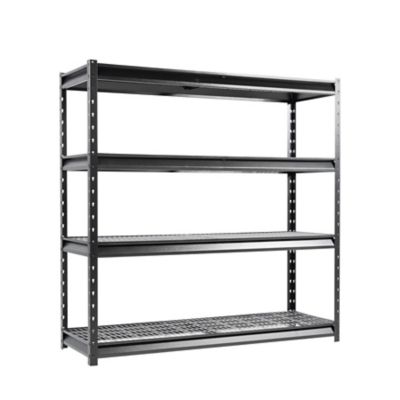
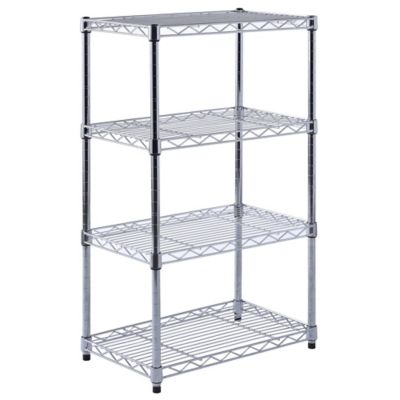
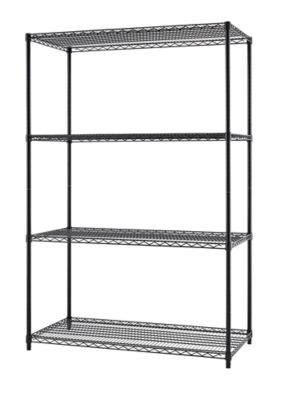
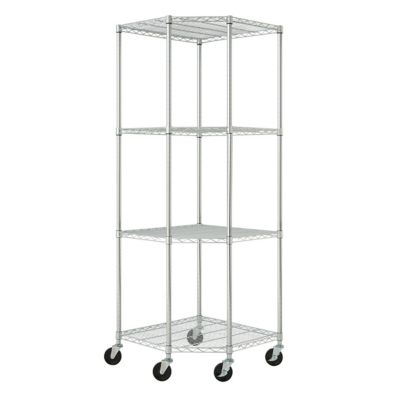
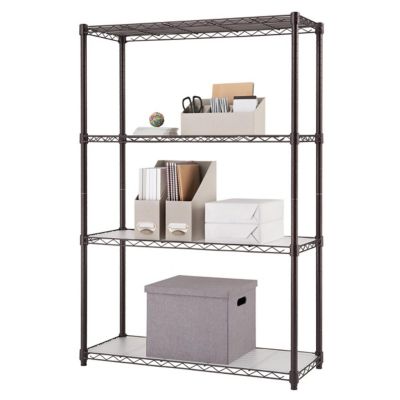
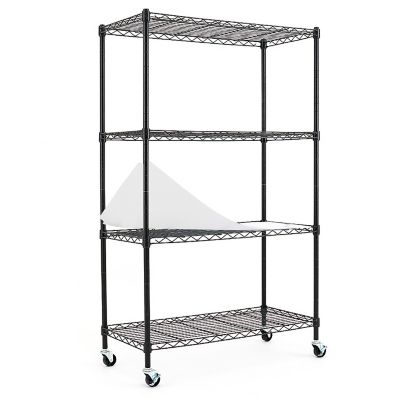
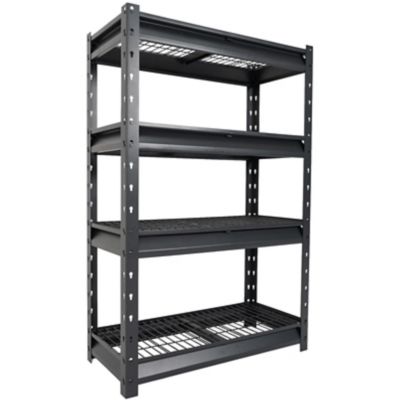
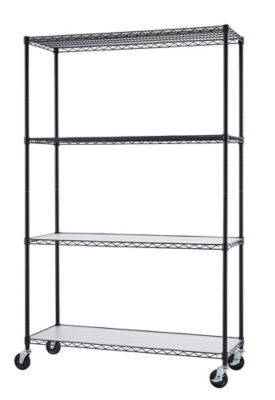
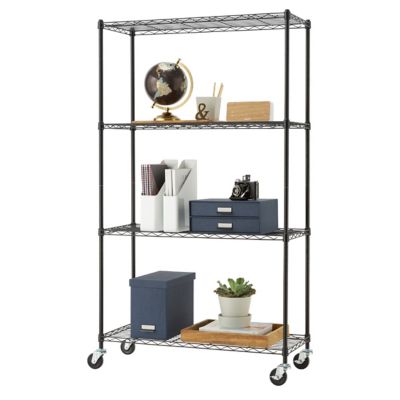
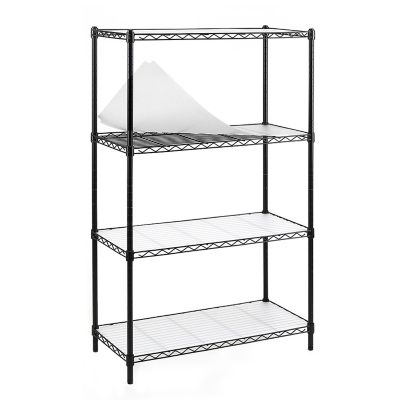
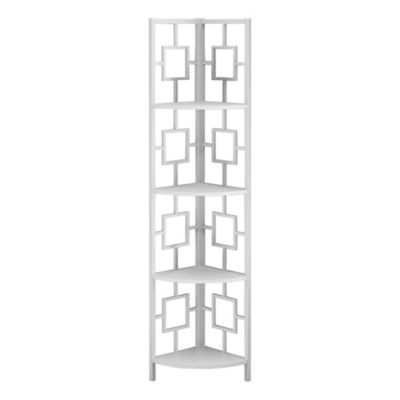
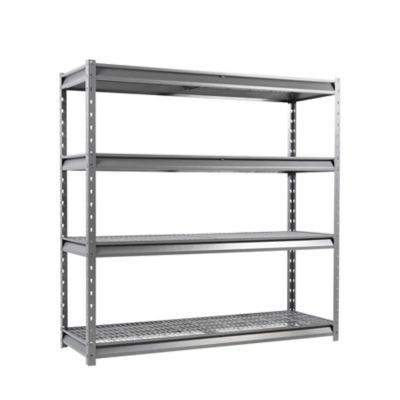
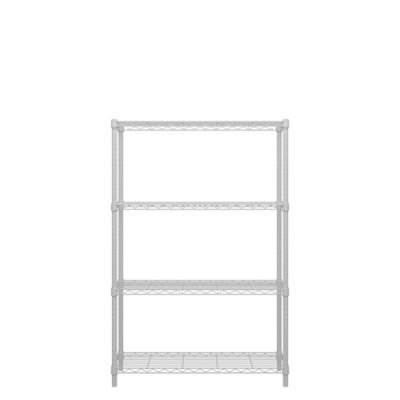
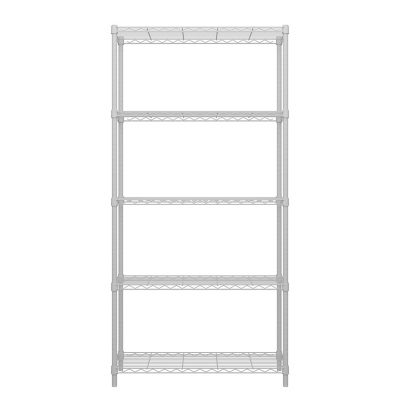
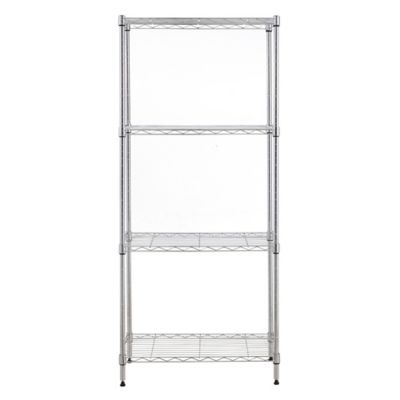
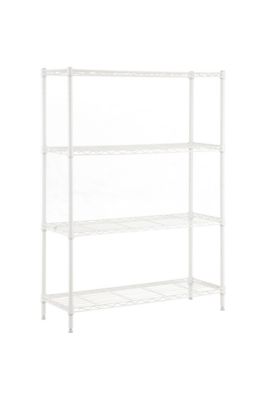
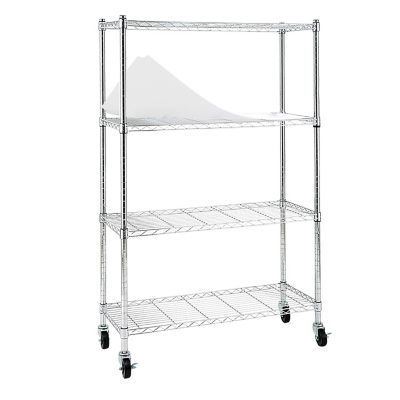
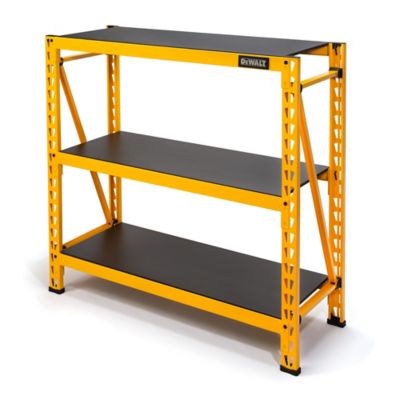
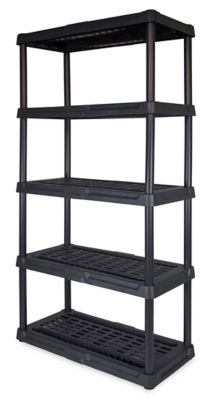
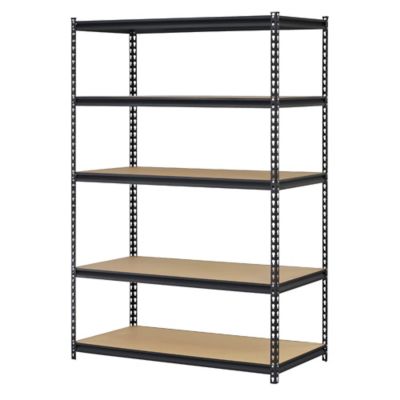
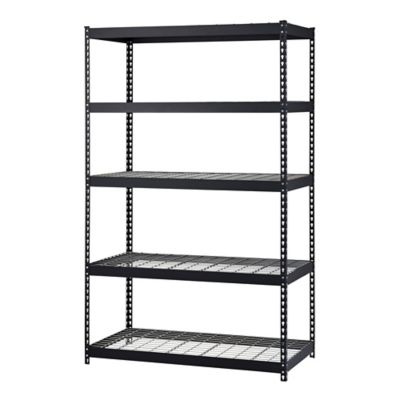
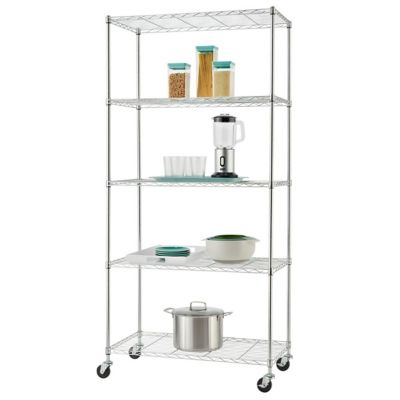
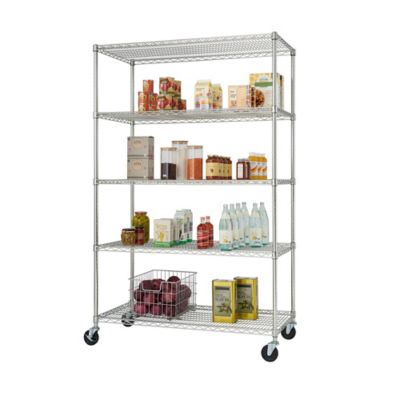
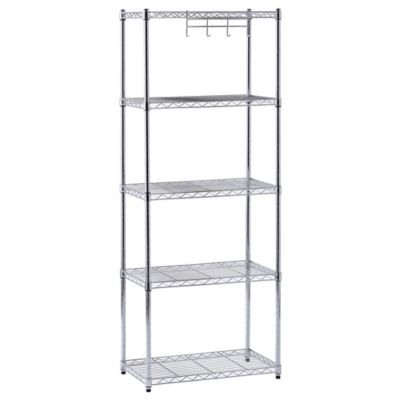
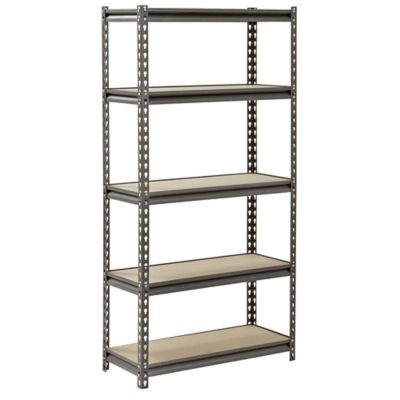
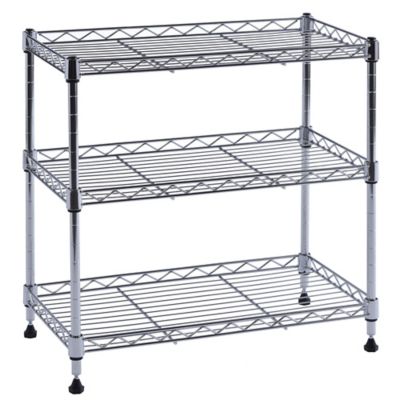
4 tier metal shelving units bring a little order to the places where life tends to pile up. In a garage, mudroom, pantry, laundry room, barn office or workshop, the four open levels give you a clear spot for supplies without taking up the floor space of several separate cabinets. A standard wire shelving unit is often around 36 inches wide, 14 inches deep and 54 inches tall, though dimensions vary by model, so measure the intended space before choosing a unit. Leave enough room to walk around it, open nearby doors and reach the top shelf without stretching or climbing on an unsafe surface. The open-wire design lets you see what is stored at a glance and allows air to move around feed bags, bins, canned goods, boots and tools. That airflow can be especially helpful in a busy garage or utility area where damp coats, muddy footwear and recently washed items need room to dry. The shelves are also easy to wipe down after a dusty project or a spill. For a more finished look in a living space, use matching totes or baskets to hold smaller items, while larger buckets, boxes and equipment can sit directly on the shelves. Shelf liners can help keep small pieces from slipping through the wire, and they provide a steadier surface for jars, pet supplies or delicate containers. Four levels make it easy to sort by purpose: everyday items within easy reach, bulk supplies on the middle shelves, and less-used seasonal gear up top. During the cooler months, a unit near the back door can hold hats, gloves, boots and winter workwear, while a pantry or mudroom shelf can keep animal care supplies, paper goods and household extras off the floor.
When comparing 4 tier metal shelving units, pay close attention to how the capacity is rated and how you plan to use the shelf. Many wire units support roughly 300 pounds per shelf when they are standing on leveling feet, while the total capacity may reach 1,000 to 1,200 pounds when the weight is spread evenly across the frame. Those numbers are not universal, and a unit’s capacity may be lower when it is fitted with rolling casters, so check the manufacturer’s specifications before storing heavy tools, feed or equipment. Put the heaviest items on the lowest level to keep the center of gravity low, and avoid placing one very heavy object in the middle of a shelf when the load can be spread across the surface. Caster wheels are handy when a shelf needs to move for sweeping, rearranging or loading, and many units include both wheels and stationary leveling feet so you can choose between mobility and a firm, steady setup. A rolling unit should be locked before you load or unload it, and it should not be pushed across rough ground, thresholds or uneven flooring with a heavy load. Leveling feet are a better choice for a permanent storage spot, particularly in a workshop, shed or barn where a stable frame matters. Adjustable shelves add another layer of flexibility; many can be moved in about 1-inch increments without tools, allowing room for tall bottles, a toolbox, storage totes or short rows of cans. Look for a sturdy frame, secure shelf clips and a finish suited to the space. Chrome plating, epoxy coatings and black powder-coated finishes can help protect metal from everyday wear, but no finish makes a shelf completely rustproof. Keep the unit away from standing water, wipe up spills and use extra care in damp outbuildings. If the shelf will be used where children, pets or livestock can bump into it, place it on a level surface, keep frequently handled items within reach and consider anchoring it when appropriate.
These shelves fit just as well into practical gift giving as they do into a hardworking home. They can be a thoughtful choice for someone setting up a first workshop, organizing a new garage, outfitting a hunting camp or making room for a growing collection of garden and farm supplies. A family member who spends weekends repairing equipment may use one for hand tools, fasteners, oils and safety gear. A pet owner can sort food containers, grooming supplies, litter, bedding and toys by shelf, while a gardener can keep seed-starting trays, gloves, pots and hand tools together when outdoor work slows during the cooler months. In a laundry room, four tiers can separate detergent, cleaning cloths and spare linens; in a home office, they can support labeled file boxes and shipping supplies. Rural households often need storage that can handle a little dust, mud and hard use, and open metal shelving makes it easier to keep those everyday necessities visible instead of buried in a crowded cabinet. Pairing one unit with durable bins creates a simple system for holiday decorations, canning supplies or animal-care items, with labels facing outward so the right box can be found without pulling everything down. For heavier storage needs, browse
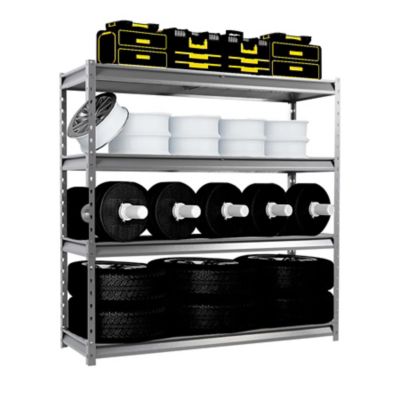
Heavy Duty Wire Shelving Units and compare construction, shelf spacing and load ratings. Before assembly, sort the parts on a clear floor and follow the included instructions so each shelf clip, post and foot is seated correctly. Once the unit is in place, give it a gentle shake, confirm that it sits level and check that no shelf is overloaded. A well-chosen 4 tier metal shelving unit can turn a cluttered corner into a dependable staging area, keeping tools, supplies and household goods close at hand through changing seasons.