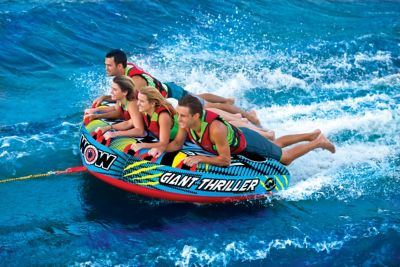
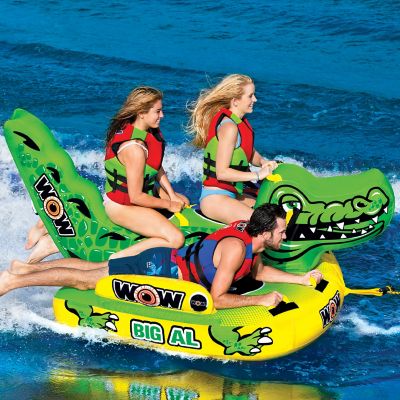
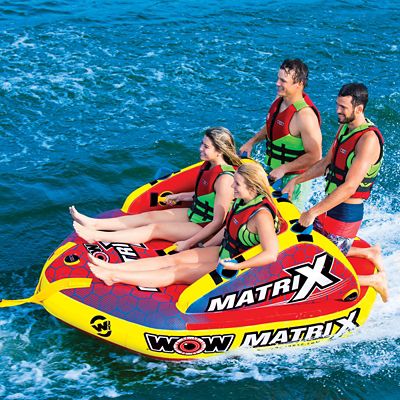
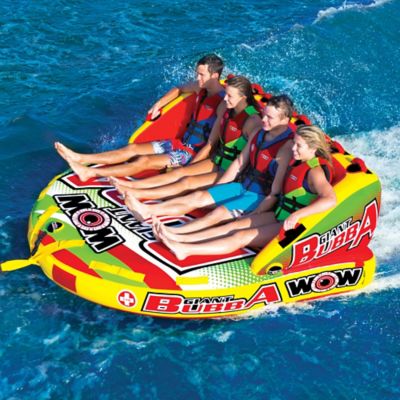
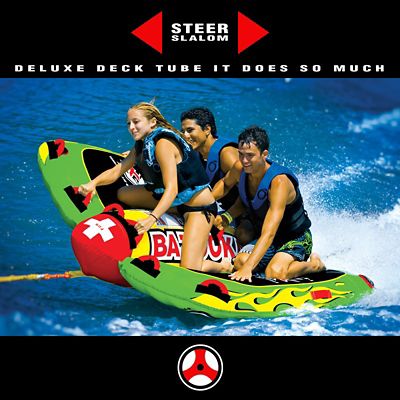
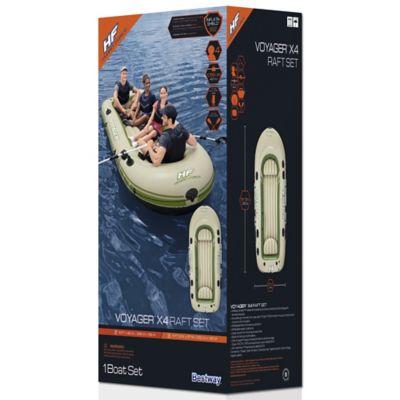
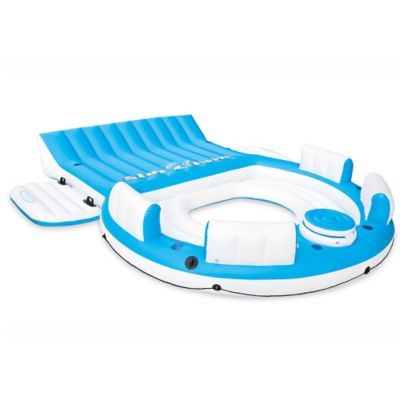
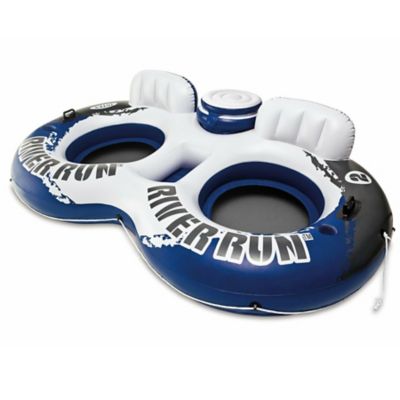
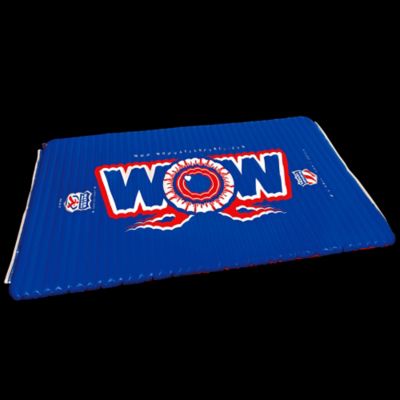
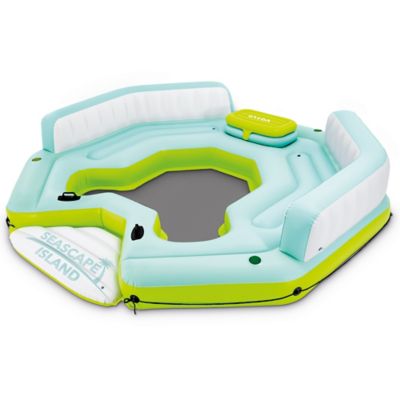
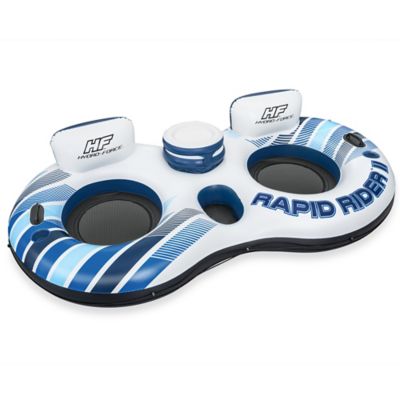
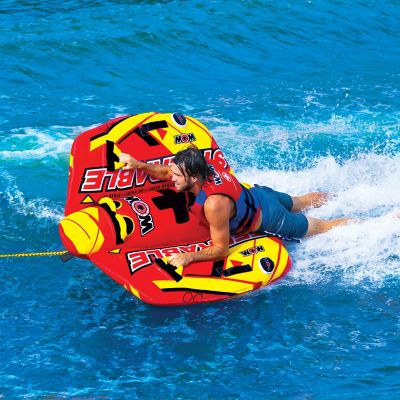
Four-person towable tubes bring a whole crew along for the ride behind a boat, giving families and friends a way to share the fun instead of taking every turn alone. Built for up to four riders within a stated weight limit, these inflatable boat tubes come in several shapes that change how riders sit, hold on, and feel the water beneath them. Flat deck tubes have a broad, low riding surface and commonly accommodate riders lying on their stomachs, with handles positioned toward the front. Couch-style tubes typically have a raised backrest and side supports for seated riding, while chariot and hybrid designs may offer different riding positions or more than one designated tow point. The manufacturer's directions determine which positions and towing configurations each tube permits; a second attachment point does not mean every orientation is suitable. A backrest can make a seated ride feel more supported, but it does not replace a life jacket or protect riders from being thrown into the water. For a family heading out from the boat ramp, the right shape comes down to the people taking a turn: their ages, swimming abilities, comfort on the water, and ability to reach and hold the handles. Four-person capacity describes a maximum rider count, not a promise that any four people will fit. Combined rider weight matters just as much, especially when a group includes several adults. Published dimensions also help explain how much elbow and knee room a tube provides, though overall width can include inflated sidewalls rather than usable seating space. A wide deck may suit a group that enjoys lying side by side, while clearly defined seating areas can help riders settle into their designated positions. Whether the outing includes siblings, cousins, or longtime fishing buddies taking a break from casting, a shared tube works best when everyone is comfortable with the same kind of ride. The least confident rider should help set the pace, and no tube shape makes an aggressive turn or excessive towing speed safe.
Construction plays a big part in how a four-rider towable handles repeated trips from the truck bed to the dock and onto the water. Many designs pair an inflatable PVC bladder with a woven nylon or polyester cover that helps protect the air chamber from abrasion. Cover coverage varies, and a fully covered design surrounds more of the bladder than a partial cover. Fabric specifications can provide useful comparison points, but heavier fabric alone does not tell the whole story about service life. Reinforced seams, protected valve openings, securely attached handles, and reinforcement around the designated towing connection all deserve attention. These are areas that take repeated pulling, gripping, and movement during normal operation. Padded handles and knuckle guards can soften contact where hands press against the tube, while foam or smooth contact panels may reduce rubbing beneath elbows and knees. Those features are especially noticeable when several riders share a deck and have less room to shift around. They do not eliminate skin irritation, and proper riding position still matters. Some tubes also include boarding handles that help swimmers climb back aboard; their placement is worth considering for riders who may struggle to pull themselves onto a tall sidewall. Inflation hardware matters on a tube this size, too. Large valves, including Boston-style valves on some designs, can make filling and deflating less of a chore when paired with the correct pump adapter. The specified inflation pressure helps the tube hold its intended shape and keeps the cover fitted as designed. An underinflated tube can sag and drag, while excess pressure can strain the bladder and seams. Pumps, adapters, ropes, and repair supplies are not necessarily included, so package contents matter when planning a complete setup. Bright panels can help a tube stand out against the water, but visibility still depends on light, distance, and surrounding boat traffic. For a household that spends plenty of time at the lake, these practical details can matter more than a bold graphic: comfortable handholds, manageable boarding, and construction suited to repeated outings make a difference over the long haul.
A four-person boat tube also needs to fit the boat's towing setup and the space aboard. Its larger footprint takes room on deck, and towing several riders creates different demands than pulling a single rider. Compatibility depends on the boat manufacturer's towing guidance, the approved attachment point, and the tube's requirements—not simply whether the boat has enough power to move it. Tow ropes must meet the tube manufacturer's specified strength, length, and rider-capacity requirements. A rope intended for a single-rider tube or another watersport is not automatically suitable, and an elevated tower or other fitting should never serve as a towing point unless its manufacturer expressly approves it for towables. Every rider needs a properly fitted, U.S. Coast Guard-approved life jacket suitable for the activity, along with the ability to follow the tube's age and riding requirements. A designated observer, agreed-upon hand signals, and towing within the manufacturer's limits help keep the driver informed without relying on shouted instructions over engine noise. Open water with ample clearance from shore, docks, swimmers, and other boats is essential because a tube can swing well outside the boat's path during a turn. Care between outings helps protect the investment in the whole setup. Freshwater rinsing removes grit and residue, and complete drying before storage helps prevent mildew inside folded fabric. Handles, seams, valves, the bladder, and tow attachments need regular checks for wear or damage. Dragging a tube across gravel at the ramp can wear through its cover, so carrying it keeps rough ground away from the riding surface. For longer storage, a clean, dry location away from rodents, sharp tools, and direct sunlight is a better choice than leaving it loose beside equipment in the shed. Deflated dimensions and packed weight matter when storage space is tight. Households comparing larger formats can also explore
Big Boat Tubes while keeping rider limits and boat compatibility in mind. As a gift for a boating family, a four-person towable makes the most sense when the giver already knows the group's riding preferences, towing equipment, and room for storage.