

Schleich Farm World Barrel Racing with Cowgirl Playset
Item # 1929300


Spend $49.99 to unlock free delivery!

Neighbor’s Club Members earn points with purchases.
Item # 1929300

Spend $49.99 to unlock free delivery!
Shopping at
Grassland (franklin) TN
Delivery to
Pickup Nearby at TRIUNE TN(16.3) miles Free
Ship to store at Grassland (franklin) TN
Free standard delivery on online footwear & Clothing purchases of $49 and over.
Neighbor’s Club Members earn points with purchases.
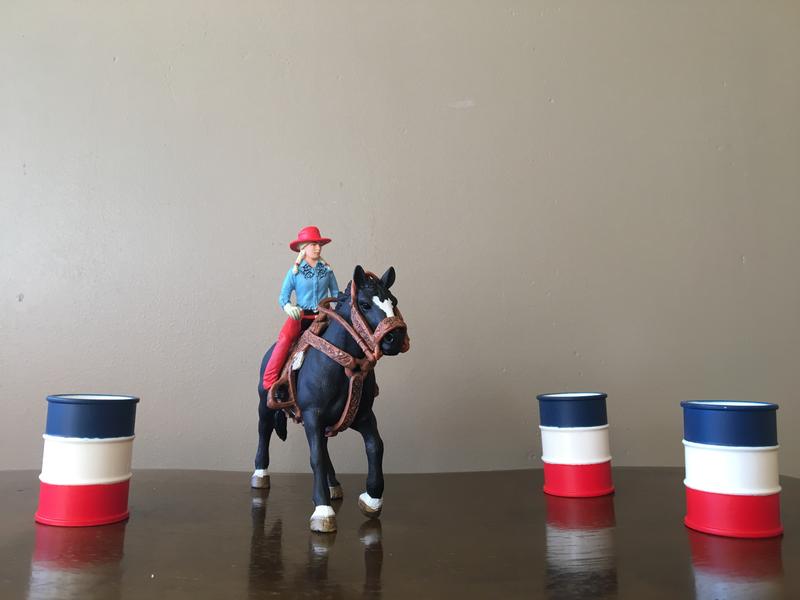
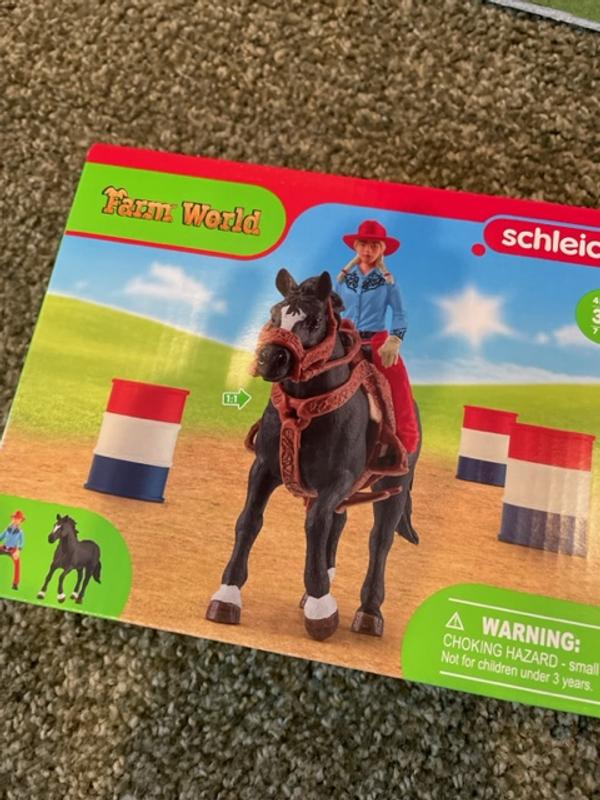
Barrel racing is the exhilarating rodeo sport that puts the wind in your hair...let's ride! The Schleich Farm World Barrel Racing with Cowgirl Playset puts you in the saddle with a toy Appaloosa Stallion, a cowgirl figurine, 3 barrels, plus a Western saddle, bridle, and harness. Grip those reins tight and keep your feet in the stirrups...this playset is recommended for kids ages 3 and up. This toy makes the perfect gift for any kiddo who loves playing with horses.
- Detailed and authentic farm set captures the grit and spirit of a popular rodeo event in genuine detail
- Each toy in this farm playset is made with high-quality craftsmanship
- Is a horse the only farm animal built for barrel racing? What if a pig, a rooster, and a llama want to try? Let 'em race - our toys believe your stories should have no silly rules
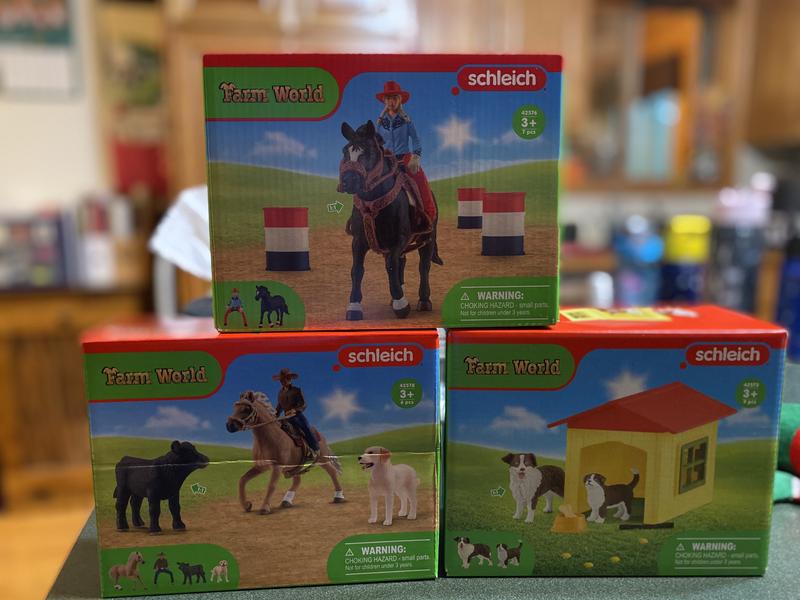
- Plays nicely with other Schleich Farm World playsets, from chickens and pigs, to farmers and longhorn steers
- Perfect horse toy for young riders and horse lovers who wanna be cowgirls or cowboys
- Makes a great gift for western riders
- Suitable toy for ages 3 and up
- 7 pc. farming playset includes the cowgirl, horse, saddle, bridle, and 3 barrels
| Brand | Schleich |
|---|---|
| Country of Origin | Imported |
| Assembly Required | No |
| Choking Hazard Warning | This toy contains small parts |
| Features | Rodeo cowgirl playset with barrels and horse figurine |
| Play Set Components Included | Other |
| Primary Color | Multicolor |
| Primary Material | Plastic |
| Product Height | 5.91 in. |
| Product Length | 7.48 in. |
| Product Weight | 0.56 lb. |
| Product Width | 2.36 in. |
| Manufacturer Part Number | 42576 |
Q: What scale would this be considered?
9 months ago- A: Thank you for your question. This playset measures 7.5 x 2.4 x 5.9 inch.9 months agoHelpful?

Q&As
Q: What scale would this be considered?
9 months ago- A: Thank you for your question. This playset measures 7.5 x 2.4 x 5.9 inch.9 months agoHelpful?
Similar Items
-
Top Rated
-
-
Top Rated
-
-
-
-
-
-
-
-
-
Top Rated





Items You May Like
-
-
-
Top Rated
-
-
-
-
Top Rated
-
-
-
-
-




Reviews
Customer Images and Videos
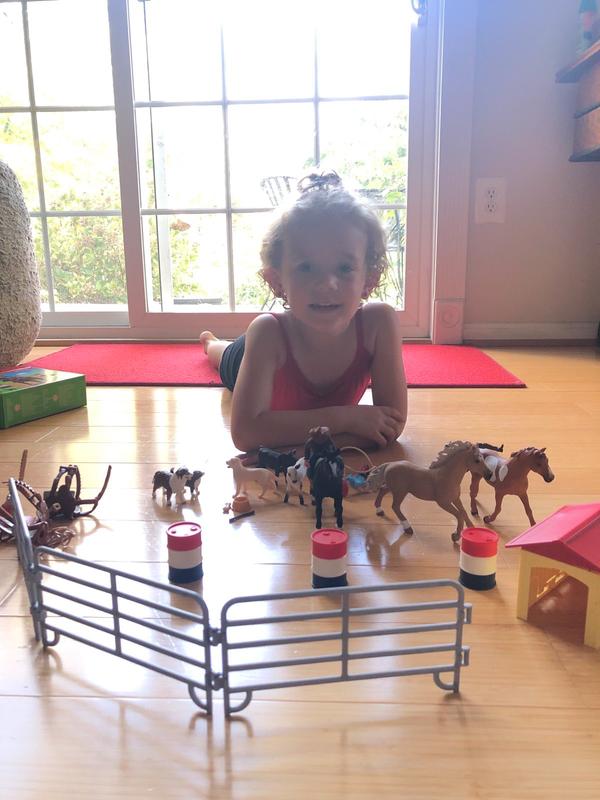
Cowgirl fun!

Originally posted on www.schleich-s.com
Good

Originally posted on schleich.com
Fun addition to our collection
Yes, I recommend this product.
Originally posted on www.schleich-s.com
Great new set!
Originally posted on www.schleich-s.com