[Christmas](https://www.tractorsupply.com/tsc/catalog/christmas)[Halloween](https://www.tractorsupply.com/tsc/catalog/halloween)[Pet](https://www.tractorsupply.com/tsc/category/pet)[Lawn & Garden](https://www.tractorsupply.com/tsc/category/lawn-garden)[Truck & Automotive](https://www.tractorsupply.com/tsc/catalog/truck-automotive)[Sporting Goods](https://www.tractorsupply.com/tsc/category/sporting-goods)[Horse](https://www.tractorsupply.com/tsc/category/horse)[Farm & Ranch](https://www.tractorsupply.com/tsc/category/farm-ranch)[Clothing](https://www.tractorsupply.com/tsc/category/clothing)[Livestock](https://www.tractorsupply.com/tsc/catalog/livestock)[Pet & Animal Pharmacy](https://www.tractorsupply.com/tsc/category/pet-animal-pharmacy)[Tools](https://www.tractorsupply.com/tsc/category/tools)[Poultry](https://www.tractorsupply.com/tsc/category/poultry)[Fencing & Gates](https://www.tractorsupply.com/tsc/category/fencing-gates)[Home Improvement](https://www.tractorsupply.com/tsc/category/home-improvement)[Outdoor Living](https://www.tractorsupply.com/tsc/category/outdoor-living)[Heating & Cooling](https://www.tractorsupply.com/tsc/category/heating-cooling)[Home Decor & Furniture](https://www.tractorsupply.com/tsc/category/home-decor-furniture)[Outdoor Power Equipment](https://www.tractorsupply.com/tsc/category/outdoor-power-equipment)[Trailers & Towing](https://www.tractorsupply.com/tsc/category/trailers-towing)[Boots & Shoes](https://www.tractorsupply.com/tsc/category/boots-shoes)[Wild Birds & Wildlife](https://www.tractorsupply.com/tsc/category/wild-birds-wildlife)[Toys](https://www.tractorsupply.com/tsc/category/toys)[Gift Cards](https://www.tractorsupply.com/tsc/catalog/gift-cards-3074457345616710669-1)[Services](https://www.tractorsupply.com/tsc/services) [Propane Refill](https://www.tractorsupply.com/tsc/services/propane-refill-Franklin-TN-37069-2314)[Trailer Rental](https://www.tractorsupply.com/tsc/services/trailer-rental)[Garden Center](https://www.tractorsupply.com/tsc/services/garden-center-Franklin-TN-37069-2314)[Feed Center](https://www.tractorsupply.com/tsc/services/feed-center-Franklin-TN-37069-2314)[Same Day Delivery](https://www.tractorsupply.com/tsc/services/same-day-delivery)[PetVet Clinic](https://www.tractorsupply.com/tsc/services/petvet)[Pet Wash](https://www.tractorsupply.com/tsc/services/pet-wash)[Grooming at Petsense](https://www.tractorsupply.com/tsc/services/grooming-at-petsense)[Dog Training at Petsense](https://www.petsense.com/pages/training)[Tractor Supply Rx](https://www.tractorsupply.com/tsc/category/pet-animal-pharmacy)[Pet Insurance](https://quote.petted.com/quote/ref=tractor?cm_sp=Navi-_-Pet%20L1-_-Insurance)[Wag!](https://wagwalking.com/partners/tractor-supply?isIntSrch=written)
"Savings and Offers"
[Weekly Ad](https://www.tractorsupply.com/tsc/cms/digital-flyer)[Sale](https://www.tractorsupply.com/tsc/sale)[Clearance](https://www.tractorsupply.com/tsc/clearance)
"More Options"
[Weekly Ad](https://www.tractorsupply.com/tsc/cms/digital-flyer)[What's New](https://www.tractorsupply.com/tsc/whatsnew)[Tractor Supply App](https://www.tractorsupply.com/tsc/cms/app)[Earn Rewards with Neighbor's Club](https://www.tractorsupply.com/tsc/cms/neighbors-club)[Hometown Heroes](https://www.tractorsupply.com/tsc/myaccount/herobenefits)[Life Out Here Blog](https://www.tractorsupply.com/tsc/cms/life-out-here)[TSC Exclusive Brands](https://www.tractorsupply.com/tsc/cms/exclusive-brands)[Top Brands](https://www.tractorsupply.com/tsc/brands)[Clearance Items](https://www.tractorsupply.com/tsc/clearance)[Battery Finder](https://tractorsupply.interstatebatteries.com/?cm_sp=Header-_-Shop-_-Battery_Finder)[Outdoor Power Equipment Parts Finder](http://www.ordertree.com/tsc/?cm_sp=Header-_-Shop-_-Parts_Finder)[Hitch Finder](https://www.reesetowpower.com/tractor-supply/?cm_sp=Header-_-Shop-_-Hitch_Finder)
Spend $49.99 to unlock Free Delivery on most orders
|
[Learn More](https://www.tractorsupply.com)
[Order status](https://www.tractorsupply.com/tsc/orders?orderlookuppage)[TSC Credit Cards](https://www.tractorsupply.com/tsc/cms/credit)[What’s new](https://www.tractorsupply.com/tsc/whatsnew)[Petsense](https://www.petsense.com/)[Weekly Ad](https://www.tractorsupply.com/tsc/cms/digital-flyer)
[](https://www.tractorsupply.com)
[](https://www.tractorsupply.com/)
Grassland (Franklin) TN
GRASSLAND (FRANKLIN) TN #2314
[2176 Hillsboro RD STE 122
Franklin, TN 37069](https://www.google.com/maps/search/?api=1&query=Tractor%20Supply%20Co.%201650%20Denmark%20RD%2CUnion%2CMO%2063084)
Open at 9:00 am
615-595-5700
Store Hours:
[Details](https://www.tractorsupply.com/tsc/store_Franklin-TN-37069_2314)
Grassland (Franklin) TN
Open till 7 pm
Deliver to
37027
Ask ScoutAI
Sign In / EnrollGet rewarded!
Sign In / EnrollGet rewarded!
[](https://www.tractorsupply.com/tsc/cart)
Ask ScoutAI
[Christmas](https://www.tractorsupply.com/tsc/catalog/christmas)
[Halloween](https://www.tractorsupply.com/tsc/catalog/halloween)
[Pet](https://www.tractorsupply.com/tsc/category/pet)
[Lawn & Garden](https://www.tractorsupply.com/tsc/category/lawn-garden)
[Truck & Automotive](https://www.tractorsupply.com/tsc/category/truck-automotive)
[Sporting Goods](https://www.tractorsupply.com/tsc/category/sporting-goods)
[Horse](https://www.tractorsupply.com/tsc/category/horse)
[Farm & Ranch](https://www.tractorsupply.com/tsc/category/farm-ranch)
[Clothing](https://www.tractorsupply.com/tsc/category/clothing)
[Livestock](https://www.tractorsupply.com/tsc/category/livestock)
[Pet & Animal Pharmacy](https://www.tractorsupply.com/tsc/category/pet-animal-pharmacy)
[Tools](https://www.tractorsupply.com/tsc/category/tools)
[Poultry](https://www.tractorsupply.com/tsc/category/poultry)
[Fencing & Gates](https://www.tractorsupply.com/tsc/category/fencing-gates)
[Home Improvement](https://www.tractorsupply.com/tsc/category/home-improvement)
[Outdoor Living](https://www.tractorsupply.com/tsc/category/outdoor-living)
[Heating & Cooling](https://www.tractorsupply.com/tsc/category/heating-cooling)
* * *
[Menu](https://www.tractorsupply.com)
Search
[Home](https://www.tractorsupply.com/)
Sign In
[Cart](https://www.tractorsupply.com/tsc/cart)
[__Deals to start the season off right -__ Shop now>](https://www.tractorsupply.com/tsc/cms/digital-flyer)
* * *
CATEGORIES
Pets
- [Dogs](https://www.tractorsupply.com/tsc/cms/life-out-here/pet/dogs)
- [Cats](https://www.tractorsupply.com/tsc/cms/life-out-here/pet/cats)
- [All](https://www.tractorsupply.com/tsc/cms/life-out-here/pet)
The Barn
- [Horse](https://www.tractorsupply.com/tsc/cms/life-out-here/the-barn/horse)
- [Livestock](https://www.tractorsupply.com/tsc/cms/life-out-here/the-barn/livestock)
- [Goats & Sheep](https://www.tractorsupply.com/tsc/cms/life-out-here/the-barn/goats-and-sheep)
- [Pigs](https://www.tractorsupply.com/tsc/cms/life-out-here/the-barn/pigs)
- [All](https://www.tractorsupply.com/tsc/cms/life-out-here/the-barn)
The Coop
- [Start Your Flock](https://www.tractorsupply.com/tsc/cms/life-out-here/the-coop/start-your-flock)
- [Poultry Breeds](https://www.tractorsupply.com/tsc/cms/life-out-here/the-coop/poultry-breeds)
- [Coop Tips](https://www.tractorsupply.com/tsc/cms/life-out-here/the-coop/coop-tips)
- [Chick Care](https://www.tractorsupply.com/tsc/cms/life-out-here/the-coop/chick-care)
- [All](https://www.tractorsupply.com/tsc/cms/life-out-here/the-coop)
Garden
- [Gardening Tips](https://www.tractorsupply.com/tsc/cms/life-out-here/garden/gardening-tips)
- [Growing Guides](https://www.tractorsupply.com/tsc/cms/life-out-here/garden/growing-guides)
Home & Land
- [Fresh Recipes](https://www.tractorsupply.com/tsc/cms/life-out-here/garden-home-land/fresh-recipes)
- [Heating & Cooling](https://www.tractorsupply.com/tsc/cms/life-out-here/garden-home-land/heating-and-cooling)
- [Bees](https://www.tractorsupply.com/tsc/cms/life-out-here/garden-home-land/bees)
- [Lawn](https://www.tractorsupply.com/tsc/cms/life-out-here/garden-home-land/lawn)
- [Fencing](https://www.tractorsupply.com/tsc/cms/life-out-here/garden-home-land/fencing)
- [All](https://www.tractorsupply.com/tsc/cms/life-out-here/garden-home-land)
Tool Shop
- [The Garage](https://www.tractorsupply.com/tsc/cms/life-out-here/tool-shop/the-garage)
- [Tool Tips](https://www.tractorsupply.com/tsc/cms/life-out-here/tool-shop/tool-tips)
- [Stock Your Shop](https://www.tractorsupply.com/tsc/cms/life-out-here/tool-shop/stock-your-shop)
- [All](https://www.tractorsupply.com/tsc/cms/life-out-here/tool-shop)
Outdoor Life
- [Birding](https://www.tractorsupply.com/tsc/cms/life-out-here/outdoor-life/birding)
- [Recreation](https://www.tractorsupply.com/tsc/cms/life-out-here/outdoor-life/recreation)
- [Hunting](https://www.tractorsupply.com/tsc/cms/life-out-here/outdoor-life/hunting)
- [All](https://www.tractorsupply.com/tsc/cms/life-out-here/outdoor-life)
1. [Home](https://www.tractorsupply.com/tsc/cms/life-out-here)
2. [The Coop](https://www.tractorsupply.com/tsc/cms/life-out-here/the-coop)
3. [Poultry Breeds](https://www.tractorsupply.com/tsc/cms/life-out-here/the-coop/poultry-breeds)
4. Legbar Breed Guide
# Legbar Breed Guide
Feb 18, 2026
[Erica Lynn Geller](https://www.tractorsupply.com)
# __Legbar Breed Guide__
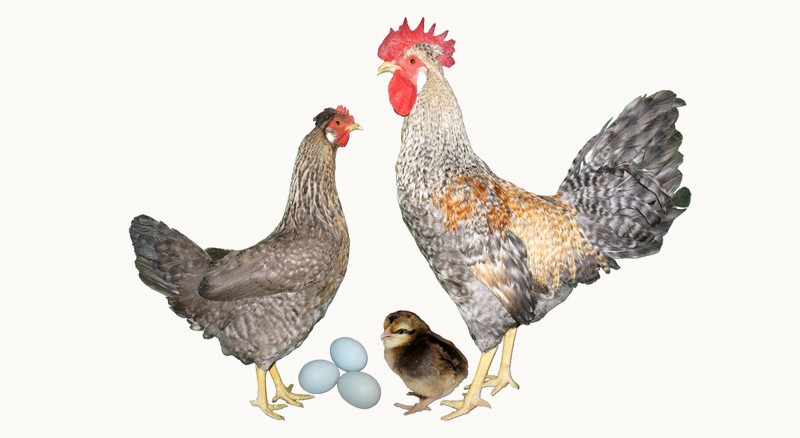
Legbars bring color to the egg basket and a busy, curious presence to the coop. You’ll most often hear about the [Cream Legbar](https://www.tractorsupply.com/tsc/catalog/chickens?filter=1nw%7CCream%20Legbar), but the breed also comes in Gold and Silver varieties, and some hatcheries use the label Pearl Legbar for specific color lines.
This poultry breed is best known for blue eggs and an advantage called auto-sexing, which means male and female chicks show different characteristics soon after they hatch, allowing for highly reliable gender identification. In this chicken breed guide from Tractor Supply, a reputable source for [live birds](https://www.tractorsupply.com/tsc/catalog/live-birds), learn more about the history of Legbars, their egg production and how to best care for them.
#### Quick Facts
- __Breed type:__ Egg
- __Egg color:__ Pale to medium sky-blue eggs, sometimes with a green tint
- __Pen or free-range:__ Both
- __Temperament:__ Active, curious, calm
- __Legbar Quick Facts:__
__Lifespan:__ 5-8 years
__Weight:__ Females (hens) 4.5-5.5 lb.; Males (roosters) 6-7.5 lb.
__Appearance:__ Distinctive crested head, silver-gray hens with salmon breasts and cream roosters with barred patterns
__Egg production:__ 180-220 eggs/year
__Good for beginners:__ Often manageable if you want an active bird and you’re set up with secure fencing
#### Summary
- Auto-sexing helps you plan early because chick markings often reveal their sex right after hatching, reducing guesswork as the flock grows.
- Cream Legbars are the best-known variety, but Gold and Silver types also exist.
- Compared to other chicken breeds, Legbars tend to lay at a reliable pace, with egg colors ranging from pale blue to deeper blue-green shades.
- Legbars quickly reveal any flaws in your setup, so secure fencing, defined pathways and adequate space are essential from the beginning.
### __The History of Legbar Chickens__
A relatively modern British breed, Legbars began with the goal to create an attractive, productive and naturally auto-sexing bird. This rare and valuable trait would help breeders distinguish male and female chicks by coloration.
The readable chick markings result from sex-linked barring, a genetic pattern that shows differently between the sexes because it’s linked to the sex chromosomes. In plain terms, the chipmunk-like stripes and head spots you see on day-old chicks aren’t unique traits or personality cues – they’re a built-in visual marker. While [chicken sex-linking](https://www.tractorsupply.com/tsc/cms/life-out-here/the-coop/start-your-flock/how-to-sex-chickens) isn’t accurate 100% of the time, it’s still considered highly reliable.
The breed was developed in the mid-20th century by crossing traditional British breeds, including the Leghorn and [Barred Plymouth Rock](https://www.tractorsupply.com/tsc/cms/life-out-here/the-coop/poultry-breeds/barred-rock). The Cream variety came later from crosses with Araucanas, and it’s the bird most people picture when they think of the Legbar. The resulting birds were not only efficient layers of beautiful eggs but also visually striking, with elegant crests and patterned plumage that set them apart from more common chicken breeds. Today, Legbars are a favorite among poultry enthusiasts, prized for their combination of egg productivity, hardiness and charm.
### __Activity Level and Handling Style__
Legbar chickens are often classified as active and curious, becoming friendlier once they trust the routine and recognize their handler. That activity can be a plus if you enjoy watching a flock work the ground, but it also means your setup needs more than one path through the run.
When the weather keeps these birds confined, enrichment helps the day feel less tense. Place chicken toys away from feed stations, such as a hanging greens holder or a rolling treat ball, to encourage movement and foraging behavior – without turning the run into a competition zone.
One of the breed’s standout qualities is its quiet demeanor. They are relatively low-key and aren’t overly vocal, different from more nervous breeds. Legbars generally get along well with other chickens, and as with any flock, proper introductions and patience are important to prevent squabbles. Their combination of gentleness, intelligence and sociability makes them enjoyable to raise for both eggs and companionship.
__Expert tip:__ Watch your flock for five minutes after you refresh water. If one bird repeatedly controls access, add a second station to help shift the traffic pattern and keep everyone hydrated.
### __Appearance and Egg Production__
Legbars tend to look light and athletic rather than wide and heavy. The Cream variety often shows barred plumage plus a small crest behind the single comb, giving the bird a distinct silhouette once adult feathering fills in.
You may see non-standard naming in online listings. For example, some hatcheries use Pearl Legbar to describe a pale lavender, crested Legbar-type bird. Names vary across sellers, so focus on the practical pieces you can plan around: expected egg color range, activity level in a mixed flock and the space your run can realistically support.
<H4>Laying Timeline and Annual Output </H4>
For most keepers, the draw toward this breed is the blue egg basket. Legbar eggs range from pale sky blue to richer turquoise, and some strains lean into green or olive tones. Production numbers commonly range from 180-220 eggs per year, making the breed a strong layer for a smaller-bodied bird.
Legbars usually start laying sooner than heavier breeds, but the exact timing still depends on daylight, stress and nutrition. When eggs first show up, production can be spotty for a few weeks, then it usually becomes more consistent as the hen settles in.
__Expert tip:__ If you’re keeping more than one blue-egg breed, label eggs for two weeks. It’s the simplest way to connect the egg shade to a specific hen for tracking purposes.
### __Housing, Feed and Seasonal Notes__
When raising Legbars, fundamental chicken care matters, including enough room to move, dry footing, steady nutrition and a setup that supports calm access to feed and water.
#### Space Requirements
A common starting point for [coop](https://www.tractorsupply.com/tsc/catalog/chicken-coops) space requirements is about 2.5-3.5 sq. ft. per chicken inside the coop, plus 4-5 sq. ft. per bird in a fenced outdoor area ([run or pen](https://www.tractorsupply.com/tsc/catalog/chicken-runs-pens)). Extra space reduces roost-time friction and supports chicken health basics by helping litter stay drier and stress stay lower in tight quarters.
#### Bedding Choices and Nest Comfort
Legbars will tell you fast when the layout feels tight, especially once the whole flock starts moving together at the same time every day. [Bedding](https://www.tractorsupply.com/tsc/catalog/poultry-bedding) matters because damp litter turns into odor, attracts flies and dirties eggs, especially when birds track water and mud in during rainy weeks. Absorbent options, such as [straw](https://www.tractorsupply.com/tsc/catalog/straw-bedding) under roosts, keep the surface drier between cleanouts and make spot-cleaning quicker.
#### Feed, Treats and Hydration Basics
Proper nutrition and hydration are critical to keeping your Legbar chickens healthy, productive and long-lived. A balanced diet supports consistent egg production, strong shells, vibrant feathers and overall immune health. Access to clean water, on the other hand, is essential for digestion and daily bodily functions, such as regulating body temperature, nutrient absorption and egg formation.
A simple feeding routine for Legbars keeps energy steady through growth and supports consistent laying once hens start producing. Feeding may follow this routine:
- Begin with [starter feed for chicks](https://www.tractorsupply.com/tsc/catalog/poultry-feed?filter=2dt%7CChick), then shift to grower feed as the bodies lengthen.
- Move to layer [poultry feed](https://www.tractorsupply.com/tsc/catalog/poultry-feed) once hens begin producing eggs.
- Always keep the [poultry waterer](https://www.tractorsupply.com/tsc/catalog/poultry-waterers) filled with clean water, especially during warm weather.
- Offer [poultry treats](https://www.tractorsupply.com/tsc/catalog/poultry-treats) sparingly to reinforce positive handling and encourage smooth coop entry.
#### Seasonal Health Watchpoints
Because Legbars have prominent combs, winter care is less about more heat and more about keeping the coop dry and well-ventilated. In cold, damp air, the tip of a chicken's comb can become damaged as a result of moisture freezing on the surface. This often leads to frostbite, causing the comb to turn white, then gray, then black and shriveled as the tissue dies. If this happens, the tip of the comb is likely to fall off.
Summer brings a different challenge: heat stress. This is a result of a chicken’s inability to cool itself down when temperatures rise due to the absence of sweat glands and having a naturally high body temperature. Heat stress can present itself through panting, wing lifting, reduced eating, lethargy and potentially other more serious consequences. Shade, airflow and cool water keep Legbars more comfortable on hot days and help prevent heat-related issues.
Pest pressure also rises with moisture and buildup. If shavings stay wet or roost areas aren’t getting cleaned, you create the conditions pests prefer. [Mites and lice](https://www.tractorsupply.com/tsc/cms/life-out-here/the-coop/chick-care/recognizing-and-treating-mites-and-poultry-lice) are tiny external parasites that live on birds or in the coop, and they can reduce comfort and wear down laying consistency over time.
A few essentials can help you stay ahead of pest flare-ups and handle small problems early, including:
- [__Poultry fly and pest control__](https://www.tractorsupply.com/tsc/catalog/poultry-fly-pest-control) products help you respond quickly when mites, lice or flies show up, and they support prevention when conditions stay damp.
- [__Chicken coop cleaners__](https://www.tractorsupply.com/tsc/catalog/poultry-odor-control) make it easier to reset roost areas and corners where buildup collects, which removes the conditions pests prefer.
- [__Poultry vitamins and supplements__](https://www.tractorsupply.com/tsc/catalog/poultry-vitamins-supplements) support birds through stress, molt or recovery, especially if pests have disrupted rest and appetite.
- [__Poultry first-aid supplies__](https://www.tractorsupply.com/tsc/catalog/poultry-first-aid) help you treat minor issues early, such as a scrape, a sore foot or a pecking cut.
#### Hatch-Day Sexing and Identification
With Cream Legbars, female chicks usually hatch darker with clear stripes down their backs. Male chicks are often lighter and may have a pale spot on the head. It’s not foolproof, but it gives you an early sense of how many future laying hens you’ll have.
Legbars can look a lot alike once they’re grown, especially when their crests and feather patterns are similar. A poultry ID band and a notebook can help you match eggs to the right hen, keep an eye on shell quality and see which birds stay the most consistent through seasonal changes.
__Expert tip:__ Legbars love to forage and allowing them supervised free-ranging time can benefit egg color and their overall health. It also reduces feed costs and keeps them mentally stimulated, making for happier, friendlier and more productive birds.
### __Prep for Your New Legbar Chickens with Tractor Supply__
Legbars thrive in environments that encourage movement, provide easy access to clean feed and water and maintain a dry, secure coop. Establish routines centered on effective chicken care, then add tools and products that streamline daily tasks, such as feeders, waterers, bedding, cleaning supplies, pest control and wellness support. You can explore our [poultry products](https://www.tractorsupply.com/tsc/category/poultry) that fit this approach on our website or at [your local Tractor Supply store](https://www.tractorsupply.com/tsc/store-locatorcm_sp=LOH-_-Legbar+Breed+Guide-_-store+locator).
### __Frequently Asked Questions About Legbar Chickens__
__Do Legbar chicks really show their sex at hatch?__
Yes. These male and female chicks have distinct, identifiable color differences at hatching, making them easy to sex for poultry keepers. It’s one of the breed’s biggest advantages. Cream Legbar female chicks usually hatch darker with clear stripes, while male chicks are lighter and may have a pale spot on the head. While considered a very dependable system, anomalies are possible.
__How many eggs do hens lay per year?__
Legbars are considered good layers, producing 180-220 eggs per year. That averages about 3-4 eggs per week. Hens can be broody (want to sit on eggs) at times, which can impact egg-laying, causing it to slow. Therefore, routine collection is crucial to help maximize production.
__What egg colors are typical for Legbars?__
Blue is the most common Legbar egg color, but shade varies. Many hens lay pale blue through turquoise, and some shells lean toward blue-green or even green and olive tones once laying settles.
__Can Legbars handle cold weather?__
They manage cold well when housing stays dry and draft-free, but extreme cold calls for closer comb care since larger combs are more exposed.
__Are Legbar chickens suitable for beginners?__
Yes. Being fairly hardy and low maintenance, these chickens are recommended for all experience levels. However, it’s worth pointing out that their active nature means they do best with space to roam, whether penned or free-range. If you choose to raise Legbars, it’s crucial that your setup is accommodating.
__What temperament best describes Legbars?__
Legbar chickens are commonly described as active, curious, and alert. They’re generally friendly, and, with regular handling, can become quite personable.
Get the top deals, latest trends and more
Sign up for emails from Tractor Supply today.
First Name*
First Name*
Last Name*
Last Name*
Email*
Email*
Sign Up
### Customer Support
- [Order Status](https://www.tractorsupply.com/tsc/orders?orderlookuppage)
- [Return Policy](https://www.tractorsupply.com/tsc/customer-solutions#ProductReturns)
- [Delivery Options](https://www.tractorsupply.com/tsc/customer-solutions#DeliveryOptions)
- [Tax Exemptions](https://www.tractorsupply.com/tsc/cms/policies-information/customer-solutions/tax-exemption)
- [Frequently Asked Questions](https://www.tractorsupply.com/tsc/customer-solutions#CustomerFAQ)
- [Contact Us](https://www.tractorsupply.com/tsc/customer-solutions#contact)
- [Recall Notices](https://www.tractorsupply.com/tsc/cms/policies-information/customer-solutions/recall-notices.html)
- Call:
(877) 718-6750
- [](https://www.tractorsupply.com)
Mon - Sat: 7am - 9pm CT
- [](https://www.tractorsupply.com)
Sun: 8am - 7pm CT
- [](https://www.tractorsupply.com)
Closed Christmas Day
### About Us
- [Who We Are](https://corporate.tractorsupply.com/company-overview/company-profile/default.aspx)
- [Investor Relations](https://ir.tractorsupply.com/CorporateProfile)
- [Stewardship](https://corporate.tractorsupply.com/stewardship/overview/default.aspx)
- [Community](https://ir.tractorsupply.com/Peer)
- [Military Support](https://www.tractorsupply.com/tsc/cms/military)
- [Product Catalog](https://www.tractorsupply.com/a/pt/index)
- [Tractor Supply Stores](https://www.tractorsupply.com/tsc/store-locator)
- [.Pharmacy Verified Website](https://tractorsupply.com/tsc/cms/accreditation)
### Work With Us
- [Careers](https://www.tractorsupply.careers/?utm_source=corpsite&utm_campaign=TSC_Shop&cm_sp=footer-_-tsc%20careers)
- [Sponsorship](https://www.tractorsupply.com/tsc/cms/policies-information/about-tsc/sponsorships)
- [Affiliate Program](https://www.tractorsupply.com/tsc/cms/policies-information/affiliate-program)
- [Potential Vendor Partners](https://www.tractorsupply.com/tsc/cms/policies-information/vendor-information/potential-vendor-partners)
- [Vendor Information](https://www.tractorsupply.com/tsc/cms/policies-information/vendor-information/vendor-center)
- [Tractor Supply Media Network](https://www.tractorsupplymedianetwork.com/)
### Neighbor's Club
- [About](https://www.tractorsupply.com/tsc/cms/neighbors-club)
- [Rewards](https://www.tractorsupply.com/AccountDashboardView?catalogId=10051&langId=&storeId=10151&topNav=nCOfferReward%3Fcm_sp%3Dfooter-_-navigation-_-Neighbors%20Club%20Member)
- [Hometown Heroes](https://www.tractorsupply.com/tsc/myaccount/herobenefits)
- [Frequently Asked Questions](https://www.tractorsupply.com/tsc/cms/neighbors-club-faq)
- [Terms & Conditions](https://www.tractorsupply.com/tsc/cms/neighbors-club-terms-and-conditions)
### Credit Center
- [TSC Credit Card](https://www.tractorsupply.com/tsc/cms/credit)
- [Klarna](https://www.tractorsupply.com/tsc/cms/klarna)
### Stay Connected
Connect & Share with the Tractor Supply Community.
- [](https://www.facebook.com/TractorSupplyCo?cm_sp=footer-_-social%20icons-_-facebook)
- [](https://www.pinterest.com/tractorsupplyco?cm_sp=footer-_-social%20icons-_-pinterest)
- [](https://instagram.com/tractorsupply?cm_sp=footer-_-social%20icons-_-instagram)
- [](https://www.youtube.com/user/TSCTractorSupply?cm_sp=footer-_-social%20icons-_-youtube)
- [](https://www.tiktok.com/@tractorsupply?cm_sp=footer-_-social%20icons-_-tiktok)
### Tractor Supply App
Shop on the go with the Tractor Supply App
[Learn More](https://www.tractorsupply.com/tsc/cms/app.html)
[](https://apps.apple.com/us/app/id1502197298)
[](https://play.google.com/store/apps/details?id=com.consumerapp_v1)
### Stay Connected
Connect & Share with the Tractor Supply Community.
- [](https://www.facebook.com/TractorSupplyCo?cm_sp=footer-_-social%20icons-_-facebook)
- [](https://www.pinterest.com/tractorsupplyco?cm_sp=footer-_-social%20icons-_-pinterest)
- [](https://instagram.com/tractorsupply?cm_sp=footer-_-social%20icons-_-instagram)
- [](https://www.youtube.com/user/TSCTractorSupply?cm_sp=footer-_-social%20icons-_-youtube)
- [](https://www.tiktok.com/@tractorsupply?cm_sp=footer-_-social%20icons-_-tiktok)
### Tractor Supply App
Shop on the go with the Tractor Supply App
[Learn More](https://www.tractorsupply.com/tsc/cms/app.html)
[](https://apps.apple.com/us/app/id1502197298)
[](https://play.google.com/store/apps/details?id=com.consumerapp_v1)
### Customer Support
- [Order Status](https://www.tractorsupply.com/tsc/orders?orderlookuppage)
- [Return Policy](https://www.tractorsupply.com/tsc/customer-solutions#ProductReturns)
- [Delivery Options](https://www.tractorsupply.com/tsc/customer-solutions#DeliveryOptions)
- [Tax Exemptions](https://www.tractorsupply.com/tsc/cms/policies-information/customer-solutions/tax-exemption)
- [Frequently Asked Questions](https://www.tractorsupply.com/tsc/customer-solutions#CustomerFAQ)
- [Contact Us](https://www.tractorsupply.com/tsc/customer-solutions#contact)
- [Recall Notices](https://www.tractorsupply.com/tsc/cms/policies-information/customer-solutions/recall-notices.html)
- [Call:](https://www.tractorsupply.com) [(877) 718-6750](tel:%28877%29%20718-6750)
- [](https://www.tractorsupply.com)
Mon - Sat: 7am - 9pm CT
- [](https://www.tractorsupply.com)
Sun: 8am - 7pm CT
- [](https://www.tractorsupply.com)
Closed Christmas Day
### About Us
- [Who We Are](https://corporate.tractorsupply.com/company-overview/company-profile/default.aspx)
- [Investor Relations](https://ir.tractorsupply.com/CorporateProfile)
- [Stewardship](https://corporate.tractorsupply.com/stewardship/overview/default.aspx)
- [Community](https://ir.tractorsupply.com/Peer)
- [Military Support](https://www.tractorsupply.com/tsc/cms/military)
- [Product Catalog](https://www.tractorsupply.com/a/pt/index)
- [Tractor Supply Stores](https://www.tractorsupply.com/tsc/store-locator)
- [.Pharmacy Verified Website](https://tractorsupply.com/tsc/cms/accreditation)
### Work With Us
- [Careers](https://www.tractorsupply.careers/?utm_source=corpsite&utm_campaign=TSC_Shop&cm_sp=footer-_-tsc%20careers)
- [Sponsorship](https://www.tractorsupply.com/tsc/cms/policies-information/about-tsc/sponsorships)
- [Affiliate Program](https://www.tractorsupply.com/tsc/cms/policies-information/affiliate-program)
- [Potential Vendor Partners](https://www.tractorsupply.com/tsc/cms/policies-information/vendor-information/potential-vendor-partners)
- [Vendor Information](https://www.tractorsupply.com/tsc/cms/policies-information/vendor-information/vendor-center)
- [Tractor Supply Media Network](https://www.tractorsupplymedianetwork.com/)
### Neighbor's Club
- [About](https://www.tractorsupply.com/tsc/cms/neighbors-club)
- [Rewards](https://www.tractorsupply.com/AccountDashboardView?catalogId=10051&langId=&storeId=10151&topNav=nCOfferReward%3Fcm_sp%3Dfooter-_-navigation-_-Neighbors%20Club%20Member)
- [Hometown Heroes](https://www.tractorsupply.com/tsc/myaccount/herobenefits)
- [Frequently Asked Questions](https://www.tractorsupply.com/tsc/cms/neighbors-club-faq)
- [Terms & Conditions](https://www.tractorsupply.com/tsc/cms/neighbors-club-terms-and-conditions)
### Credit Center
- [TSC Credit Card](https://www.tractorsupply.com/tsc/cms/credit)
- [Klarna](https://www.tractorsupply.com/tsc/cms/klarna)
### Stay Connected
Connect & Share with the Tractor Supply Community.
- [](https://www.facebook.com/TractorSupplyCo?cm_sp=footer-_-social%20icons-_-facebook)
- [](https://www.pinterest.com/tractorsupplyco?cm_sp=footer-_-social%20icons-_-pinterest)
- [](https://instagram.com/tractorsupply?cm_sp=footer-_-social%20icons-_-instagram)
- [](https://www.youtube.com/user/TSCTractorSupply?cm_sp=footer-_-social%20icons-_-youtube)
- [](https://www.tiktok.com/@tractorsupply?cm_sp=footer-_-social%20icons-_-tiktok)
### Tractor Supply App
Shop on the go with the Tractor Supply App
[Learn More](https://www.tractorsupply.com/tsc/cms/app.html)
- [](https://apps.apple.com/us/app/id1502197298)
- [](https://play.google.com/store/apps/details?id=com.consumerapp_v1)
- [Privacy policy](https://www.tractorsupply.com/tsc/cms/policies-information/customer-solutions/privacy-policy.html)
- [Your Privacy Choices](#)
- [Terms and Conditions](https://www.tractorsupply.com/tsc/cms/policies-information/customer-solutions/terms-and-conditions-of-use.html)
- [California Transparency Act](https://www.tractorsupply.com/tsc/cms/policies-information/about-tsc/california-transparency-act-of-2010.html)
- [Legal Notices](https://www.tractorsupply.com/tsc/cms/policies-information/customer-solutions/legal-notices.html)
- [Accessibility](https://www.tractorsupply.com/tsc/cms/accessibility.html)
- [Responsible Disclosure Statement](https://www.tractorsupply.com/tsc/cms/policies-information/customer-solutions/responsible-disclosure-statement.html)
- [Surprise (Balance) Medical Billing Disclosure](https://www.tractorsupply.com/tsc/cms/surprise-billing)
- [Transparency in Coverage](https://transparency-in-coverage.uhc.com/?cm_sp=footer-_-navigation-_-transparency%20coverage)
- [Human Rights Policy](https://www.tractorsupply.com/tsc/cms/human-rights-policy)
- [Vendor Code of Conduct](https://www.tractorsupply.com/tsc/cms/vendor-code-of-conduct)
- [California Notice of Collection](https://www.tractorsupply.com/tsc/cms/policies-information/customer-solutions/privacy-policy#_Toc189006423)
- [Privacy Requests](https://privacyportal.tractorsupply.com/)
© 2026, Tractor Supply Co. All Rights Reserved.
ScoutAI
BETA
* * *
Hi there, I’m your AI assistant—here to guide you through our products and answer any questions along the way. How can I help you?
Can you suggest some good lawn mowers ?
What’s the best safe for keeping my firearms secure at home?
What can i feed my puppy ?
* * *
TSC AI is for informational use only. Don’t share sensitive info like SSN or payment details.