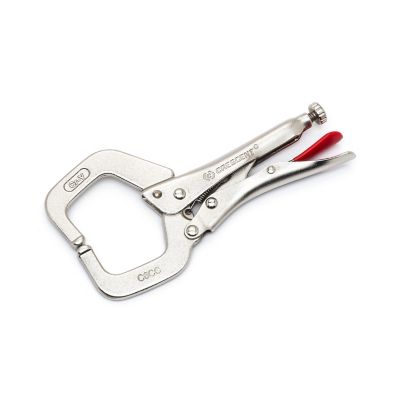
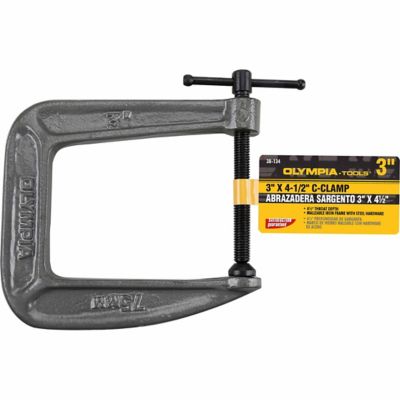
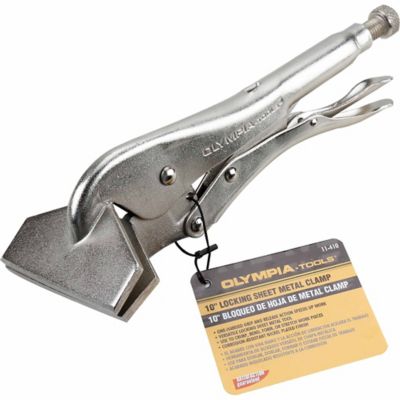
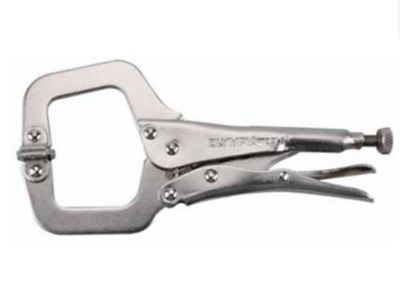
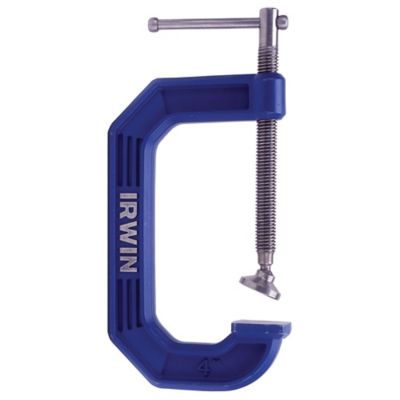
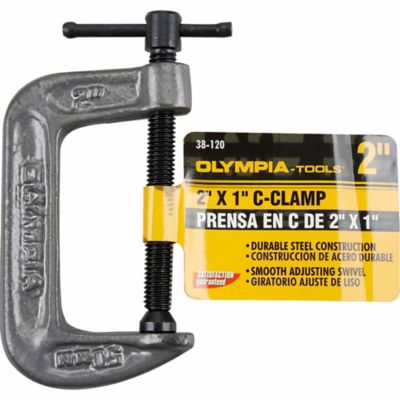
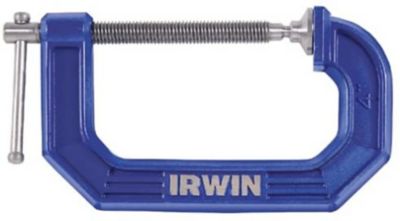
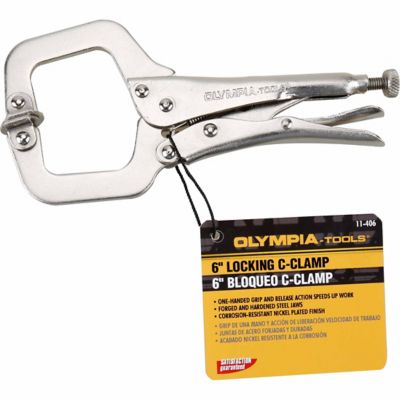
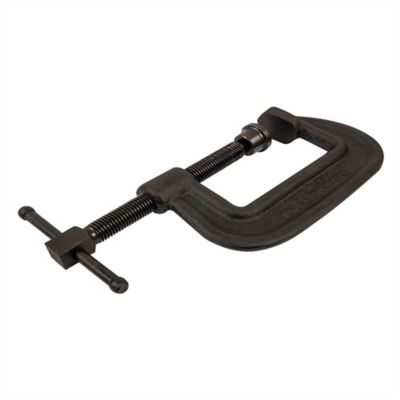
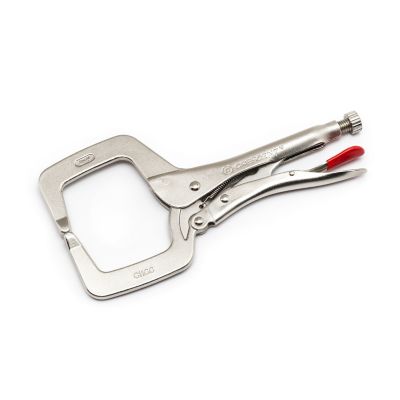
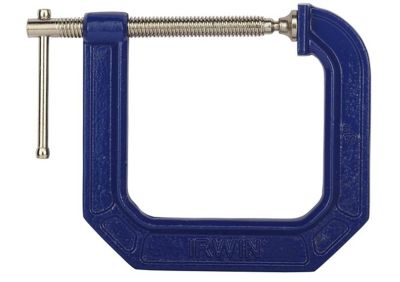
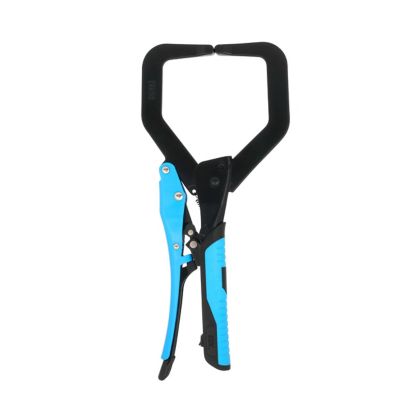
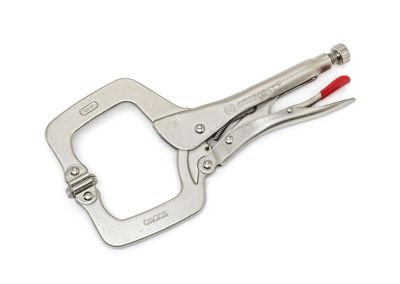
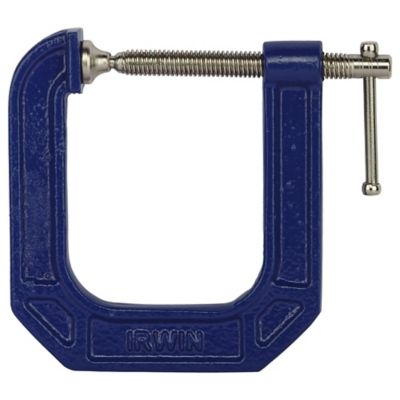
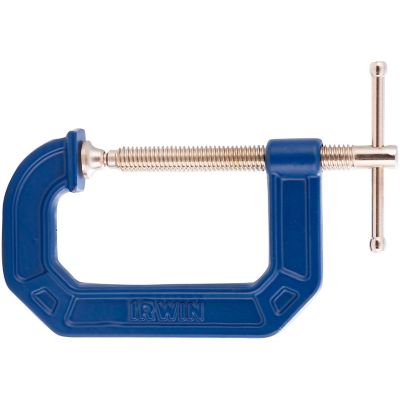
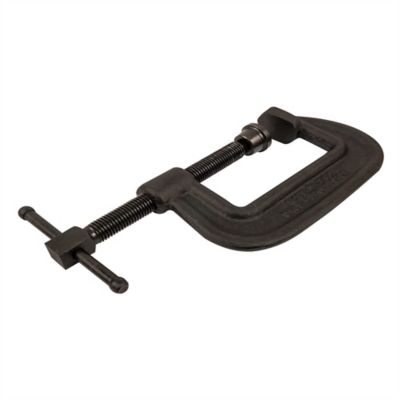
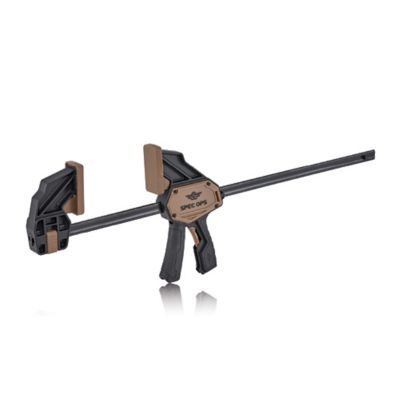
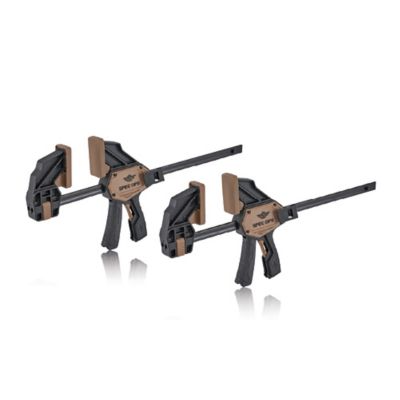
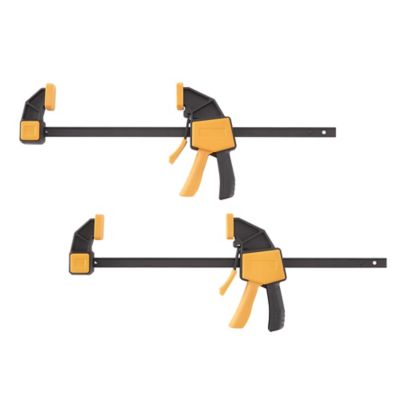
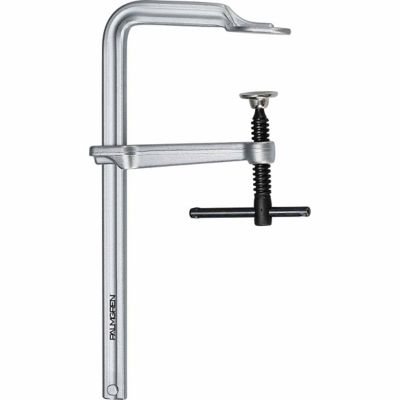
Woodworking C clamps hold wood parts, jigs, and fixtures together with pressure from a threaded screw inside a C-shaped frame. That simple setup makes them handy for furniture repairs, small glue-ups, bench work, and assemblies that need a firm hold while parts are fitted or fastened. One jaw stays fixed, while the screw advances a pressure pad toward it, trapping the work between the two contact points. Many designs have a swiveling pad that helps seat against the surface as the screw tightens. Unlike a clamp with a long sliding bar, a C clamp keeps its working space within a compact frame, making it a practical choice around a table leg, a cabinet corner, or a jig clamped to the edge of a workbench. A woodworker repairing a loose chair joint might need steady pressure in a small area, while someone building a storage shelf might need to hold a stop block in place for repeated cuts. C clamps serve both kinds of work, provided their opening, reach, and rated capacity fit the task. Frame material also matters. Forged steel frames can handle demanding clamping applications, cast iron frames offer rigidity, and cast aluminum designs generally weigh less than similarly sized iron or steel versions. The material alone does not establish how much pressure a clamp can handle; frame shape, screw construction, and the manufacturer’s rating all play a part. A thick frame may resist flexing well but take up more room around a joint. A lighter frame can be easier to position when the work calls for several clamps, though its load rating still deserves attention. For farm shops, home workshops, and small woodworking spaces, these differences make C clamps useful companions to other clamping styles rather than a replacement for every clamp on the bench. Their main strength is applying concentrated holding pressure where the frame can reach without getting in the way of the work.
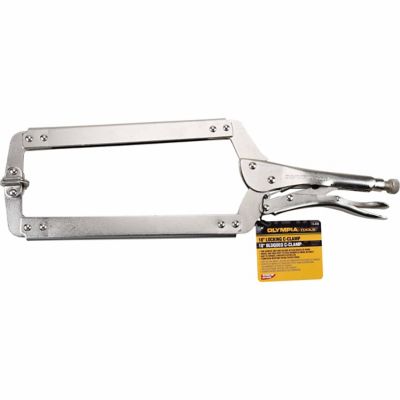
Fit comes down to more than the number attached to a clamp’s size. Opening capacity describes the maximum space between the jaws, while throat depth describes the reach from the inside of the frame to the clamping line. Both measurements affect whether a woodworking C clamp will sit where it needs to sit. A clamp might open wide enough for a board and a bench edge but still lack the reach to place its pad over the intended contact point. The total clamped thickness also includes any scrap blocks, protective pads, or fixtures between the jaws. Those extra layers can take up more space than expected, especially when a thick workbench top is part of the setup. When the contact point sits farther in from an edge,
Deep Throat C Clamps can provide the additional reach needed for recessed joints, wider fixtures, and parts that cannot be held close to their edges. Clearance around the frame and handle matters, too. A screw handle needs room to turn without striking a cabinet side, another clamp, or nearby hardware. Pressure-pad size and movement are worth considering for the same reason: a pad that seats squarely helps keep the force directed through the work instead of pushing a piece sideways. Bare metal jaws can leave dents in pine, cedar, and other softer woods, so protective scrap blocks are an important part of many setups. A caul, or wood block between the clamp and the workpiece, spreads pressure over a broader area and helps protect the surface. Clean pads and clean blocks matter on finished wood, where trapped grit can leave scratches. Broad panel glue-ups often call for bar or parallel clamps to span the width, while C clamps can help hold edge cauls, secure supporting fixtures, or address smaller contact areas. Keeping several opening sizes on hand allows a closer fit for different tasks, without wrestling a large frame around a small joint. The right fit leaves room for protection, keeps the pad over solid support, and lets the work stay aligned as pressure builds.
A firm hold does not mean every woodworking job needs the greatest pressure a clamp can deliver. Excessive tightening can crush wood fibers, bow thin parts, shift a joint, or squeeze out more adhesive than intended. Sound joints start with well-fitting parts; clamps hold those parts together rather than correct a badly fitted connection. For an edge repair or a small assembly, steady, balanced pressure is often more helpful than bearing down hard on one spot. Dry-fitting the pieces before adding glue gives a clearer picture of where the frames will sit and whether the handles will remain accessible. On a narrow trim piece, a backing block can support the wood beneath the pad. On a fixture secured to a bench, the clamp should hold against solid material and stay clear of the cutting or drilling path. C clamps are workholding tools, not lifting equipment, and their published limits should guide the job. Handle extensions and hammer blows can overload the screw or frame, so tightening should follow the manufacturer’s directions. Care is straightforward: wipe away fresh glue before it hardens, clear debris from the screw threads, and inspect the frame, pad, and handle for cracks, bending, or damaged threads. Thread lubrication, where recommended, helps the screw turn smoothly, but oil should stay away from wood surfaces that will receive glue or a finish. A clean storage spot keeps the tools easy to find and helps prevent damaged pads from marking the next project. With that attention, C clamps can earn a regular place beside the saw, drill, and workbench. They suit woodworkers, cabinet builders, farm-shop tinkerers, and homeowners tackling furniture repairs or building practical pieces for the house and shop. For someone who enjoys making things from wood, a thoughtfully chosen range of clamp sizes can also make a useful gift, especially when matched to the bench space and projects that person already has. These are straightforward tools whose value shows up in the details: parts that stay put, joints that remain aligned, and a workpiece held steady while the next step gets done.