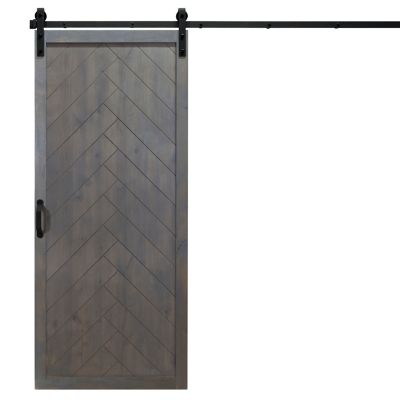
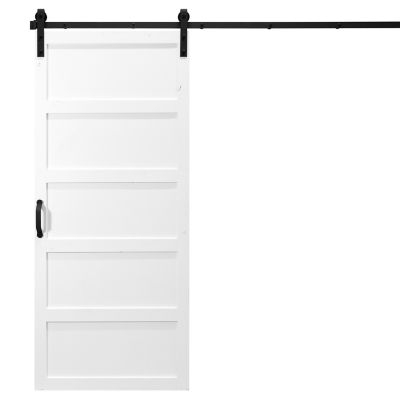
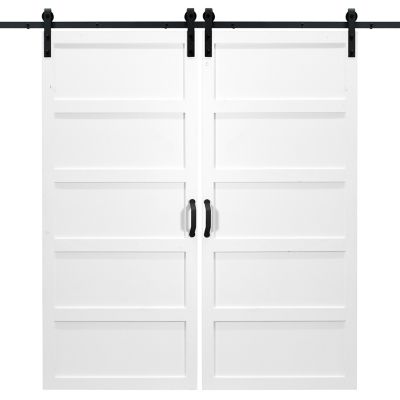
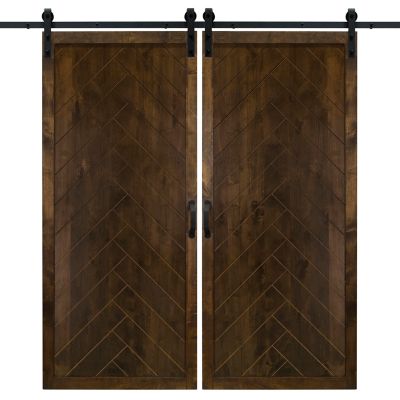
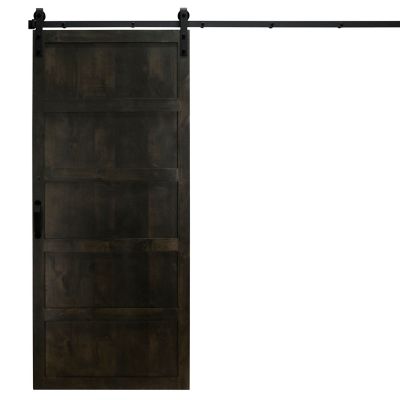
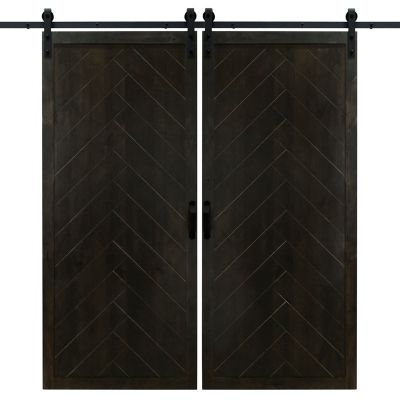
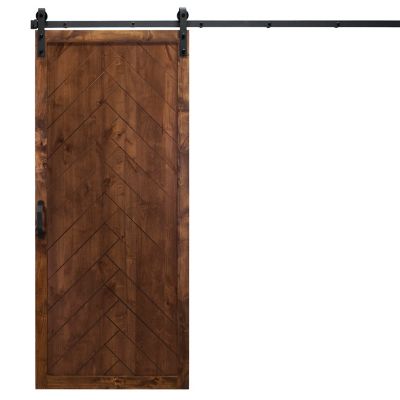
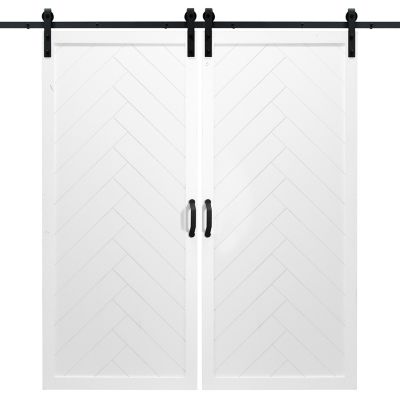
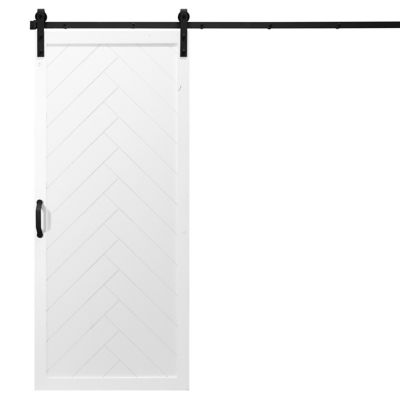
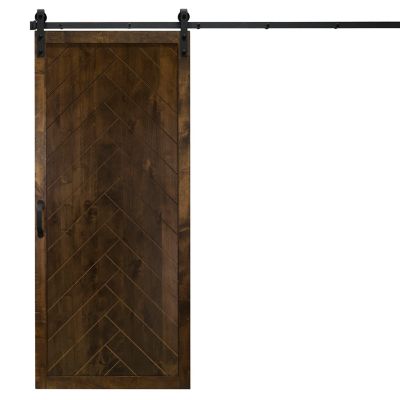
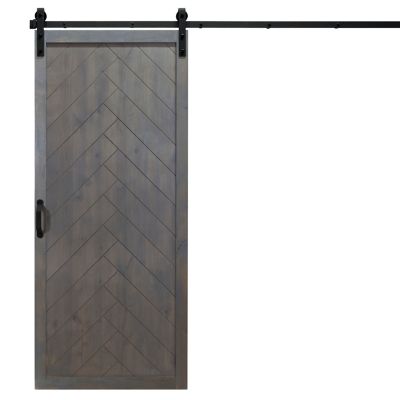
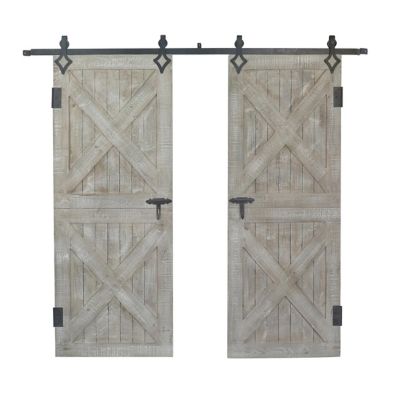
Wooden barn doors bring the look of a working barn into spaces where a regular swinging door can get in the way. Their broad faces, visible grain, and straightforward lines feel right at home in a farmhouse, a ranch house, or a place with a mudroom full of boots. A sliding door can close off a pantry, cover a laundry nook, or separate a home office from the main living area without sweeping across the floor each time it opens. The appeal goes beyond saving that swing space: wood gives a large doorway warmth and texture, whether the room leans toward simple painted trim or exposed beams and natural finishes. Plank-style faces and cross braces have a familiar country look, while flat panels and straighter lines fit rooms with a cleaner, quieter feel. The wood itself makes a difference, too. Pine often shows knots and a lively grain pattern, while oak tends to have a more pronounced grain and a heavier feel. Engineered wood construction can offer a more uniform surface, although the core, facing, and edges all matter when comparing doors. Solid wood has natural variation, so two panels with the same finish may not look exactly alike. Knots, grain direction, and slight differences in color are part of that character rather than something a finish always hides. Unfinished surfaces offer room to choose a paint or stain that fits existing cabinetry and trim, while finished surfaces reduce the work needed before installation. A door intended for an indoor hallway is not automatically suited to a farm building or an exterior opening. That distinction matters for folks shopping for an actual barn entrance rather than an interior barn-style door. The construction, finish, and hardware need to match the setting and the job, whether that means screening a utility space from view or closing a larger building opening.
Fit is where a wooden barn door earns its keep. For an interior sliding setup, the panel generally needs to overlap the doorway enough to cover the opening, and the wall beside it needs room for the panel to travel. A narrow hallway may benefit from a door that stays close to the wall, but light switches, outlets, baseboards, and nearby trim can affect that clearance. A pantry door that slides neatly behind open wall space behaves very differently from one that runs into a cabinet edge or blocks a switch. Door height, panel thickness, track length, and the distance between the door and the wall all deserve attention before a size is chosen. The door’s weight matters just as much as its dimensions. Track and mounting hardware need the right load rating, and the wall needs suitable structural support; drywall alone is not enough to carry a heavy sliding assembly. Some openings suit a single panel, while wider passages may call for two panels that meet in the middle or another compatible arrangement. The right setup depends on both the opening and the usable wall area, not simply the width printed on a door description. Handles also affect everyday use. A pull that is easy to grab on one side may need a recessed grip on the wall-facing side so the panel can slide without interference. Floor guides help keep the bottom from swinging outward, and compatible stops or soft-close hardware can make movement more controlled. These doors are handy for rooms where visual separation is the main goal, but the small gaps around many sliding installations mean they may not block sound, light, or odors as well as a fitted hinged door. That is worth keeping in mind for a bedroom beside a busy living room or a bathroom where privacy matters. Families with little ones also have good reason to consider reachable pinch points, secure guides, and a setup that keeps the panel on its intended path.
The finish and upkeep of wooden barn doors should fit the way a household runs. A door beside a laundry area may get frequent hand contact, while one near a mudroom can collect dust and marks from everyday traffic. Painted wood gives a more even color and can tie into existing trim; stain lets more of the grain show through. Clear finishes can protect the surface while keeping the natural look, though the level of protection depends on the coating and how it is applied. For unfinished doors, the edges and any areas affected by trimming deserve attention along with the broad faces, following the door and finish makers’ directions. Routine care is usually straightforward: a soft cloth for dust, a lightly damp cloth when appropriate for the finish, and prompt drying rather than soaking the wood. Harsh cleaners and abrasive pads can dull or damage a surface, so care directions matter more than a one-size-fits-all cleaning habit. Hardware needs attention as well. A clear track, secure fasteners, and a guide that stays aligned help a door move the way it should, especially in a passage that gets opened and closed all day. Long-term wear is shaped by the construction, finish, mounting, and daily handling together, not by wood thickness alone. Appearance still matters once those practical needs are covered. A darker stain can give a broad panel a grounded look against pale walls, while a painted door can blend into the room instead of becoming its main feature. For spaces that call for a more refined look,
Elegant Barn Doors offers another direction to consider alongside familiar plank and brace styles. Matching every wood tone is not always necessary; a shared finish tone or a handle that works with nearby fixtures can help the whole room feel settled. The best fit is a door that suits the opening, takes everyday handling in stride, and looks natural in the home—not one that makes daily chores harder just to catch the eye.