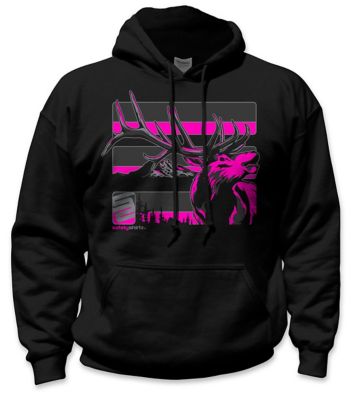
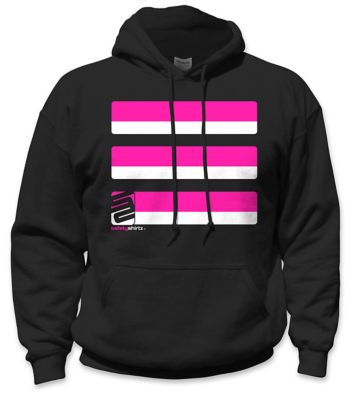
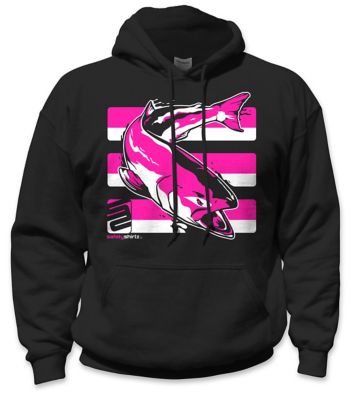
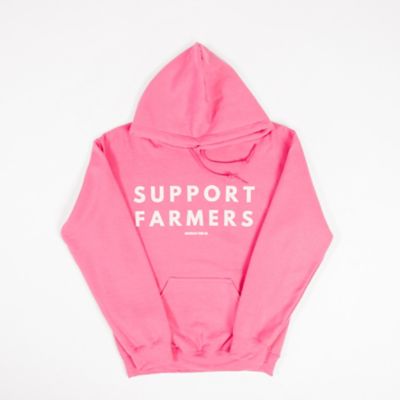
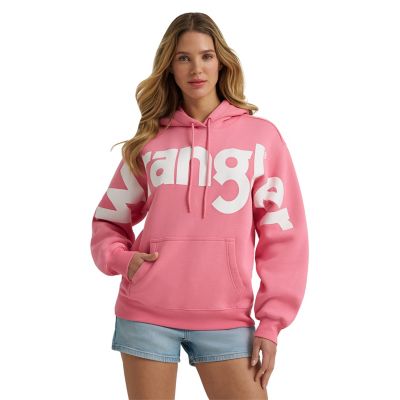
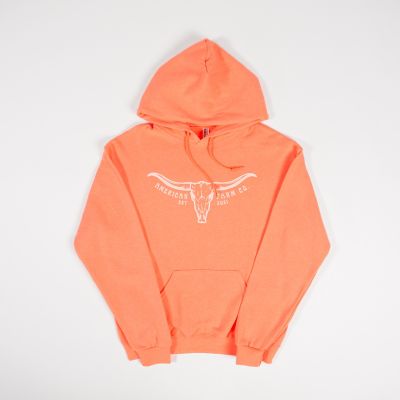
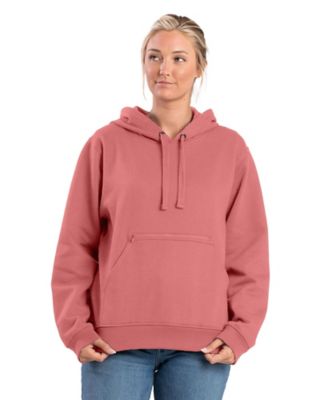
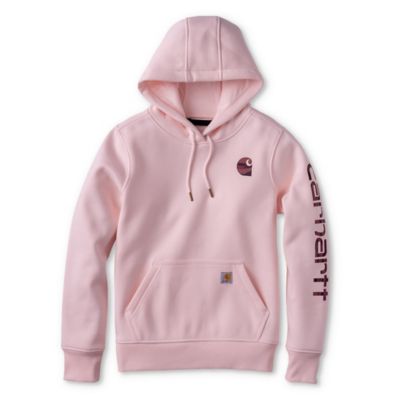
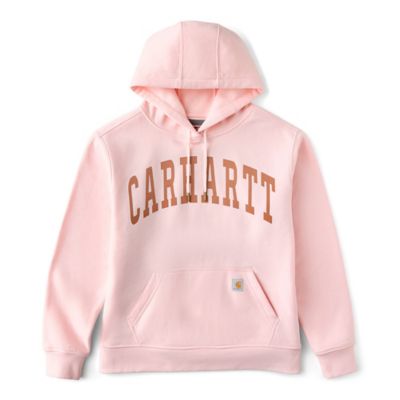
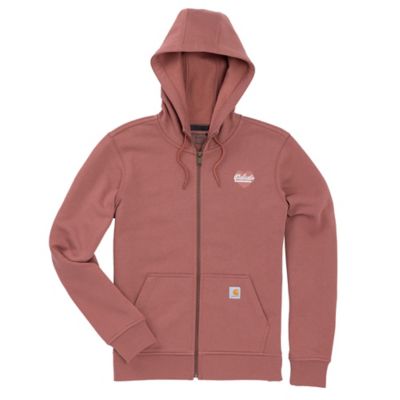
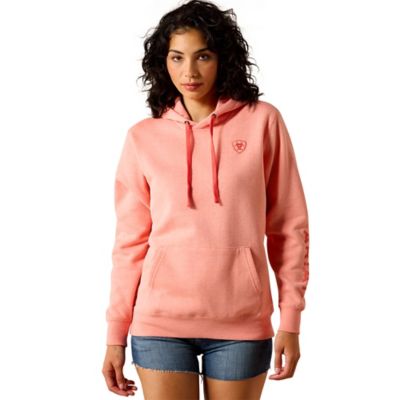
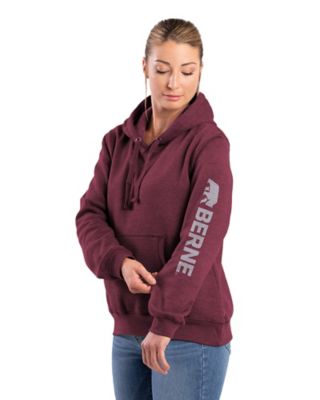
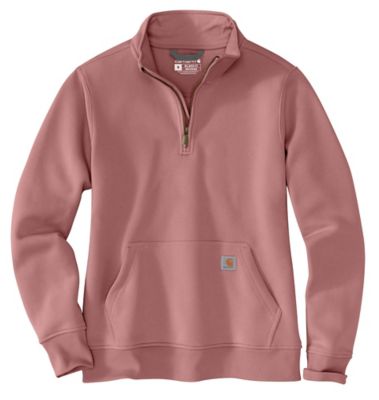
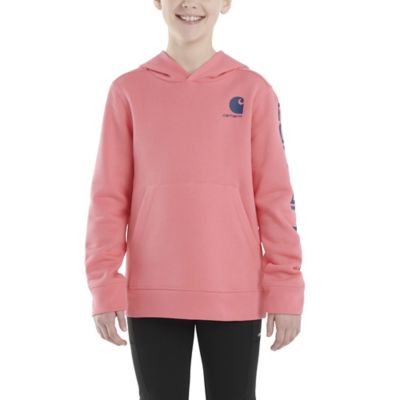
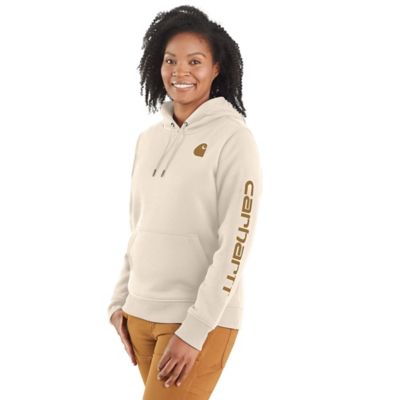
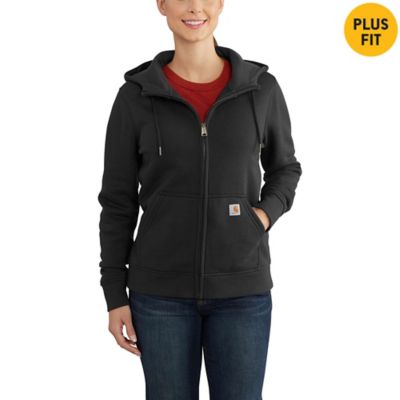
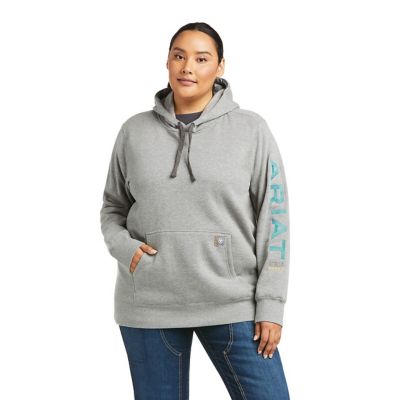
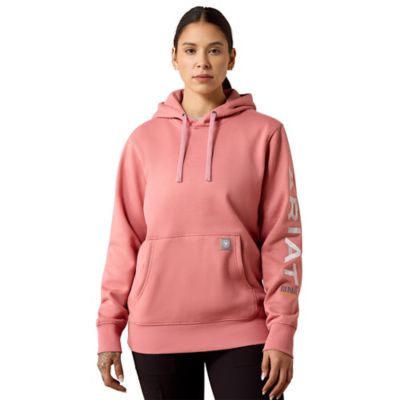
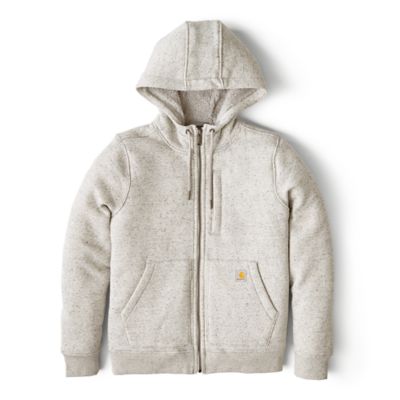
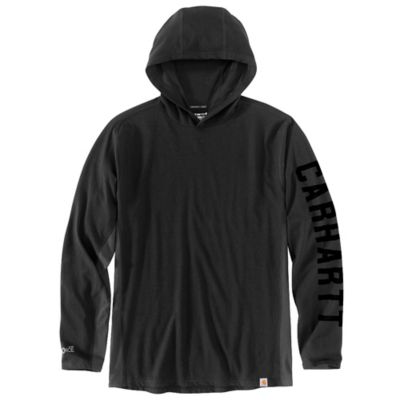
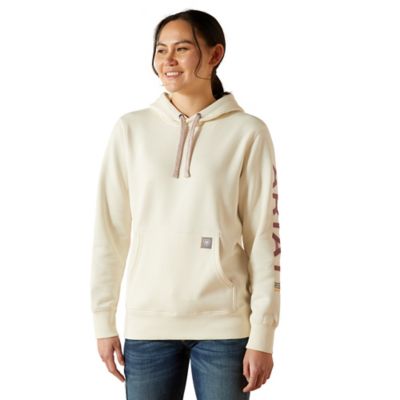
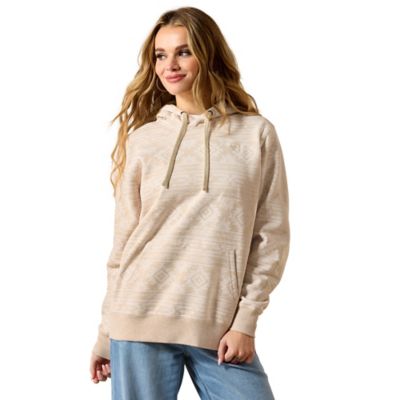
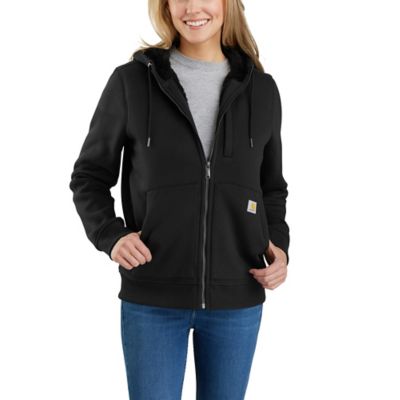
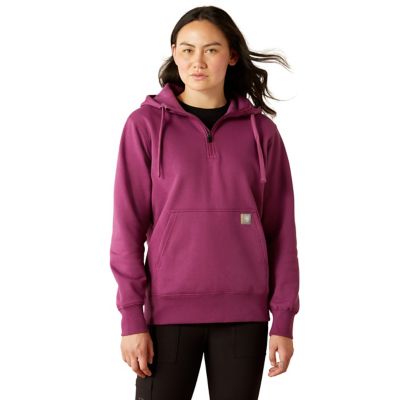
Women's pink hoodies come in pullover and zip-front styles, with shades ranging from pale blush and dusty rose to bright pink and deep raspberry. The color can be a small change from an everyday gray sweatshirt or the main focus of an outfit with jeans and boots. Beyond the shade, the biggest differences come down to fabric, fit, closures, and pocket placement. Cotton-rich knits tend to have a soft, familiar feel, while cotton and polyester blends can offer a balance of softness, shape retention, and straightforward care. Brushed fleece has a fuzzy inner surface that feels plush against the skin. French terry has small loops on the inside and a less fluffy texture, making it another option for everyday layering. Fabric weight also matters: a substantial sweatshirt has a different drape and feel than a lighter knit, even when both share the same color and general shape. Pullovers have an uninterrupted front apart from pockets or graphics, with no zipper running down the middle. Full-zip hoodies open completely, which makes them easy to take off without pulling them over a cap or ponytail. Half-zip styles split the difference, offering an adjustable neckline with the general feel of a pullover. A kangaroo pocket creates a familiar sweatshirt look, while separate front pockets give zip-front styles a different shape. Pockets can keep a phone or small essentials close, though their depth and opening affect how securely those things sit. Solid pink is easy to pair with patterned shirts, faded denim, or dark work pants. Heathered pink has a blended appearance, while color-blocked panels and printed details bring more contrast. A muted rose can feel understated enough for regular errands and casual work settings; a brighter shade stands out against blue jeans and brown leather. Within the broader category of
women's long sleeve hoodies, pink offers plenty of room for personal preference without changing the practical appeal of a familiar sweatshirt.
Fit makes a noticeable difference when a hoodie is part of a full day rather than something worn for a quick trip out. A regular fit usually leaves room for a T-shirt without much extra fabric, while a relaxed or oversized cut creates more space through the chest, shoulders, and sleeves. Those descriptions vary between makers, so garment measurements give a clearer picture than a size name alone. Shoulder width, chest room, sleeve length, and body length all affect how a sweatshirt sits when reaching for a shelf, carrying a feed scoop, or settling into a truck seat. A hem that looks right while standing may ride up when both arms are raised, and sleeves that hang well at rest can pull back when elbows bend. Stretch in the fabric and ribbing can help with movement, but it does not replace enough room through the shoulders. Longer lengths provide more coverage over leggings or fitted pants, while a standard hip-length cut pairs easily with straight-leg jeans. Cropped styles sit higher on the body and have a different balance with high-rise bottoms. Ribbed cuffs help sleeves stay in place, and a ribbed hem gives the bottom edge a more defined shape. The hood deserves attention, too: its size, lining, and weight can change how the neckline rests across the shoulders. A heavy hood may pull backward, while a flatter hood can sit more neatly under another layer. Drawstrings add adjustment, though a drawstring-free design has fewer loose ends. Stitching at pocket corners, cuffs, and zipper ends matters because those areas see repeated pulling during everyday wear. Even seams, secure pocket attachments, and ribbing that springs back after stretching are useful construction details. For chores involving machinery or other hazards, ordinary hoodies are not a substitute for task-appropriate protective clothing, and loose fabric or cords need to stay clear of moving parts.
Care helps a pink hoodie keep its shape, feel, and color through repeated wear. The garment's care label takes priority because fabric blends, printed designs, and trims can call for different washing and drying methods. Turning a sweatshirt inside out can reduce rubbing against the outer surface, especially when it has a graphic or a brushed finish. Washing with similar colors helps limit color transfer, and separating sweatshirts from rough hardware can reduce snagging and abrasion. Pink shades can show certain marks more readily than darker colors, so prompt attention to a splash of coffee or a dusty cuff can make routine care simpler. Stain treatments need to suit the fabric and dye; a small, hidden test area can help reveal an unwanted color change before treatment reaches the front of the garment. Following the recommended drying method matters for fit, since some cotton-containing fabrics can shrink and excessive dryer heat can affect stretch fibers or printed details. Empty pockets and a fastened zipper can also help prevent forgotten objects or exposed hardware from causing trouble in the wash. Between wears, a neatly folded hoodie keeps the hood, sleeves, and body together without taking up much closet space. For everyday outfits, pale pink works well with charcoal leggings, medium-wash denim, and simple sneakers, while a richer pink pairs naturally with dark jeans and pull-on boots. A zip-front style leaves a favorite T-shirt visible; a pullover gives the outfit a more continuous block of color. These are practical layers for women heading to a casual gathering, walking the property, riding along on errands, or relaxing after chores. They can also make thoughtful birthday gifts for a daughter, sister, mother, or friend who already reaches for pink. A familiar shade and preferred fit usually matter more than a bold detail the recipient might not wear. The right combination feels at home in an everyday rotation, with enough room to move, pockets where they are wanted, and fabric that feels good from the first errand to the last stop.