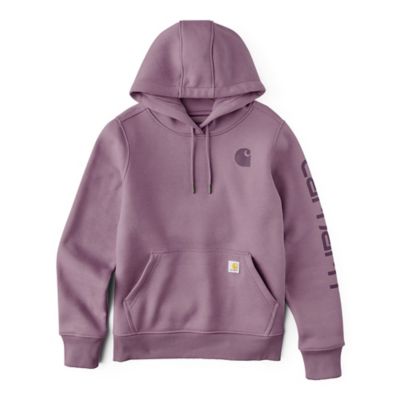
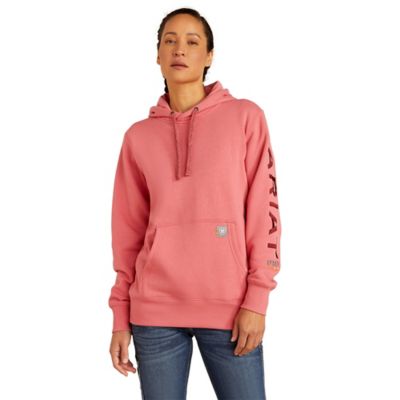
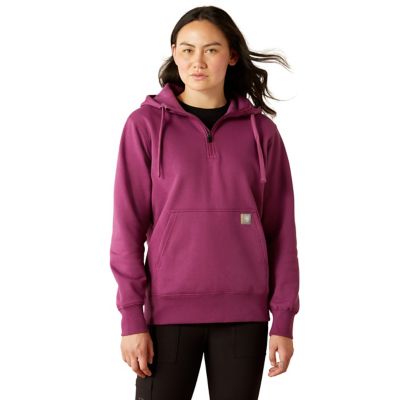
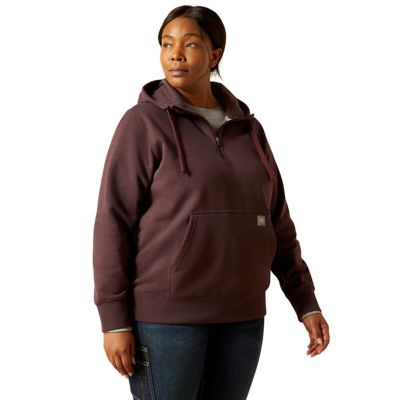
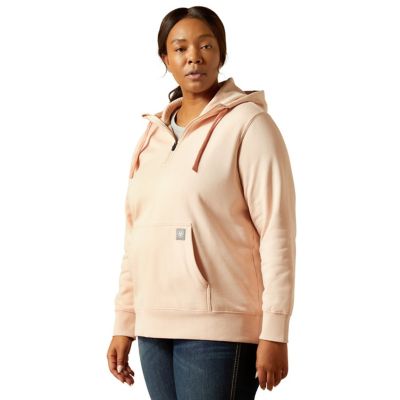
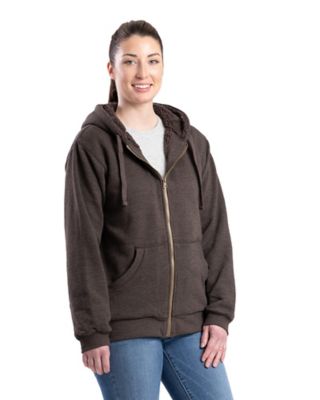
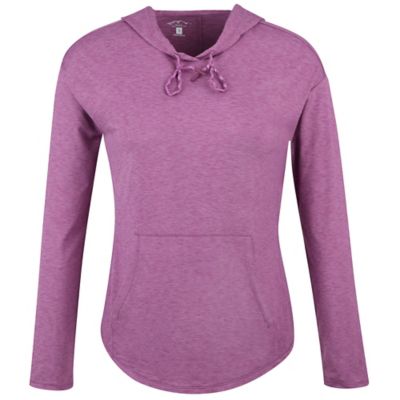
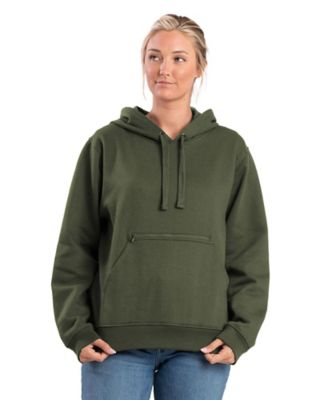
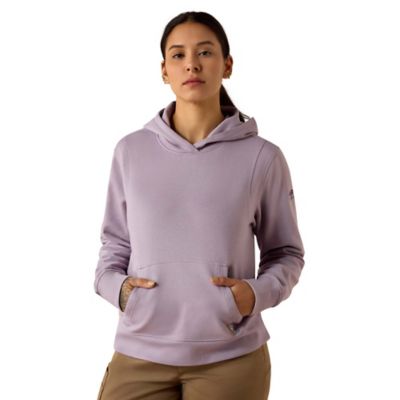
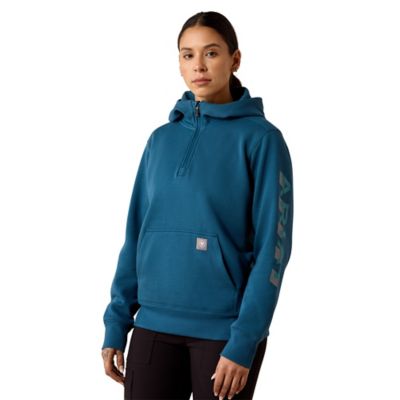
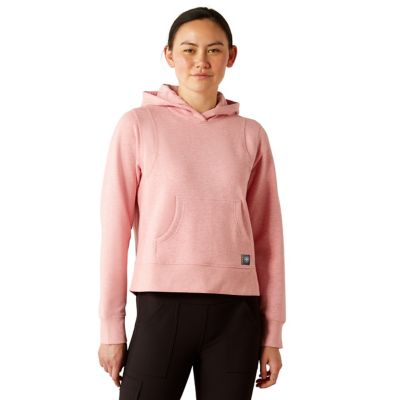
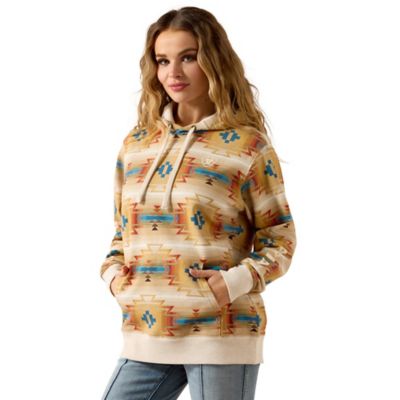
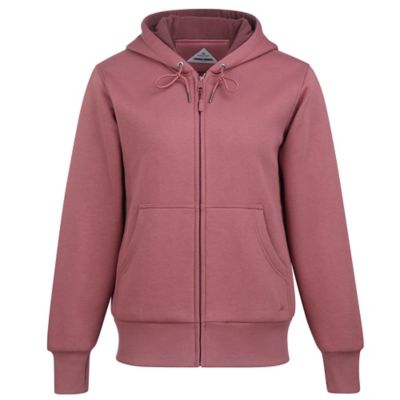
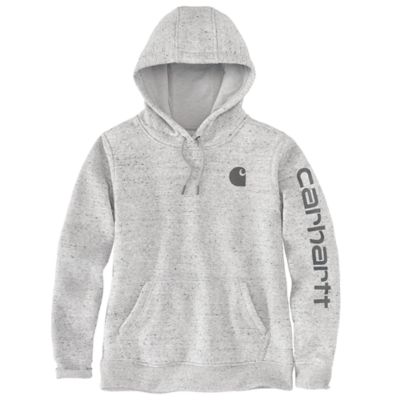
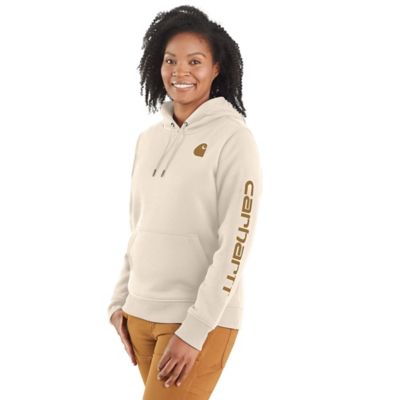
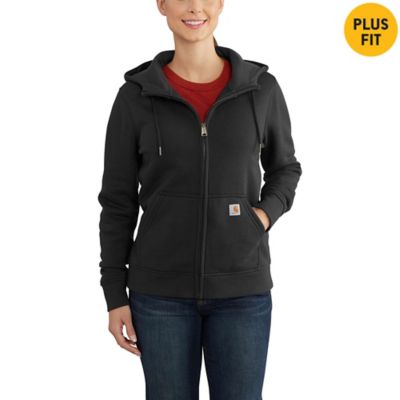
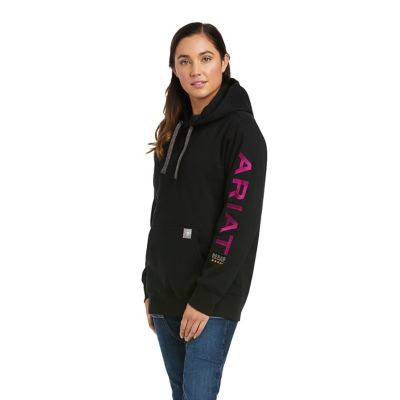
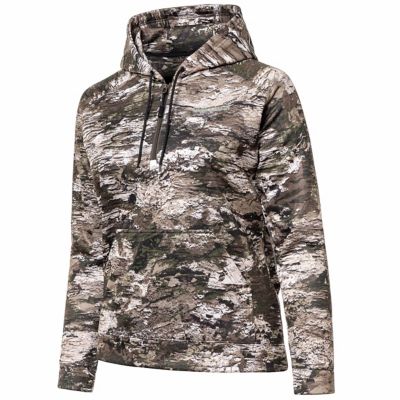
Women’s hoodies include pullover and zip-up styles in cotton, polyester, cotton-polyester blends, and fabrics with added stretch. Each combination brings a different feel to an everyday layer, whether the day involves feeding animals, heading to class, walking the property, or taking a break on the porch. A pullover hoodie has a simple, uninterrupted front and often includes a kangaroo pocket for resting hands or carrying a few small essentials. A full-zip hoodie opens completely, making it easy to slip on over a T-shirt without pulling anything over your head. Partial-zip designs offer another option, with an adjustable neckline and a front that stays mostly closed. Fabric construction matters just as much as the closure. Brushed fleece has a soft, fuzzy interior, while French terry has small loops on the inside and generally feels less plush against the skin. Cotton brings a familiar, breathable feel, though cotton-rich fabric can hold moisture and take longer to dry than some synthetic fabrics. Polyester can help a garment dry faster and retain its shape, depending on the knit and care routine. Blends combine characteristics of different fibers, while a little elastane can add give through the shoulders, sleeves, and body. Fabric weight also changes how a hoodie hangs: a lighter knit tends to drape closer to the body, while a heavier knit often has more structure. Neither is automatically better; the difference comes down to how the sweatshirt will fit into the day. A smooth, less substantial fabric may tuck comfortably into a tote for an overnight visit, while a thicker fleece can feel substantial enough to wear as the main piece of an outfit. For women moving between chores, errands, and downtime, those practical differences can matter more than a bold graphic or an eye-catching color.
Fit gives a women’s hoodie much of its character, from a close, streamlined shape to a roomy cut with dropped shoulders. A relaxed fit leaves space for a shirt underneath and allows easy movement, while a more fitted shape sits closer through the waist and arms. Oversized hoodies are intentionally generous, so simply sizing up in a standard cut may not create the same proportions through the shoulders, sleeves, and hem. Measurements help make sense of those differences. Chest, sleeve, and body-length measurements are more useful than relying on a size letter alone, especially when comparing different cuts. A favorite sweatshirt laid flat can provide a helpful reference for how much room feels comfortable. Length deserves some attention, too. A shorter hem pairs naturally with higher-rise jeans or joggers, while a longer body provides more coverage when sitting, reaching, or bending to fill a feed pan. Side slits and curved hems can change how the fabric moves over the hips, and ribbed hems tend to draw the bottom edge inward. Sleeves should allow elbows to bend freely without leaving excessive fabric gathered around the hands. Ribbed cuffs can help sleeves stay put when pushed up for washing hands or handling everyday tasks. The hood itself should rest comfortably behind the neck without pulling the front neckline backward. Its shape, lining, and seams all affect how it feels when raised or lowered. Pockets bring their own trade-offs: an open front pouch is convenient for quick access, but a zipper closure offers more security for small belongings when bending or sitting. Smooth zipper movement, even stitching, and neatly finished pocket openings are useful construction details to notice. Reinforcement around pocket corners can help those frequently tugged areas stand up to repeated wear. For work around moving equipment, close-fitting clothing and secured drawcords matter more than having extra room or oversized sleeves.
Everyday styling is straightforward with a women’s hoodie. A plain pullover works with jeans and work boots for a trip into town, while a zip-up can sit over a simple tee with joggers for travel or time at home. Graphic designs bring a different look without changing the basic comfort of the garment, and solid colors make it easy to mix a hoodie with clothing already in the closet. A less roomy cut can fit more comfortably beneath a vest or jacket, while a generous silhouette leaves space for layering underneath. For more layering options, explore
Women's Fall Hoodies. The best everyday choice also needs to fit the laundry routine. Care labels take priority because fiber content, printed artwork, trims, and fabric finishes can call for different treatment. Washing with similar colors, closing zippers, and turning printed garments inside out can help limit rubbing and snagging in the wash. Cotton-rich hoodies may shrink with heat, so the recommended wash and drying settings are worth following before assuming a roomy fit will stay exactly the same. Excessive dryer heat can also affect stretch fibers and graphics. Giving a hoodie enough space to dry, rather than leaving it bunched in a hamper, helps keep the fabric fresh between wears. Small problems are easier to address early: a loose thread near a pocket or an opening seam at a cuff can worsen when repeatedly pulled. Hoodies can also make practical gifts for students, women who spend plenty of time outdoors, or anyone who reaches for comfortable casual clothing after a long day. A familiar fit, a preferred neckline, and a color that works with the recipient’s usual wardrobe are better starting points than guessing at a statement design. Whether it becomes the sweatshirt kept by the door or the one packed for a weekend away, a hoodie earns its place through comfortable movement, useful details, and fabric that suits the way it will be worn.