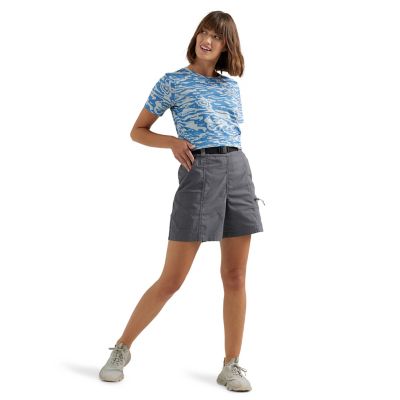
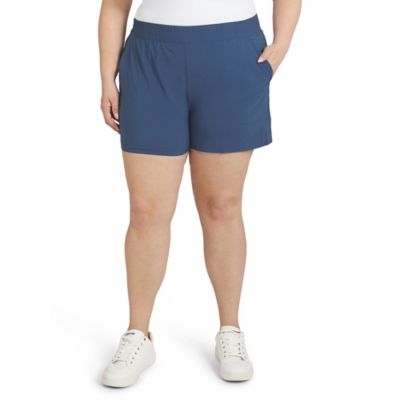
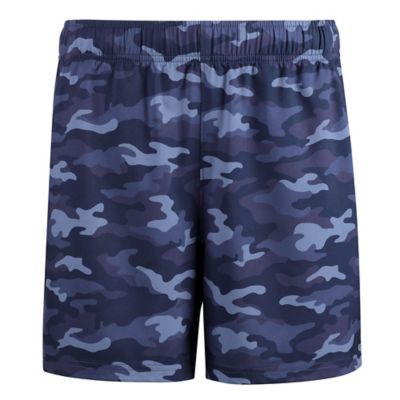
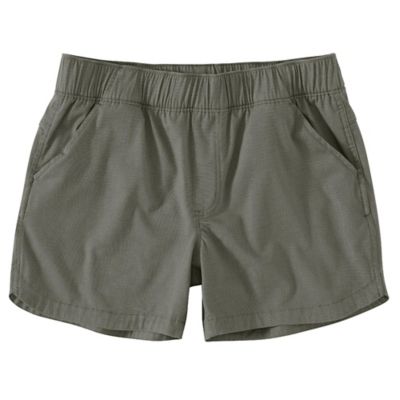
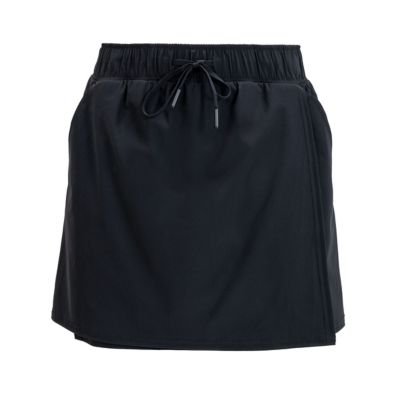
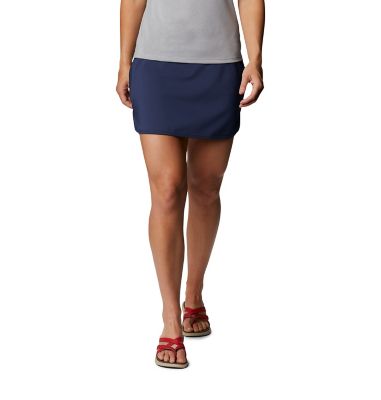
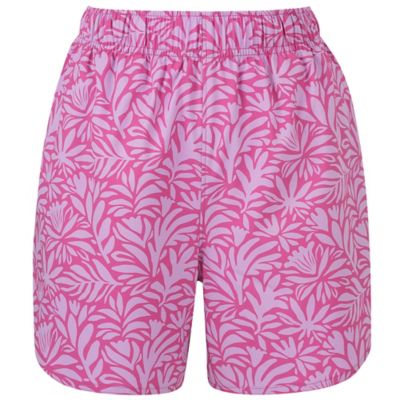
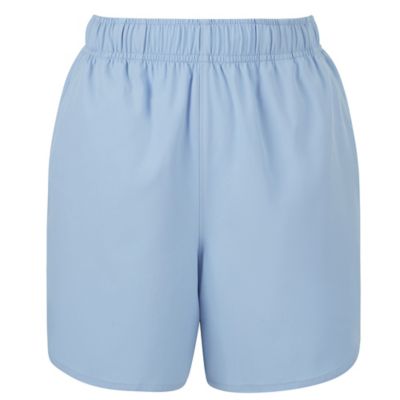
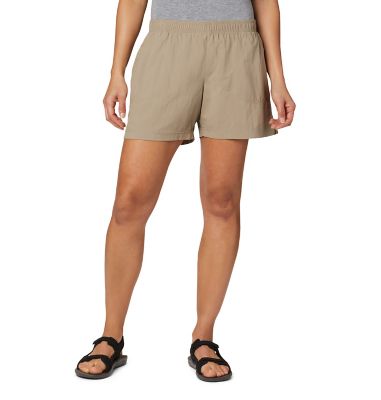
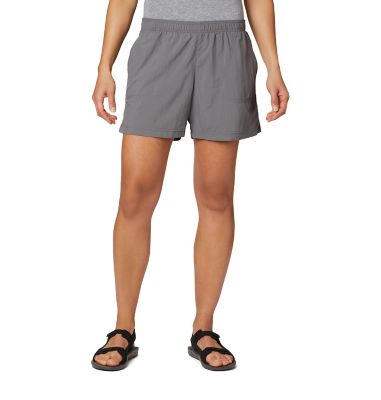
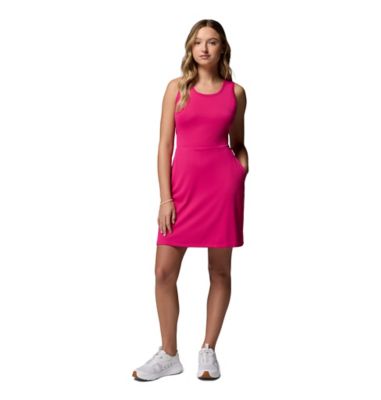
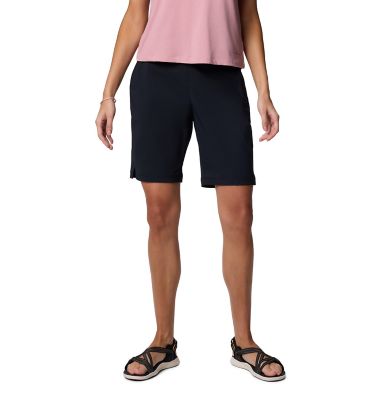
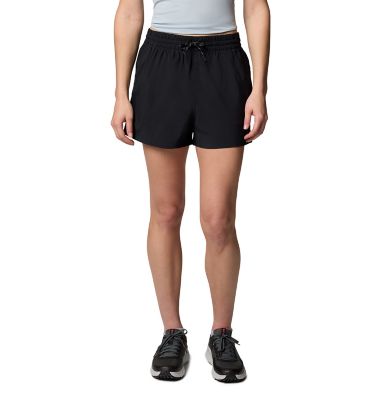
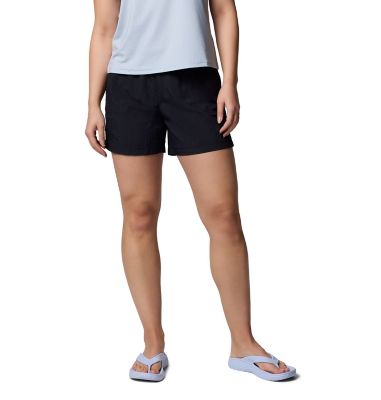
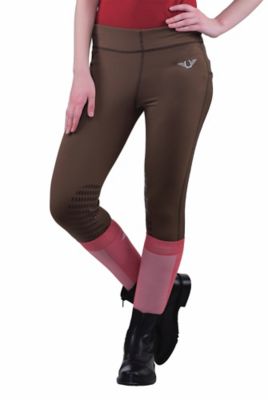
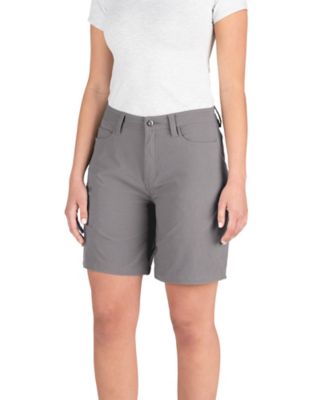
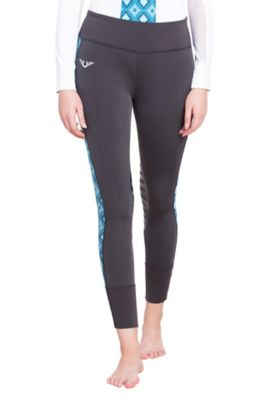
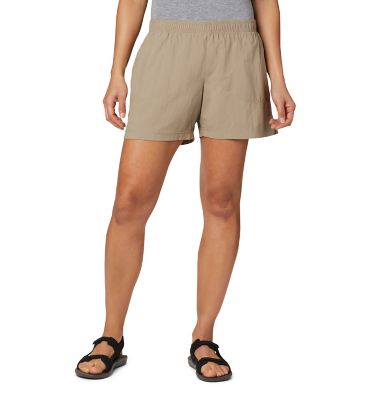
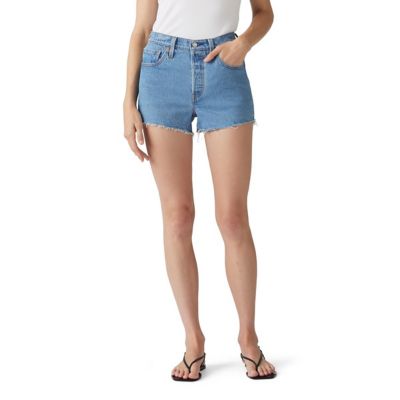
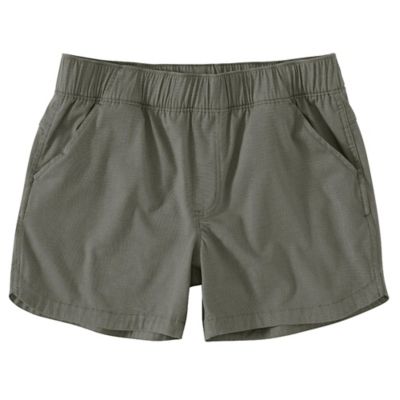
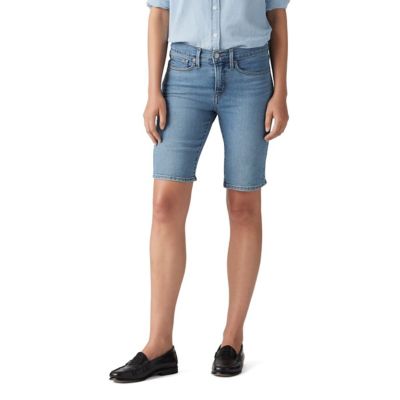
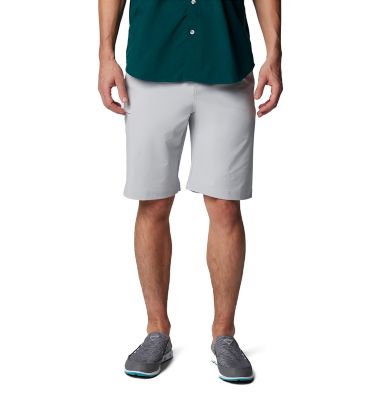
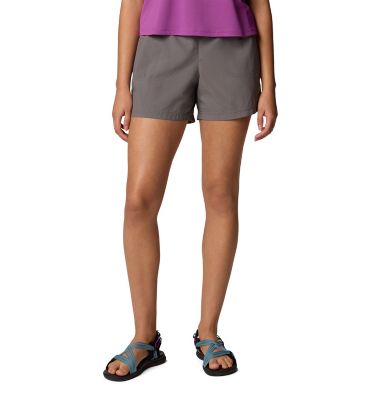
Women's moisture-wicking shorts move perspiration away from the skin and spread it across the fabric so it can evaporate more readily. Many feature polyester or nylon blends, often with spandex or elastane for stretch, to help manage sweat while allowing comfortable movement. That combination makes them a practical choice for walking, working out, running errands, and handling everyday tasks that keep you on your feet. Moisture-wicking fabric is not the same as waterproof fabric: it helps move sweat rather than blocking water from reaching the skin. Drying speed also depends on fabric weight, construction, airflow, and how much moisture the material holds. Polyester is common in athletic shorts because it absorbs relatively little water and can dry readily, while nylon often brings a smooth feel and resistance to abrasion. Stretch fibers help the material give when you bend to fill a pet bowl, climb a flight of stairs, or reach down to the bottom shelf in the feed room. A lightweight woven fabric generally has a less clingy feel, while a soft knit can offer a closer, more flexible fit. Mesh panels and breathable pocket bags may allow more airflow, though the overall design matters just as much as a single fabric feature. Cotton blends can feel familiar and soft, but their moisture management varies with the blend and construction; a cotton-containing short should not be assumed to wick sweat without that feature being stated. Fabric thickness deserves a look, too. A substantial knit may provide more coverage during squats, while a lighter woven shell may feel less restrictive on a long walk. A smooth inner surface and thoughtfully placed seams can also make a difference when your routine involves repeated movement. The most comfortable choice brings together moisture management, coverage, and a feel against the skin that suits the way you spend your day.
Fit shapes how women's moisture-wicking shorts perform, whether the plan is a walk down the gravel lane or a session at the gym. A relaxed cut leaves room through the seat and thighs, while a fitted cut follows the body more closely and can help limit excess fabric movement. Neither should pinch at the leg opening or pull across the hips when you sit. Stretch helps, but it does not replace enough room in the right places. Inseam length affects both coverage and freedom of movement: shorter lengths leave less fabric around the legs, while longer lengths provide more thigh coverage and may help reduce skin-to-skin rubbing. The way the hem sits matters as well, particularly if it tends to roll or creep upward with each step. A broad waistband can spread pressure across a larger area, and an internal drawcord offers another way to keep the waist in place. High-rise and mid-rise designs sit differently when bending, so the most comfortable rise is one that stays put without digging in. Flat seams or seams positioned away from high-friction areas may help reduce irritation on longer outings. Some designs include a brief liner or a fitted inner layer for support and coverage; others leave that choice to the wearer. A liner should feel smooth rather than bunching through the stride, and its care needs matter alongside those of the outer fabric. Pockets bring everyday convenience, but their placement can change how shorts feel in motion. A phone resting against the outer thigh moves differently from one carried in a loose side pocket, and a secure closure can help keep keys from slipping out. Extra reinforcement at pocket openings, a firmly attached waistband, and even stitching at stress points are worth noticing when shorts will see frequent wear. For stretching, lifting, or walking with a steady stride, a comfortable pair should let the activity take center stage instead of demanding constant waistband adjustments.
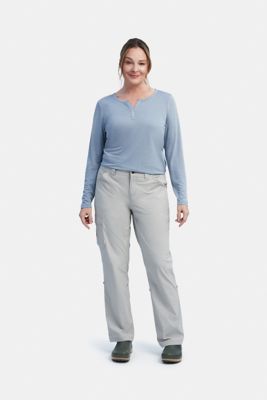
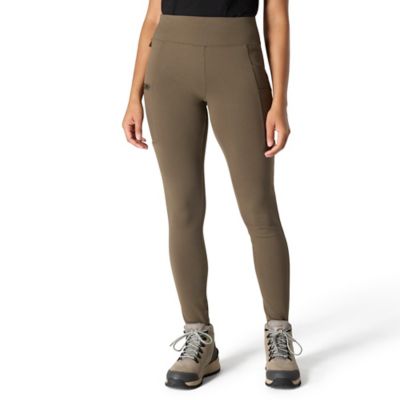
Moisture-wicking shorts fit naturally into routines that mix exercise with the rest of the day. They can work for a treadmill walk before chores, a trip into town after a fitness class, or time spent tidying the house and tending container plants. Their purpose is everyday movement and sweat management, not protection from every task around a property. Exposed legs are not the right match for brush, sharp materials, certain equipment, or work that calls for protective clothing. When more leg coverage suits the job or the setting,
Womens Moisture Wicking Pants offer another direction while keeping moisture management part of the conversation. For shorts that earn a regular place in the laundry basket, care helps preserve stretch, fit, and fabric performance. The garment's care label is the starting point because liners, finishes, and fiber blends can call for different treatment. Fabric softener can leave residue that interferes with moisture movement, and too much detergent may also leave buildup behind. Washing with similar colors, fastening closures, and keeping rough or hook-and-loop materials away from smooth athletic fabric can help limit snags. Letting damp shorts dry before leaving them in a hamper can help keep odors from settling in. High dryer heat can be hard on stretch fibers, so air-drying or a lower setting may be appropriate when the label allows it. Frequent wear also makes small construction details count: seams that stay flat, hems that hold their shape, and waistbands that recover after stretching all contribute to continued comfort. For a woman who enjoys fitness walks, home workouts, or an active routine, moisture-wicking shorts can also make a thoughtful gift when her size, preferred inseam, and usual fit are known. A familiar cut and useful pocket layout often matter more than a flashy detail. The strongest match is a pair that feels comfortable from the first step, provides the coverage she wants, and stands up to regular wear and washing.