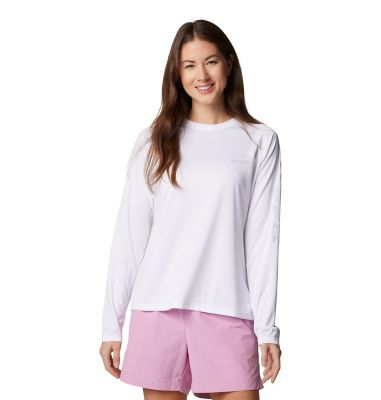
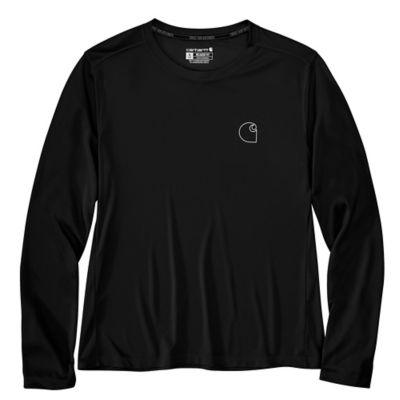
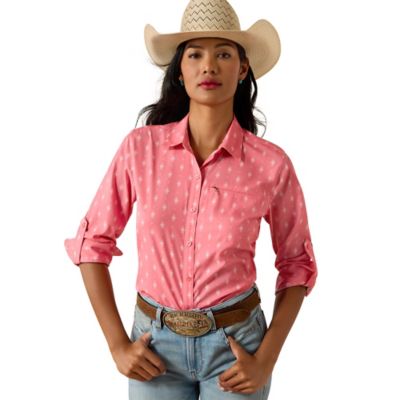
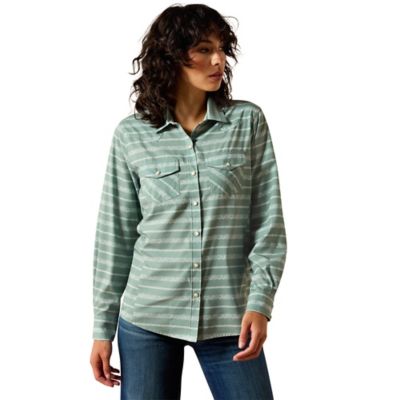
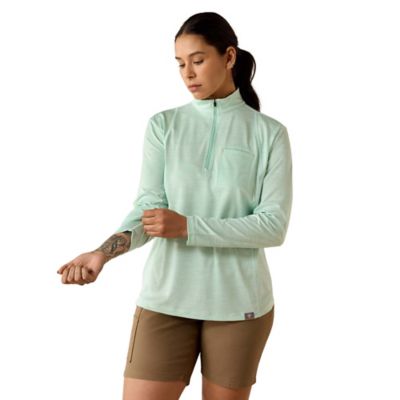
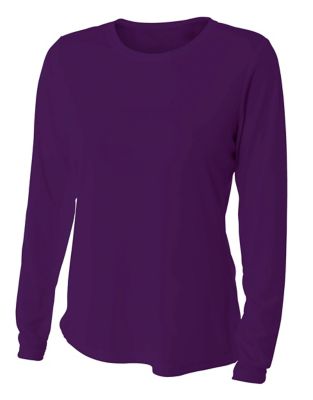
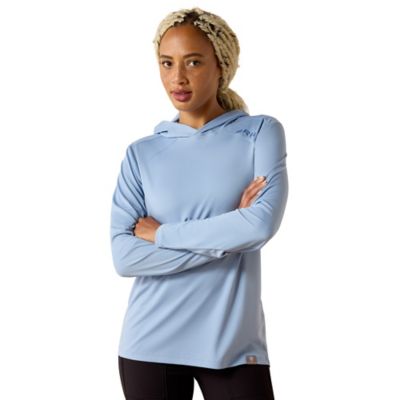
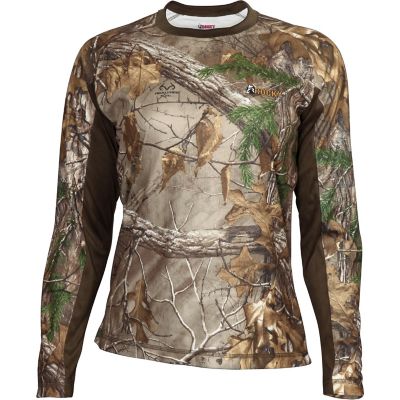
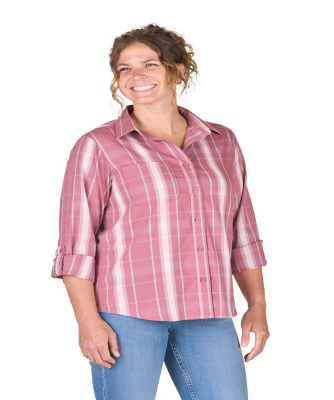
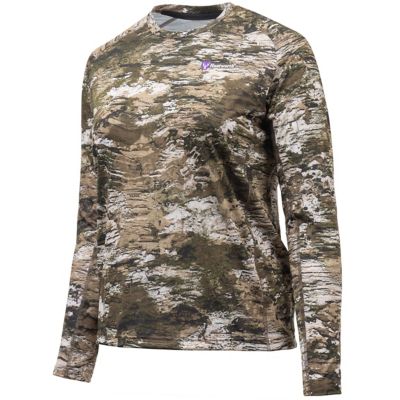
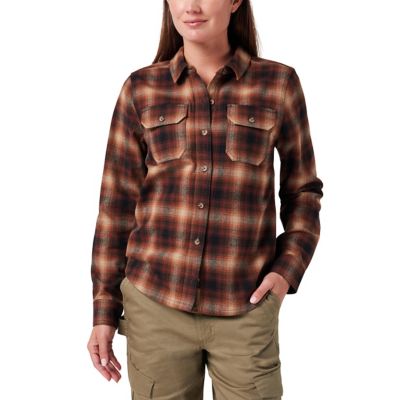
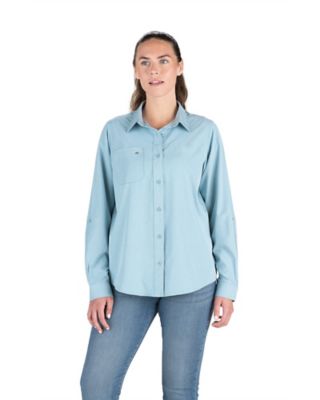
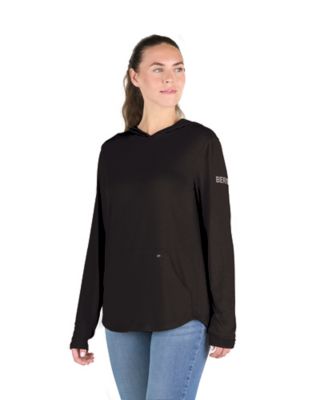
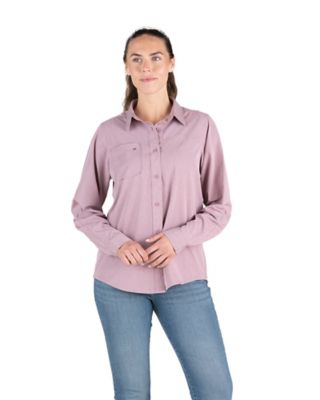
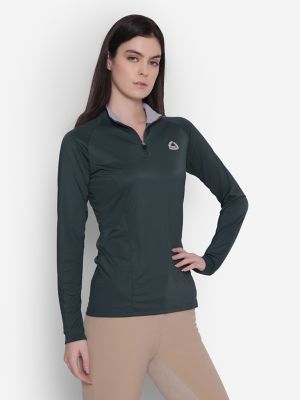
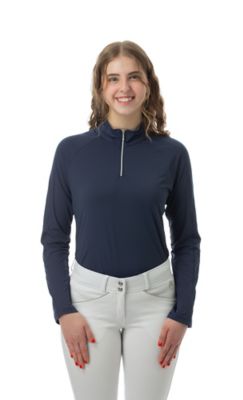
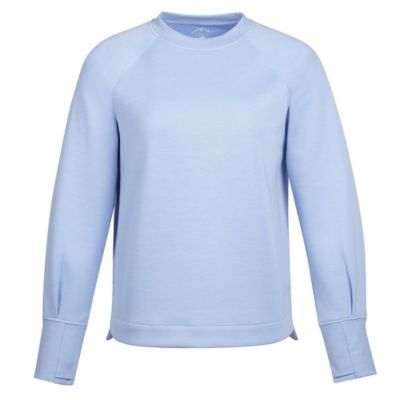
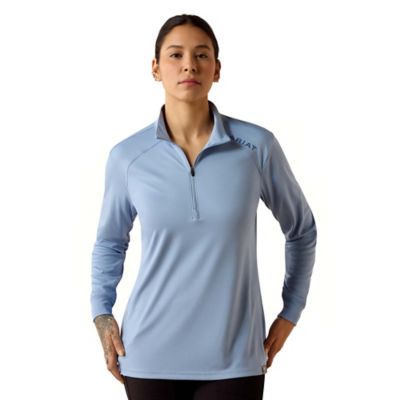
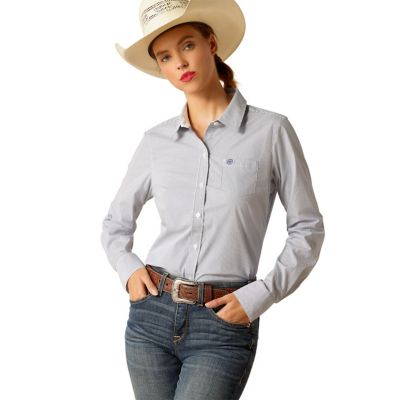
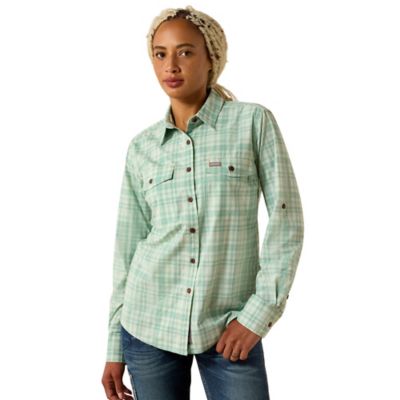
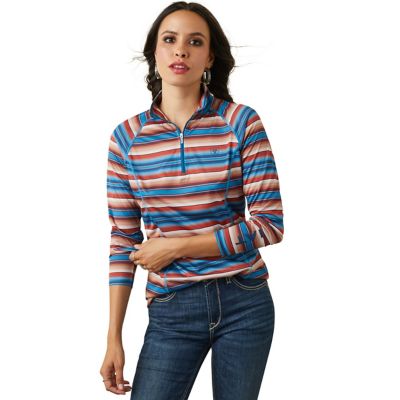
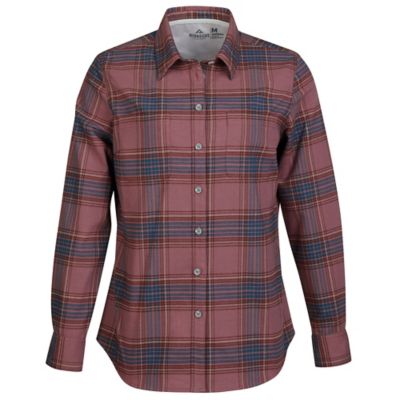
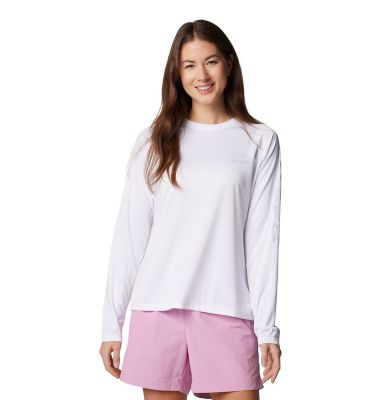
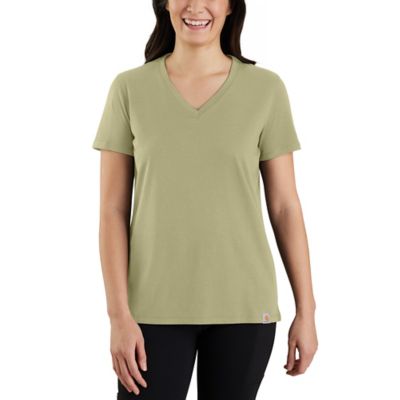
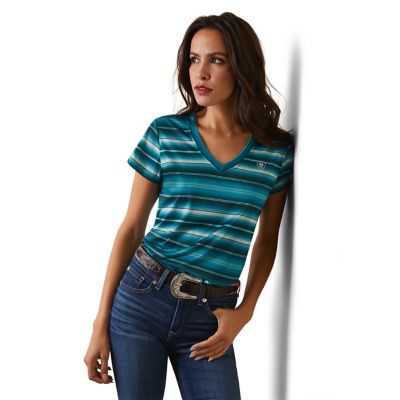
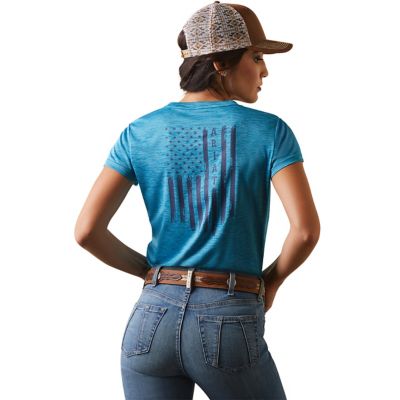
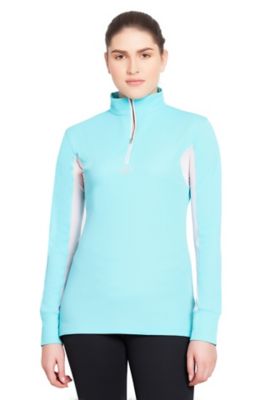
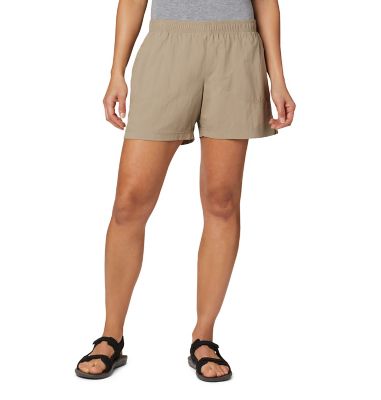
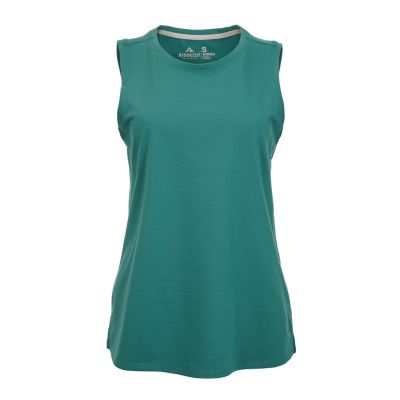
Women’s long sleeve hiking shirts belong in a working outdoor wardrobe, whether the day calls for a loop around the county park, a walk along the fence line or a few miles on a wooded trail. A good hiking shirt gives you room to reach, bend and keep moving without constantly tugging at the sleeves or straightening the hem. Long sleeves provide coverage along the arms, while different fabric weights and shirt shapes make it possible to find something that feels right for your pace and plans. Polyester and nylon are common choices for hiking apparel because they tend to release moisture more readily than cotton, though the weave, fabric thickness and overall construction also affect how a shirt feels during activity. A little elastane can add stretch for stepping over fallen branches or reaching for a handhold. Cotton blends offer a familiar feel for easy walks and everyday wear, but they may hold onto perspiration longer than fabrics designed to move moisture away from the skin. Merino wool blends are another option, with a soft feel that varies by fabric and a natural ability to help manage moisture and odor. For a long walk with a loaded daypack, fabric weight and seam placement can matter as much as fiber content. A thick shoulder seam that feels fine standing still may become distracting beneath a pack strap after several miles. Lighter fabrics can feel less cumbersome, while more substantial weaves may be worth considering for routes where sleeves brush against branches. No shirt is snag-proof, so the right balance depends on where you spend time. Someone following a maintained walking path may favor softness and stretch, while someone checking a back pasture before heading onto a trail may prefer a woven shirt with a bit more structure. The best match starts with the kind of walking that actually fills your day.
Fit makes a noticeable difference in how women’s long sleeve hiking shirts perform once the trail stops being level. A close fit can sit neatly beneath another layer, but there should still be enough room across the shoulders and upper back to reach forward without pulling at the neckline. A relaxed fit allows more freedom through the torso, although extra fabric can bunch beneath a pack’s hip belt. Shirt length deserves attention, too: a hem that stays below the waistband when you lift your arms helps keep your midsection covered when climbing over a gate or lifting a pack into the truck. For button-front styles, enough room through the chest helps prevent gaps between buttons, especially when shoulder straps draw the fabric backward. Sleeve length should account for bent elbows rather than just arms hanging at your sides. Adjustable cuffs let you change the wrist opening, while roll-tab sleeves, when included, help hold folded fabric in place without repeated readjustment. Thumbholes can keep sleeves from riding up beneath another garment, though their placement should feel comfortable rather than tugging against your hands. Pullovers offer a straightforward shape with fewer front closures, and zip-neck styles let you adjust the opening without taking the shirt off. Collars, hoods and chest pockets are matters of preference and intended use, not features every hiker needs. A pocket might be handy for a folded trail map, but its position matters if a pack strap lies directly over it. Flat or carefully positioned seams can help limit rubbing, particularly along the shoulders and underarms. When checking size information, body measurements and garment measurements serve different purposes; comparing the listed measurements with a shirt that already fits well can help make sense of the cut. Picture the whole setup, including the pants, pack and layers that go with it. A hiking shirt should work with those pieces rather than demand attention every time you take another step.
Keeping a trail shirt in good shape has plenty to do with its construction and the way it gets cared for between outings. Look at stitching around cuffs, pocket corners and buttonholes, where repeated pulling puts stress on the fabric. Stretch panels and knit fabrics should recover their shape rather than stay baggy at the elbows, while woven styles need enough ease that seams are not strained during ordinary movement. Care directions vary by fiber and finish, so the garment label takes priority over a one-setting-fits-everything laundry routine. Some performance fabrics call for skipping fabric softener because residue can interfere with moisture management. Wool blends may need a gentler wash cycle and a particular drying method to help preserve their fit. Fastening closures before washing and keeping shirts away from exposed hook-and-loop tabs can help reduce catching and abrasion in the laundry. A stain from leaning against a muddy rail is often easier to address before it has settled into the fabric, using a treatment suited to the care label. Letting a shirt dry fully before folding it into a drawer or packing it away also helps keep it fresh for the next outing. Beyond the trail, these shirts can suit campground chores, dog walks, travel days and everyday trips that involve plenty of time on your feet. For women who split their outings between walking trails and casting from the bank,
women’s long sleeve fishing shirts offer another outdoor clothing category to consider, with some overlap in coverage, stretch and pocket layouts. A hiking shirt can also make a thoughtful gift for a regular walking partner, a camper or someone who enjoys exploring local trails. Familiar sizing, preferred sleeve details and a fabric feel they already like are better starting points than guessing from appearance alone. From a short walk after chores to a full day carrying water and lunch, the right shirt earns its place by fitting comfortably, moving freely and being practical to care for.