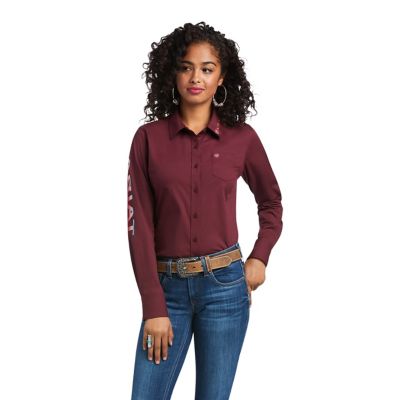
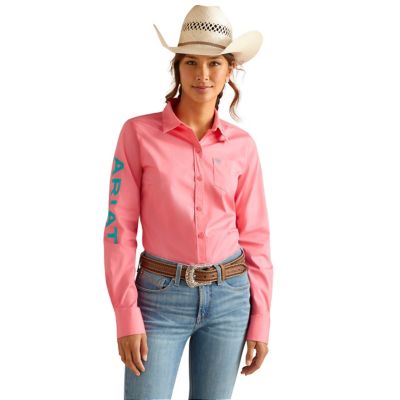
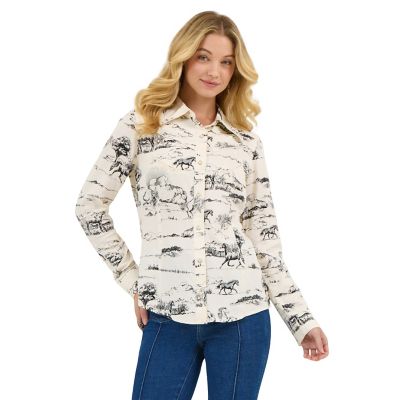
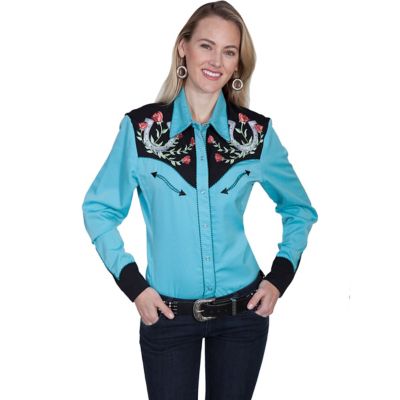
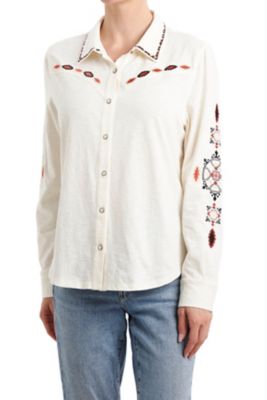
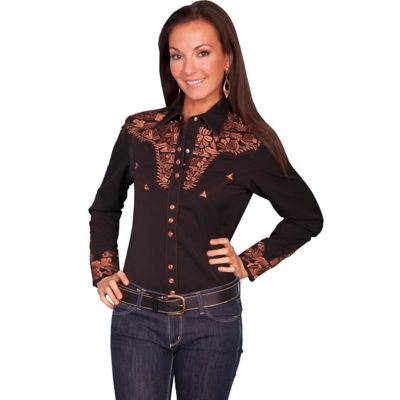
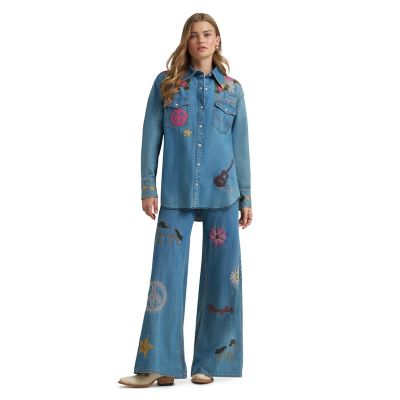
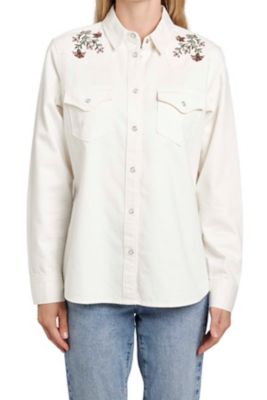
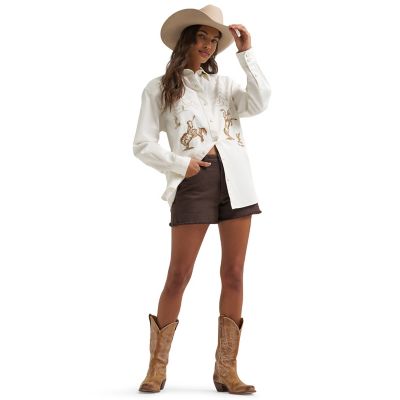
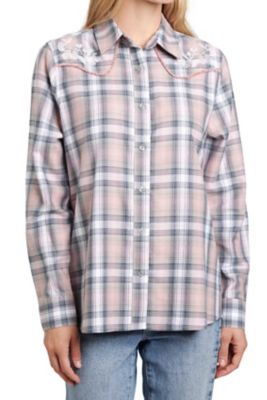
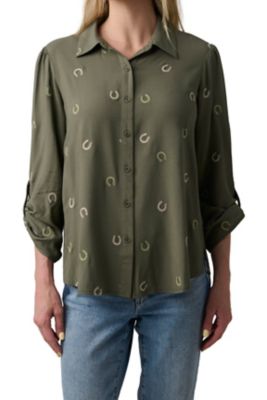
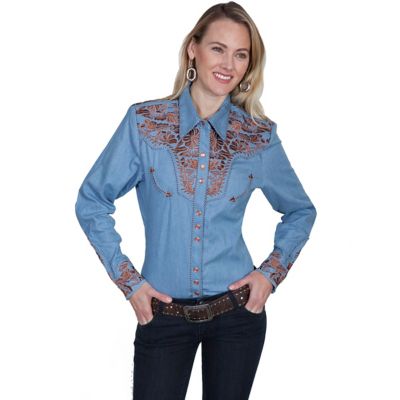
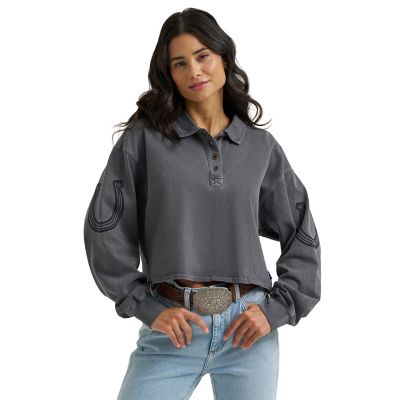
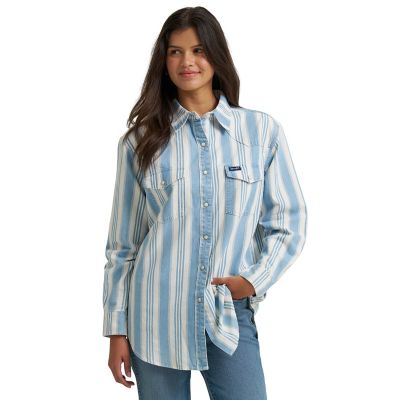
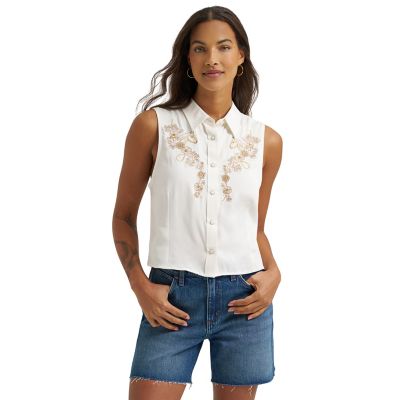
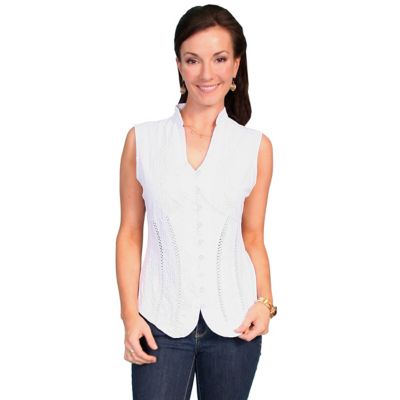
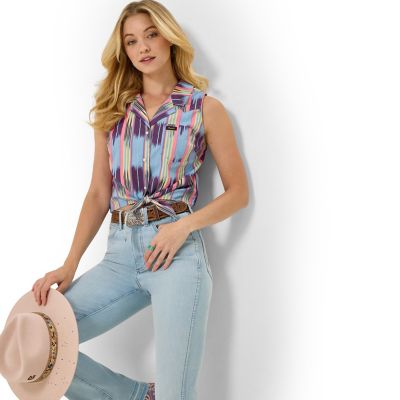
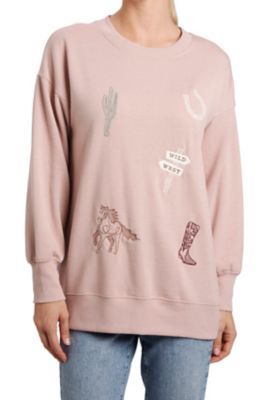
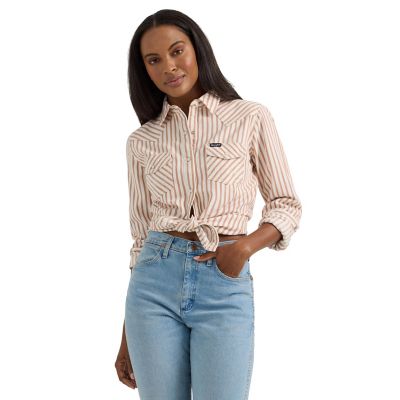
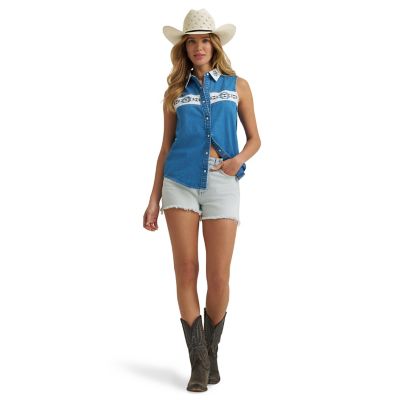
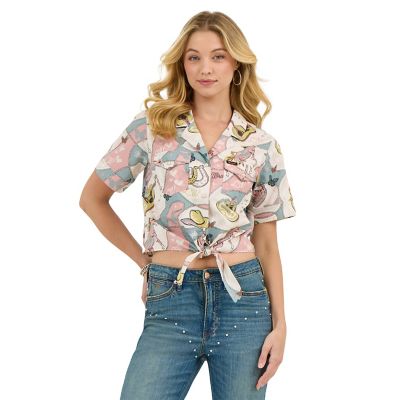
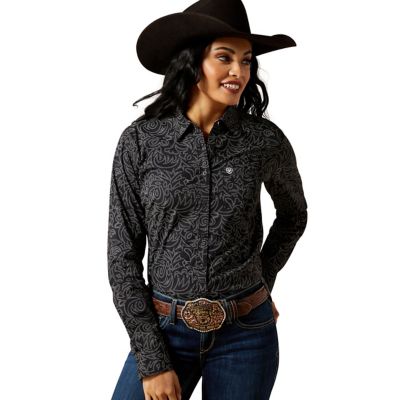
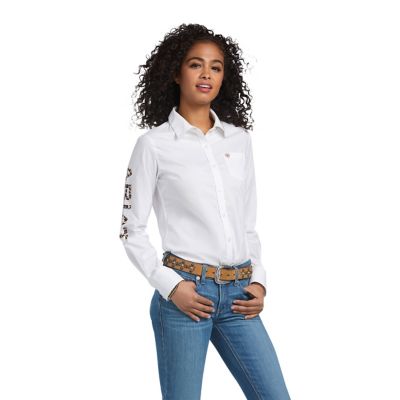
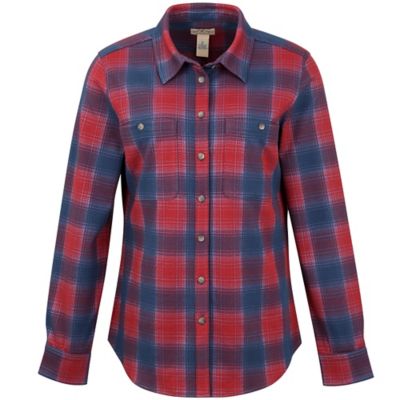
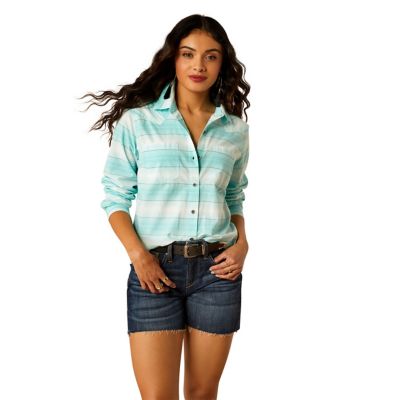
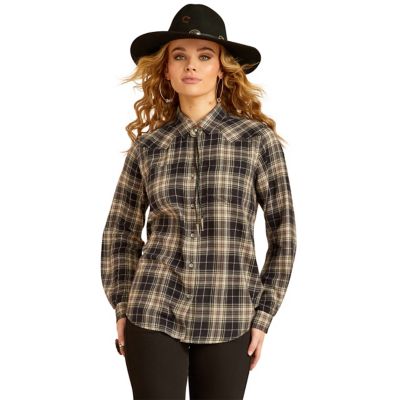
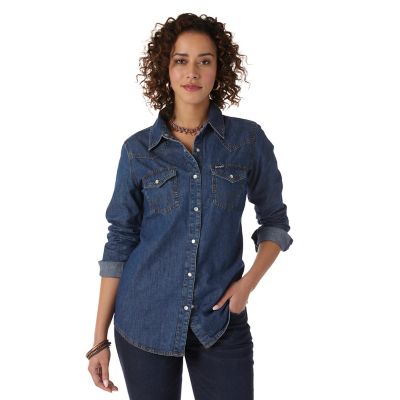
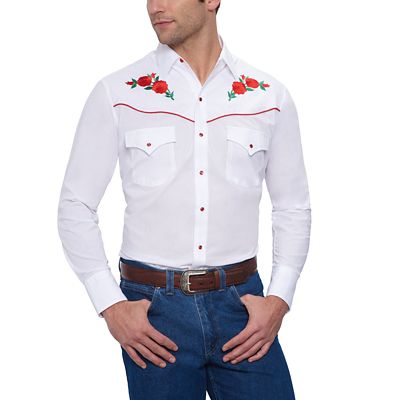
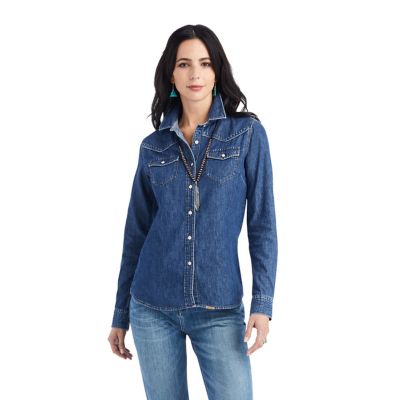
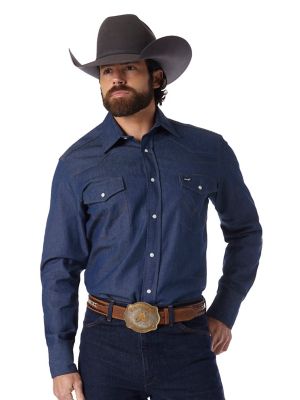
Women's embroidered Western shirts bring stitched patterns to familiar ranchwear details such as pointed yokes, shaped collars, chest pockets, and snap-front or button-front closures. The embroidery is made with thread stitched into the fabric rather than a printed design, giving flowers, vines, scrollwork, and other motifs a raised texture. Designs may sit along the shoulders, frame the front yoke, trail beside the placket, or stretch across the back. A small floral accent keeps the look understated, while broad, contrasting stitching makes more of a statement at a rodeo, dance hall, or county fair. Tone-on-tone embroidery gives the same detail a quieter look, with the pattern becoming more noticeable up close. Some styles also have piping around the yokes, cuffs, or pockets, outlining the shirt's shape without competing with the embroidery. Pearl-style snaps are a familiar Western touch, though buttons fit just as naturally into this category. Their appearance matters, but so does how comfortably the front closes and how easily the cuffs fasten. With a tucked-in hem, straight-leg jeans, and a favorite belt buckle, an embroidered shirt can look pulled together without feeling too dressed up for a stop at the feed store. Worn untucked with a suitable hem length, it takes on a more relaxed feel for a concert or supper with friends. Shirts with detailed backs deserve a little room to show their stitching, while front-focused embroidery works well when a vest is part of the outfit. The shirt doesn't need much competition from the rest of the outfit; a striking yoke and a well-shaped collar can carry the look. Shoppers drawn to darker colors can also explore
women's black Western shirts for an easy match with blue denim, boots, and silver-tone accessories. Color, thread placement, and the amount of embroidery all help determine whether the overall feel is everyday ranchwear or something with a little more dance-floor flair.
Fabric and fit make a big difference in how an embroidered Western shirt feels through a full day. Cotton offers a familiar feel against the skin, while cotton blends may bring easier wrinkle care or a different drape, depending on the fibers and weave. Denim generally has a more substantial feel, and chambray can provide a denim-like appearance with a lighter plain-weave construction. Neither the look nor the fiber name tells the whole story: fabric weight, finishing, and the density of the embroidery also affect comfort. A broad stitched panel can feel firmer than the surrounding cloth, especially across the shoulders or upper back. Embroidery backing on the inside may be noticeable against bare skin, so its placement matters for anyone sensitive to seams or textured surfaces. A little stretch can help with reaching and bending, but it doesn't replace enough room through the bust, upper arms, and shoulders. A comfortable front lies flat instead of pulling between snaps or buttons. Shoulder seams should sit comfortably, and sleeves need enough length for reaching toward a gate latch, holding reins, or resting both hands on a steering wheel. When the arms move forward, the back shouldn't bind across the shoulder blades. A shaped waist gives a closer silhouette, while a straighter cut leaves more room through the middle. Hem length matters, too: a longer shirttail is easier to keep tucked during movement, while a shorter hem may sit more neatly outside jeans. For riding, the shirt should allow a comfortable seated position without bunching heavily at the waist. Cuffs should close comfortably around the wrists without leaving excess fabric hanging over the hands. Neat seams, firmly attached closures, and embroidery without loose loops are useful details when judging how a shirt may stand up to repeated wear. Intended use still matters, since a shirt chosen mainly for dancing may have a different fabric weight and fit than one meant for regular chores.
Care helps preserve both the shirt fabric and the stitched design. The care label takes priority because embroidery thread, backing, trim, and the main fabric may have different washing needs. Some embroidered Western shirts can go through a machine cycle, while others call for gentler handling or professional cleaning. When machine washing is permitted, turning the shirt inside out and keeping it away from exposed zippers or hook-and-loop fasteners can help limit snagging. A crowded wash load creates more rubbing, especially around cuffs, collars, and raised stitching. Strong heat can affect fit, thread, and trim, so drying and ironing directions deserve attention rather than assuming every cotton-looking shirt needs the same treatment. Pressing from the reverse side or with a pressing cloth, when the label allows ironing, helps avoid flattening the embroidery. Hanging a shirt neatly after care can also keep the collar and front placket from developing unnecessary creases. For days around tack, fencing, or equipment, a close-fitting silhouette and secure cuffs help keep extra fabric out of the way, though an everyday shirt isn't a substitute for required protective clothing. Embroidery that sits beneath a shoulder strap or against a saddle may receive more friction than stitching elsewhere, making placement worth considering for frequent wear. For social outings, the priorities may lean toward color, drape, and how the design looks with a favorite pair of jeans. These shirts can also make thoughtful gifts for women who enjoy rodeos, horseback riding, country music, or Western dress. Knowing the recipient's usual shirt size is helpful, but preferences for a fitted waist, roomier sleeves, snap closures, or subtle stitching matter just as much. The most wearable choice is one that suits her routine and feels comfortable enough to reach for again, whether the day includes a fairground visit, a family photo, or a turn across the dance floor.