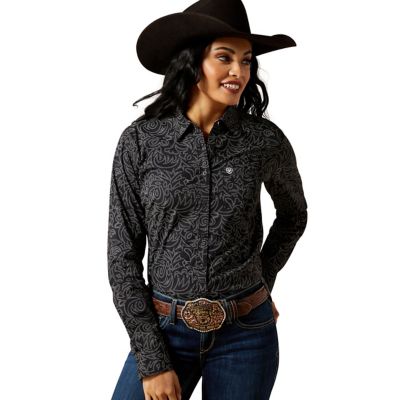
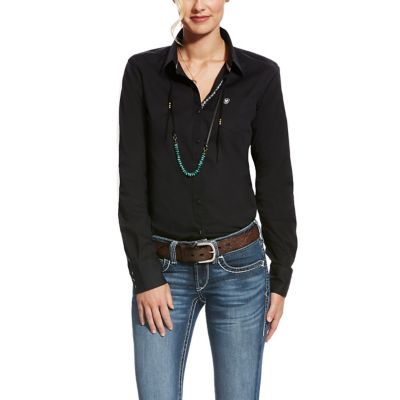
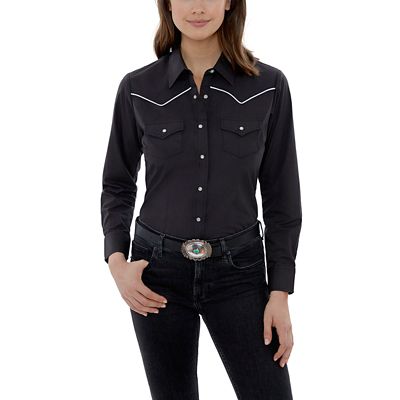
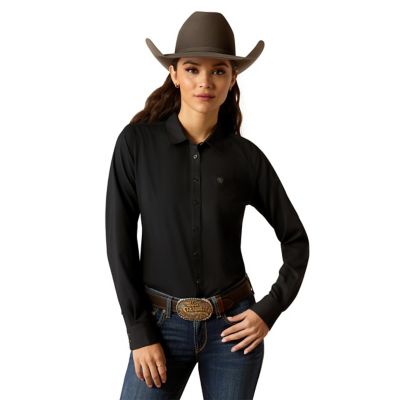
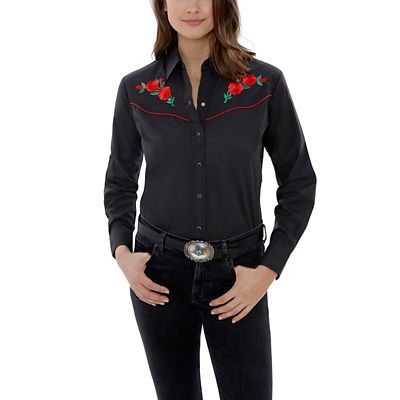
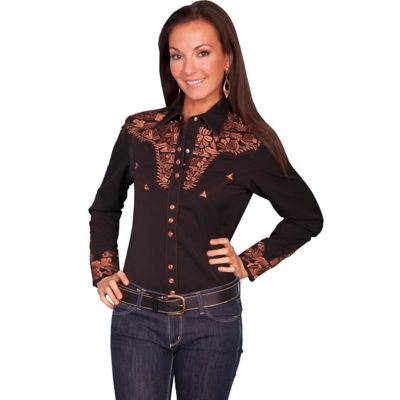
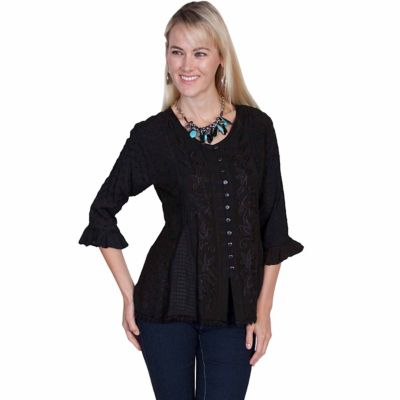
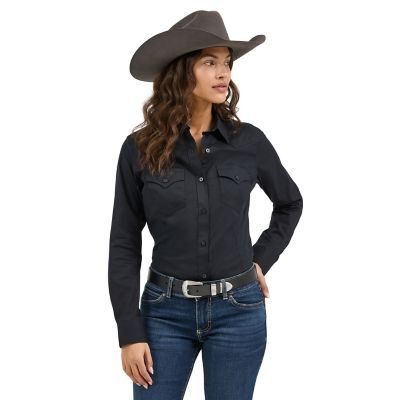
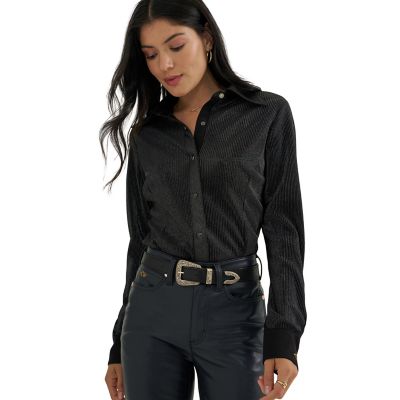
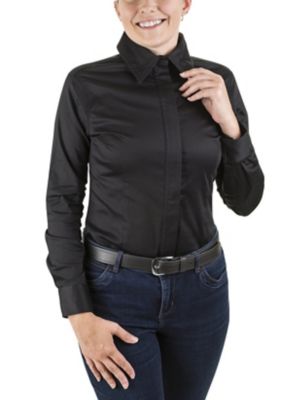
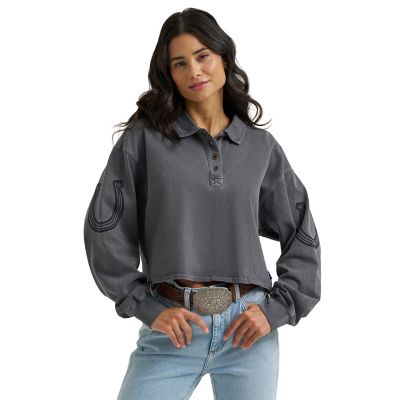
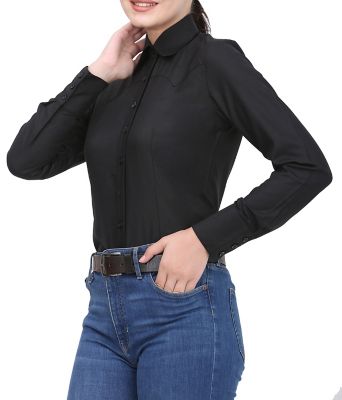
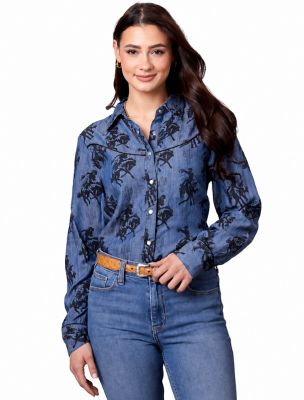
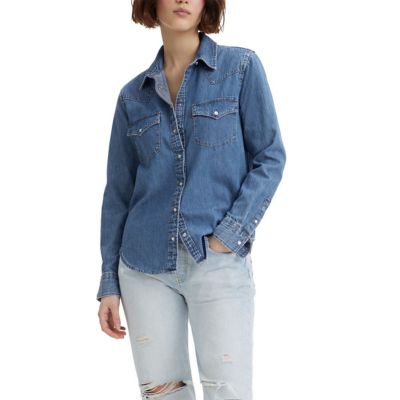
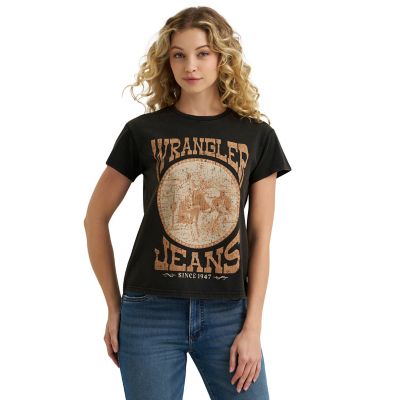
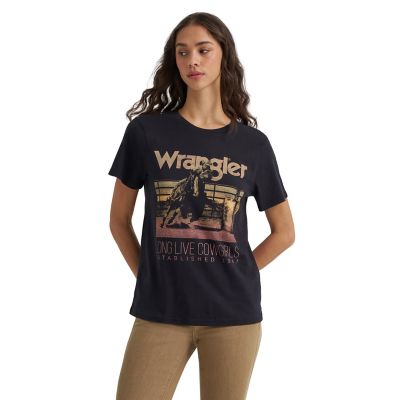
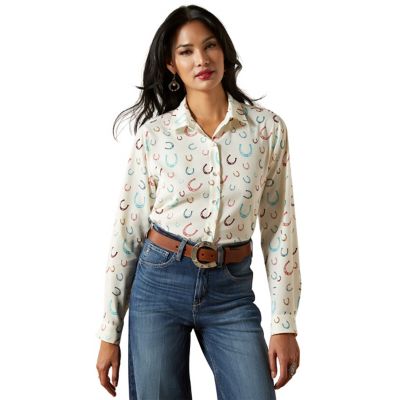
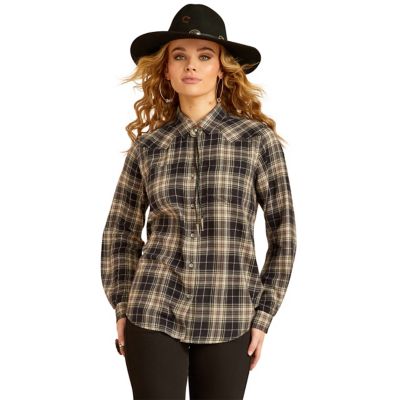
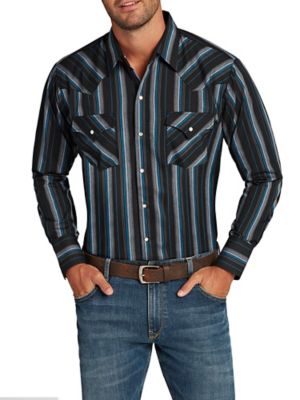
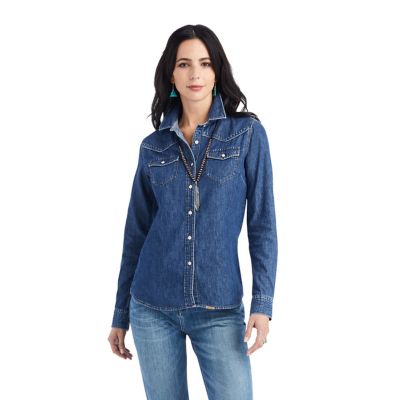
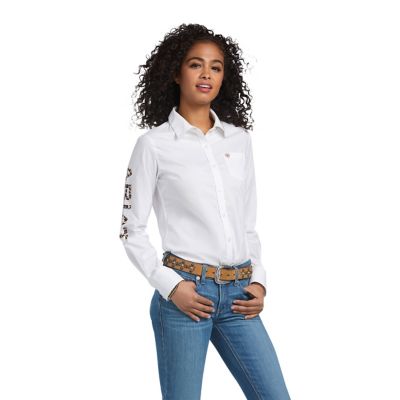
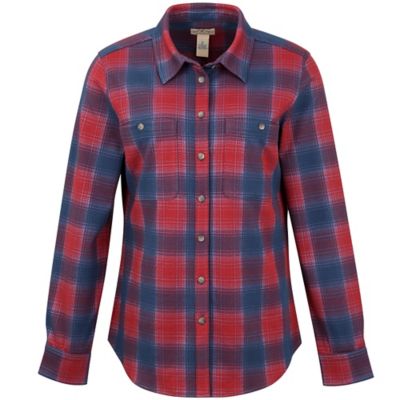
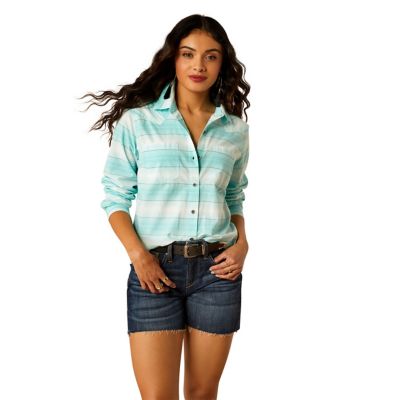
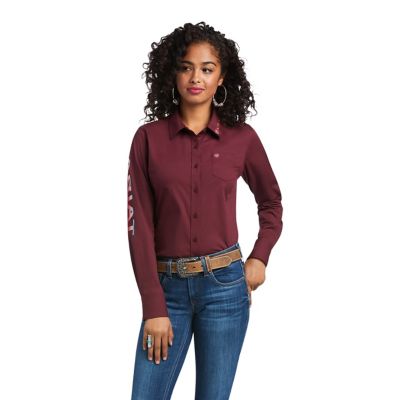
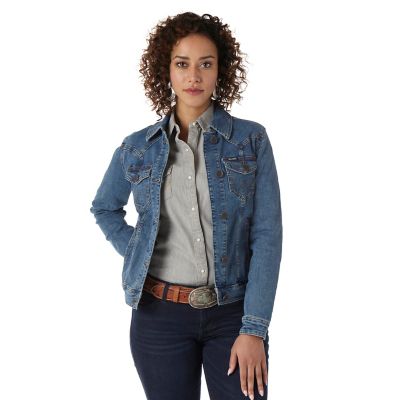
Women’s black western shirts pair familiar ranchwear details with a color that’s easy to wear from the feed store to the dance floor. Pointed yokes, snap fronts, chest pockets and shaped cuffs give these shirts their western character, while differences in fabric and trim help set the tone. A plain black shirt with matching stitching keeps things understated; contrast piping outlines the shoulders and front placket for a sharper look. Embroidered flowers, scrollwork or riding-inspired motifs bring more personality to the shoulders, back or cuffs without changing the shirt’s basic shape. Pearl-look snaps add a familiar finishing touch, and fringe brings movement to an outfit meant for a concert, rodeo outing or evening of two-stepping. Those details matter in everyday wear, too. A smooth front sits neatly beneath a vest, while a more elaborate yoke can carry an outfit with nothing more than jeans, boots and a belt. Black works with light or dark denim, and it gives silver-tone buckles and turquoise jewelry room to stand out. For women who prefer a quieter look, tonal embroidery adds texture without a strong color contrast. Long sleeves and buttoned or snapped cuffs create a traditional profile, while sleeve length, collar shape and hem design influence how dressed up the shirt feels. A curved shirttail generally suits a tucked-in outfit, especially with riding jeans, while a shorter hem can look balanced worn loose. Women’s black western shirts fit into plenty of routines: checking livestock, heading to a county fair, meeting friends after chores or getting ready for a country music show. The best match depends on what the day holds. A shirt meant for regular saddle time calls for freedom through the shoulders and a secure fit, while a shirt for an evening out may put more emphasis on embroidery, drape or a close-fitting silhouette.
Fabric makes a noticeable difference in how a black western shirt feels and moves. Cotton offers a familiar, breathable feel, with lighter weaves tending to bend and drape more easily than substantial twill. Twill’s diagonal weave gives the fabric more body, which can help a collar, cuff or pocket flap hold its shape. Chambray has a different texture and a more relaxed appearance, though its weight varies from shirt to shirt. Cotton blends can balance softness with easier care, and a little elastane or spandex may provide welcome give when reaching for a gate latch, lifting a saddle or stretching an arm across a truck seat. Polyester blends often resist wrinkles better than all-cotton fabrics, while rayon or viscose can offer a softer drape suited to a flowing silhouette. Fiber content alone doesn’t tell the whole story: fabric weight, weave and garment construction all affect the feel. For active riding, freedom of movement matters more than a close fit on the hanger. The shoulder seam should sit comfortably, the upper back should allow a forward reach, and the front placket should lie flat without pulling between closures. A fitted cut follows the waist more closely, while a regular or relaxed fit leaves additional room through the body. Neither should pinch when sitting or make the hem pull out of a waistband with every movement. Sleeve length deserves attention with arms extended, not just resting at your sides; cuffs that look right while standing can ride up when holding reins. Bust measurements are especially helpful with snap-front shirts because tension across the chest can leave gaps. Comparing body measurements with the garment’s size chart is more useful than assuming every western cut fits alike. Women who wear a belt and tuck their shirts in may prefer enough length to stay put, without so much extra fabric that it bunches at the waist. For casual wear, a bit more ease can make sitting, driving and moving around feel less restricted.
Construction and care help determine how a women’s black western shirt holds up through repeated wear. Even stitching, neatly finished seams and firmly attached closures are worth a close look, particularly at the cuffs, pocket corners and underarms where movement puts fabric under strain. Snaps should meet without forcing the placket sideways, and buttons should pass through their openings without excessive tugging. Chest pockets can be handy for small essentials, though carrying heavy objects may pull on lighter fabric and change the way the front hangs. For hands-on chores, a simpler shirt with close-fitting cuffs and minimal loose trim is generally more practical than fringe or raised embellishments that might catch. Everyday western clothing is not a substitute for task-specific protective apparel around equipment or other hazards. Keeping black fabric looking its best starts with the care label, since cotton, stretch blends, rayon and embroidered panels can call for different treatment. When the label permits, washing inside out with similar dark colors and avoiding excessive heat can help limit fading and stress on fibers. Treat dust, sweat and spills promptly with a method suited to the fabric, and test any treatment in an inconspicuous spot. Embroidery, fringe and ornamental snaps may need gentler washing or protection from abrasion. Promptly removing a shirt from the dryer, when tumble drying is permitted, can reduce wrinkles; hanging it with the collar and placket smoothed helps it keep a tidy shape. For a broader look at sleeve styles beyond western details,
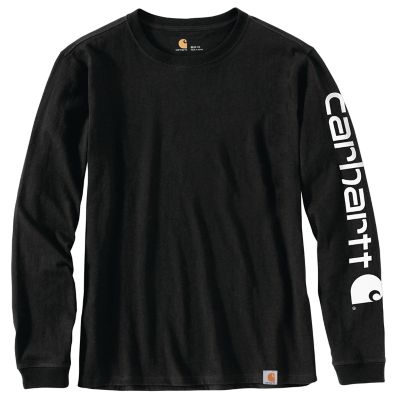
Women's Black Long Sleeve Shirts offers a related clothing category. As a gift, a black western shirt makes the most sense when the recipient’s fit and taste are familiar. A woman who spends hours in the saddle may appreciate stretch and a longer shirttail, while someone who enjoys rodeos and dance halls may favor piping, embroidery or eye-catching snaps. Matching those everyday preferences helps make the shirt one she’ll reach for again.