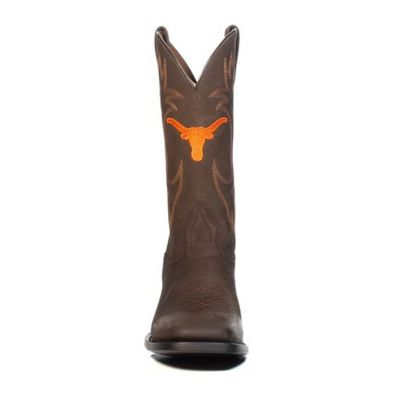
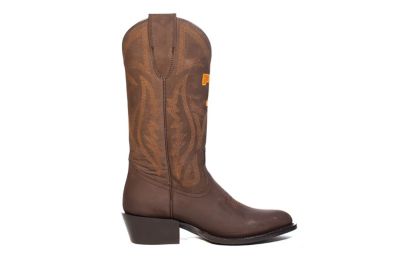
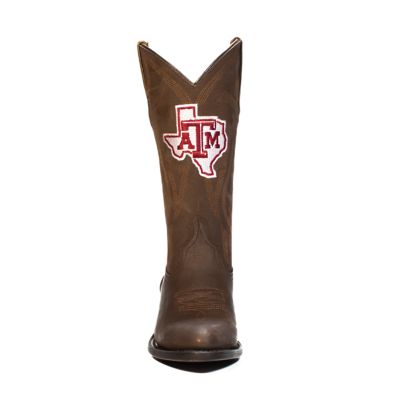
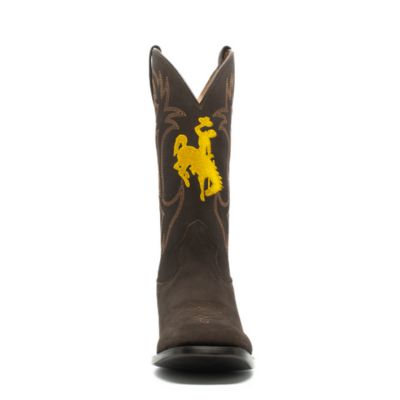
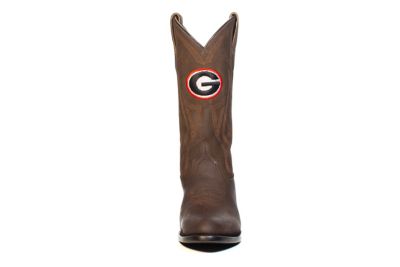
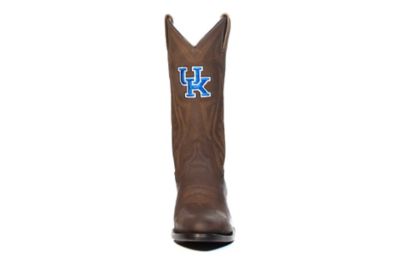
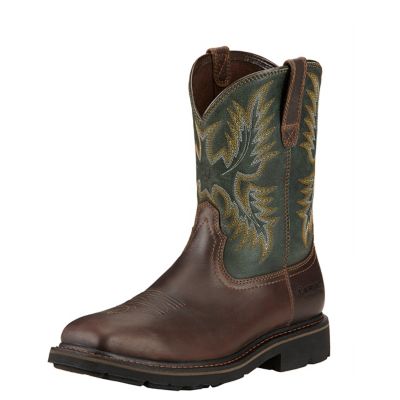
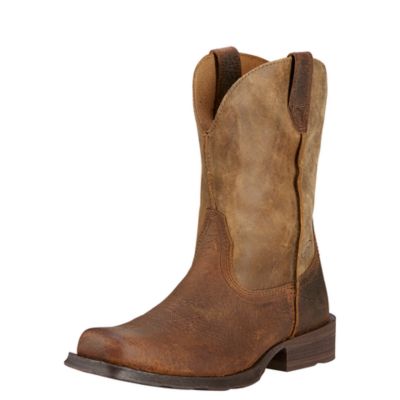
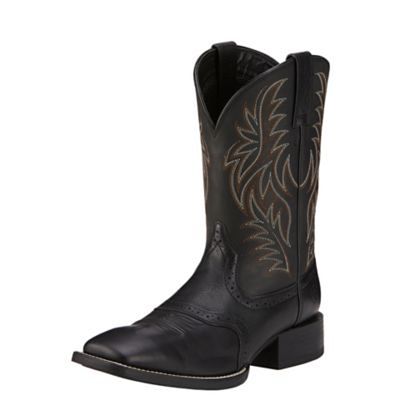
Western-style boots for college football fans bring cowboy-boot character to tailgates, stadium seats and hometown watch parties, with school spirit expressed through colors, stitching and, on officially licensed styles, college names or team logos. They suit fans who want their game-day footwear to feel at home with jeans and a team shirt, rather than look like something worn only for a few Saturdays each year. The western shape does much of that work: a shaped toe, a raised heel and a stitched shaft give these boots a familiar look whether the afternoon starts beside a pickup at the tailgate or around a television with family. Team details can be bold enough to show above a skirt or dress, or subtle enough to sit beneath a straight-leg pair of jeans. Shaft height changes that balance, with taller designs giving embroidery more room and shorter profiles keeping the look understated. Brown, tan and black leather provide an easy backdrop for school colors, while contrasting thread can make a team emblem stand out without covering the whole boot. Official licensing matters when a college name or mascot is part of the appeal; a school-color palette alone does not mean a boot carries licensed team artwork. Men's and women's western boots can fit into all kinds of fan traditions, from alumni gatherings and homecoming weekends to rivalry games and postseason watch parties. They also make a thoughtful gift for a college student, recent graduate, parent or longtime season-ticket holder, especially when the school connection has a story behind it. For a broader look at footwear suited to those occasions,
Boots for College Gamedays brings the focus back to time spent cheering, walking and gathering with fellow fans. The appeal is straightforward: western boots let a little country style and a lot of school pride share the same outfit, without needing every piece of clothing to carry a logo.
Materials and construction help determine how those boots feel through a full day of football. Leather uppers can soften and develop creases with wear, while synthetic uppers have different flexibility and care needs depending on their construction. Smooth leather, suede and distressed finishes each have their own character; a broken-in appearance, however, does not guarantee a broken-in feel. Inside the boot, lining materials, cushioning and the shape of the footbed all contribute to comfort. A soft insole can ease the feel underfoot, but it cannot make up for a boot that squeezes the toes or lets the foot slide too far forward. Western boots generally fit close through the instep, with enough space for toes to rest naturally and a small amount of heel movement possible in a new pull-on pair. That movement should not feel like the boot is coming off with every step. Because sizing varies by maker and shape, the size stamped inside an everyday shoe is only a starting point. The socks planned for game day belong in the fit check, and any orthotic needs enough room without crowding the top of the foot. Square, round and pointed toes change the look, but the interior shape and width matter more than the outside silhouette alone. Shaft openings deserve attention, too, particularly for fans wearing jeans tucked in or looking for more room around the calf. Outsole and heel choices become noticeable on the walk from a distant parking spot to the gate. Rubber outsoles often provide more grip than smooth leather soles, though traction depends on the tread and the surface. A lower, broader heel may feel steadier during long stretches on foot than a taller, narrower one. Stadium stairs, gravel lots and hours standing beside a tailgate all call for a fit that feels secure rather than restrictive. Short outings before a full game day can reveal pressure points, but persistent pinching is a fit problem, not something to push through.
Good care helps western football boots keep their shape, finish and stitched details through repeat wear, from the first tailgate on the schedule to the last watch party. Dust from a parking lot and grit along the sole edge are easier to handle before they settle into seams. For smooth leather, a soft brush or cloth is often the starting point, followed by a cleaner and conditioner suited to the material and recommended by the maker. Too much conditioner can change the feel or appearance of leather, and some treatments darken lighter colors, so a small hidden test spot makes sense. Suede and nubuck need products intended for those surfaces rather than the same routine as smooth leather. Embroidered logos deserve a light touch; hard scrubbing can catch threads or rough up the surrounding finish. If boots get damp, drying them at room temperature away from a heater helps protect the leather and adhesives. Airing out the interiors between outings, storing boots upright and supporting taller shafts can also help them hold their shape. Leather is not automatically waterproof, and a western profile does not automatically bring the protective features of a work boot. A pair chosen for cheering in the stands should not be assumed suitable for chores that call for a safety toe, electrical-hazard protection or other job-specific features. Long-term wear also depends on construction, sole thickness and whether a cobbler can replace worn parts; welted construction may allow repairs that some cemented designs do not. For a gift, knowing the recipient's usual boot size, width and preferred shaft height is just as helpful as knowing the school they cheer for. For everyday fans, the strongest match is a pair that feels comfortable with their usual jeans, holds the foot securely and carries the right amount of team detail. That leaves the boots ready for the familiar routine: loading the truck, finding the tailgate crowd and settling in for kickoff.