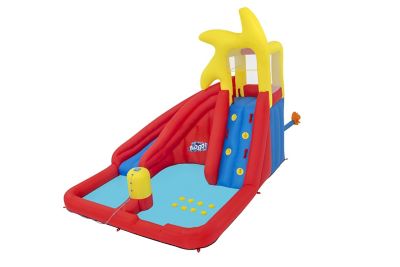
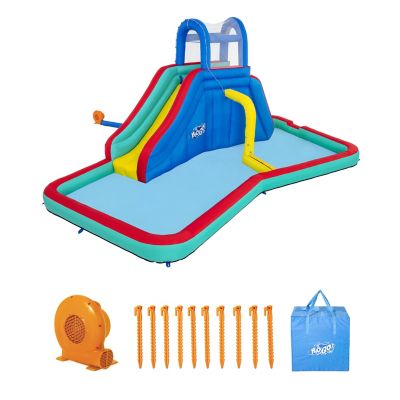
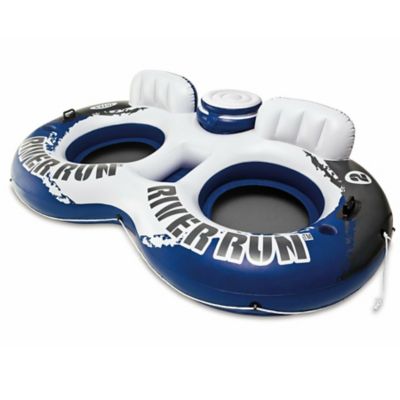
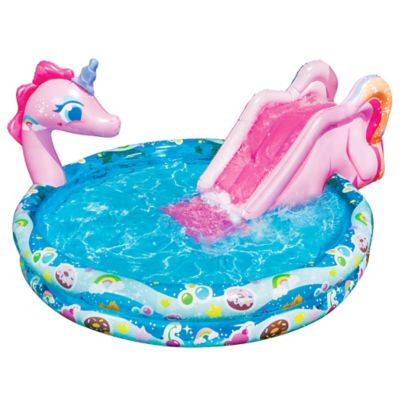
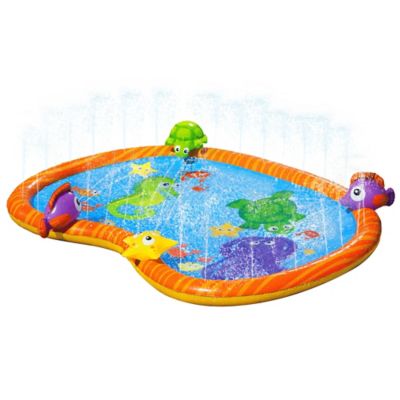
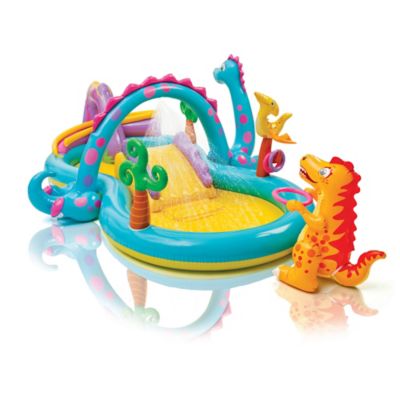
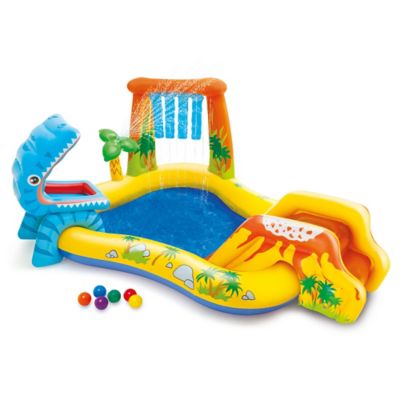
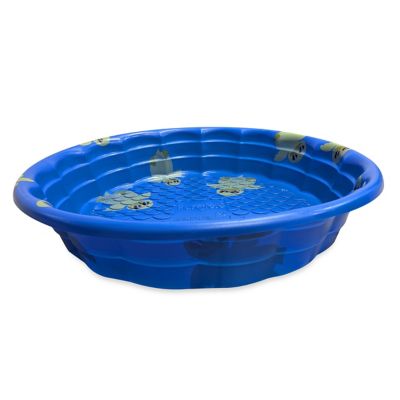
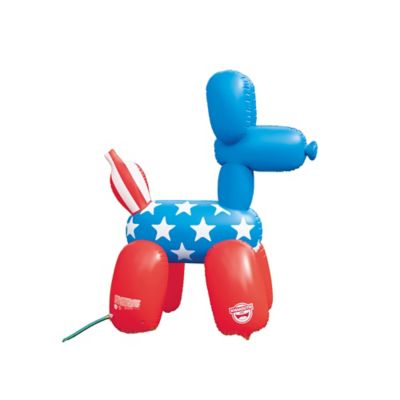
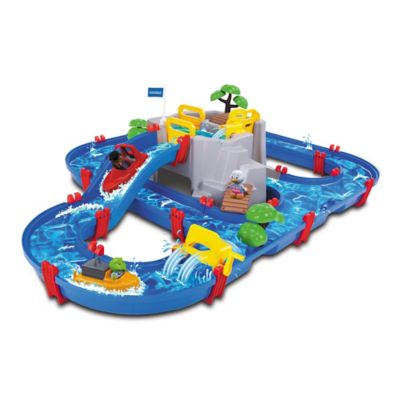
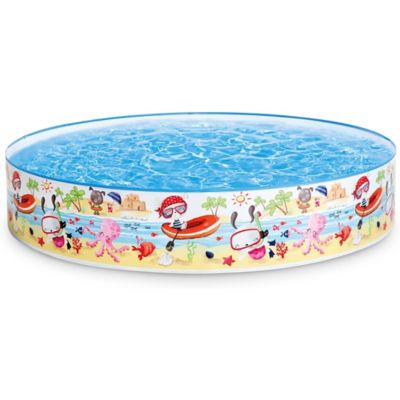
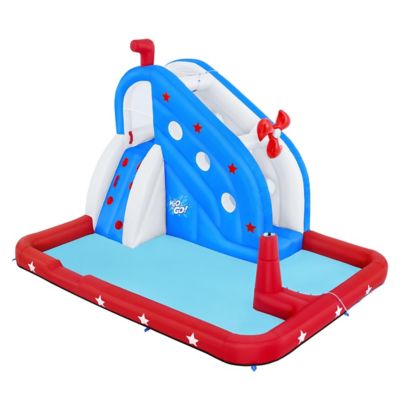
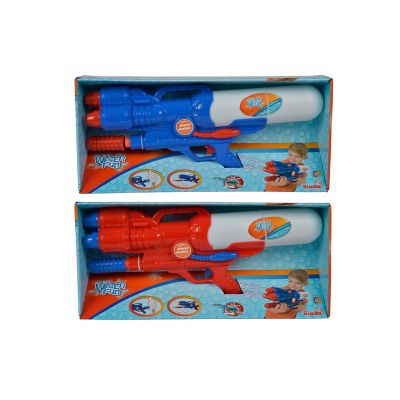
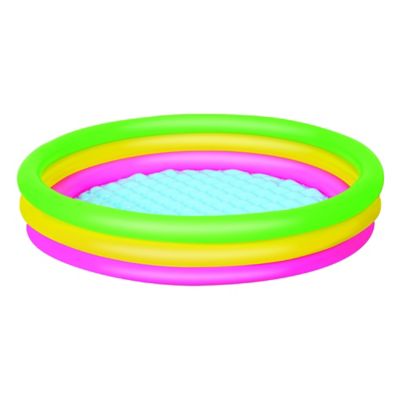
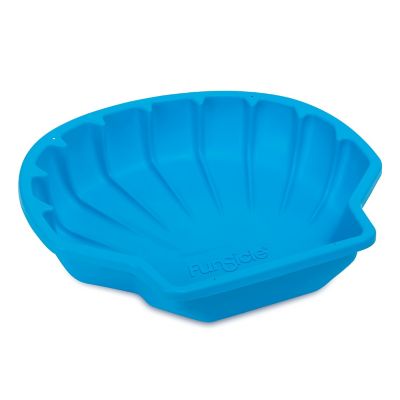
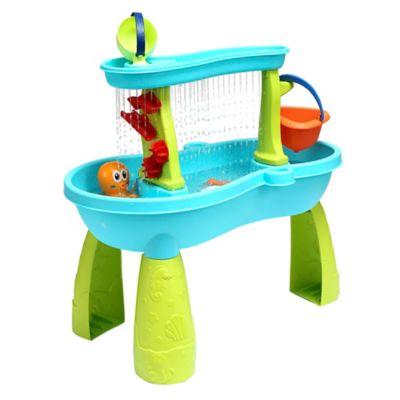
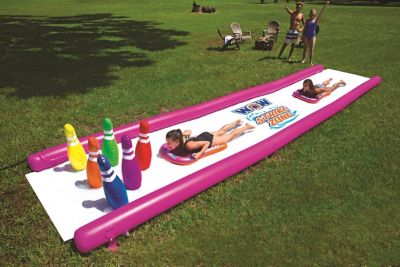
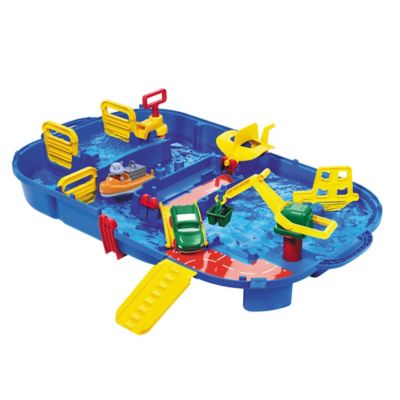
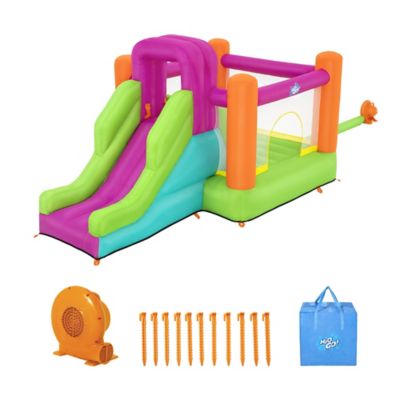
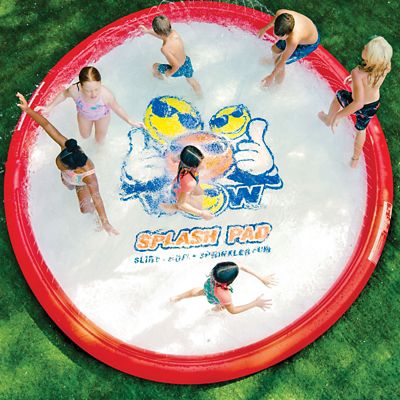
Water play toys include water tables, splash pads, sprinklers, floating toys, water blasters, and inflatable play centers that turn splashing, pouring, and spraying into hands-on fun. Each type offers a different way to play, whether a little one is filling a cup at a water table or older kids are sending floating boats across a pool. Water tables give toddlers and preschoolers a place to scoop, pour, and watch water move through channels, wheels, or funnels. Those simple actions let children practice grasping, taking turns, and noticing what happens when they pour faster or block a stream. Splash pads and play sprinklers bring the action closer to ground level, with sprays that invite kids to step, reach, and move around. Water blasters add active play for children who can comfortably manage the grip and pumping motion, while floating toys can make supervised pool time more engaging. Inflatable play centers combine several activities in one space, sometimes bringing together a shallow splash area, sprayer, and small slide. The right match depends on the child’s age, the setting, and how much hands-on help the activity needs. A toddler who enjoys filling and emptying containers may stay busy at a simple water table, while a group of older cousins might prefer a sprinkler game with room to spread out across the yard. For mixed-age gatherings, separate play areas help keep fast-moving games away from smaller children who are sitting or standing beside the water. Age labels matter more than appearance alone: small parts, climbing features, and spray mechanisms can change who a toy is meant for. Every water activity calls for close, constant adult supervision, even when the water looks shallow. These toys are for play, not flotation or lifesaving, and a floating toy never replaces a properly fitted life jacket where one is needed.
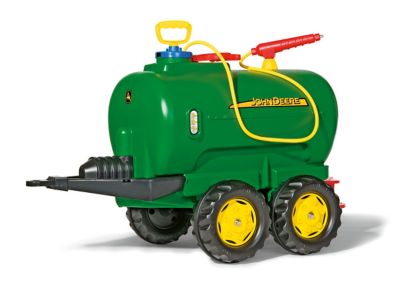
Materials and construction make a noticeable difference in how water play toys feel, handle, and hold up to repeated filling, carrying, and emptying. Rigid plastic is common in water tables, scoops, and boats because it keeps its shape and can be rinsed clean. Rounded edges and easy-to-grip handles matter for small hands, especially once everything gets wet. Flexible materials such as vinyl and PVC appear in many splash mats and inflatable play centers, where seams, air chambers, and valves deserve a close look before each play session. Fabric-covered toys and foam pieces have their own care needs, since their surfaces may dry differently from hard plastic. Product labeling should explain the material, intended age range, weight limits where applicable, and any restrictions on placement or operation. Size is about more than whether a toy fits in the yard. A water table needs a level spot with enough space for children to stand around it without crowding, and an inflatable needs clearance beyond its edges for safe entry and exit. A grassy patch near the porch may be convenient, but sticks, gravel, sharp stubble, and uneven ground can create problems beneath flexible play surfaces. Follow the placement instructions rather than assuming any open patch will do. Hose-connected toys also need a compatible connection and water pressure within the maker’s stated range. A hose stretched across a walkway can become a tripping hazard, so the route from the spigot matters along with the play area itself. For handheld water toys, tank size and grip shape affect how easily a child can carry and operate them; a large tank can become heavy once filled. Sprays should stay away from faces and eyes, and running games belong away from slick decking, steps, driveways, and farm work areas. Keeping the play space separate from pets, livestock, and moving equipment gives everyone more room to enjoy the activity.
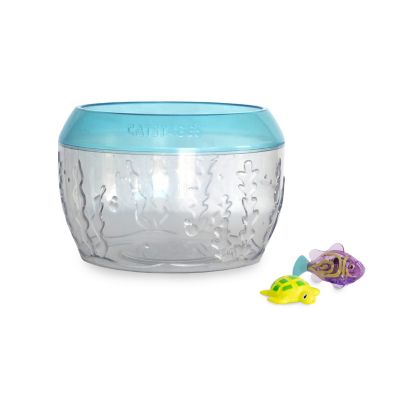
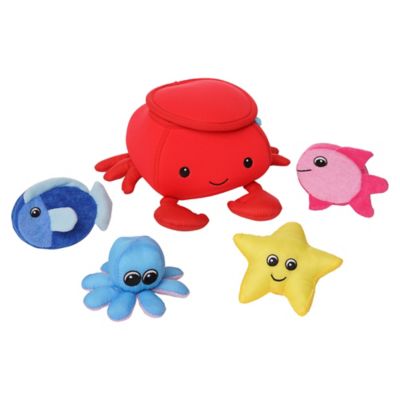
Care and storage help keep water play toys ready for the next round without turning cleanup into an all-afternoon chore. Water should be emptied after play rather than left standing in tables, splash areas, or containers where a child could reach it later. Follow the maker’s cleaning directions, rinse away grass and dirt, and let surfaces dry thoroughly before putting toys away. Openings, drain plugs, tubing, and hollow sections need particular attention because water can remain inside even when the outside feels dry. Any toy showing cracks, sharp edges, loose parts, leaking seams, or damaged valves needs attention before it returns to play. Inflatable pieces should be deflated and folded according to their instructions, with nothing sharp tucked against them in storage. A clean storage bin or designated shelf can keep small pieces together, but everything needs to be dry first, and heavier toys belong where they cannot fall onto a child. Toys intended for one setting are not automatically suited to another: pool toys, hose attachments, and bath toys can have different materials, sizes, and care requirements. For water play that belongs in the tub,
Fun Bath Toys offer another way to make pouring, floating, and scooping part of an everyday routine. Gift shoppers can match water play toys to the recipient’s age and the family’s space, whether the occasion is a birthday or a visit with the grandkids. A large play center also brings setup, drainage, drying, and storage needs, so it helps to think beyond the fun of opening the box. Smaller toys can be easier to carry between home and a relative’s house when their intended setting and age rating fit. From quiet pouring at a table to lively splashing in the yard, water play works best when the toy suits the child, the space, and the adults keeping watch.