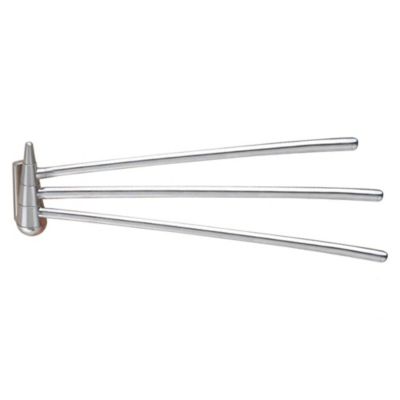
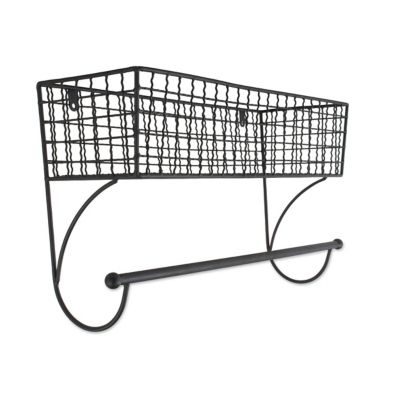
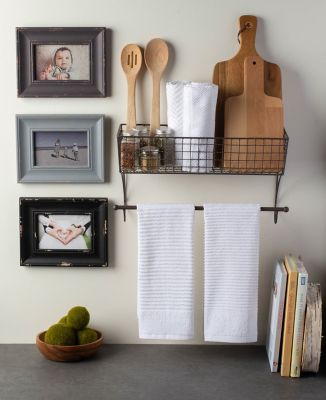
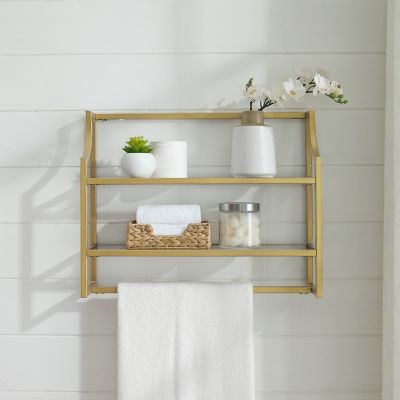
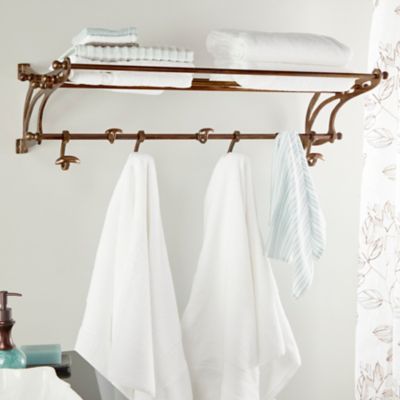
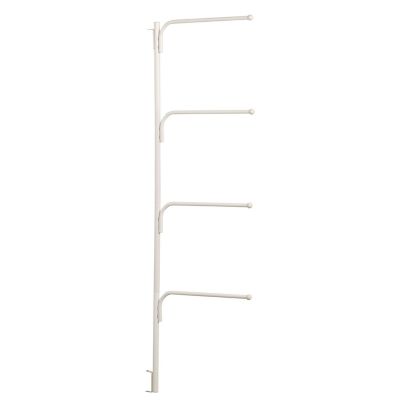
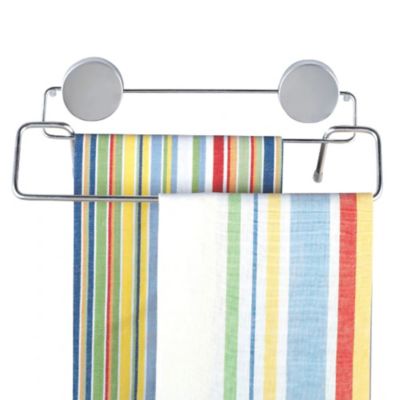
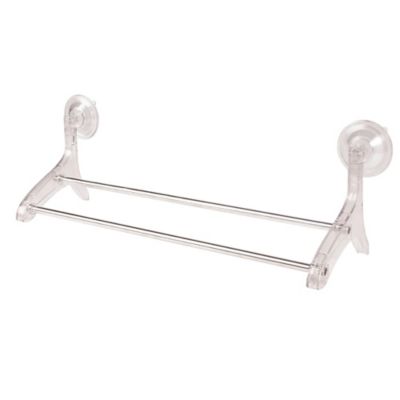
Wall-mounted towel bars keep bath towels and hand towels within reach without taking up floor space. A bar gives damp fabric room to hang rather than leaving it bunched on a countertop or piled beside the hamper, helping air reach more of the towel between washes. That simple setup makes sense in a busy family bathroom, a small powder room, or a utility room with a sink for washing up after chores. Single-bar designs provide a straightforward place for an everyday towel, while double-bar designs add hanging space along the same stretch of wall. With two bars, the distance between them matters: towels need enough separation to hang freely instead of pressing together. A longer bar can accommodate a bath towel spread across more of its width, while a shorter bar fits a hand towel beside the sink. The best fit depends on the towel’s actual dimensions, not just whether its label says bath towel or bath sheet. Folding a large towel over a narrow bar saves wall space, but the overlapping layers generally take longer to dry than fabric with more exposure to air. In a shared bathroom, separate hanging spots also make it easier to keep each person’s towel where it belongs. Near a laundry sink, a dedicated bar keeps a hand towel away from cleaning supplies and wet countertops. These fixtures do not need much visual attention to earn their place. A simple straight rail can suit a no-fuss bathroom, while rounded brackets or squared mounting plates can echo the shape of nearby faucets and cabinet pulls. The result is a practical spot for towels that fits into the room rather than getting in the way of everyday tasks. Whether the room serves a whole household or occasional guests, easy reach and enough hanging room matter more than an elaborate appearance.
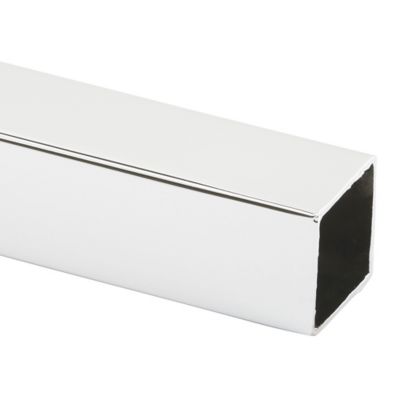
Materials and finishes affect how a towel bar looks, feels, and holds up around splashes and damp towels. Stainless steel, brass, aluminum, and coated metal constructions each have their own characteristics, and the stated material is worth distinguishing from the finish name. A brushed nickel appearance, for example, describes the surface rather than necessarily identifying the metal underneath. Stainless steel offers corrosion resistance, though its performance still depends on the grade, surface treatment, cleaning habits, and surrounding conditions. Brass is another common choice for bathroom hardware, with finishes that can range from polished to subdued. Aluminum is relatively lightweight and corrosion resistant, while coated steel depends on an intact protective surface to help keep moisture away from the underlying metal. No finish should be treated as maintenance-free. Scratches, standing water around mounting plates, and harsh cleaners can affect appearance over time. Polished surfaces reflect more light and may make fingerprints or water marks easier to notice; brushed and matte surfaces have a softer look but still need regular cleaning. For a bathroom that sees plenty of daily traffic, smooth surfaces and uncomplicated bracket shapes can make wipe-downs less of a chore. A soft cloth and a cleaner approved by the manufacturer are sensible starting points, with mild soap and water appropriate for many finishes. Abrasive pads and strong chemical cleaners can damage some coatings, so the care directions matter more than a general bathroom-cleaner label. The bar’s shape also affects everyday handling. Rounded edges and smooth joints help towels slide on and off without catching, while secure connections help limit twisting at the brackets. A towel bar should feel steady under its intended load, but its strength comes from the entire assembly, including the wall attachment. Metal thickness alone does not tell the whole story. A well-supported rail with properly fitted brackets is better suited to repeated towel changes than one attached to a weak or damaged surface. Matching the material and finish to the room’s upkeep routine helps keep the fixture looking tidy without adding unnecessary work.
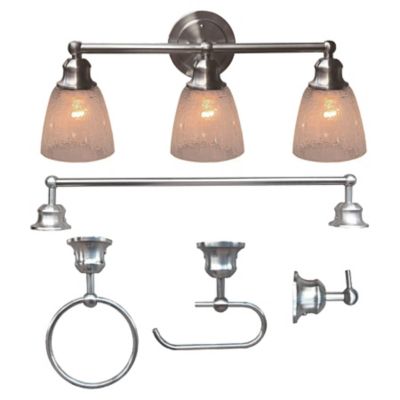
Fit starts with the space around the bar, not just the length printed in its description. The listed measurement may refer to the rail or the overall fixture, so the usable hanging width, total width, and projection from the wall all deserve a look. Mounting plates can add several inches beyond the towel-holding section, and a deep projection can interfere with a door, drawer, or narrow walkway. Above a toilet, beside a vanity, or behind a bathroom door, there also needs to be enough clearance for the towel itself. A bath sheet hanging below the rail should not drag across the floor, cover a heat register, or rest against a damp surface. Positioning near the sink or shower can make everyday routines easier, provided the towel stays clear of direct spray and the bar does not crowd other fixtures. In a bathroom shared with children or someone with limited reach, a comfortable mounting height is more helpful than automatically matching the height in another room. An ordinary towel bar is not a grab bar and should never serve as support for getting in or out of a tub. Wall construction matters, too. Wood framing, drywall, tile, and masonry call for suitable fasteners and mounting methods; an anchor intended for one surface is not automatically right for another. Replacement projects also depend on the distance between existing holes and the condition of the wall beneath the old brackets. Concealed mounting hardware can give the finished installation a clean look, but secure attachment remains the priority. For a coordinated bathroom, the bar’s finish and bracket shape can sit comfortably alongside faucets, mirrors, and
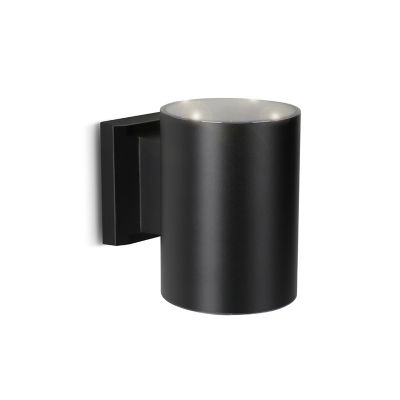
Bathroom Wall Mounted Light Fixtures without every detail matching exactly. Keeping the main finishes consistent can bring the room together, while a straightforward rail leaves room for patterned towels or a favorite wall color. With sensible placement, suitable mounting, and routine care, a wall-mounted towel bar provides an orderly place for an everyday essential, from the hand towel by the utility sink to the bath towel waiting beside the shower.