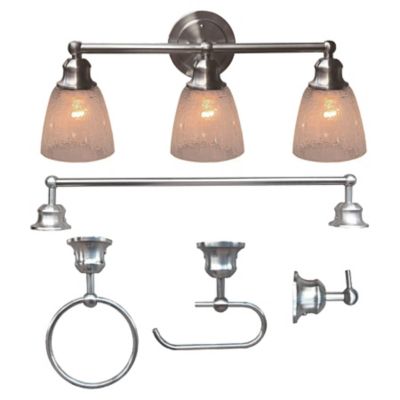
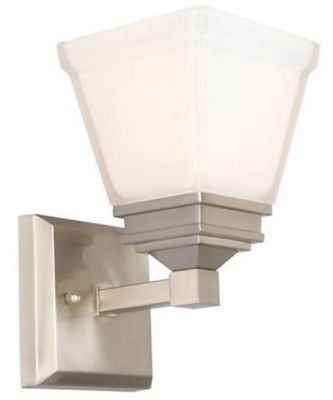
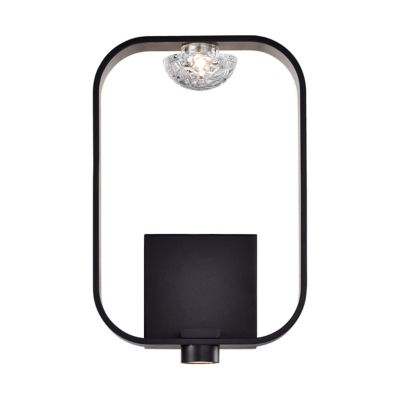
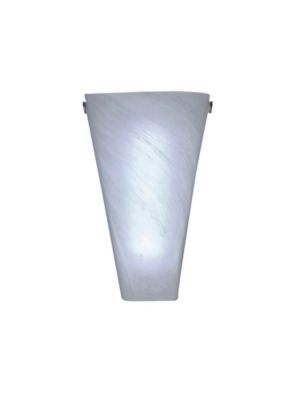
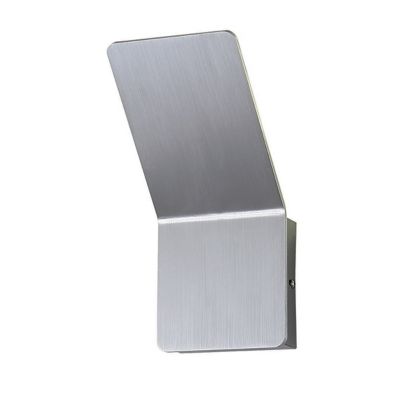
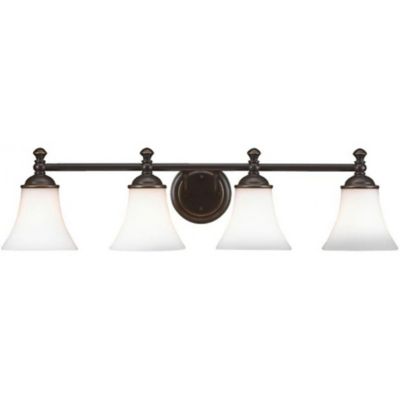
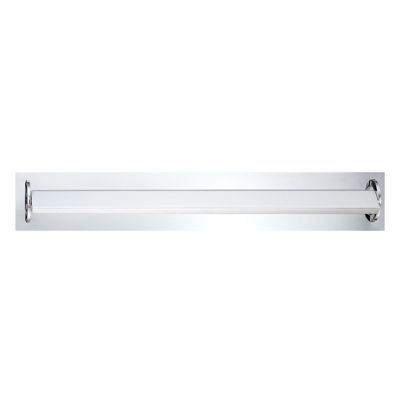
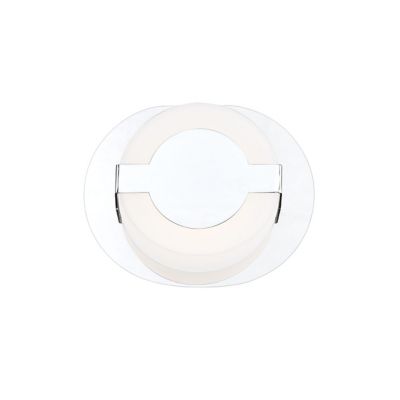
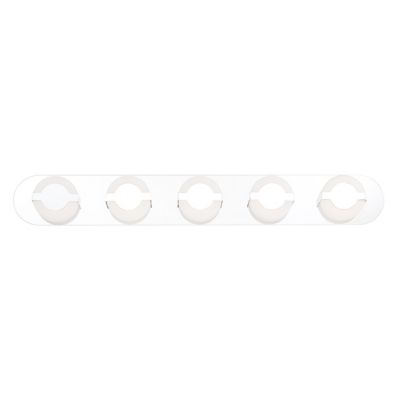
Bathroom wall mounted light fixtures provide task lighting for grooming and everyday routines while adding character around a mirror or vanity. Mounted above a mirror or along its sides, these lights put illumination closer to the face than a ceiling light alone. That makes a difference when shaving before chores, putting in contact lenses, or getting ready for a day away from the farm. Vanity light bars spread light across a wider area, while individual wall sconces can frame a mirror without filling the wall above it. A pair of sconces positioned near face level can help soften the shadows that overhead lighting casts beneath the eyes and chin. Above-mirror fixtures work well where side wall space is limited, though shade shape and light direction affect how evenly they illuminate the sink area. Frosted glass softens the view of the bulb, while clear glass leaves the bulb visible and creates a more open look. Upward-facing shades can bounce light toward the ceiling; downward-facing shades direct more light toward the vanity. Either arrangement needs to match the mounting positions permitted by the fixture manufacturer. In a small powder room, a compact sconce or short light bar can keep the wall from feeling crowded. A broad vanity with two sinks may call for separate lighting zones so both spots have useful illumination. Mirror width, sink placement, and the distance between cabinets all influence how a fixture fits. The best balance is not always the widest light: a fixture should look proportionate without blocking a medicine cabinet door or crowding nearby trim. For a family bathroom, a guest bath, or a washroom off the mudroom, well-placed wall lighting makes ordinary routines easier without asking the ceiling light to do all the work. It also gives the room a finished look, whether the rest of the space leans toward simple painted wood, clean tile, or a farmhouse vanity with plenty of storage underneath.
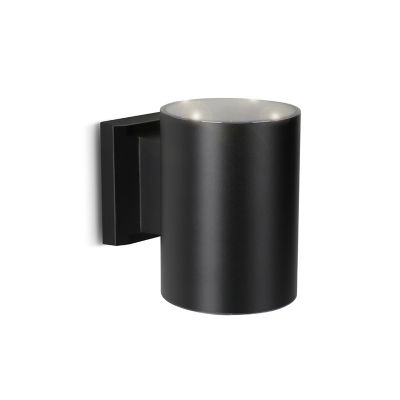
Materials and construction matter in a room where steam, splashes, and frequent cleaning are part of daily life. Bathroom wall lights often combine metal backplates and arms with glass shades, with steel, aluminum, or brass providing different shapes, weights, and surface treatments. A moisture-resistant finish helps protect exposed metal, but no finish makes every fixture suitable for every bathroom location. Damp-rated fixtures are intended for moisture-prone locations without direct water exposure, while wet-rated fixtures are designed for locations where water may reach them. Placement near a shower or tub still depends on the fixture’s listing, required clearances, and local electrical requirements. A licensed electrician can confirm that the location, electrical box, wiring, and mounting arrangement meet those requirements. The backplate deserves attention along with the overall width and height. It needs to fit the mounting area, and an existing electrical box may sit higher, lower, or farther off-center than expected. A replacement light with a different backplate shape can also leave old paint lines or mounting marks visible. Projection from the wall matters just as much, especially above a deep medicine cabinet or beside a mirror with a thick frame. A shade that looks compact from the front may extend far enough to interfere with a cabinet door. Fixture weight and the proper mounting hardware also affect a secure installation. Within those practical limits, finish and shape can tie the room together. Matte black offers a strong outline against pale walls, brushed nickel has a softer sheen, and brass tones bring warmth beside wood cabinetry. Matching every metal surface is not essential, but repeating a finish on the faucet, mirror frame, or cabinet pulls helps the room feel settled. Simple arms and open spacing can also make wiping around the fixture less of a chore than closely packed details, particularly in a busy bathroom shared by the whole household.
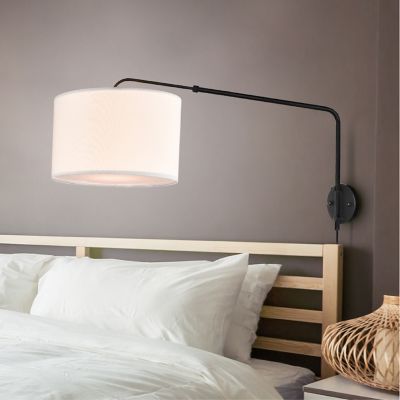
Light output is another part of choosing bathroom wall mounted light fixtures that feels right in everyday use. Lumens describe brightness, while the fixture’s shade, bulb position, and mounting location determine where that light goes. More brightness alone does not solve a poorly placed light that shines straight into the eyes or leaves the face in shadow. Color temperature affects the room’s appearance, too: light around 2700K to 3000K gives a warmer look, while light around 3500K to 4000K appears more neutral. Consistent color temperature across the vanity and ceiling lighting helps keep one part of the room from looking yellow beside another that looks blue. Color rendering matters for grooming because it influences how naturally skin tones, clothing, and makeup appear. A color rendering index of 90 or higher can be helpful where those details matter. Fixtures with replaceable bulbs offer flexibility in brightness and light color, provided the bulb shape, base, wattage, and enclosure requirements match the fixture. Integrated LED fixtures have their light source built into the design, so the stated light output, color temperature, and service options deserve a close look. Dimming can make a bathroom more comfortable for an early start or a quiet evening routine, but the light source and dimmer need to be compatible. Care is usually straightforward: with power off and the fixture cool, a soft cloth can lift dust from the backplate and arms, while removable glass shades should be cleaned according to the manufacturer’s directions. Harsh cleaners and abrasive pads can damage finishes, and cleaner should not be sprayed into sockets or electrical openings. For a bathroom that opens onto a hall, coordinating the finish or shade shape with
Modern Hallway Wall Light Fixtures can help neighboring spaces feel connected without making them identical. The result is practical lighting with a look that belongs in the home, from a hardworking main bath to a small guest washroom.