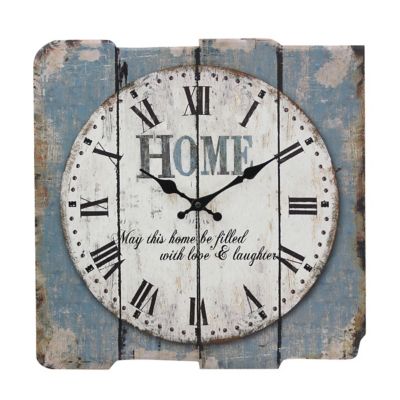
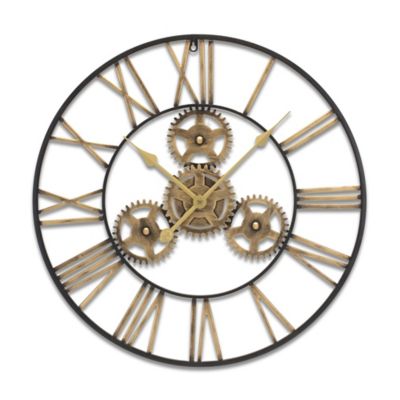
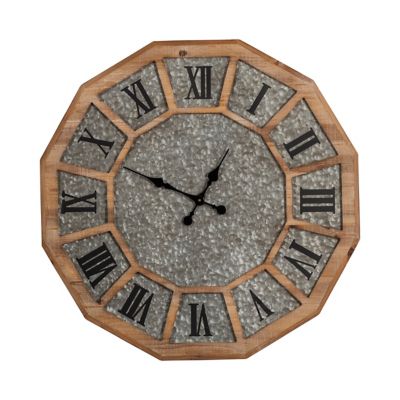
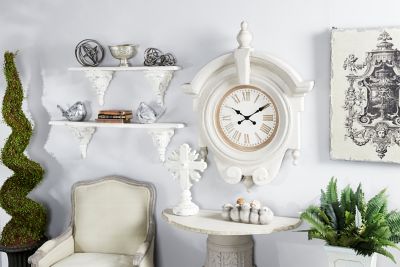
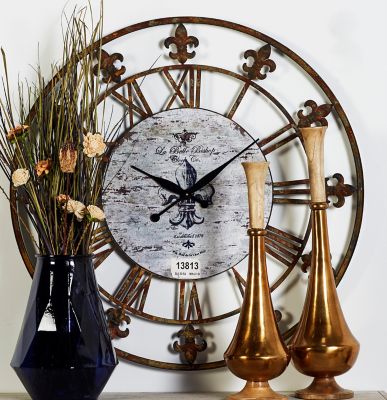
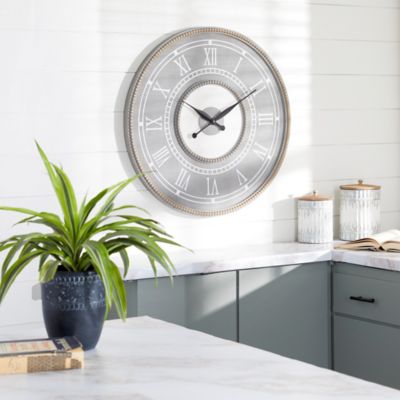
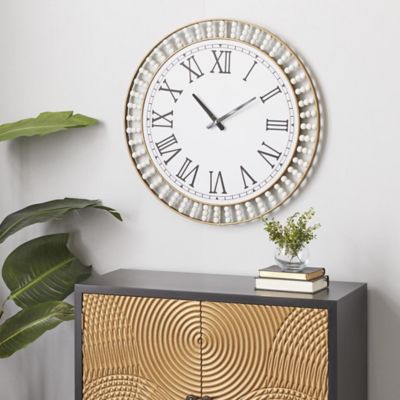
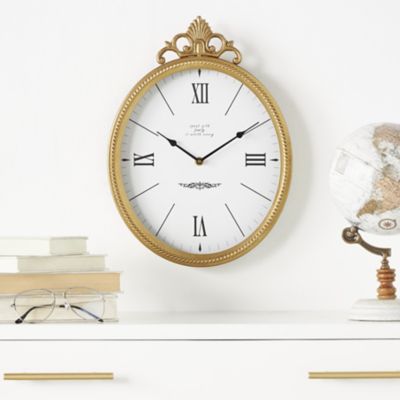
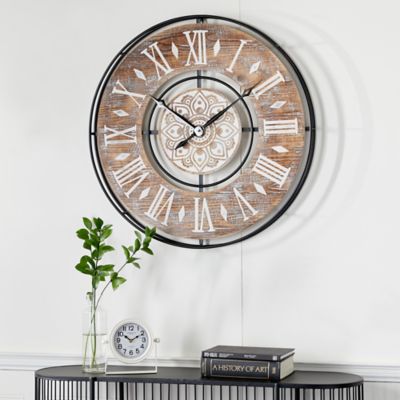
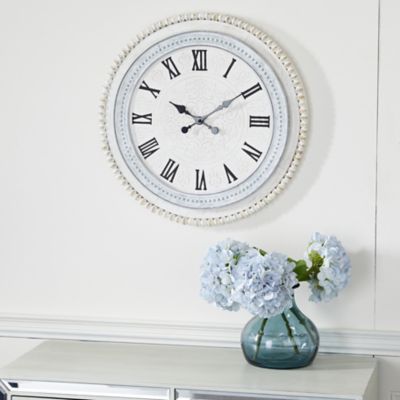
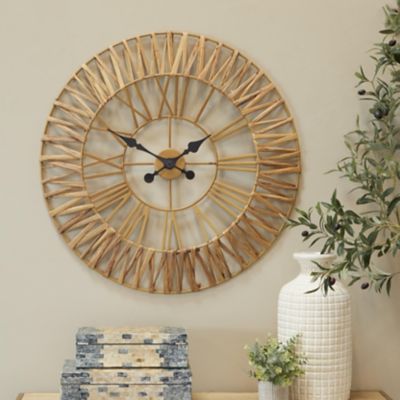
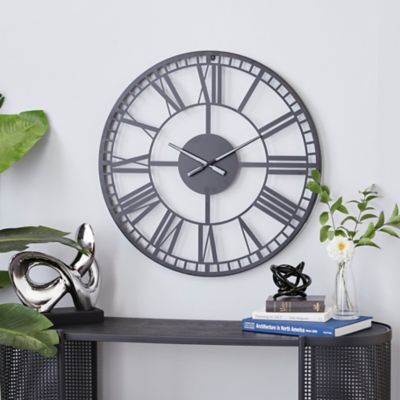
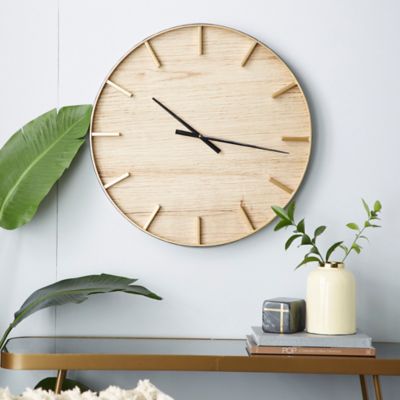
A wall clock with Roman numerals marks the hours with combinations of the letters I, V, and X rather than the numbers 1 through 12. That familiar lettering gives the face a traditional look, whether the clock hangs above a kitchen table, beside a living room bookcase, or near the door where everyone grabs their keys. Some faces show four as IV, while others show IIII, a long-standing clockmaking convention. Both styles serve the same everyday purpose: making the time easy to check without reaching for a phone. The character of the clock comes from more than the numerals alone. A broad wooden frame can bring out the grain and warm tones of nearby furniture, while a slim metal rim gives the lettering more room to stand out. Dark iron-look finishes sit comfortably alongside barnwood, brick, and painted cabinets. Lighter finishes can soften the look against a dark wall or a room with substantial wood furniture. An open-frame Roman numeral wall clock lets the wall show through its face, giving a large clock a less solid appearance. A closed face creates its own background, which can make the hands and hour markers easier to distinguish. Glass-covered faces add another consideration, since windows and overhead lights can reflect across the surface. For a room with brass hardware, warm wood, or a broad stretch of open wall,
Large Gold Wall Clocks can tie those finishes together without needing several smaller wall accents. Round faces are familiar and easy to place, while square cases and elongated pendulum styles give the clock a stronger furniture-like presence. Whether the setting is a farmhouse kitchen or a straightforward home office, the best match feels at home with the room while keeping its main job plain to see.
Size and readability make a real difference once a Roman numeral clock is on the wall. A face that seems plenty big up close may look small over a long sofa or across a spacious dining room. The overall width matters, but so do the height of the numerals, the thickness of the hands, and the contrast between those parts and the background. Black hands against a pale face are generally easier to pick out than hands that nearly match the hour markers. On an open-face clock, the wall color becomes part of that contrast, so a design that stands out against white paint may be harder to read against dark paneling. Clear spacing between the numerals helps, too, especially when checking the time from the kitchen sink or the far end of the table. A clock intended for a hallway may only need to read well from a few steps away, while one in a gathering room has a bigger job. Measuring the intended spot gives a better sense of fit than judging the clock by its face alone. Leave breathing room around the frame, and account for shelves, door trim, cabinet doors, and anything else nearby. The mounting point should suit both the clock’s weight and the wall material; a broad metal frame and a light molded frame can call for different hanging hardware. Movement type is another practical detail. Many wall clocks run on a battery-powered quartz movement, but the numeral style does not determine whether a clock ticks or runs with a quieter sweep. That distinction matters in a bedroom, reading corner, or office where small sounds carry. Pendulums and chimes bring a different experience, with motion or an audible time signal that some households enjoy. Where those features are present, access to the controls and any sound settings deserves a look before the clock goes above a tall cabinet or another hard-to-reach spot.
Materials and construction influence how a wall clock fits into daily life and how much attention it needs over time. Solid wood, wood-based panels, metal, plastic, and glass each bring different weight, texture, and care needs. A wood frame may show grain and slight variations in color, while painted metal offers a smoother outline around the face. An open metal design has exposed hands and narrow spaces around the numerals that collect dust; a covered face keeps those parts behind glass but adds a surface that can show fingerprints. A soft, dry cloth is often enough for routine dusting, with the maker’s care directions taking priority for painted, stained, or plated finishes. Spraying cleaner directly onto the clock can send liquid toward the movement or leave marks along the frame, so any approved cleaning solution belongs on the cloth instead. Gentle handling matters around exposed hands, which can bend if the clock is carried or wiped by the center of the face. Placement also affects upkeep. Cooking grease near a range, dust near a workbench, and repeated bumps beside a busy doorway can all mean extra cleaning or a different hanging spot. Easy access to the battery compartment makes routine changes less of a chore, and the battery size and installation directions should match the movement. For a clock going into storage, removing the battery helps reduce the chance of leakage damaging the compartment. These practical details are worth considering when choosing a gift, too. A Roman numeral wall clock can suit a housewarming, wedding, or retirement gift when its size, finish, and sound level fit the recipient’s home. Someone furnishing a first kitchen may appreciate a clear, simple face, while someone settling into a larger home may prefer a clock that holds its own above a mantel. Whether it serves as the room’s main timepiece or a finishing touch near a favorite chair, a well-chosen clock earns its spot through both its appearance and its everyday usefulness.