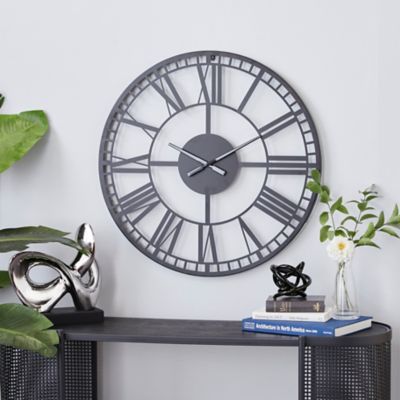
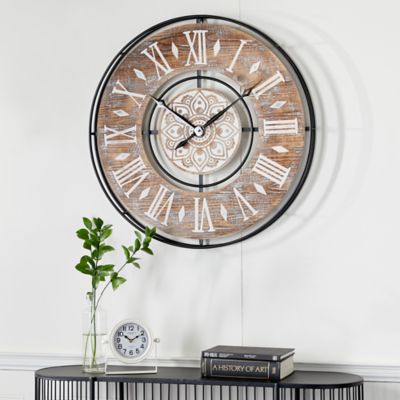
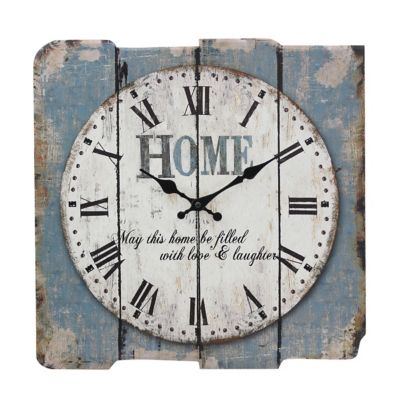
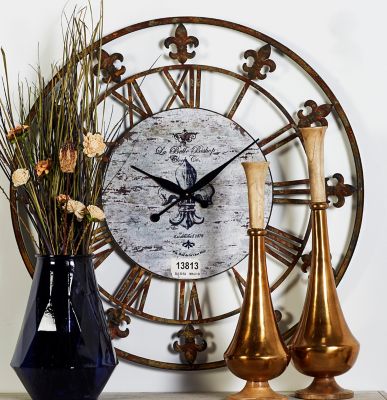
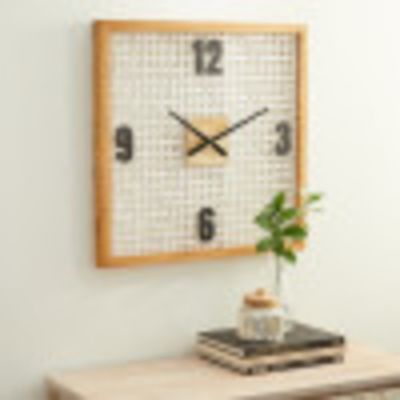
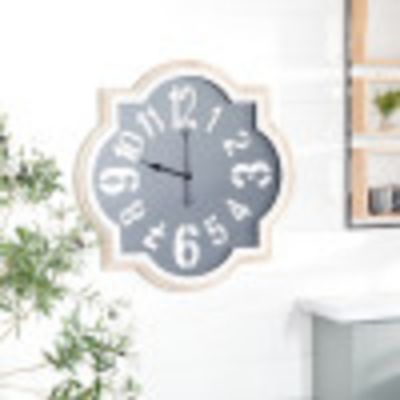
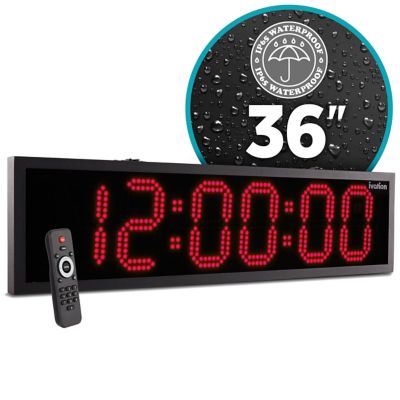
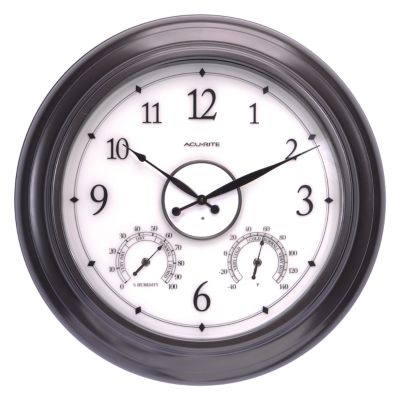
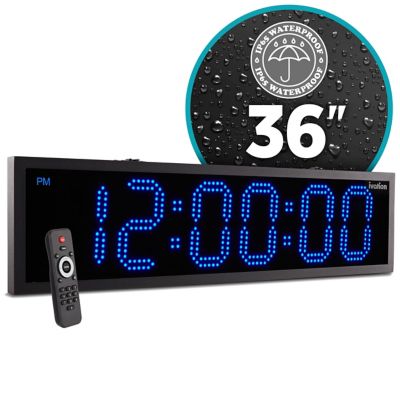
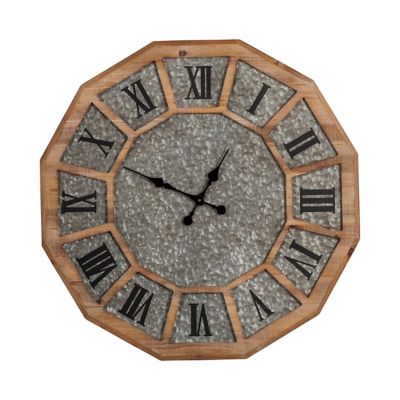
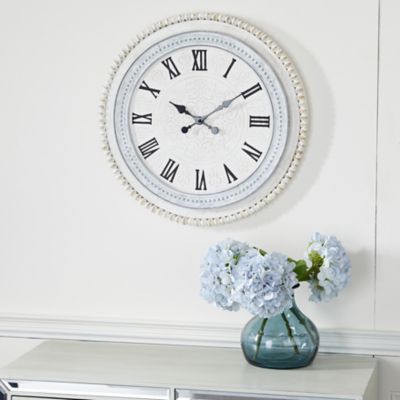
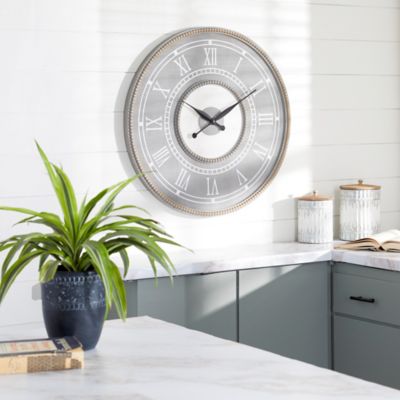
Oversized square wall clocks bring a strong, straightforward shape to a room while keeping the time easy to spot from across the floor. Their broad faces and defined corners work especially well above a long console, beside a kitchen table, or on an open wall in a farmhouse living room. A square frame echoes the lines of doorways, windows, cabinets, and shelving, giving a large wall a sense of order without needing a whole collection of smaller pieces. These clocks can serve as the main feature above a sideboard or settle into a room with family photographs, framed prints, and wood furniture. The face makes a big difference in how a clock looks and how easily it reads. Bold numerals and dark hands against a light background are easier to pick out when heading out the door or checking the time from the far end of the dining table. Roman numerals bring a more traditional look, while simple hour marks leave more open space on the dial. An open-frame design lets the wall show through, so the paint color becomes part of the overall look; a solid face creates a more distinct backdrop for the hands. That distinction matters on patterned wallpaper, brick, or wood paneling, where slender hands may blend into the surface behind them. For a kitchen that opens into a family room, a clear face can make one clock useful from several spots. In an entryway, it offers a quick time check before chores, school, or a trip into town. A large square clock also has enough visual presence to stand on its own, which suits rooms where the furniture and everyday belongings already provide plenty of detail. The right balance comes from a face that is easy to read and a frame that feels at home with the rest of the space, rather than size alone.
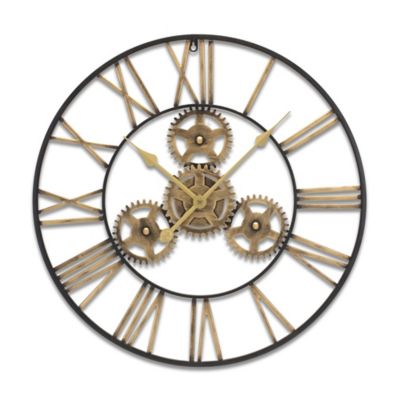
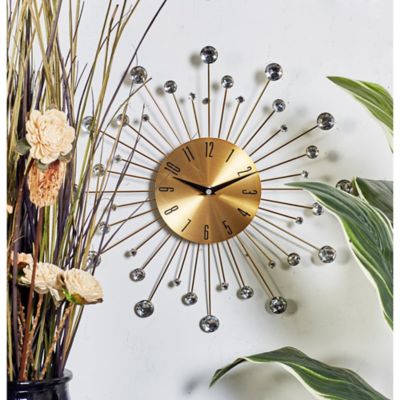
Materials, finishes, and proportions give oversized square wall clocks much of their character. Wood frames can bring visible grain and a warm, substantial look that pairs naturally with a pine table, oak cabinets, or exposed beams. Depending on the construction, a wood-look frame may offer a similar appearance with a different weight and care routine. Metal frames can range from slim borders to broad, riveted-looking edges, with finishes that lean toward dark iron, soft silver, or warm gold tones. A black frame adds definition against a pale wall, while a lighter finish may sit more quietly against neutral paint. For another take on a warm metallic finish,
Large Gold Wall Clocks offer a related look worth considering alongside square shapes. Glass-covered faces help shield the dial and hands from everyday dust, though reflections from a nearby window or lamp can make the time harder to see from certain angles. Open faces avoid that glass reflection but leave the hands more exposed during cleaning and handling. Frame depth matters, too: a thick case can look substantial above a broad piece of furniture, while a slimmer profile may be a better fit along a hallway where people carry laundry baskets or groceries. Since “oversized” does not point to one fixed measurement, the listed width, height, and depth tell more than the category name alone. A square clock fills its corners as well as its center, so it can feel fuller on the wall than a round clock of the same width. A paper outline in the planned spot gives a useful sense of that footprint before hanging. Leaving breathing room around the frame keeps it from looking squeezed between a doorway and a cabinet. Above furniture, a clock generally looks more settled when it stays within the width of the piece below it. Its weight and hanging arrangement deserve just as much attention as its appearance, especially with a broad wood frame or a glass front.
Everyday use comes down to the movement, placement, mounting, and a little routine care. Battery-powered movements allow placement without a nearby outlet, but battery type and quantity vary, and access to the compartment matters when a large clock needs to come off the wall. Some movements have a noticeable tick, while others are designed for quieter operation; that detail can matter in a bedroom, a reading corner, or a home office where small sounds carry. A sweeping second hand and a stepping second hand also create different visual effects, so movement details are worth checking rather than assuming every clock runs the same way. For mounting, the clock’s weight, its attached hanger, and the wall material determine the appropriate fasteners. Drywall, masonry, and wood walls call for different hardware, and a heavy clock needs support suited to both the wall and the load. Keeping the frame level makes the square outline look right, with the hands clear of anything that could interfere with their travel. Placement away from door swings, crowded coat hooks, cooking splatter, and sink spray can help protect the finish and movement. Unless a clock is specifically rated for outdoor exposure, an indoor room is the better setting than a porch or an open outbuilding. Care is usually straightforward, but the maker’s directions should govern cleaning. A soft cloth can lift dust from the frame, while a glass cover may need gentle cleaning with a suitable product applied to the cloth rather than sprayed toward the case. Exposed hands need a light touch and should not be bent or pushed while dusting. Secure corners, a sound backing, and firmly attached hanging hardware all contribute to how well a large clock holds up through normal handling. These clocks can make thoughtful housewarming or wedding gifts for people furnishing a home, provided the wall space and recipient’s taste are known. Whether keeping supper on schedule or marking the start of the workday, an oversized square wall clock earns its place by combining an easy time check with a shape that gives the room a finished feel.