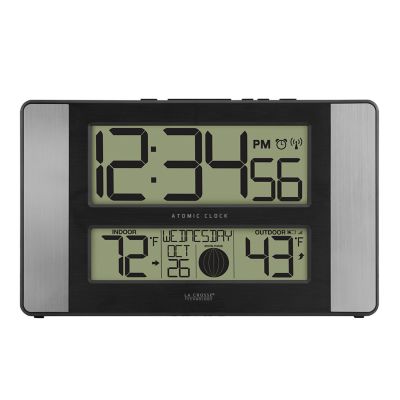
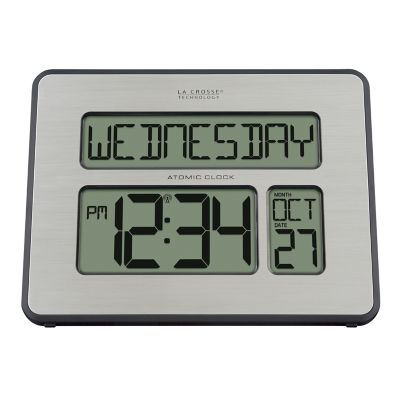
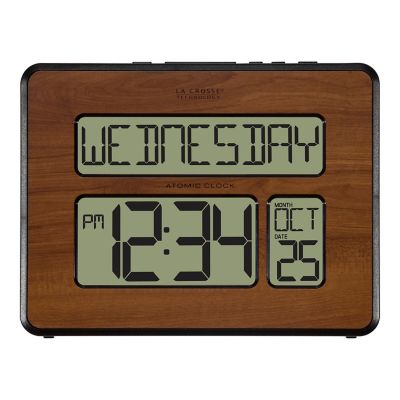
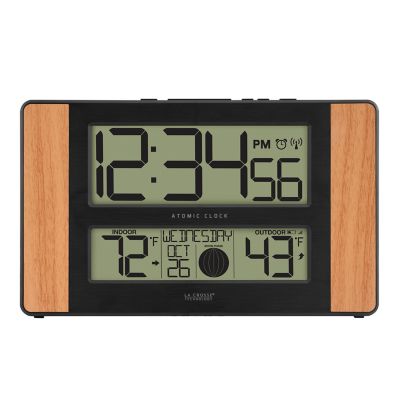
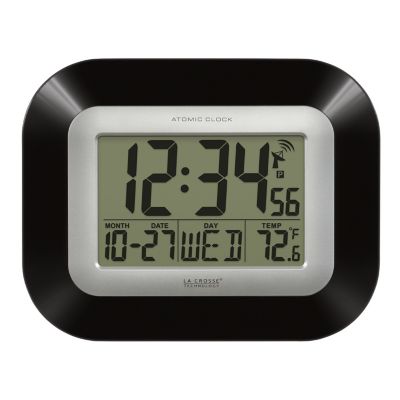
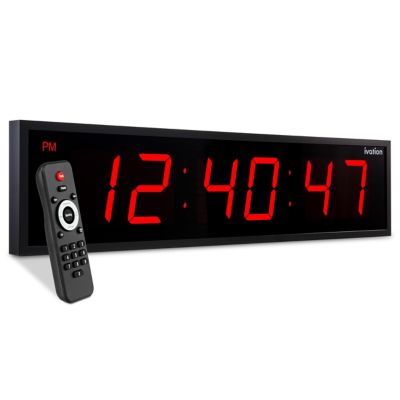
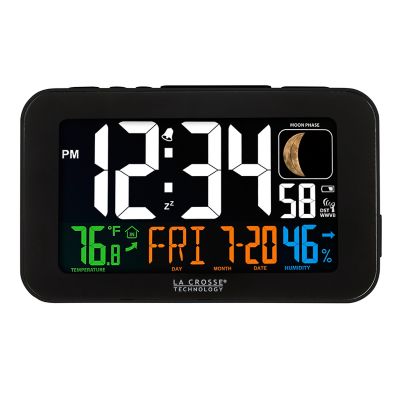
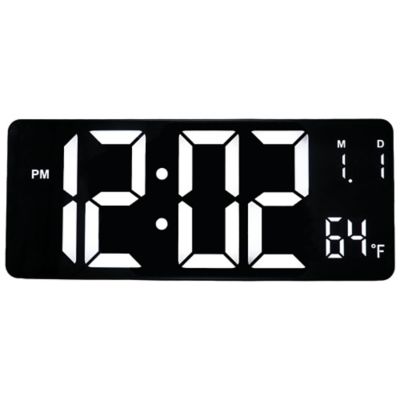
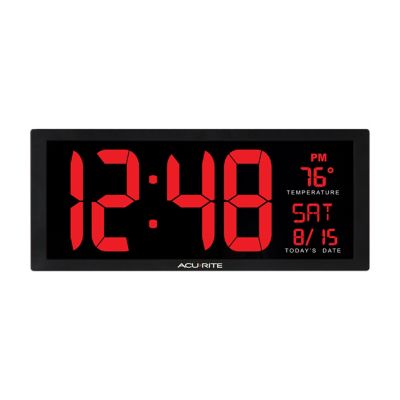
An atomic digital wall clock is a radio-controlled clock that receives a time signal from WWVB, the radio station operated by the National Institute of Standards and Technology near Fort Collins, Colorado. That signal carries time information based on atomic time standards, allowing a compatible clock to correct its display automatically when reception is successful. The clock itself does not contain an atomic timekeeping system; it generally runs on a quartz movement between signal updates. For a kitchen, home office, farm office, or indoor workspace, that means easy-to-read digital time without as much routine resetting. Many designs also support automatic daylight saving time adjustments, though the time zone and daylight saving settings still need to match the location. These settings matter in places that do not observe the time change, and supported time zones can differ among clocks. Most radio-controlled wall clocks do not need Wi-Fi, a phone app, or an internet connection to receive WWVB broadcasts. Radio reception is its own consideration, especially in a metal-sided shop, a room with reinforced concrete walls, or a spot crowded with electronics. A clock may receive the signal more readily near a window than deep inside a building, and many models attempt synchronization overnight, when reception is often better. The display can continue keeping time between successful updates, so a missed signal does not necessarily mean the clock stops. A reception symbol, when included, helps distinguish a recent signal update from ordinary quartz operation. For shoppers who want less fuss, clear setup controls and a readable signal indicator can matter just as much as the size of the numbers. Manual time-setting capability is also worth considering for locations where reception is limited. Atomic synchronization is a useful convenience, but it works best when the clock’s settings, placement, and reception conditions suit the room. That balance is especially helpful in a busy household where the kitchen clock sets the pace for school departures, appointments, and getting out the door to tackle chores.
Readability is one of the biggest differences among atomic digital wall clocks. Overall frame dimensions tell only part of the story; the height of the time digits, contrast between the numbers and background, and viewing angle determine how easily the display can be read from across a room. A broad, uncluttered display makes sense above a shop doorway or on the far wall of a family room, while a smaller clock may fit better beside a desk or over a kitchen counter. Large numerals can be helpful for older adults and anyone who would rather not walk across the room just to check the time. LCD screens generally depend on room light unless they include illumination, while illuminated displays need a power arrangement that supports their lighting. Backlighting, brightness controls, and nighttime visibility vary, so a screen that works well in a bright office may not be the best match for a bedroom. The arrangement of extra information matters, too. A day-and-date display can help keep appointments and paperwork on track, but smaller calendar numbers should not crowd the main time display. A 12-hour format with a clear AM or PM indicator feels familiar in many homes, while a selectable 24-hour format can suit shift schedules and shared work areas. Some clocks include seconds, alarms, or a tabletop stand, giving the same general clock style more flexibility around the house. These features are most useful when they serve a routine rather than make the screen harder to read. For someone keeping track of feed deliveries from a desk or checking departure time while packing lunches, a quick glance should be enough. Frame color and shape also help a clock settle into the room without competing with shelves, cabinets, or other wall fixtures. For a traditional dial-style alternative, a
Wall Clock With Roman Numerals offers a different way to read the time.
Materials, mounting details, and everyday care help determine how well an atomic digital wall clock fits its intended space. Plastic housings can keep wall weight down, while metal frames or trim bring a different look and feel. Screen covers may be glass or plastic, with different cleaning needs and resistance to scratches. A smooth frame with fewer grooves is easier to wipe free of ordinary household dust, which is handy near a busy entryway or office workbench. An indoor clock belongs in a protected setting unless its stated rating allows something more demanding; a room inside a shop is not the same environment as an open equipment shed. Wall attachment deserves attention as well. The mounting slot, clock weight, and wall surface all affect the hardware needed for a secure fit. A clock above a doorway should sit firmly and remain accessible for battery changes without having to move heavy furniture or reach over equipment. Battery-powered designs allow placement away from an outlet, while clocks with an adapter need a practical cord route and a nearby power source. Battery type, quantity, and any separate backup function vary by design. A backup may preserve settings or timekeeping without keeping every display feature running, so that distinction matters where uninterrupted visibility is important. Routine care is usually simple: a soft cloth for dust, gentle cleaning as directed, and attention to battery replacement before leaking cells can damage the compartment. Spraying cleaner directly onto the screen or letting moisture reach buttons and openings can cause trouble. For a gift, an atomic digital wall clock makes sense for a new homeowner, a parent who appreciates large numbers, or someone setting up a farm office. Easy-to-reach buttons, straightforward settings, and a display suited to the recipient’s room are thoughtful details. The best fit is a clock that can be read at a glance, mounted where it belongs, and maintained without turning an everyday task into a project.