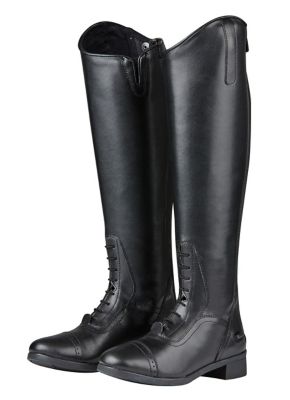
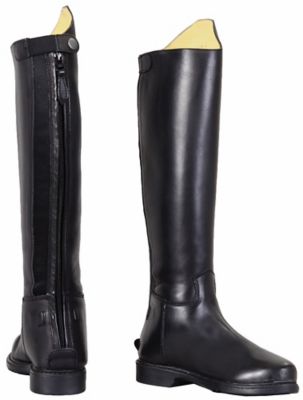
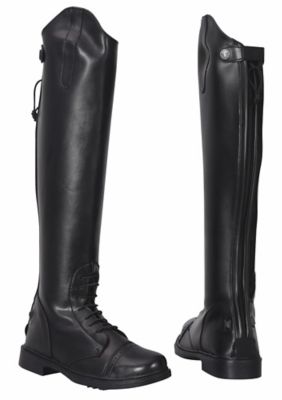
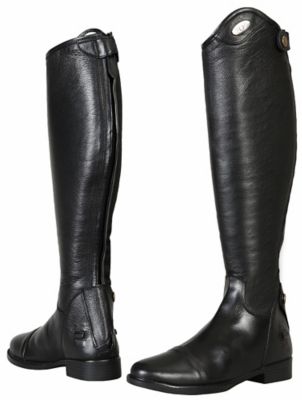
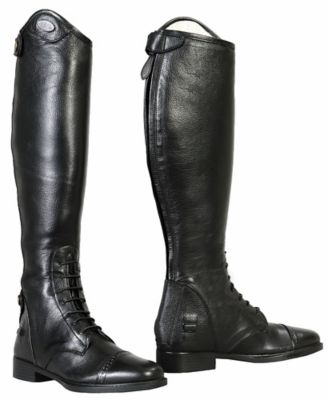
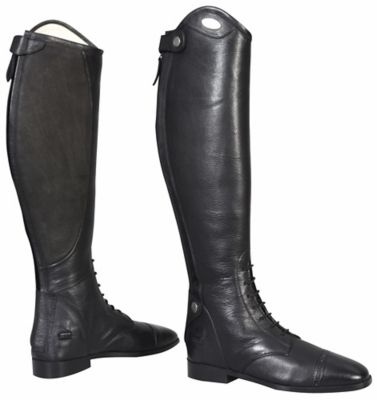
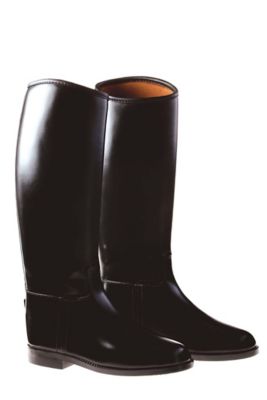
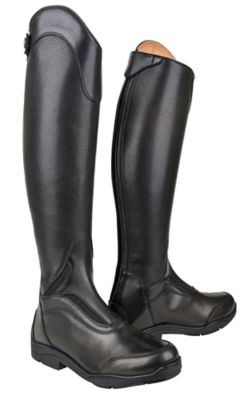
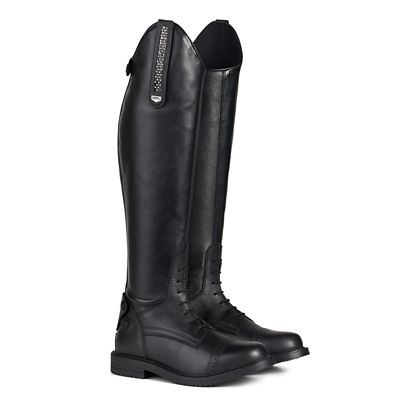
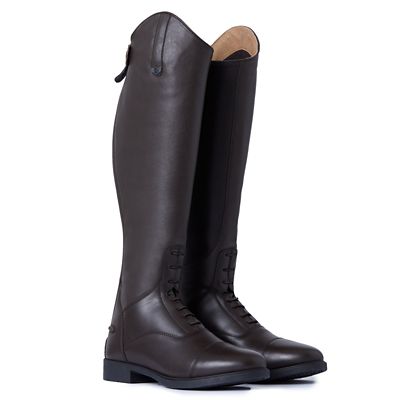
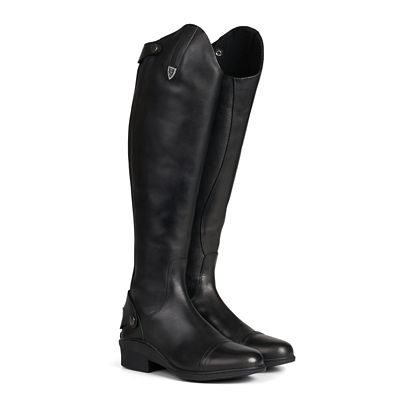
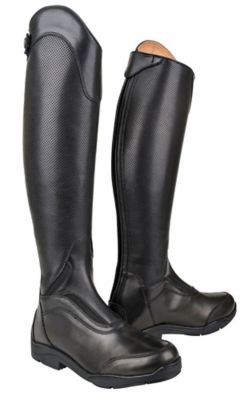
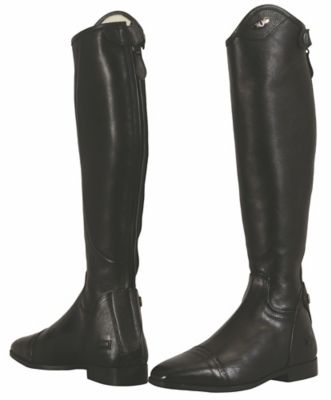
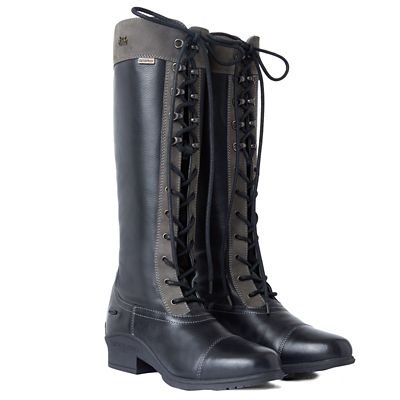
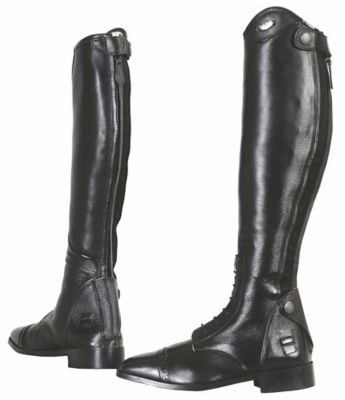
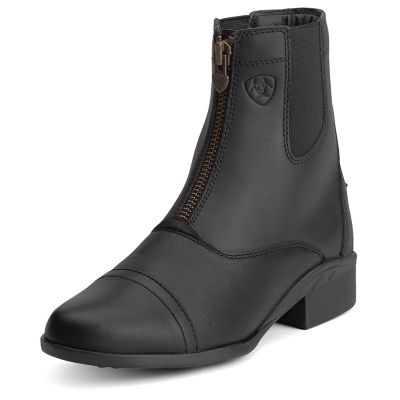
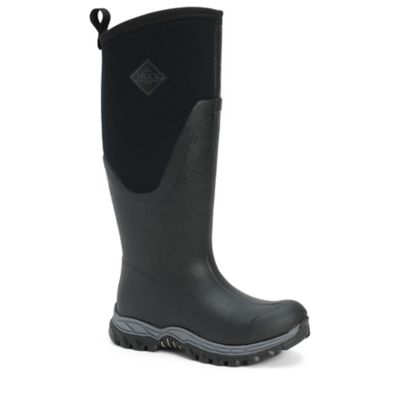
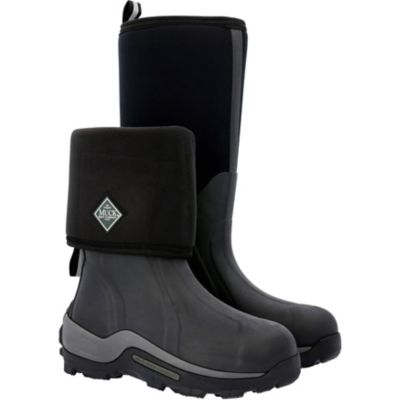
Tall boots for horse riding extend up the calf and finish just below the knee, giving riders a close-fitting layer between the lower leg and the saddle’s stirrup leathers. They help reduce rubbing and pinching while keeping the leg free of loose material that could bunch or catch. Most closely associated with English riding, tall riding boots have a place in schooling, jumping, dressage and the show ring. Their shape serves a purpose beyond appearance: a fitted ankle allows movement, a defined heel helps limit the foot’s forward travel through the stirrup, and a smooth shaft keeps seams and folds from getting in the way. Field boots typically have lacing across the front of the ankle, adding flexibility where the foot bends. Dress boots generally have a plain front for a clean, traditional look, while some dressage styles have a firmer shaft that offers a more structured feel. The right style depends on the riding discipline, personal comfort and any rules that apply at a competition. Leather is a familiar choice for its ability to soften and take the shape of the rider’s leg with wear. Synthetic materials offer another option, often with straightforward cleaning needs and less ongoing conditioning. Neither material tells the whole story on its own; the lining, stitching, sole attachment and zipper construction all influence how a boot feels and holds up to regular riding. A rider working on quiet transitions in a lesson may value easy ankle movement, while someone practicing a dressage test may prefer a more structured shaft. Tall boots suit adult and youth riders alike, but experience level alone does not determine the right pair. The important match is between the boot, the rider’s build and the work being done in the saddle. For a beginning rider, an instructor’s guidance can help connect those features to the demands of lessons rather than appearance alone.
Fit matters from the footbed to the top of the shaft, and a familiar shoe size is only part of the picture. Tall riding boots also depend on calf width and lower-leg height, with room for the socks and breeches normally worn for riding. Measurements taken over that clothing give a more useful starting point than measurements over bare skin. Since legs can differ slightly, checking both sides helps avoid a boot that feels fine on one calf and tight on the other. Height measurements commonly run from the floor to the crease behind the knee while seated with the knee bent, though each manufacturer’s sizing directions should take priority. A new leather shaft may settle at the ankle as it breaks in, but the amount varies with construction. That makes the balance between initial height and eventual settling worth discussing with a fitter rather than simply choosing the tallest shaft possible. Once fastened, the boot should feel snug without painful pressure, numbness or a zipper that takes a wrestling match to close. The top should not dig sharply behind the knee when the rider bends into position. Around the foot, there should be enough space for the toes without so much room that the foot slides inside the boot. Stretch panels can accommodate small differences in calf shape, while ankle lacing can add flexibility; neither feature makes a substantially wrong size fit correctly. A smooth interior and well-placed seams matter during a long lesson, especially where the inner calf rests against the horse. Soles deserve attention, too. Riding footwear needs a defined heel and a sole profile suitable for the stirrup, rather than deep tread that may interfere with foot release. Stirrup width and boot width need to work together, including for riders moving into a different size. Tall describes the boot’s shaft, not the wearer’s height. Riders comparing options for longer legs can also browse
Boots for Tall Women, while checking that any footwear intended for saddle time is designed for riding.
Regular care helps tall riding boots stay comfortable and keeps small problems from turning into bigger ones. Arena dust, sweat and grit collect around ankle creases, seams and zipper teeth, so a quick wipe after riding makes a difference. Leather generally benefits from a soft cloth or brush, followed by cleaning and conditioning products suited to its particular finish. Too much conditioner can leave leather overly soft or tacky, and some finishes need different treatment, making the maker’s care directions worth keeping close at hand. Synthetic shafts often clean up with a damp cloth, but their seams, linings and closures still need attention. Either material should dry naturally away from direct heat. Boot trees or suitable shaft supports help maintain the upright shape in storage, while a boot bag keeps the shafts from getting scuffed against tack during the trip between home and the barn. Zippers work more smoothly when dirt is cleared away before fastening, and pulling the sides together before moving the zipper reduces strain on the teeth. Loose stitching, lifting soles and worn heel edges are worth addressing before the next ride, particularly if they change how the foot rests in the stirrup. Tall riding boots are built around time in the saddle, so changing into chore footwear before mucking stalls or hauling bedding can spare them unnecessary wear. That distinction matters for riders who go straight from a lesson to helping around the barn. For gifts, tall boots can be a thoughtful choice for a committed rider, a growing equestrian or someone preparing for a first show, but sizing and discipline matter more than a guess at shoe size. Having the rider’s measurements and preferred boot style makes the selection more personal and practical. Whether the day involves a steady lesson horse, a schooling session over fences or a carefully practiced test, well-fitting tall boots belong with riding gear that lets the rider pay attention to the horse instead of a pinching calf or slipping heel.