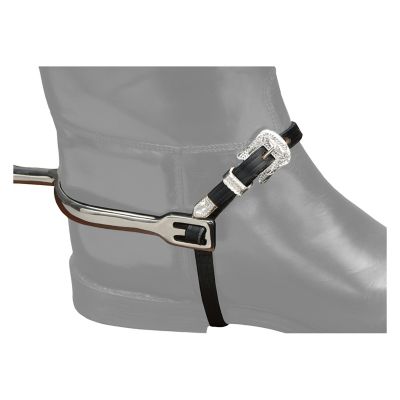
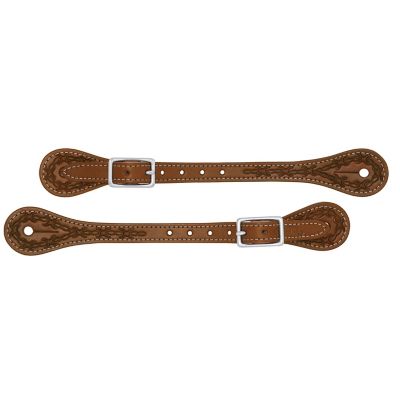
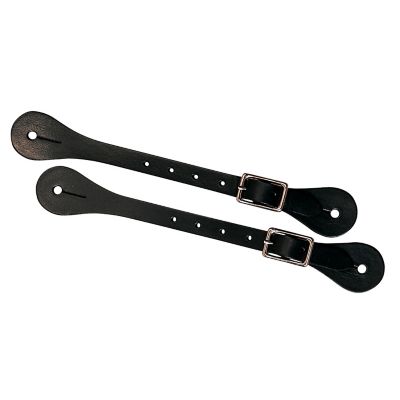
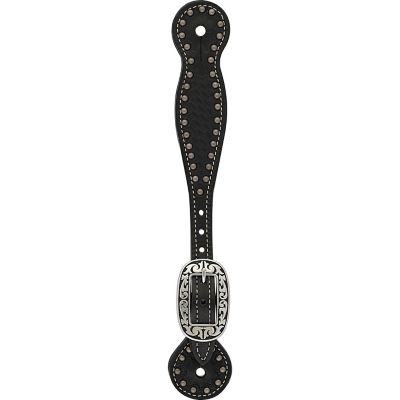
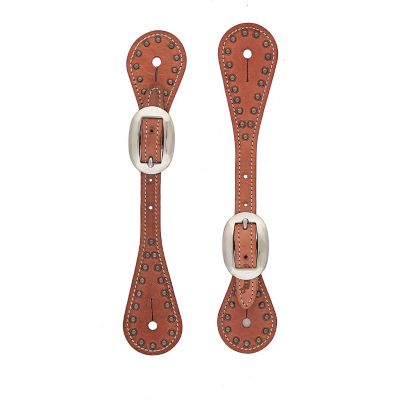
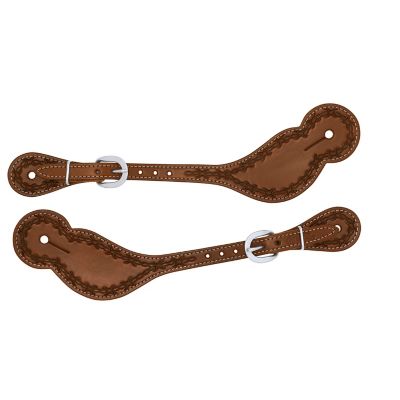
Spur straps fasten riding spurs to a rider’s boots, helping keep the heel bands steady so leg cues stay consistent. Most designs cross the instep and attach to buttons or openings on the sides of the spur, with a buckle or another fastening system that adjusts the fit. They’re small pieces of riding tack, but their shape and fit matter when a rider settles into the saddle for arena work, a trail ride, or a day checking cattle. A strap that holds its position lets the rider focus on the horse rather than a spur that keeps slipping down the heel. Western spur straps often have a broader profile that complements the shape of Western boots and button-style spur attachments. English styles generally have a narrower profile designed to pass through openings in English spurs. Those differences make compatibility more important than appearance alone: the strap has to work with both the spur and the boot beneath it. Boot shape, heel construction, and the height of the instep all affect how a strap sits, so a footwear size by itself doesn’t tell the whole story. Strap length and adjustment range deserve a close look, especially when choosing between adult and youth sizing or fitting boots with a fuller instep. A comfortable fit keeps the strap flat without digging into the top of the foot, while the spur rests in the position intended for that boot and spur design. Enough adjustment should remain to fasten the buckle securely without leaving a long, loose tail. The strap cannot make up for a heel band that is the wrong size or shape. Spurs are aids for refining a rider’s cues, not a replacement for balanced riding or basic training, and a steady strap supports that purpose without making the cue stronger or gentler on its own. For riders learning to work with spurs, an instructor’s input can help match the equipment to the horse, the rider’s leg control, and the discipline.
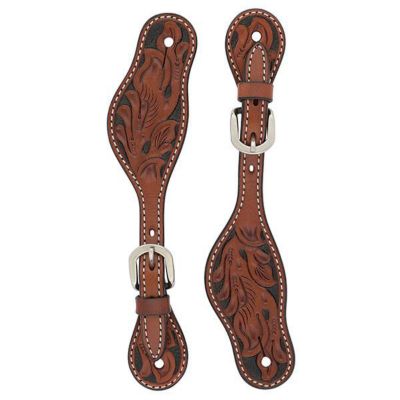
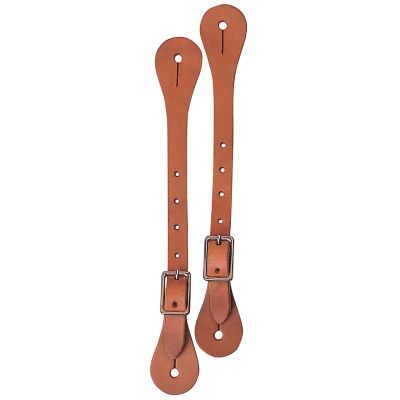
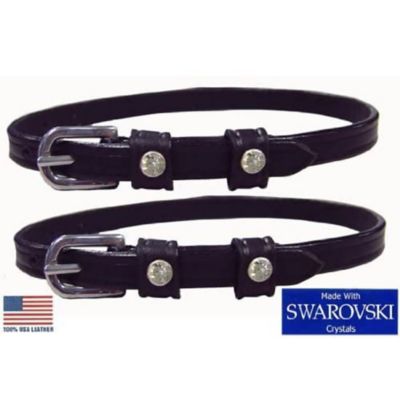
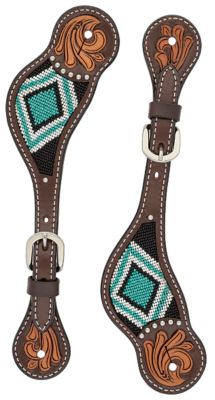
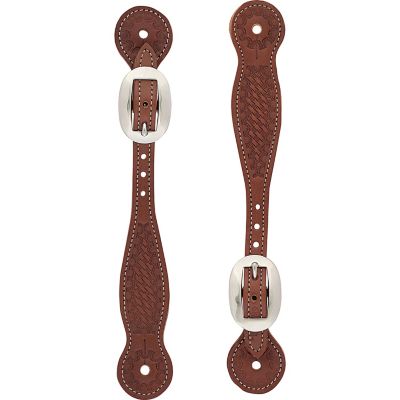
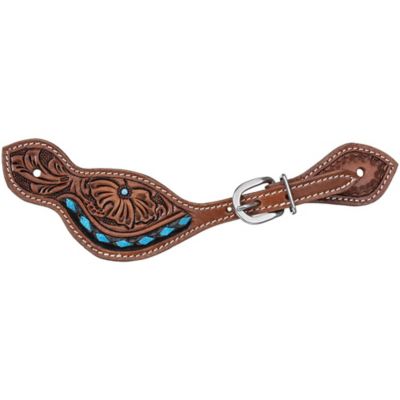
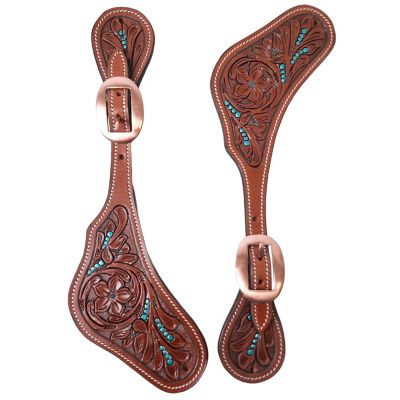
Material gives spur straps much of their feel, appearance, and resistance to everyday wear. Leather is a familiar choice for riders who like a traditional tack-room look and a strap that gradually conforms to the boot. Latigo leather is common in Western tack, while harness leather offers another option with a substantial feel; thickness, tanning, and construction influence how either leather bends and holds its shape. A heavier strap may look right alongside a broad Western spur, but it still needs enough flexibility to lie comfortably over the instep. Narrower straps need to thread cleanly through the spur’s openings without bunching or scraping along sharp edges. Synthetic materials, including nylon and rubber in some designs, offer alternatives for riders who favor straightforward cleanup. Each material brings its own care needs, and the maker’s directions are the best starting point for cleaning and conditioning. For leather, removing grit before it settles around buckle folds and attachment holes helps protect the surface from abrasion. A suitable leather cleaner and a light application of the recommended conditioner can help maintain flexibility without leaving the strap overly soft or greasy. Synthetic straps generally call for a different approach, often involving a damp cloth and mild cleaning products rather than leather treatments. Hardware deserves attention, too: buckles should move freely, tongues should seat properly in adjustment holes, and spur attachments should remain secure. Stitching, layered edges, and the leather around buttonholes are worth checking whenever tack gets cleaned. Cracks, torn holes, loose stitching, or bent hardware are reasons to take a closer look before another ride. Appearance can be simple or dressed up, with smooth leather, basketweave stamping, floral tooling, contrasting stitching, or conchos bringing different looks to a riding outfit. Finishes and added details should leave the fastening points clear and the strap comfortable against the boot. Coordinating leather tones and metal finishes with a saddle or bridle can pull things together, but sound construction and a proper fit come first.
The best match for a rider depends on how the straps will fit into everyday barn life. Someone who spends hours in the saddle checking fence may favor an uncomplicated shape with smooth edges and hardware that is easy to handle. An arena rider may want a close, tidy fit that stays out of the way through transitions and schooling patterns. For showing or rodeo events, tooling and metal accents can bring a more dressed-up look while keeping the same basic job: holding the spur securely in its intended position. Any event rules concerning spurs still apply, regardless of the strap’s appearance. Riders who switch between boots should not assume that one buckle setting will fit every pair; even boots with the same labeled size can differ across the instep and heel. A strap that sits well while standing also needs to remain comfortable with the foot in riding position. Spur straps belong within a well-fitted riding setup, alongside suitable boots, a correctly adjusted saddle, and
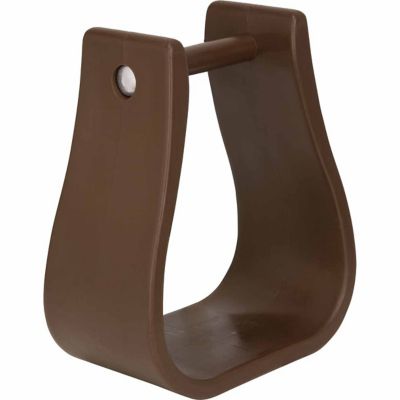
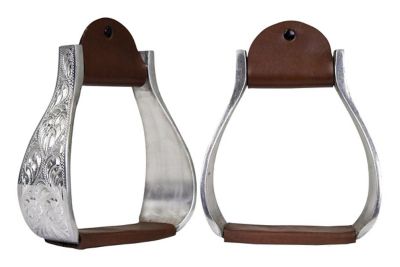
Horse Stirrups that support the rider’s foot without crowding it. None of those pieces should interfere with one another or leave loose ends near moving tack. Between rides, keeping straps clean and allowing damp leather to dry naturally away from direct heat helps preserve its shape. Storing a pair together makes it easier to keep matching lengths and attachments ready for the next trip to the barn. Spur straps can also make a thoughtful gift for a rider whose preferences are already known, especially when replacing a well-worn pair or matching an established tack set. Before choosing a gift, it helps to know the rider’s discipline, spur attachment style, usual boots, and preferred finish. Those practical details turn a good-looking accessory into a useful part of the rider’s regular gear.