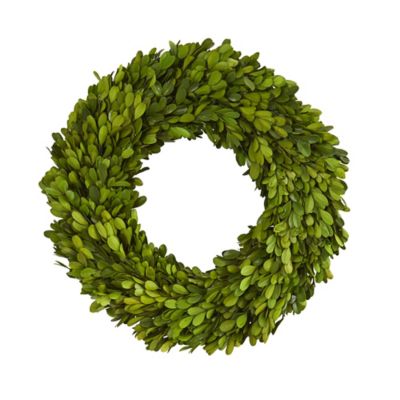
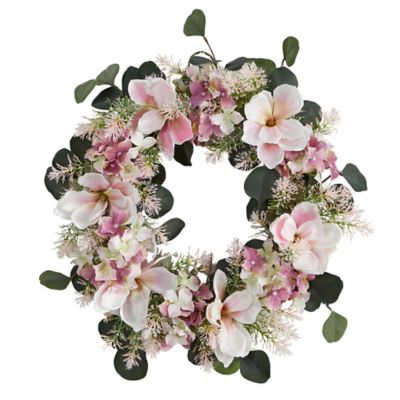
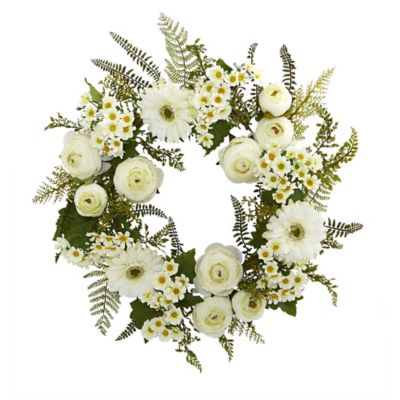
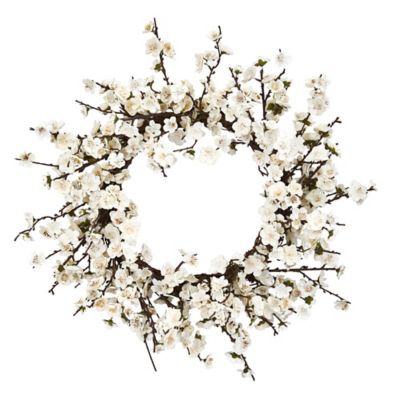
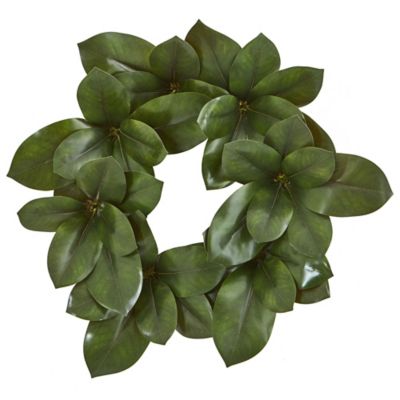
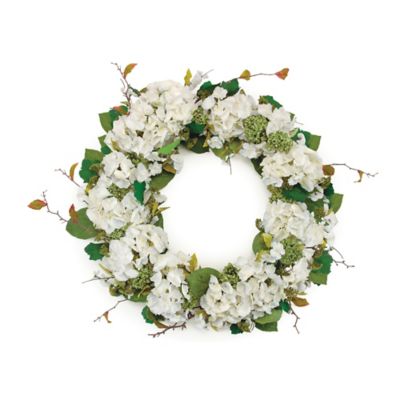
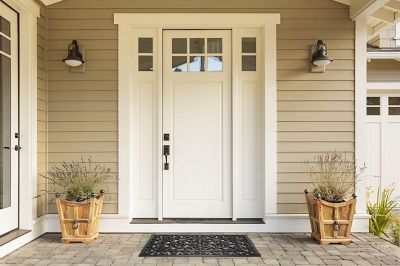
Spring and summer door wreaths bring flowers, greenery, and a little front-porch cheer to the place where folks come and go. Their lighter colors and leafy shapes suit everything from a white farmhouse door to a stained wood entry on a cabin or a painted side door beside the mudroom. Floral wreaths often feature representations of peonies, lavender, hydrangeas, daisies, or sunflowers, while greenery wreaths lean on the look of eucalyptus, boxwood, magnolia leaves, and mixed foliage. Soft pink, cream, and pale purple flowers give an entry a gentle touch; yellow blooms and rich green leaves stand out farther from the road or driveway. A mostly green wreath offers a quieter look that pairs easily with porch planters, rocking chairs, and whatever flowers are growing along the walk. Spring floral wreaths tend toward tender-looking blossoms and soft colors, while summer wreaths often carry fuller foliage and brighter flowers. There is plenty of overlap, though, especially with mixed greenery and white blooms that feel at home across both seasons. For a country entry, a grapevine base with a loose arrangement of stems can echo the textures of fence rails, woven baskets, and weathered porch boards without making the doorway feel crowded. A closely arranged ring of foliage has a neater outline and works well where the door itself has glass panels, detailed trim, or a strong paint color. Open, airy arrangements let more of the door show through, while fuller wreaths make a stronger focal point. Those differences matter just as much as flower color when the wreath is seen from the front gate rather than up close. These wreaths also fit indoor spaces, including an entry hall, a pantry door, or a wall above a bench where boots come off. For housewarmings, Mother’s Day, or a host who enjoys tending the porch, a floral or greenery wreath can be a thoughtful gift, especially when its size and colors suit the recipient’s home.
Materials and construction help determine where a door wreath belongs and how it holds its shape. Artificial floral wreaths may combine fabric petals, molded plastic leaves, flexible wire stems, and a grapevine, wire, or foam base. Fabric petals can give flowers a softer appearance, while molded foliage can add thickness and defined leaf shapes. A natural grapevine ring brings an uneven, woodsy texture that looks right at home beside brick, stone, or board-and-batten siding. Dried flowers and natural stems offer another kind of texture, but they are often more sensitive to damp air, rough handling, and repeated door movement. Artificial does not automatically mean suitable for outdoor exposure, and a sheltered porch is not the same as a fully exposed entry. Outdoor suitability, water resistance, and UV resistance are separate features worth checking in the product details. UV-resistant materials can help slow fading in sunlight, but they do not make flowers or leaves immune to a long stretch of strong afternoon sun. An overhead roof may keep most rain off a wreath while still allowing windblown moisture to reach it. On an open doorway facing a field or a wide driveway, secure stem attachments and a firmly built base matter because gusts can shake an arrangement every time the weather turns. Behind a glass storm door, depth and heat buildup deserve attention, too: crowded petals can flatten against the glass, and trapped heat may affect some materials. Fit starts with the wreath’s finished outer diameter, including any stems that extend beyond the base. On a 36-inch-wide door, a centered 24-inch wreath leaves about 6 inches on each side, which gives a useful sense of proportion without setting a rule for every entry. Thickness matters around storm doors, handles, knockers, and windows. A wreath that looks just right from the walkway should also let the door open, close, and latch freely, with house numbers and any doorbell camera left clear.
A good hanging setup keeps a spring or summer wreath looking settled rather than shifting whenever someone comes through with groceries, feed bags, or muddy boots. The hanger needs to suit both the wreath’s weight and the door’s construction. Over-the-door hangers require enough clearance at the top for the door to close without rubbing, while adhesive hooks need a compatible surface and the temperature conditions specified by their maker. Magnetic hangers depend on a compatible metal surface; they will not attach to every door that looks like metal. A smooth backing or suitable protective pad can help keep a twig or wire base from scraping the finish as it moves. For a gift, a compatible hanger can be a practical companion, provided the recipient’s door type is known. Once hung, flexible stems may need gentle shaping to open up compressed foliage and separate overlapping flowers. That light adjustment can make an arrangement look fuller, but stiff stems and fixed attachments should not be forced. Routine care is usually simple and depends on the materials: a soft brush can lift porch dust and pollen from petals, and some plastic foliage can be wiped with a lightly damp cloth if the care directions allow it. Soaking an entire wreath can loosen adhesives, affect dyes, or damage its base, so cleaning methods should follow the maker’s directions rather than treating every arrangement alike. A sheltered location and bringing the wreath inside during severe weather can help preserve its appearance. During the cooler months, dry indoor storage keeps a warm-weather wreath ready for its next turn on the door. A roomy box or wreath container protects the outline better than a tight bag, with loose tissue around delicate flowers and no heavy bins stacked on top. Letting any moisture dry before packing helps prevent musty odors and damage to natural components. When the porch takes on a winter look,
Christmas Door Wreaths offer a seasonal change while spring flowers and summer greenery rest safely indoors. With the right fit, suitable placement, and a little care, a wreath can remain a welcoming part of the entry through many arrivals, visits, and everyday trips back home.