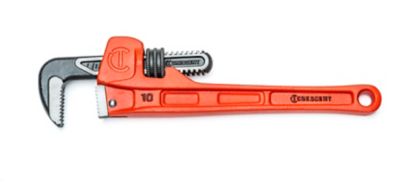
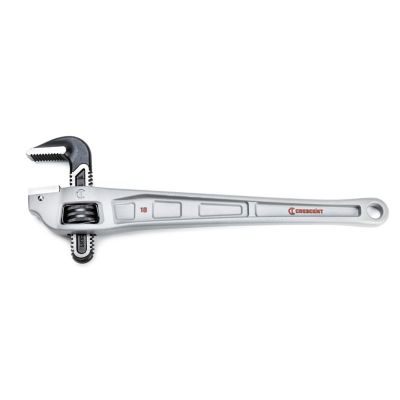
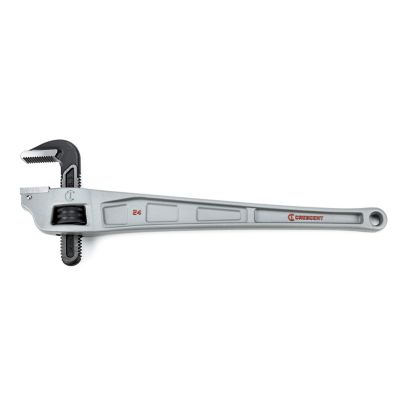
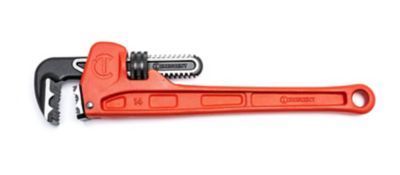
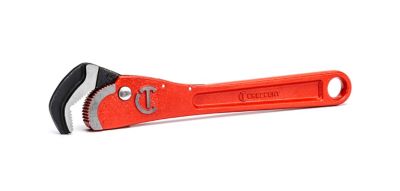
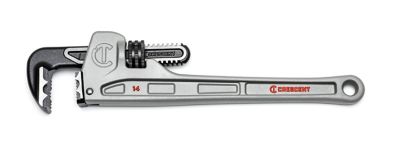
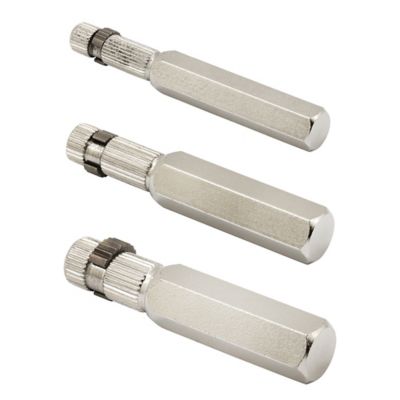
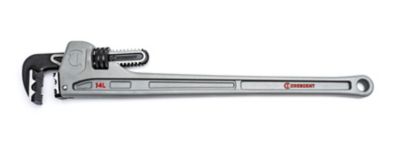
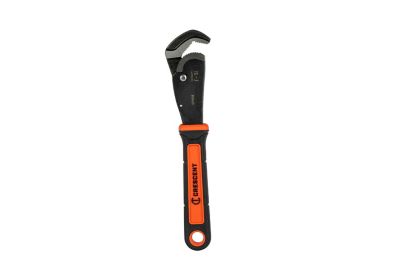
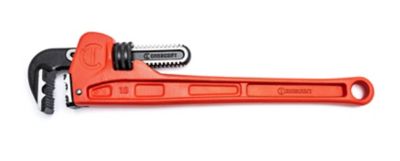
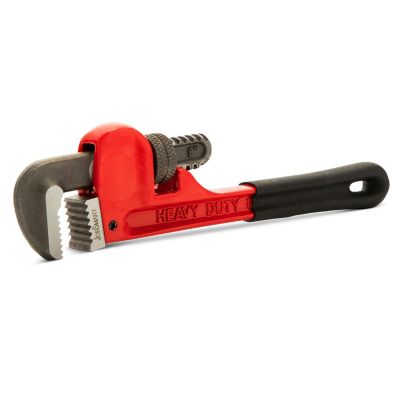
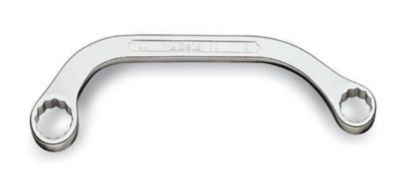
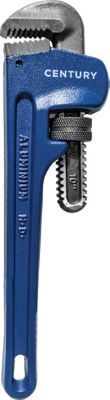
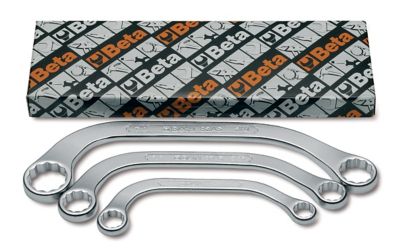
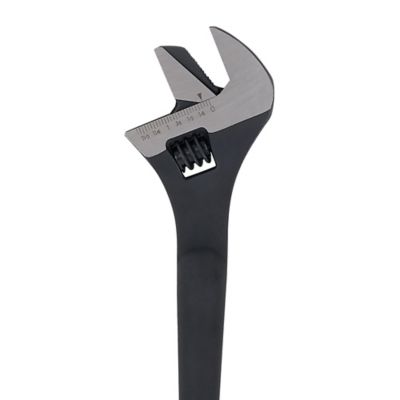
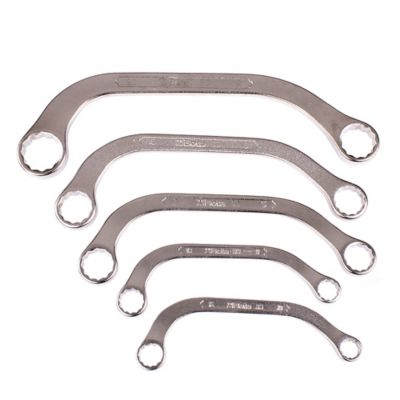
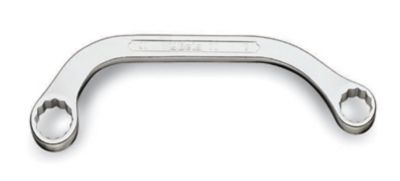
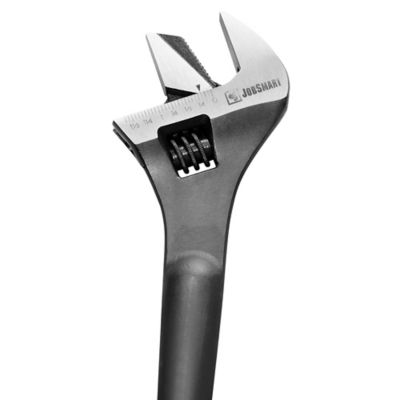
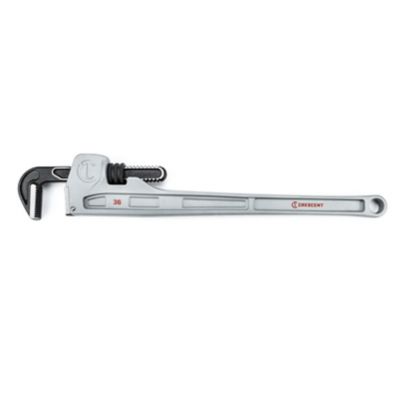
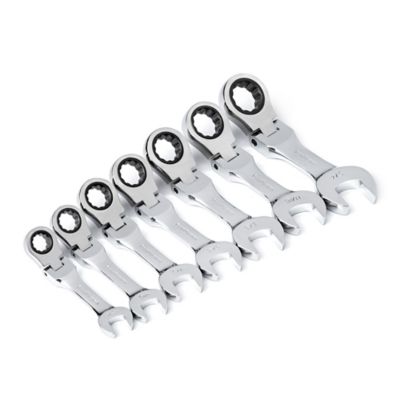
Pipe wrenches for tight spaces help grip and turn round metal pipe where a standard wrench has little room to swing. Depending on the design, a shorter handle, narrower head, or angled jaw arrangement can help reach a connection tucked beside a wall, beneath a utility sink, or between neighboring fittings. The important distinction is between reaching the pipe and having enough clearance to turn it. A wrench may fit through an opening yet leave too little handle travel to move the connection, especially when a cabinet side, floor joist, or nearby valve blocks the working area. Compact straight-pattern wrenches keep a familiar layout while trimming overall length. End-pattern and offset designs change the relationship between the jaws and handle, which can help with certain close-wall or awkwardly positioned connections. Neither style eliminates the need for clearance, and the better fit depends on where the obstruction sits. These tools make sense for plumbers, maintenance crews, farm owners, and homeowners working around threaded steel or iron pipe. Think of a short nipple behind a wash sink, a fitting near a livestock watering line, or a crowded section of piping in a shop. In each setting, jaw access, handle movement, and pipe diameter matter more than choosing the smallest wrench possible. Overall wrench length and jaw capacity are separate measurements; a short handle does not automatically mean the jaws will fit every small-looking connection. The outside diameter of the gripping surface, rather than the pipe’s nominal trade size alone, helps determine the opening needed. Head width and jaw depth also affect whether the tool can seat properly between fittings. A compact pipe wrench earns its place in the toolbox by fitting the work, not simply by taking up less room on the shelf. Enough space for the operator’s hand matters, too, particularly when the handle passes close to a rough wall or a sharp cabinet edge.
Materials and construction affect how a tight-space pipe wrench feels in the hand and holds up through repeated jobs. Steel, cast iron, and aluminum may appear in different parts of a wrench, so the handle or body material does not tell the whole story. Hardened steel jaws provide the biting surfaces on many traditional designs, while the body supports the load and the adjustment mechanism controls the opening. The solid feel of
Steel Pipe Wrenches may appeal to someone who prefers a substantial tool, while a lighter-bodied design can reduce the weight carried from one work area to another. Actual weight depends on size and construction, not just the material name. In cramped quarters, balance can matter as much as total weight: a head-heavy wrench held at arm’s length under a sink feels different from the same tool working at bench height. A handle with a comfortable shape and enough room for a gloved grip can make positioning less awkward, though grip coverings do not make an ordinary wrench electrically insulated. Jaw condition deserves just as much attention. Defined teeth help bite into suitable metal pipe, while worn or damaged teeth can contribute to slipping. A smoothly moving adjustment nut makes it easier to match the opening to the gripping surface without fighting the tool in a narrow gap. Traditional pipe wrenches are directional tools, with the jaw action arranged to grip under load in the intended turning direction. That action also leaves tooth marks, which is why these wrenches belong on appropriate round metal surfaces rather than polished fixtures or finished hardware. Hex nuts and many valve components call for a different wrench style. Thin-wall tubing, plastic pipe, and plated surfaces can require other gripping methods altogether. A compact tool is a better match when its jaw shape, capacity, and intended application line up with the connection, rather than when extra pressure is needed to make it hold.
Everyday usefulness comes down to the whole working setup, especially around older plumbing and crowded farm or shop equipment. A short handle offers less leverage than a longer handle under the same applied force, so easier access does not necessarily mean easier loosening. A stubborn threaded joint may need a different approach rather than more force on a small wrench. Handle extensions can overload a tool and should not substitute for the manufacturer’s intended operating limits. Nearby piping also needs consideration: turning one fitting can transfer force into another connection, a wall-mounted line, or a valve body. Where appropriate, a second wrench supports the adjoining fitting so the intended joint takes the turning force. That is particularly relevant beneath a utility sink, where a loose support or hidden connection may not be obvious from the front. Work on piping belongs on an isolated, depressurized system, and gas lines or unfamiliar installations call for qualified help. Between jobs, straightforward care helps keep a pipe wrench ready for the next repair. Clean jaw teeth give the gripping surfaces room to engage, while grit in the adjustment threads can make positioning rough. Moisture left on bare metal encourages rust, so wiping the tool down and storing it in a dry toolbox helps protect moving parts and exposed surfaces. Lubrication should follow the tool maker’s directions, with excess oil kept off gripping surfaces. Bent handles, cracked bodies, loose parts, and damaged jaws are reasons to take a wrench out of service. For someone who handles livestock water systems, maintains rental property, or keeps a busy workshop running, a well-matched compact pipe wrench can fill the gap between an ordinary toolbox wrench and a connection that is hard to reach. It can also make a practical gift for a hands-on homeowner or tradesperson when the size and style match the work they actually tackle.